
The short answer
Every radiator has two valves. One controls it — a thermostatic radiator valve (TRV) that holds the room at the temperature you set, or a manual wheelhead that just turns it on and off — and the other is a lockshield, set once to balance the system. Choose the pattern by where the pipes come from: angled for pipes up from the floor, straight for pipes in line with the connection, corner for pipes from the wall behind.
Why does a radiator have two valves?
Water flows in through one valve and out through the other. One is for you to adjust; the other — the lockshield — is for whoever balances the system.
| Valve | What it does | How to tell |
|---|---|---|
| Thermostatic radiator valve (TRV) | Opens and closes on its own to hold the room at the temperature you set | A numbered head, usually 1–5 with a frost setting |
| Manual wheelhead | On, off or anywhere in between — no thermostat | A plain round handle with no numbers |
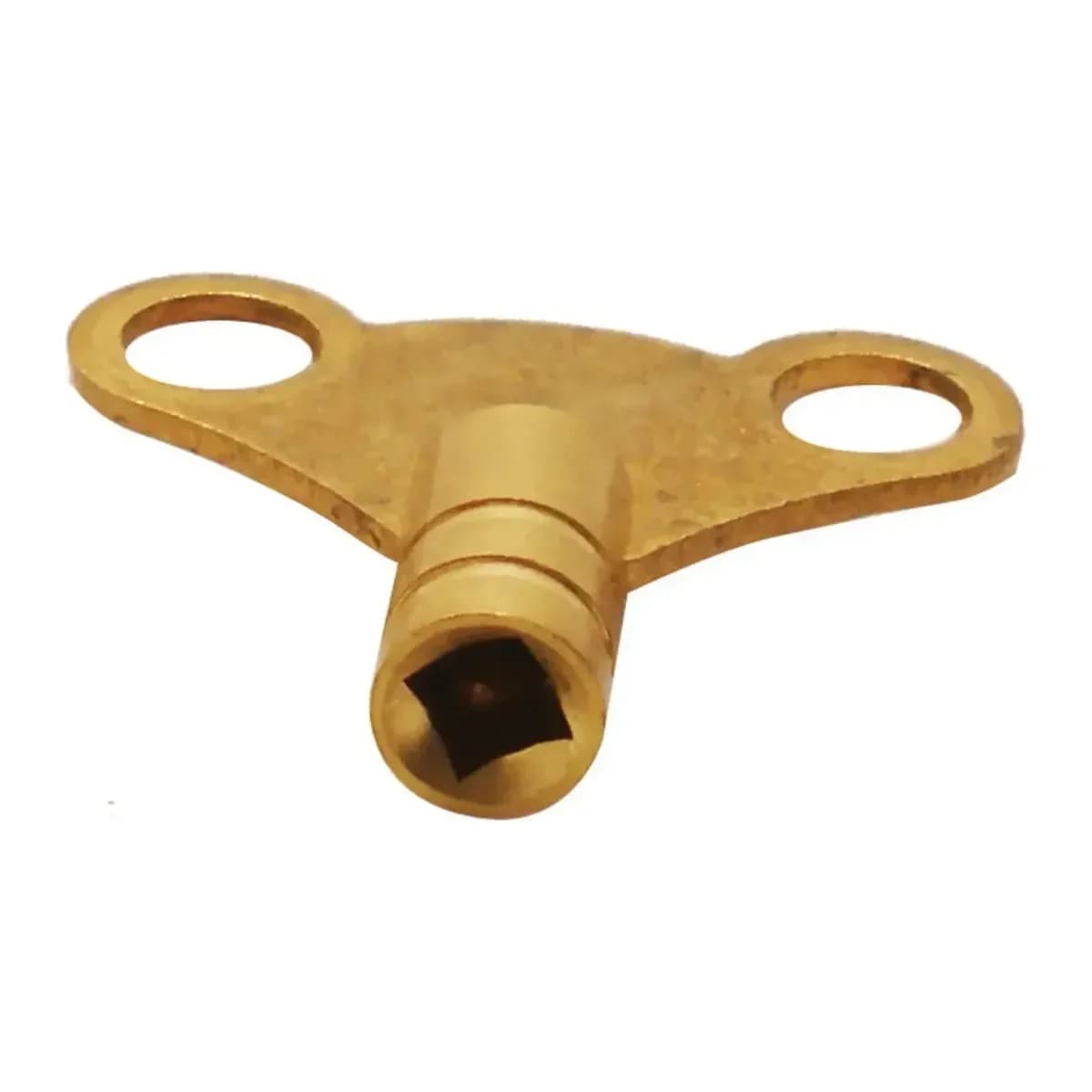
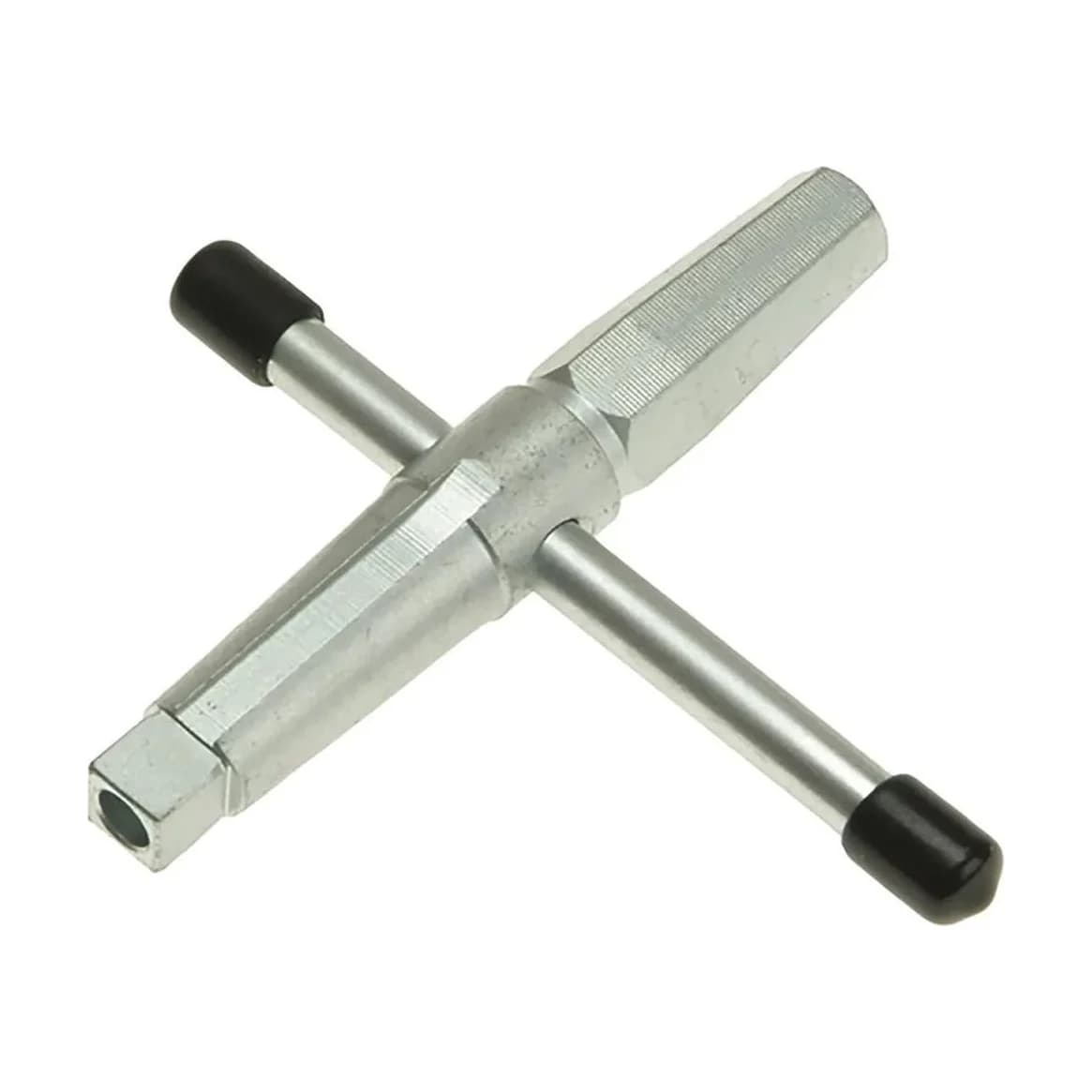
| Lockshield | Set once to balance the flow through that radiator; also used to isolate it | A plain cap, with a spindle underneath turned by a lockshield key or spanner |
Because the lockshield is set when the system is balanced, don't use it to turn a radiator on and off. If you have to close it — to take a radiator off the wall — count the turns so you can put it back where it was. The bleeding and balancing guide shows how to set them.
 In stock
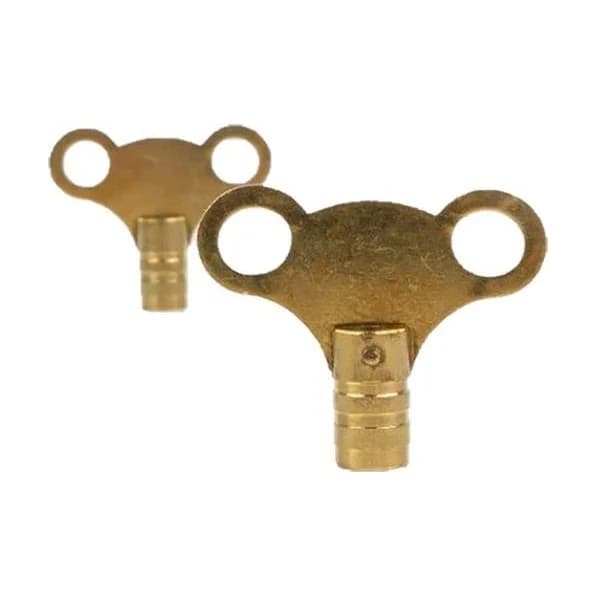 In stockRadiator Bleed Keys - Twin Pack
Code: LP-1UK6J7X
inc VAT£1.25 ex VAT
✓ Delivery available✓ Collect today
 In stock
Monument
Monument 2052R Universal Radiator & Valve Key MON2052Code: LP-1PO9M42
inc VAT£17.16 ex VAT
✓ Delivery available✓ Collect today
How a TRV works, and what the numbers mean
A TRV head holds a sensor — wax, liquid or gas — that expands as the room warms and pushes on a pin in the valve body to close it. As the room cools, the sensor contracts, the pin springs back and hot water flows again. It controls the room's temperature, not the radiator's: turning it to 5 won't warm the room any faster, it just lets the room get hotter before the valve closes.
| Setting | Room temperature, roughly | Good for |
|---|---|---|
| Frost (a snowflake or *) | About 5–8°C | Empty rooms; keeps the pipes from freezing |
| 1 | About 12°C | Rooms you rarely use |
| 2 | About 16°C | Halls, landings, cool bedrooms |
| 3 | About 20°C | Most living rooms |
| 4 | About 24°C | Bathrooms, or anyone who likes it warm |
| 5 | About 28°C | Fully open — rarely needed |
Set it and leave it: start at 3 in living rooms and 2–3 in bedrooms, and adjust a notch at a time. The head needs room air moving round it, so a TRV hidden behind a long curtain or a sofa shuts off too early. Most heads work best fitted horizontally, away from the hot pipe — check the instructions.
Angled, straight, corner or H-block?
The pattern is the shape of the valve body, and it follows where your pipes come from. Look at the old valve, or the pipe, before you buy:
| Pattern | Pipe comes from | Connects to |
|---|---|---|
| Angled | The floor, straight up | A side connection on the radiator — the most common set-up in UK homes |
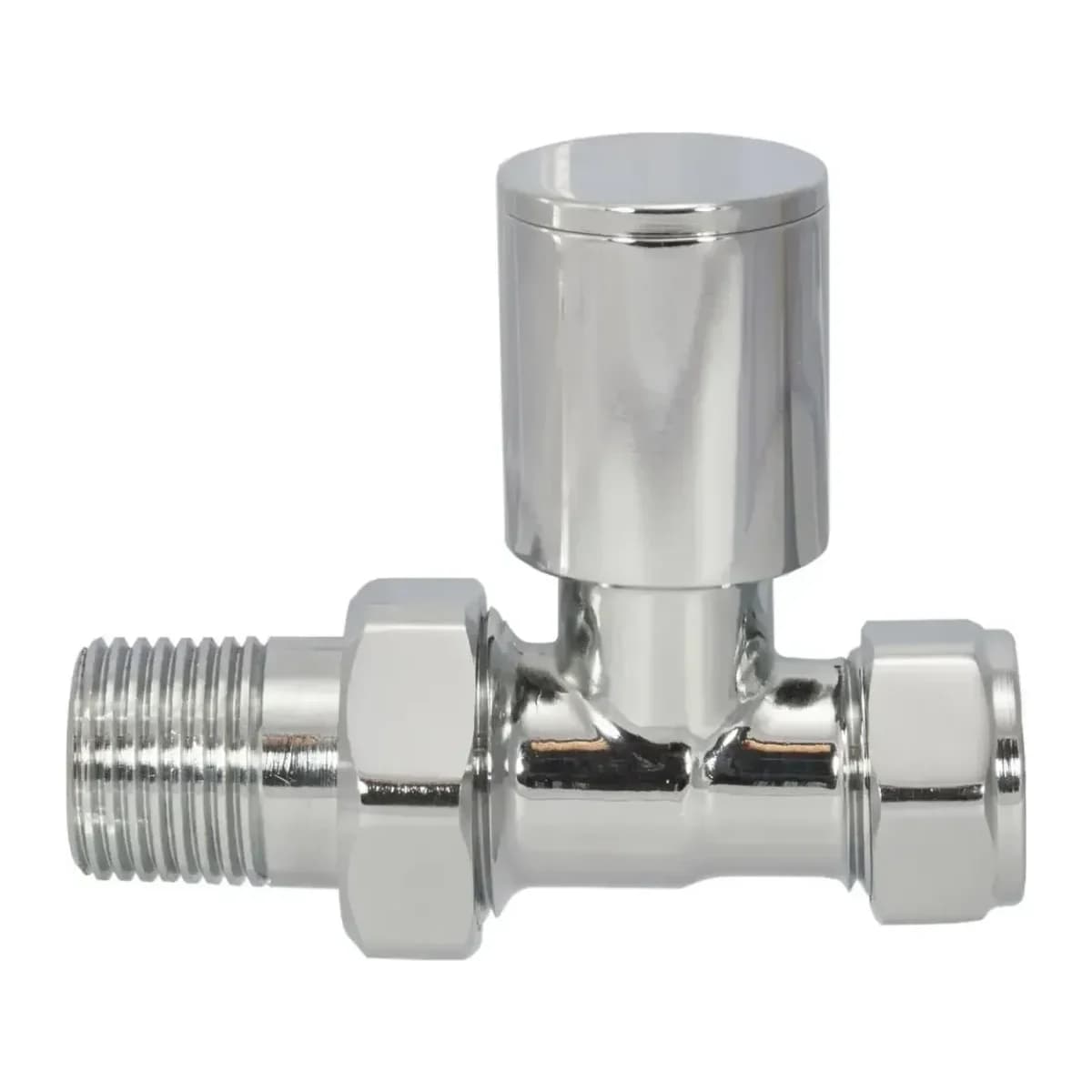
| Straight (in-line) | The wall, in line with the connection — or the floor, under a bottom connection | A side connection fed from the wall, or the underside of a towel rail or designer radiator |
| Corner | The wall behind the radiator | A side connection, with the valve turning the corner so the head faces out into the room |
| H-block (twin) | The floor or wall, both pipes together | Radiators with both connections side by side underneath |
Most panel radiators have four ½-inch BSP connections, one in each corner: two take the valves, one the bleed valve and one a blanking plug. The valve's tail screws into the radiator and the pipe joins the valve with a compression nut. Towel rails and designer radiators often connect underneath, which is why straight valves are common on them.
H-block valves are specialist: the two connections are usually 50mm apart and threads vary between radiator makers, so bring the radiator's details to the counter.
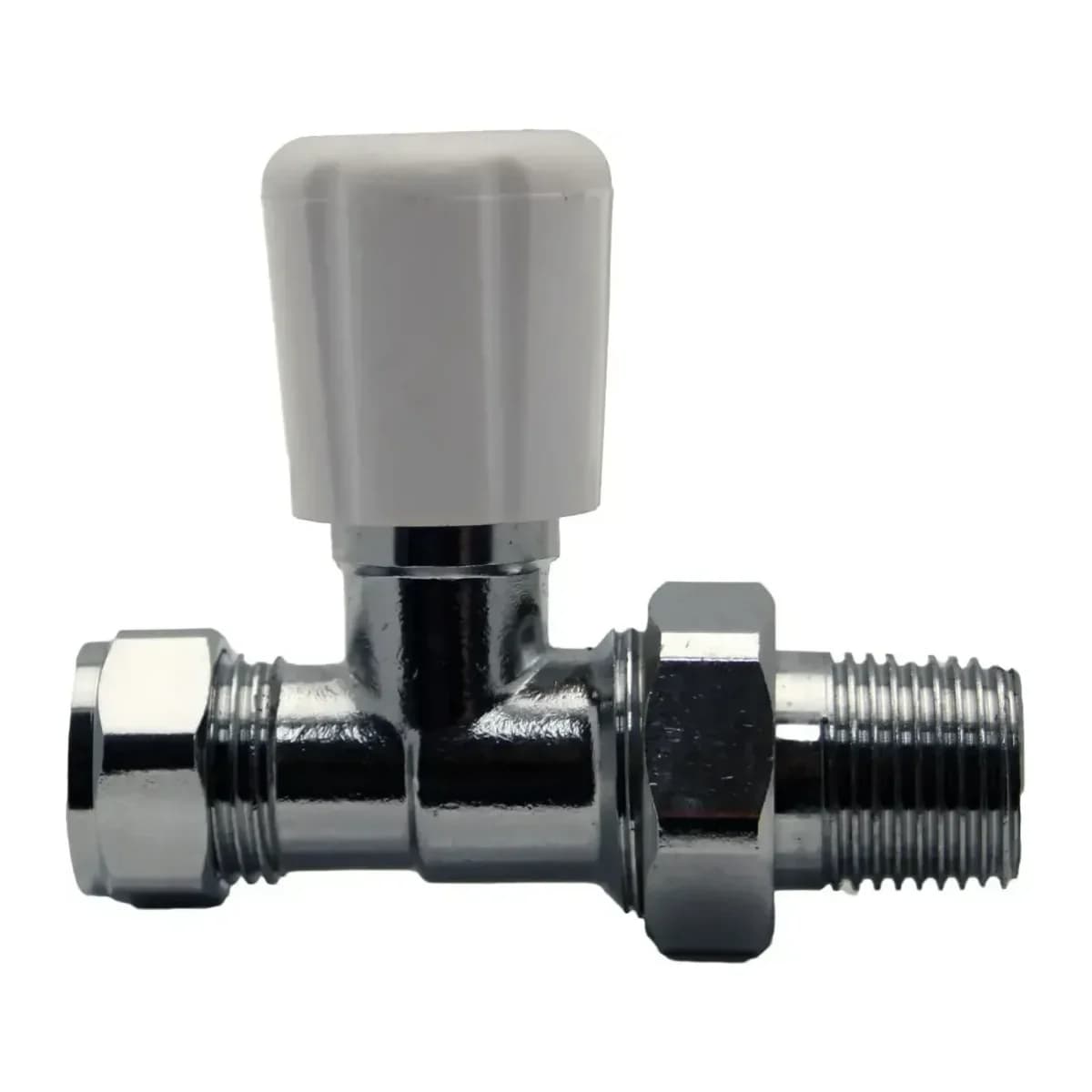 In stockDeluxe Straight Radiator Valve 15mm
Code: LP-1P6ODI4
inc VAT£9.70 ex VAT
✓ Delivery available✓ Collect today
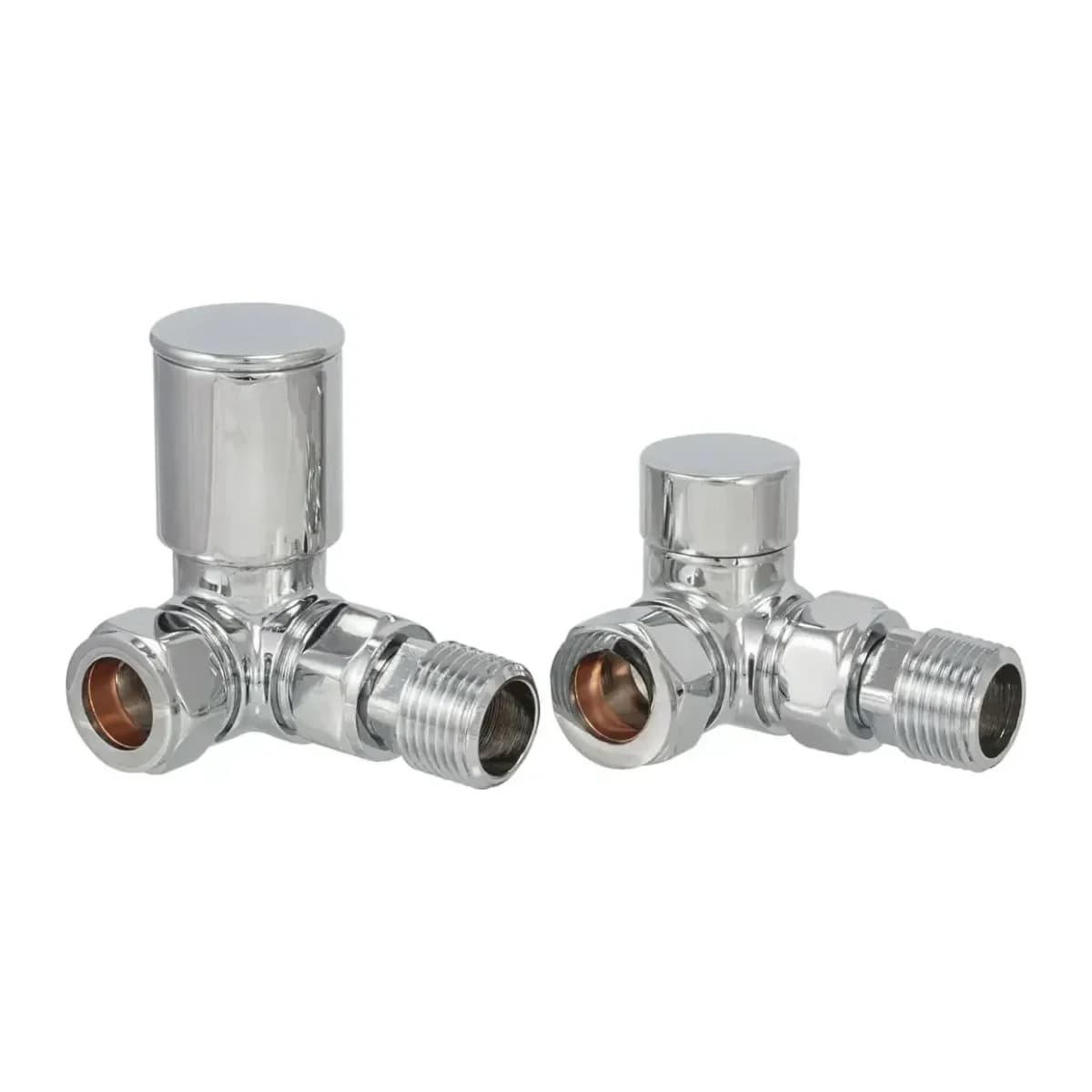 In stock15mm Corner Radiator Valves - Chrome
Code: LP-9P4HP4
inc VAT£12.93 ex VAT
✓ Delivery available✓ Collect today
 In stockTowel Rail - Chrome Straight Twin Valve Design
Code: LP-1P3LI4D
inc VAT£14.55 ex VAT
✓ Delivery available✓ Collect today
- In stock15mm Angled Corner Pattern Towel Rail Radiator Valve Chrome (Pair)
Code: LP-CO57TL
inc VAT£17.77 ex VAT
✓ Delivery available✓ Collect today
15mm, 10mm and microbore valves
Most radiators are fed with 15mm copper or plastic pipe, and standard radiator valves take 15mm on the pipe side. Many homes plumbed in the 1970s and 80s have microbore instead — 10mm or 8mm pipe running from a manifold under the floor to each radiator. You have two options:
- A valve made for 10mm, such as our 10mm Tradefix TRV.
- A standard 15mm valve with a reducing set that sits inside its compression nut to grip the smaller pipe. We stock 15mm × 10mm and 10mm × 8mm reducing sets.
On plastic pipe, push a pipe insert into the end before the compression nut goes on. Microbore also blocks with sludge sooner than 15mm, so if its radiators are slow to heat, read the filter and inhibitor guide before blaming the valves.
Does it matter which side the TRV goes on?
Older TRVs were made to go on the flow — the pipe bringing hot water in — and have an arrow on the body showing which way the water must run. Fitted on the return, they can hammer or chatter as they close. Bi-directional TRVs work on either pipe, which helps when you can't tell which is which, and most new TRVs are made that way. If yours has an arrow, follow it.
To find the flow, turn the heating on from cold and feel both pipes: the one that warms first is usually the flow. The lockshield goes on the other one.
Do I have to fit TRVs? Part L and room control
In England, Approved Document L of the Building Regulations expects each room to have its own temperature control — usually TRVs — when a boiler is replaced or a heating system is installed or upgraded, unless that isn't practical. Wales and Scotland have their own versions of the rules, and the heating engineer, who notifies the boiler work anyway, will tell you what your job needs.
When you replace radiators, fitting TRVs is the sensible choice whatever the rules: they stop you heating rooms you don't need warm. Two exceptions:
- The room with the wall thermostat is usually left on a manual valve, or a TRV turned fully up. Otherwise the TRV and the thermostat fight, and the boiler can switch off before the rest of the house is warm.
- The water needs somewhere to go when every TRV has closed: an automatic bypass valve, unless the boiler maker says one isn't needed. Your installer checks this.
Can you change a TRV head without draining the system?
Yes. The head only presses on the pin; the water is sealed inside the valve body. You can take the head off with the system full — the valve simply opens fully while it's off, so that radiator heats up.
- Turn the head to its highest number. That takes the pressure off the pin and makes the head easier to remove.
- Unscrew the knurled collar at the base of the head, or release the clip on a push-on head. Leave the hexagon nuts on the valve body and the pipe alone — those hold the water in.
- Check the pin. It should go in when you press it gently and spring back out. A pin stuck in after the summer is the usual reason a radiator stays cold; press it a few times, or ease it gently with pliers, until it moves freely.
- Fit the new head at its highest setting, tighten the collar by hand, then turn it to the number you want.
Changing the valve body itself is a different job: the pipe has to be empty, which means draining the system down below the valve, or freezing the pipe with a pipe freezer kit. If you'd rather not, our plumber can supply and fit radiator valves anywhere in Greater London.
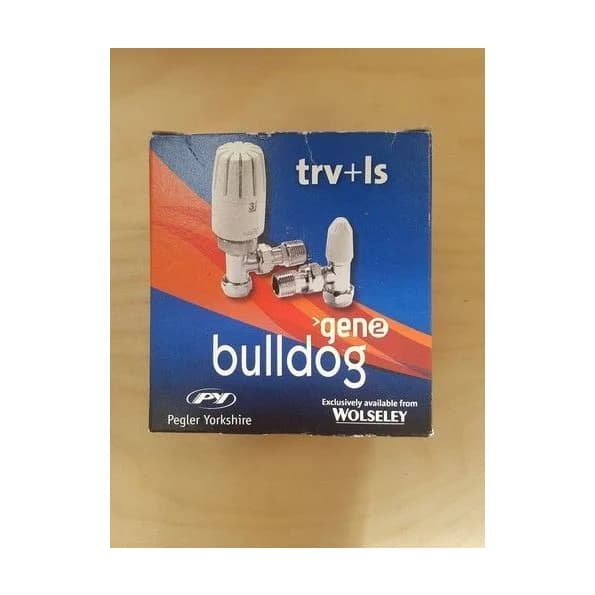 In stock
 In stock10mm Tradefix Thermostatic Radiator Valve
Code: LP-1EAFNH6
inc VAT£8.08 ex VAT
✓ Delivery available✓ Collect today
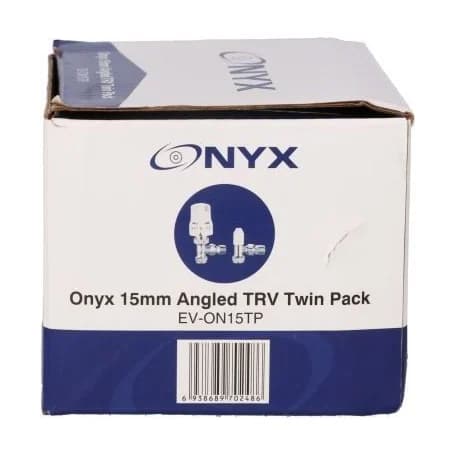 In stockOnyx 15mm Angled Lockshield Twin Pack Trv
Code: LP-1628Q7X
inc VAT£8.49 ex VAT
✓ Delivery available✓ Collect today
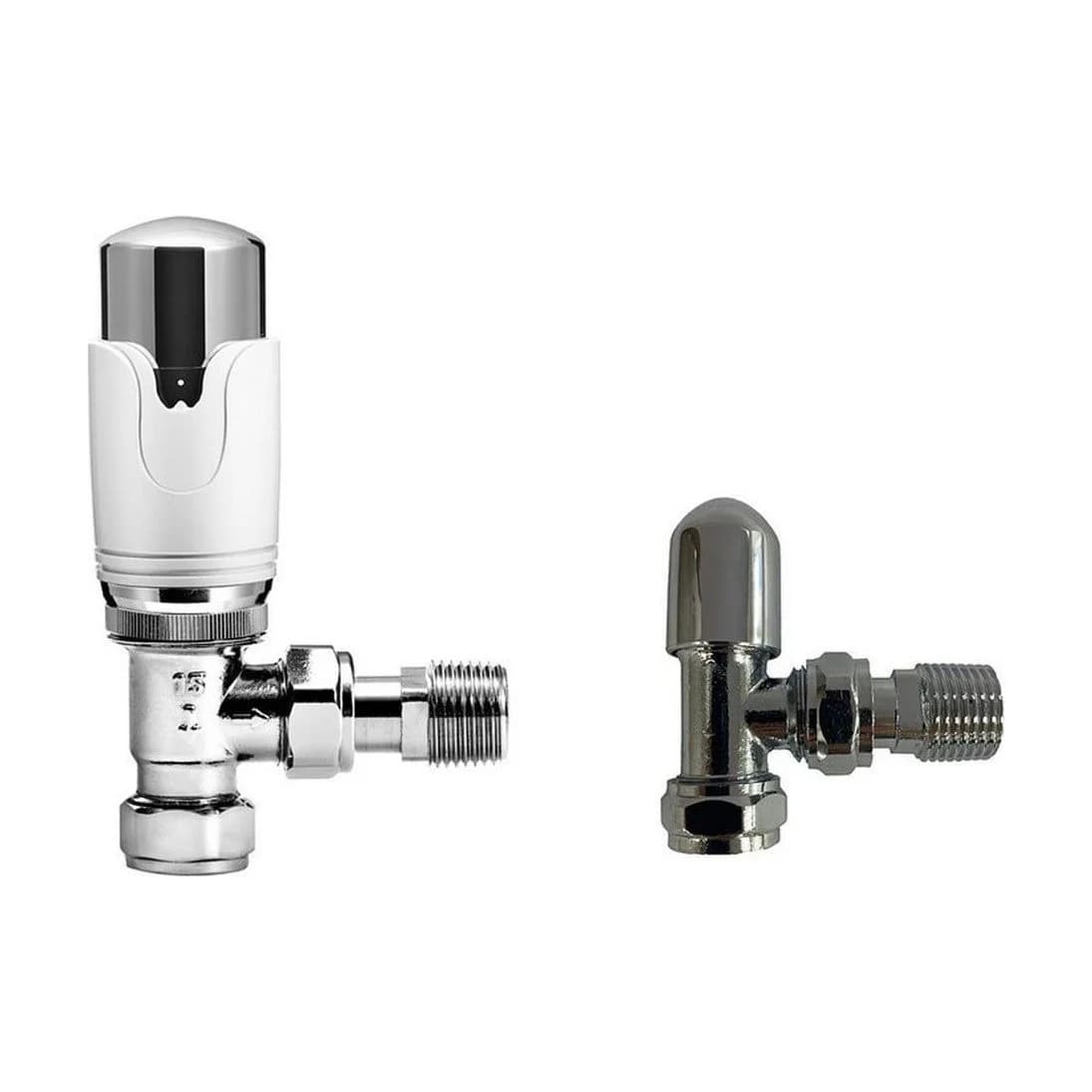 In stock
Kartell
15mm Angled Lockshield Twin Pack Trv2 colours available
Frominc VAT£11.73 ex VAT
✓ Delivery available✓ Collect today
Questions
- What is the difference between a TRV and a lockshield?
- A TRV has a numbered head and opens and closes by itself to hold the room's temperature. A lockshield has a plain cap, is set once when the system is balanced, and is then left alone.
- Which side does the TRV go on?
- On the flow — the pipe that warms up first — if the valve has an arrow on its body. Bi-directional TRVs, which most new ones are, work on either pipe.
- Should every radiator have a TRV?
- Every radiator except, usually, the one in the room with the wall thermostat, which is left on a manual valve or a TRV turned fully up. In England, Part L expects room-by-room control when a boiler is replaced.
- What number should my TRV be on?
- Around 3 in living rooms — roughly 20°C on most heads — and 2 to 3 in bedrooms. Set it and leave it: turning it to 5 doesn't heat the room any faster.
- Can I replace a radiator valve without draining the system?
- The head, yes. The valve body, no — the pipe feeding it has to be empty, either by draining the system down below the valve or by freezing the pipe.
- Are radiator valves a standard size?
- Most take 15mm pipe and screw into the radiator with a ½-inch BSP tail. Microbore systems use 10mm or 8mm pipe, which needs a 10mm valve or a reducing set. Valve heights vary, so measure before you buy.
- Why is my radiator cold with the TRV on 5?
- Usually a stuck pin. Take the head off and press the pin gently — it should spring back. If it's free and the radiator is still cold, check the lockshield is open and the radiator doesn't need bleeding.
Related guides
- Heating & boilersHow to Bleed and Balance Radiators
- Heating & boilersHow to Drain a Central Heating System (and Refill It Properly)
- Heating & boilersWhat Size Radiator Do I Need? Radiator BTU Calculator
- Heating & boilersHeated Towel Rail Guide: Sizes, BTU Output and Chrome vs White