
The short answer
Central heating water slowly corrodes steel radiators into black magnetite sludge, which blocks radiators, pumps and boiler heat exchangers. BS 7593 sets out the fix: clean and flush the system, add inhibitor to slow the corrosion, and fit a magnetic filter on the return to the boiler to catch what's left. Check the inhibitor level every year at the service, top it up after any drain-down, and clean the filter at every service.
Why heating systems sludge up
Water, air and steel radiators make iron oxide — magnetite — a fine black sludge that settles in the bottom of radiators and gets carried round to the pump and the boiler's heat exchanger. Signs of it:
- Radiators cold at the bottom and warm at the top.
- Black water when you bleed a radiator.
- A noisy, kettling boiler or a pump that keeps failing.
- Radiators that need bleeding again and again.
What BS 7593 asks for
BS 7593 is the code of practice for treating domestic heating water. In short:
- Clean the system with a system cleaner to loosen sludge and debris, and flush it out.
- Protect it with an inhibitor at the dose on the bottle.
- Filter it with an in-line filter to catch the debris that's left.
- Test the inhibitor level every year, and top up after any work that drains water out.
Most boiler makers expect this for their warranties, so it's worth doing whenever a boiler is replaced or the system is drained.
Magnetic filters: where they go
A magnetic filter sits on the heating return pipe just before the boiler, so it catches sludge before it reaches the heat exchanger. Most have isolating valves built in, so the engineer can close it off, take out the magnet and wipe it clean at each service in a few minutes.
Match the filter to the pipe — 22mm on most homes, 28mm on larger systems — and check how it can be mounted. Heat pumps have their own filters designed for their higher flow rates.
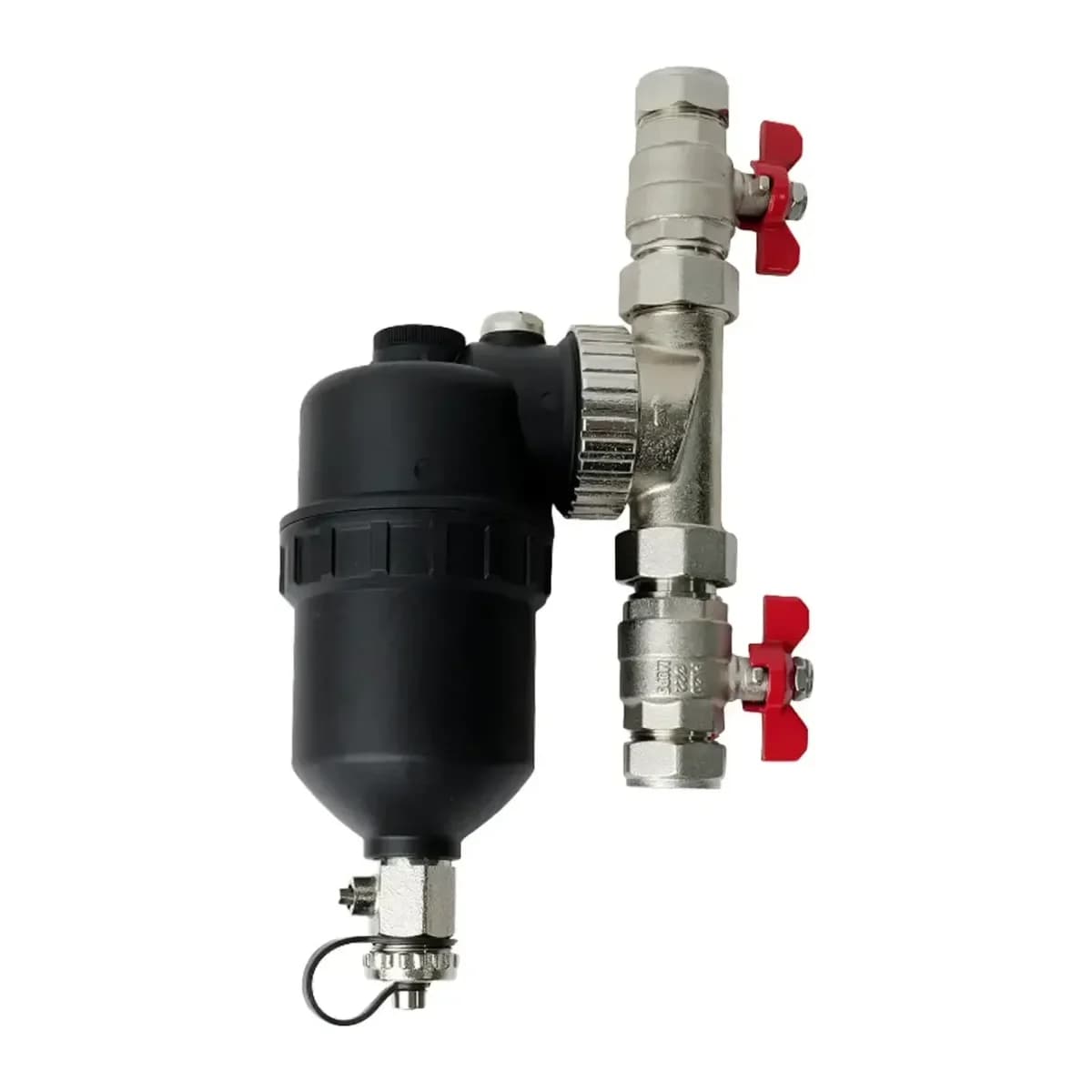 In stock
London Plumbing
22mm Magnetic FilterCode: LP-1WV6HWB
inc VAT£40.42 ex VAT
✓ Delivery available✓ Collect today
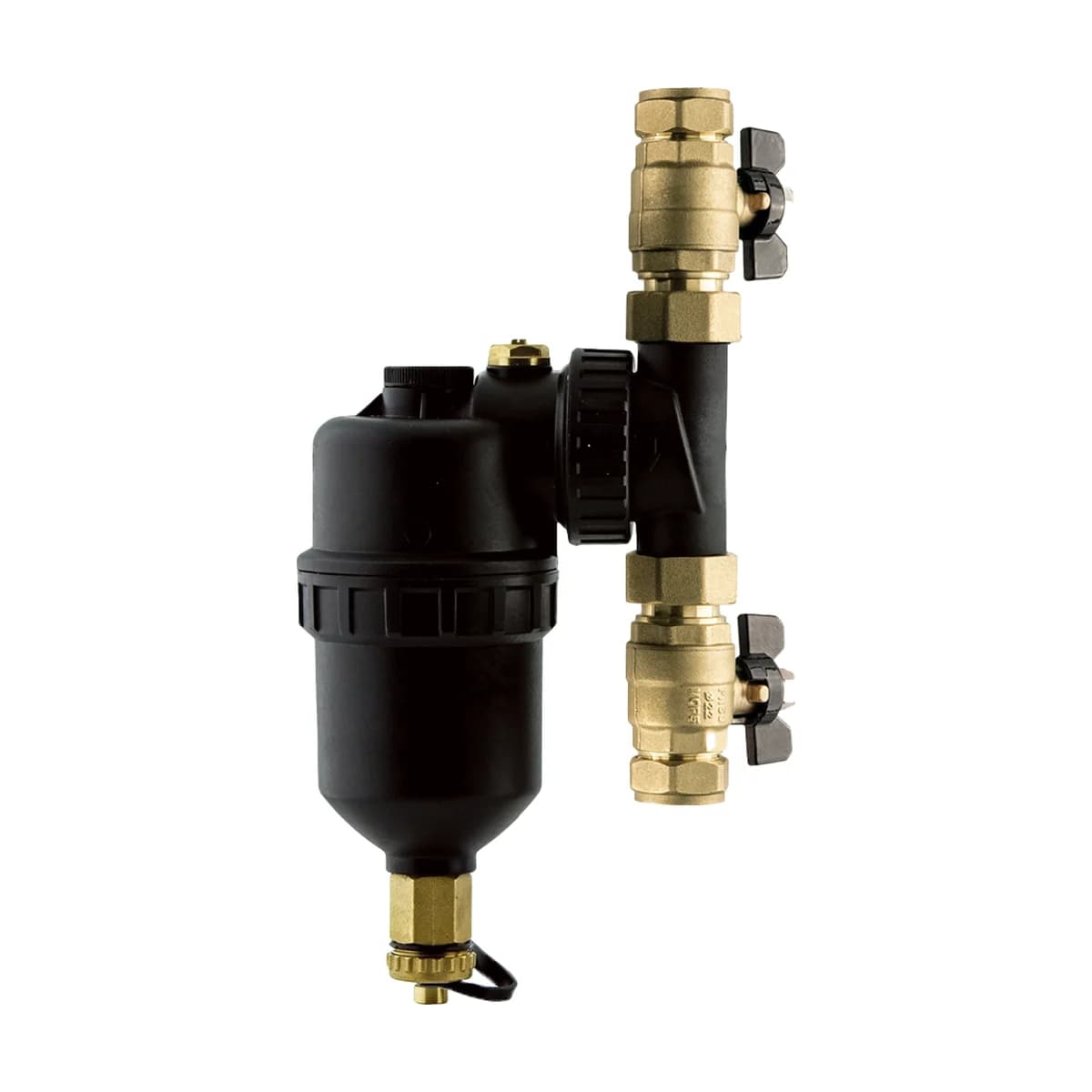 In stock
KeyPlumb
KeyPlumb Magnetic Boiler Filter 22mmCode: LP-1AOKFWN
inc VAT£46.08 ex VAT
✓ Delivery available✓ Collect today
- In stock
Eden
Eden Magnetic Filter 22mmCode: LP-1CGQEB5
inc VAT£47.69 ex VAT
✓ Delivery available✓ Collect today
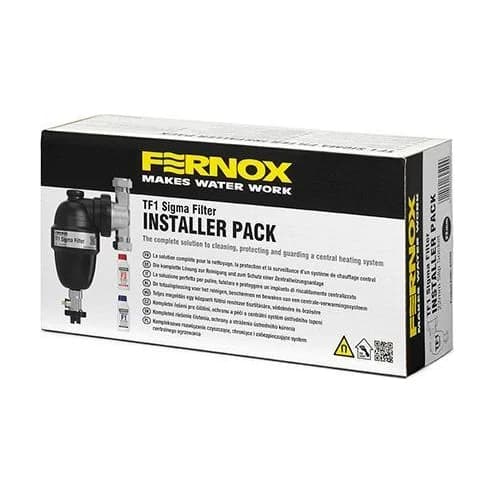 In stock
How to add inhibitor
- Use the dose on the bottle — many 1-litre bottles treat around 100 litres of system water, roughly a typical home. Larger systems need more.
- On a system with a magnetic filter, the easiest way in is usually through the filter's dosing point.
- Otherwise go in through a radiator: turn the heating off, close both valves on one radiator, drain a little water, and add the inhibitor through the bleed point with an injector.
- Open the valves, bleed the radiator, top up the system pressure and run the heating so it mixes in.
Hard water and combi boilers
London's water is hard, and scale builds up fast in the small hot water heat exchanger of a combi, cutting the flow and making it noisy. Building regulations guidance expects scale protection on new combi installations where the water hardness is over 200ppm, which covers most of London.
A scale reducer on the cold supply to the combi is the usual answer. It's a separate job from the heating side, which is protected by the inhibitor and filter.
Questions
- Do I need a magnetic filter?
- It's strongly recommended, and most boiler makers expect one for their warranties. It's the cheapest way to keep sludge out of a new boiler's heat exchanger.
- How often should a magnetic filter be cleaned?
- At every annual boiler service, or sooner after the system has been cleaned or drained, when more debris is moving round.
- How much inhibitor does my system need?
- Follow the bottle: many 1-litre bottles treat about 100 litres of system water, roughly a typical home. A larger system needs more.
- Why are my radiators cold at the bottom?
- Usually sludge sitting in the bottom of the radiator. A system clean and flush, then inhibitor and a magnetic filter, is the cure. Cold at the top is air — bleed it.
Related guides
- Heating & boilersHow to Bleed and Balance Radiators
- Heating & boilersWhat Size Combi Boiler Do I Need? kW Explained
- Heating & boilersCombi vs System vs Regular Boiler: Which Do You Need?
- Heating & boilersWhat Size Radiator Do I Need? Radiator BTU Calculator