
The short answer
Turn the internal stop tap clockwise until it stops. It's usually under the kitchen sink, or where the supply pipe comes in — a downstairs toilet, utility room or under the stairs. Then open the kitchen cold tap to check the water's off and drain the pipe. To work on one tap, toilet or appliance, close its isolating valve instead. If the stop tap won't turn or won't seal, use the outside stop tap under a small cover near your boundary.
Where is my stop tap?
The internal stop tap — also called a stopcock or stop valve — controls the mains supply to the whole house. It's on the cold pipe where the supply comes in, usually close to floor level. Look in these places, roughly in order:
- Under the kitchen sink, at the back of the cupboard — the most common spot.
- In a downstairs toilet, utility room or garage.
- Under the stairs, or in a cupboard near the front door.
- Under a floorboard or hatch just inside the front wall, in older houses with suspended floors.
- In a flat: the kitchen, bathroom or airing cupboard, or sometimes a riser cupboard in the communal corridor. Some older conversions share one stop tap between flats, so ask the landlord or managing agent.
How to turn the water off
- Turn the stop tap clockwise until it stops. If it's a lever valve, turn it a quarter turn so the lever lies across the pipe.
- Open the kitchen cold tap. The flow should die away within a few seconds; if it keeps running, the stop tap isn't sealing (see below).
- If it's a leak, switch off the boiler and immersion heater too. If water is near electrics, keep clear, and switch off at the consumer unit only if it's safe to reach.
- If you're draining down, open the other taps and flush the toilets.
What the stop tap turns off depends on your hot water system:
| Your system | Stop tap turns off | Good to know |
|---|---|---|
| Combi boiler | All the hot and cold water | Nothing else to close |
| Unvented cylinder | All the cold, and the supply to the cylinder | Hot taps run briefly, then stop; the cylinder stays full |
| Tank in the loft (gravity) | The kitchen cold tap and the supply that refills the loft tank | Tank-fed taps, toilets and the hot cylinder keep running until the tank empties — close the valves on the tank's outlet pipes to stop them |
The central heating is a separate circuit, so turning off the water doesn't drain the radiators. Not sure which system you have? See low water pressure: taps and showers.
The outside stop tap and water meter
Between the street and your house there's usually a second valve — the outside, external or boundary stop tap. It sits under a small metal or plastic cover in the pavement or front path, often marked W or Water, sometimes in the same chamber as your water meter.
- It belongs to your water company. The pipe from there to your house — the supply pipe — is usually yours to look after.
- It's normally well below ground, so you'll need a long-handled stop tap key to reach it.
- In older terraces one outside stop tap can serve several houses, so turning it off may cut off your neighbours too — warn them first.
- If it's seized, broken or you can't find it, call your water company rather than forcing it.
A meter on your supply can also tell you whether there's a hidden leak. Turn off every tap and appliance, note the reading, then check it again an hour later without using any water. If it has moved, water is escaping somewhere between the meter and your taps.
Your billing meter belongs to the water company. The water meters we sell are for measuring a supply yourself — to an annexe, a flat or a tenant's unit, for example.
Turning off one tap, toilet or appliance
You don't need to turn the whole house off to change a tap washer or a toilet fill valve. Most fittings have an isolating valve on the pipe just before them:
- Slotted valve: turn the slot a quarter turn with a flat screwdriver, so it's across the pipe. In line with the pipe is on.
- Lever or handle valve: turn the handle a quarter turn so it's across the pipe.
- Washing machine and dishwasher valves: blue lever for cold, red for hot; a quarter turn off.
- Gate valve: a wheel handle, turned clockwise to close. You'll find them on low-pressure pipes from a loft tank.
No isolating valve? Fit one next time the water's off — our guide to isolating valves explains which to choose.
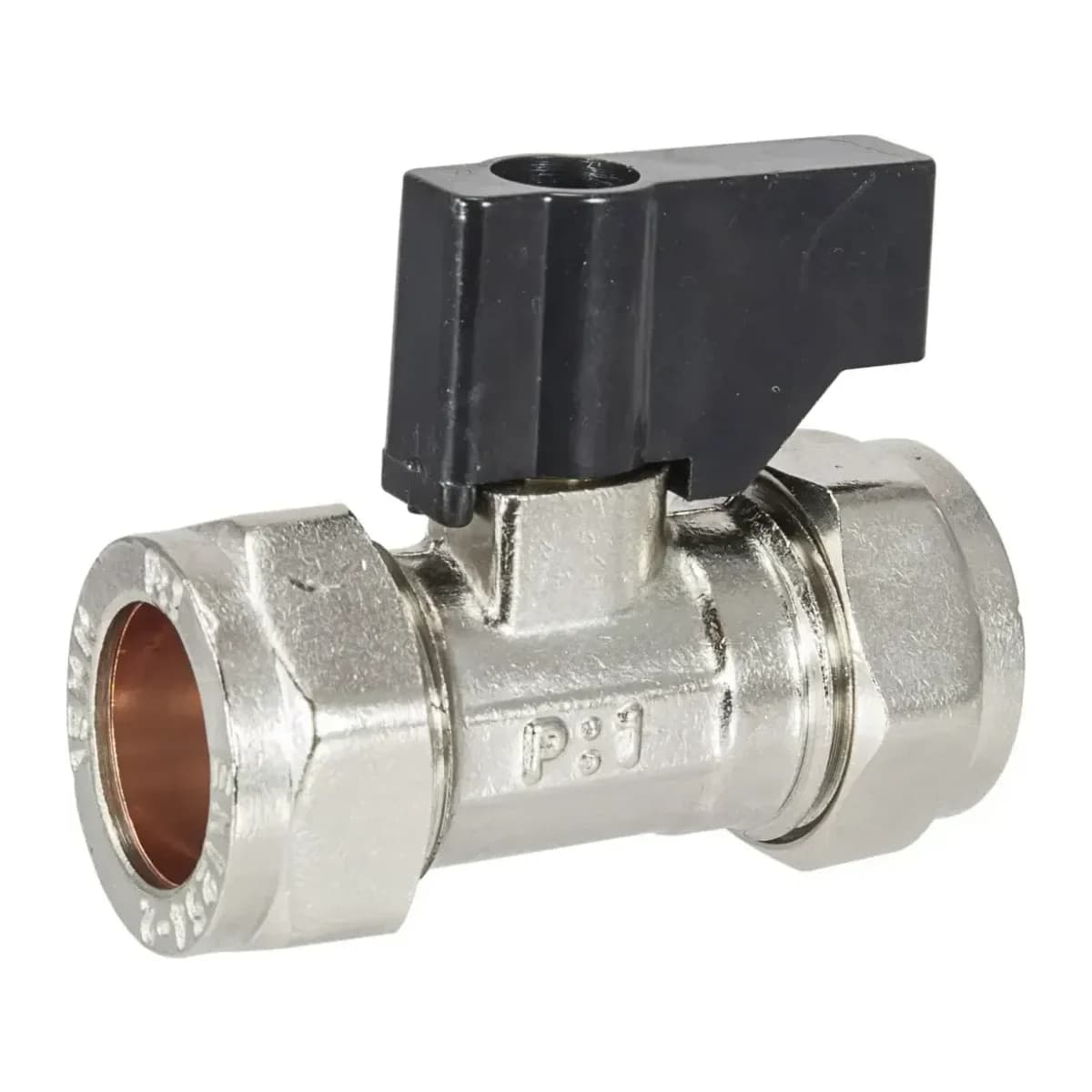 In stockIsolating Valve c/w Lever Chrome C x C
2 sizes available
Frominc VAT£1.70 ex VAT
✓ Delivery available✓ Collect today
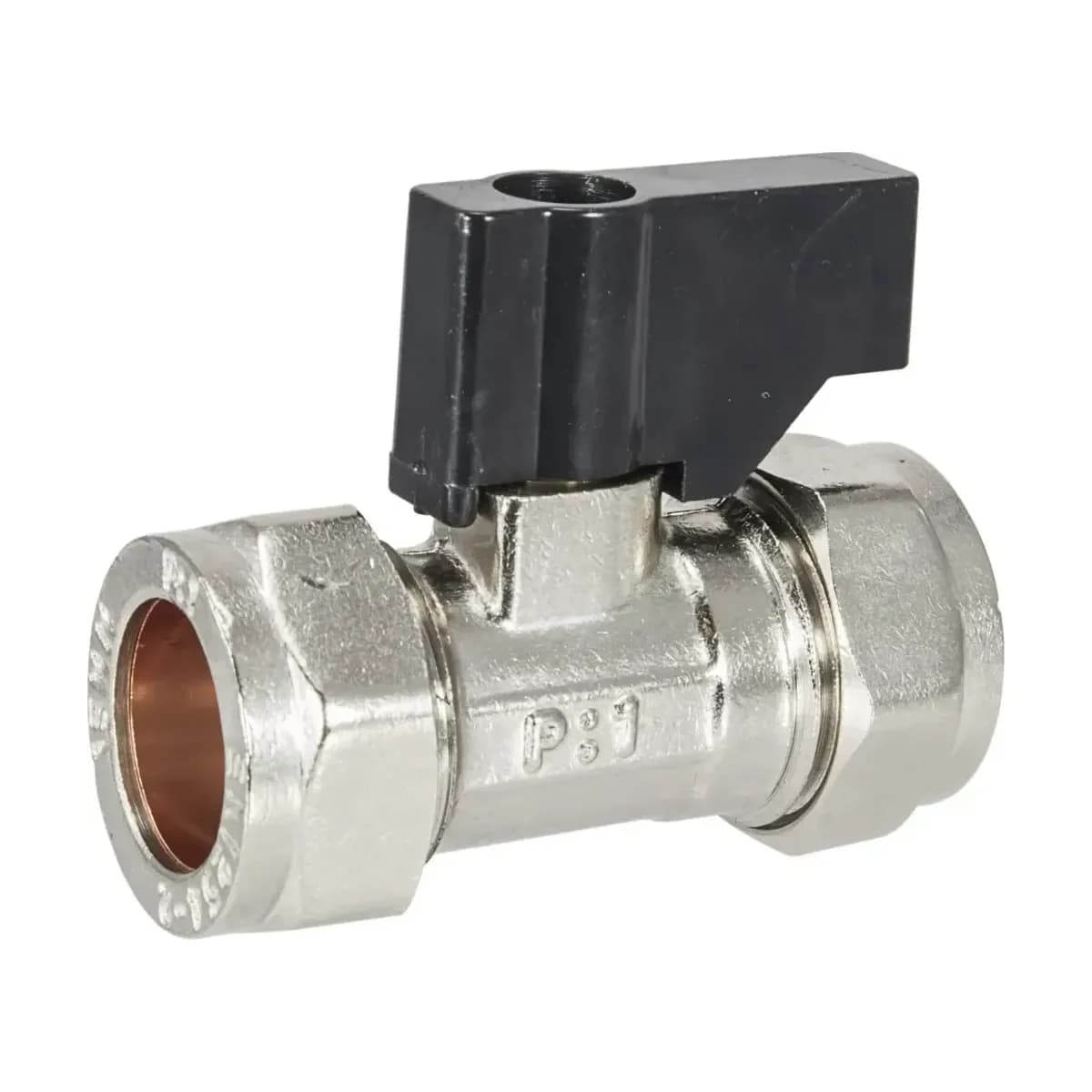 In stock15mm Isolation Valve with Handle
Code: LP-1EKFF6T
inc VAT£2.27 ex VAT
✓ Delivery available✓ Collect today
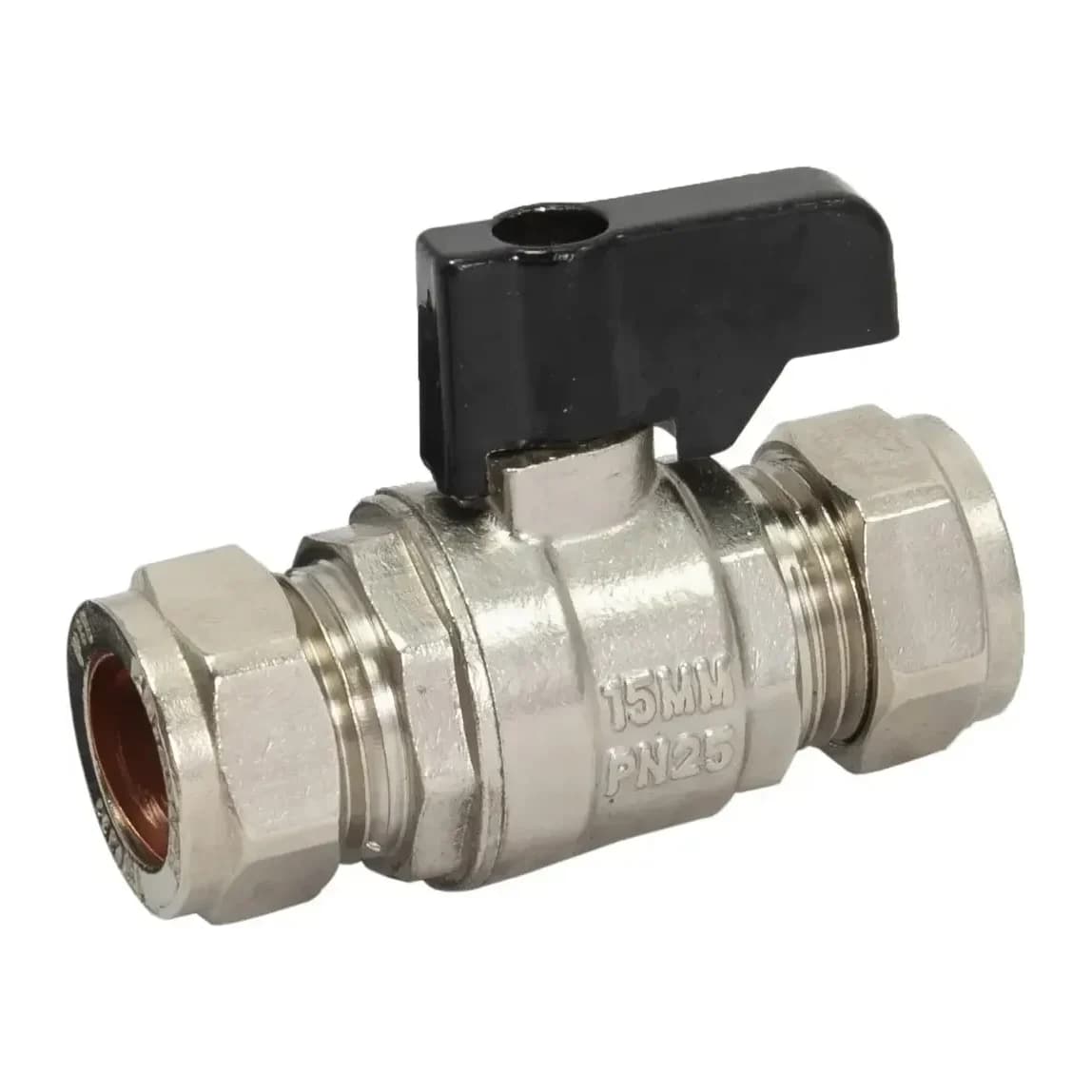 In stockIsolating Valve Full Bore
3 sizes available
Frominc VAT£2.44 ex VAT
✓ Delivery available✓ Collect today
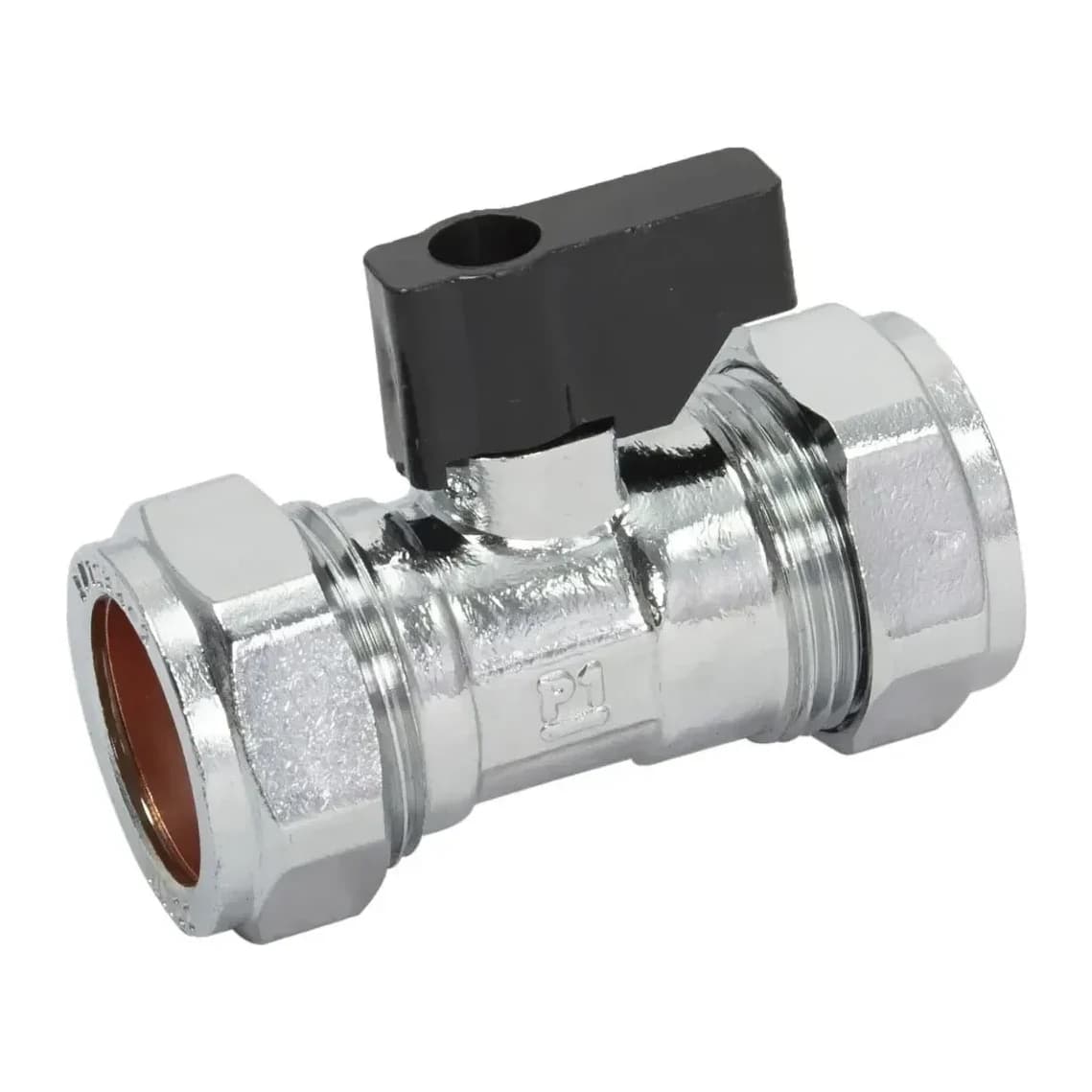 In stock22mm Isolation Valves with Handles
Code: LP-G5X7A9
inc VAT£3.32 ex VAT
✓ Delivery available✓ Collect today
What if the stop tap is stuck?
Stop taps that haven't been turned for years often seize with limescale. Go gently: a snapped spindle or a cracked joint is far worse than a stiff tap.
- Wrap a cloth round the handle and use grips for a better hold — not a long bar, which can shear the spindle.
- Try opening it a fraction first (anticlockwise), then closing. Small movements back and forth often free it.
- If water seeps from round the spindle as it moves, tighten the gland nut just below the handle by about a quarter turn.
- If it still won't move, or it turns but the water keeps flowing, the washer or jumper inside has failed. Turn the water off at the outside stop tap and replace the stop tap, or call a plumber.
Replacing or upgrading a stop tap
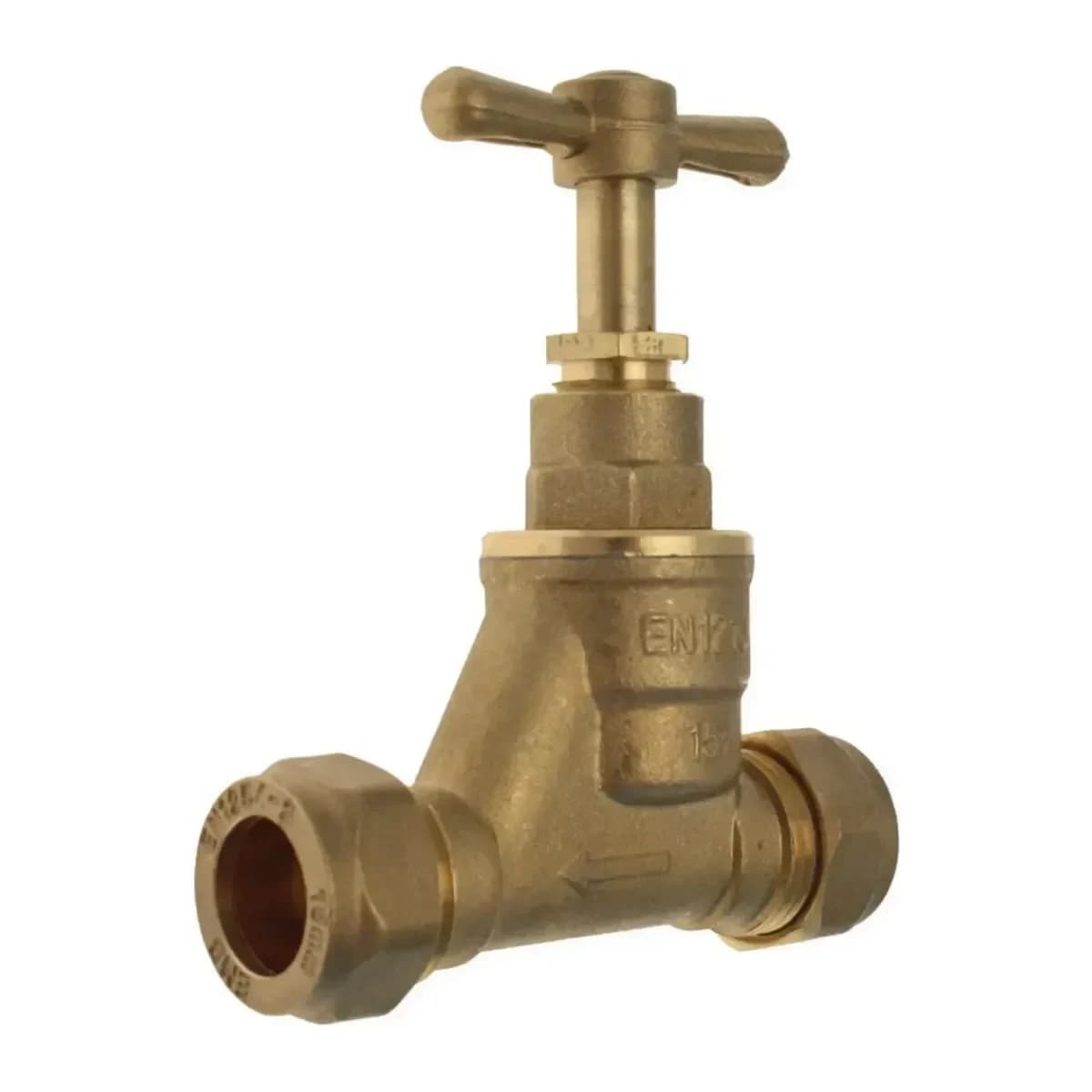
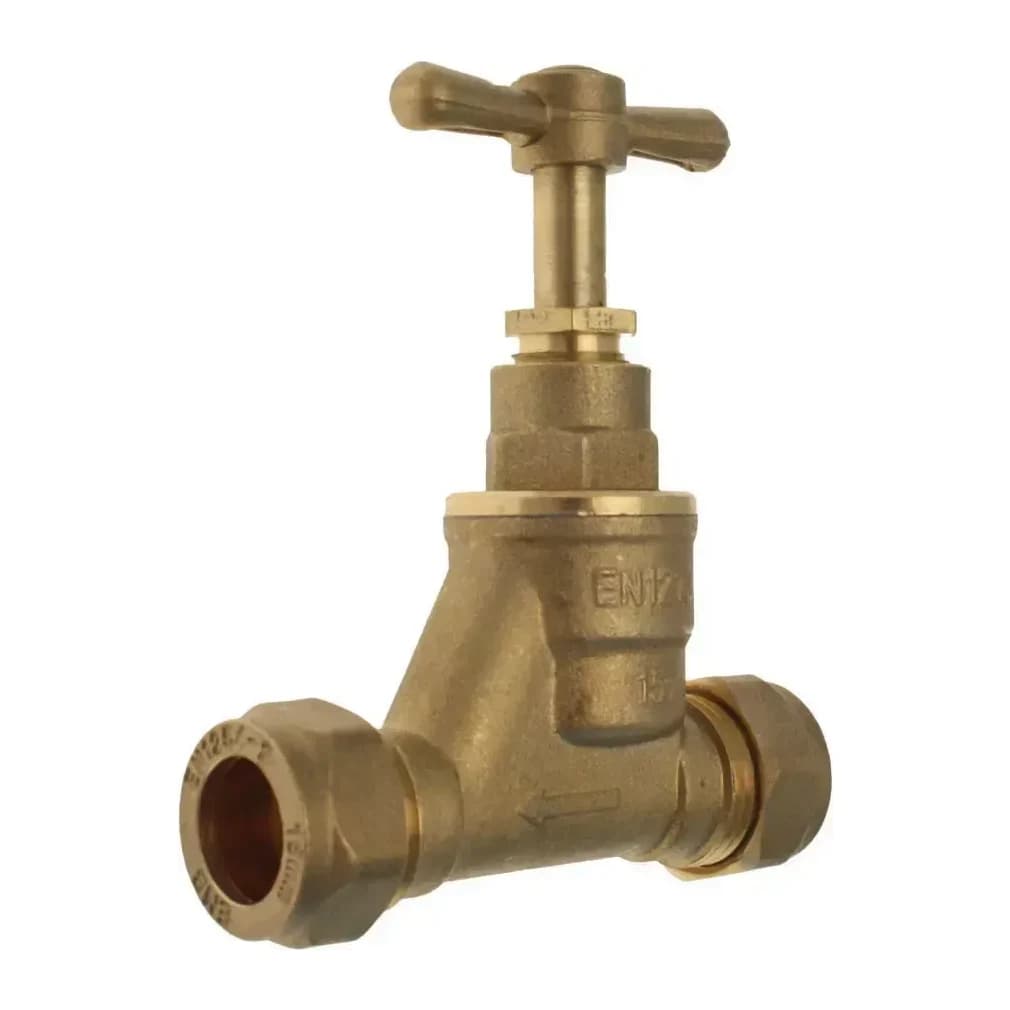
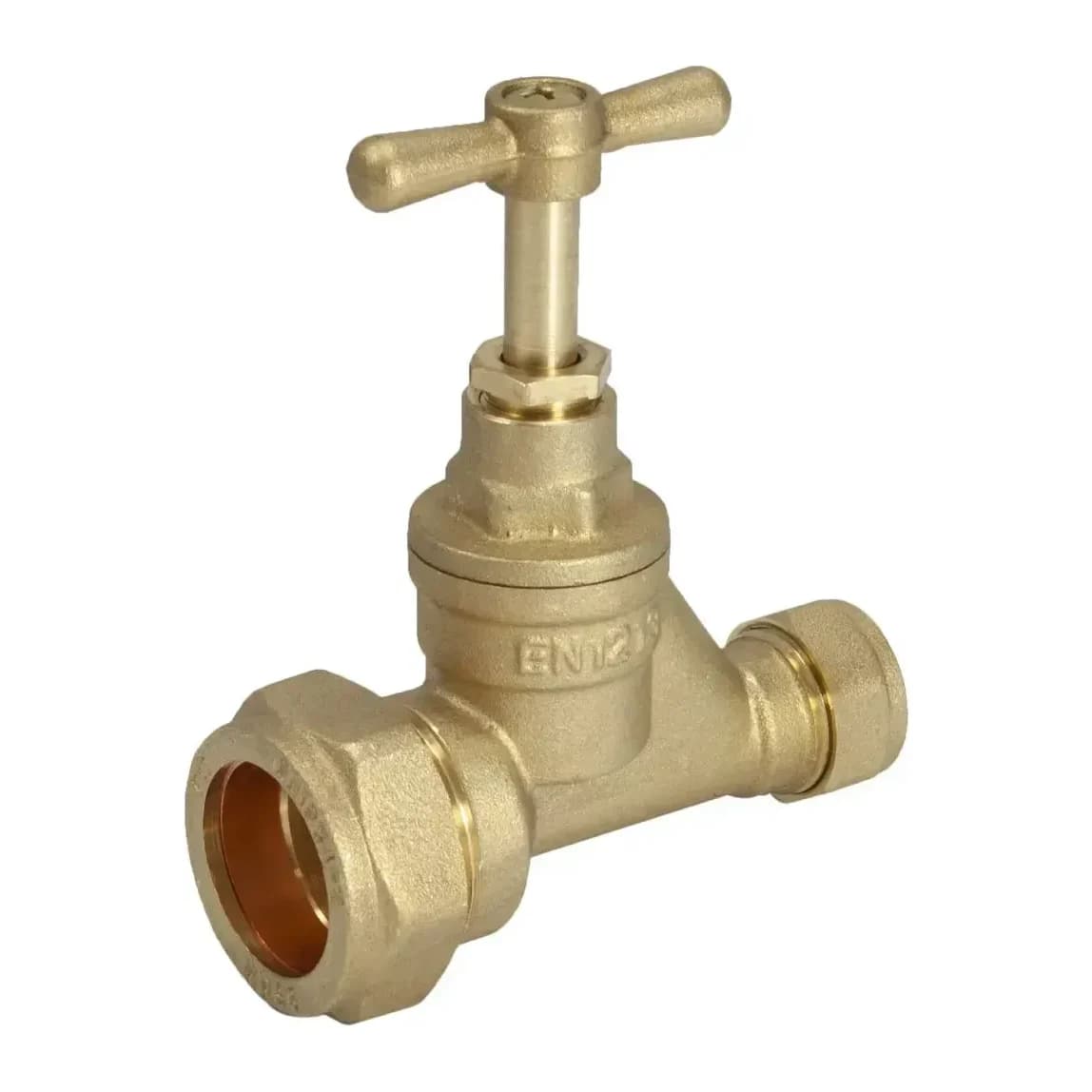
- Direction: a traditional stop tap has an arrow on the body. Fit it pointing the way the water flows — into the house — or it won't shut off properly.
- Size and pipe: match the pipe — 15mm or 22mm copper, or MDPE where the blue plastic supply comes up through the floor. Some stop taps are MDPE one end and copper the other.
- Position: the guidance to the Water Supply (Water Fittings) Regulations 1999 expects the internal stop valve inside the building, as close as practicable to where the supply enters and above floor level, with a drain-off cock just above it so the pipework can be emptied.
- Easier to reach: a Surestop remote stopcock, at £23.68, lets you turn the water off with a switch placed somewhere easy to get at — handy when the stop tap is buried at the back of a cupboard.
Replacing a stop tap means turning the water off at the outside stop tap. If that won't shut off fully, it's a job for a plumber or the water company.
 In stock
 In stock
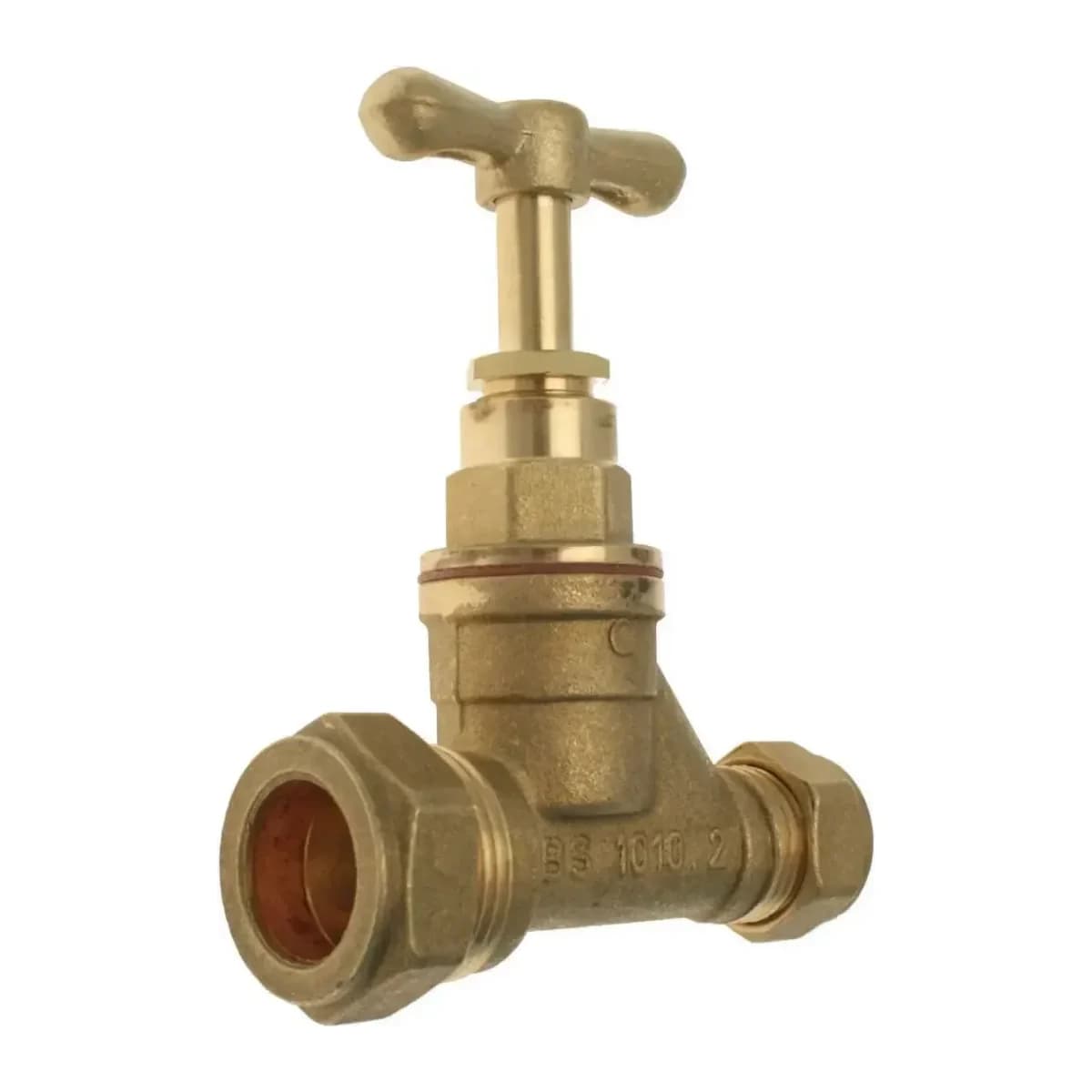 In stockStopcock MDPE - C x Poly - Brass - WRAS
3 sizes available
Frominc VAT£5.73 ex VAT
✓ Delivery available✓ Collect today
 In stock
How to drain down after turning off the water
Turning off the stop tap stops new water coming in, but the pipes stay full. To empty them before you cut into a pipe:
- Turn off the stop tap, and switch off the boiler and immersion heater.
- Open the kitchen cold tap and every other mains-fed tap, and flush the toilets.
- Push a hose on to the drain-off cock above the stop tap, run it to a drain or bucket, and open it. This empties the pipe below the level of the taps.
- On a tank-fed system, close the tank's outlet valves too, or let the tank empty through the bath taps.
- Leave a tap open while you work, so air can get in and the pipes keep draining.
To turn back on, close the drain cock, open the stop tap slowly and leave a tap running until the air and any cloudy water clear. Then check every joint you've touched. A drain-down hose makes the job cleaner, and our frozen pipes guide covers what to do in a burst.
Questions
- Which way do I turn a stop tap to turn it off?
- Clockwise, until it stops. Lever-type valves turn a quarter turn, so the lever lies across the pipe.
- Where is the stop tap in a flat?
- Usually in the kitchen, bathroom or airing cupboard, but sometimes in a communal riser or corridor cupboard, and some older conversions share one. Ask your landlord or managing agent.
- Can I turn off the outside stop tap myself?
- In an emergency you can usually turn it with a stop tap key, but it belongs to your water company. If it's stuck, damaged or shared with neighbours, call them rather than forcing it.
- Why is water still running with the stop tap off?
- The washer or jumper inside has worn, so it no longer seals — or, on a gravity system, the water is coming from the loft tank. Use the outside stop tap and replace the internal one if it's the stop tap.
- Does turning off the stop tap turn off the hot water?
- On a combi, yes. With a tank in the loft, the hot water and some cold taps keep running from the tank until it empties.
- Does turning off the water drain the central heating?
- No. The radiators are on a separate circuit and keep their water.
Related guides
- Bathrooms & showersLow Water Pressure: Which Taps and Showers Will Work?