The short answer
First find out what you have. In a gravity-fed system, water comes from a tank in the loft, and pressure depends on height: about 0.1 bar for every metre between the tank and the outlet, so a shower just below the loft may get only 0.1–0.2 bar. Combi boilers and unvented cylinders run at mains pressure. Then choose taps and showers whose minimum working pressure is below what you have, or add a shower pump (gravity systems only) or an electric shower.
Gravity fed or mains pressure: which do you have?
Pressure problems start with the system, so look in the loft and the airing cupboard:
| What you find | System | Pressure at the taps |
|---|---|---|
| A cold water tank in the loft and a hot water cylinder in a cupboard | Gravity fed (vented) | Hot at low, tank-fed pressure; the cold may be tank-fed or on the mains |
| A combi boiler, with no cylinder and no tank | Combi | Hot and cold at mains pressure |
| A cylinder but no loft tank, with an expansion vessel and pressure relief valve, usually labelled unvented | Unvented cylinder | Hot and cold at mains pressure |
Many older homes have gravity hot water but mains-fed cold, so the two sides of a mixer arrive at very different pressures — check what a tap or shower valve needs on each side before you buy. Our boiler guide explains the systems in more detail.
How much pressure does a gravity system give?
On a gravity system the pressure comes from height alone. The rule of thumb is that every 10m of height — called head — gives about 1 bar, or 0.1 bar per metre, measured from the water level in the cold tank down to the tap spout or shower head.
| Outlet | Height below the tank's water level | Pressure |
|---|---|---|
| Shower head in a first-floor bathroom | About 1–1.5m | About 0.1–0.15 bar |
| Basin taps in the same bathroom | About 2m | About 0.2 bar |
| Kitchen hot tap on the ground floor | About 4–5m | About 0.4–0.5 bar |
| Shower in a bungalow, tank just above | Under 1m | Under 0.1 bar |
That's why an upstairs shower on a gravity system is so often weak. Raising the cold tank on a sturdy, properly supported platform helps a little: every extra metre adds another 0.1 bar.
How to check your water pressure and flow
Pressure, in bar, is the push; flow, in litres a minute, is what you actually feel. You can measure flow with a bucket and a stopwatch:
- Take a bucket or jug with a known volume — a 10-litre bucket is ideal.
- Open the tap or shower fully and start timing as the water goes in.
- Stop when it's full and work out litres ÷ seconds × 60. 10 litres in 50 seconds is 12 litres a minute; 10 litres in 2 minutes is 5.
- Test the kitchen cold tap too. It's normally fed straight from the mains, so it shows what the mains can deliver.
For a pressure reading, a tap-on gauge on the kitchen or outside cold tap shows the mains pressure. Before blaming the supply, make sure the stop tap and any isolating valves are fully open, and descale a blocked aerator or shower head — both are common causes of a weak flow from a good supply.
What is the minimum water pressure for a mixer tap?
It depends on the tap, so check its minimum working pressure in the product details or instructions. Many modern single-lever mixers are designed for combi and unvented systems: the Grohe Essence basin mixer we sell, for example, works from 1.0 bar. That's fine on a combi, but it's 10m of head — far more than a gravity-fed bathroom gets.
On a gravity system, choose taps rated for low pressure, with a minimum working pressure at or below what you have at that outlet. Traditional pillar taps, with a wide waterway and no mixing cartridge, are usually the most forgiving. Not sure what a tap needs? Ask at the counter with your system type and we'll check the maker's figures.
Which shower works on low water pressure?
| Option | Works on | Good to know |
|---|---|---|
| Mixer or thermostatic valve, no pump | Mains pressure, or gravity if rated for it | Check the valve's minimum working pressure; at 0.1–0.2 bar most give a weak shower |
| Mixer valve with a shower pump | Gravity (tank-fed) systems only | Boosts tank-fed hot and cold for a strong shower |
| Electric shower | A cold mains supply | Heats its own water, so the hot water system doesn't matter |
| Large drencher head, 300–400mm | Mains pressure or pumped | Needs plenty of flow; on gravity alone the spray is weak |
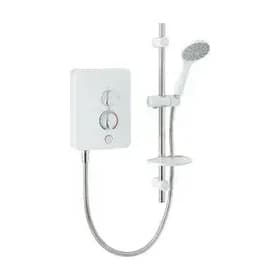
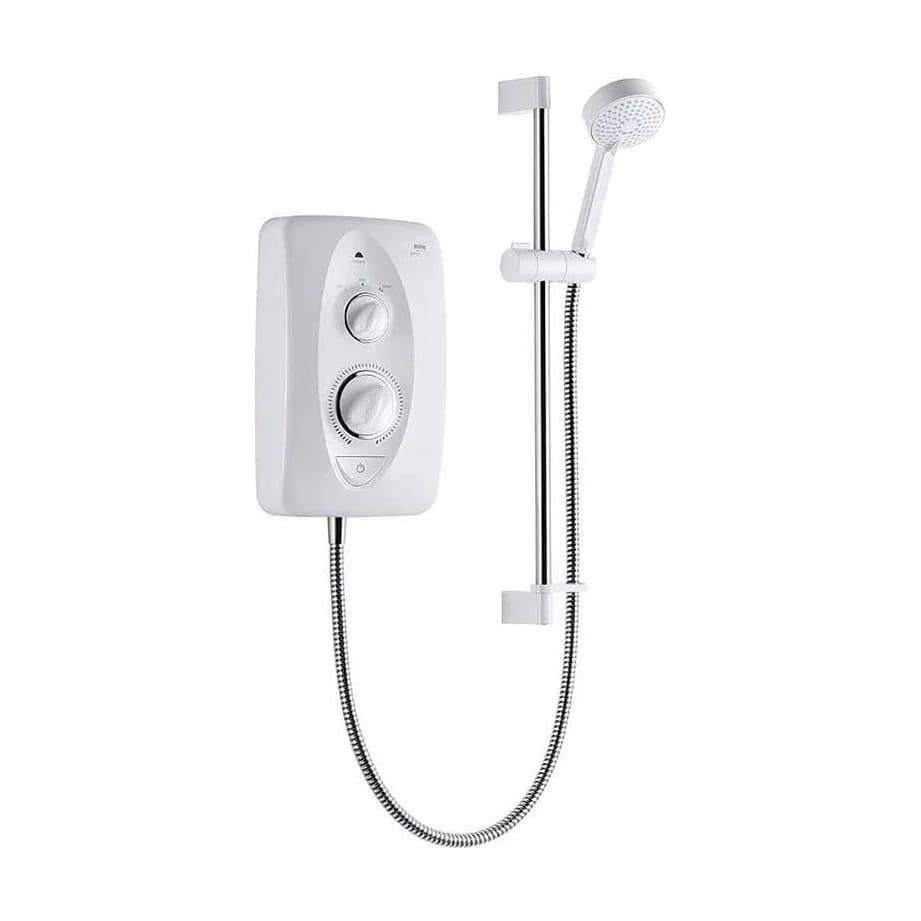
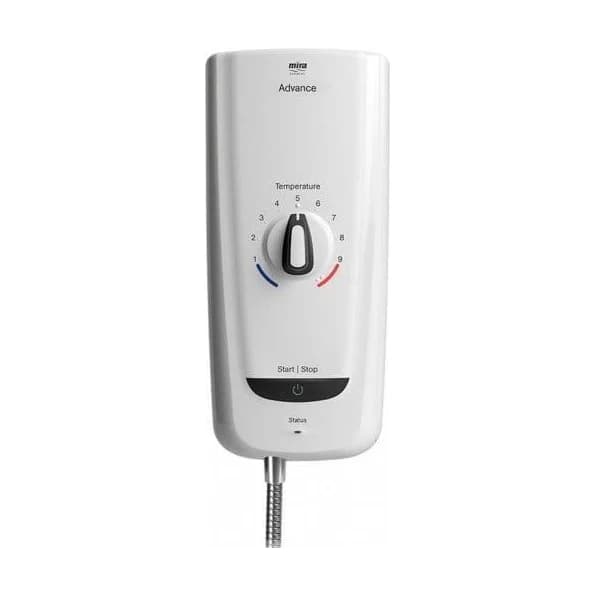
An electric shower's flow is limited by its power rather than the pressure: a 9.5kW shower heats roughly 4.5 litres a minute through a 30°C rise, less in winter when the incoming water is colder. It's the simplest fix where the hot water is tank-fed, as long as the mains meets the shower's minimum pressure. A new electric shower needs its own circuit from the consumer unit, which is notifiable under Part P in England, so it's a job for a registered electrician.
When is a shower pump the answer?
When both the hot and the cold come from tanks — a cold tank in the loft feeding a vented cylinder — a shower pump turns a weak shower into a strong one. A twin-impeller pump boosts hot and cold separately before they reach the mixer valve; a single-impeller pump boosts one supply, or the mixed water after the valve.
Pump makers usually ask for a dedicated hot feed from the cylinder, often through a special flange, so the pump doesn't draw air. If the shower head is level with or above the water in the cold tank, there isn't enough gravity flow to start a standard pump, and you need a negative-head pump.
 In stock
London Plumbing
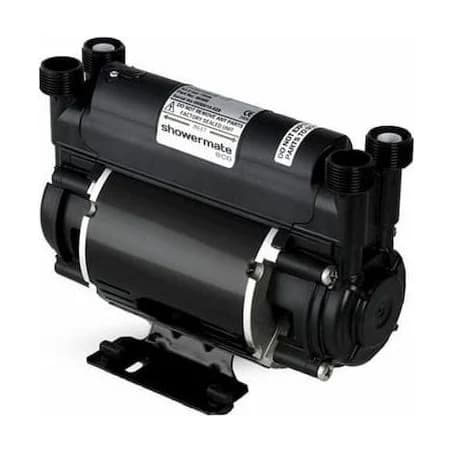
Stuart Turner Showermate Eco Standard Twin Shower Pump - 2.0 BarCode: LP-YUJHZJ
inc VAT£186.63 ex VAT
✓ Delivery available✓ Collect today
 In stock
London Plumbing
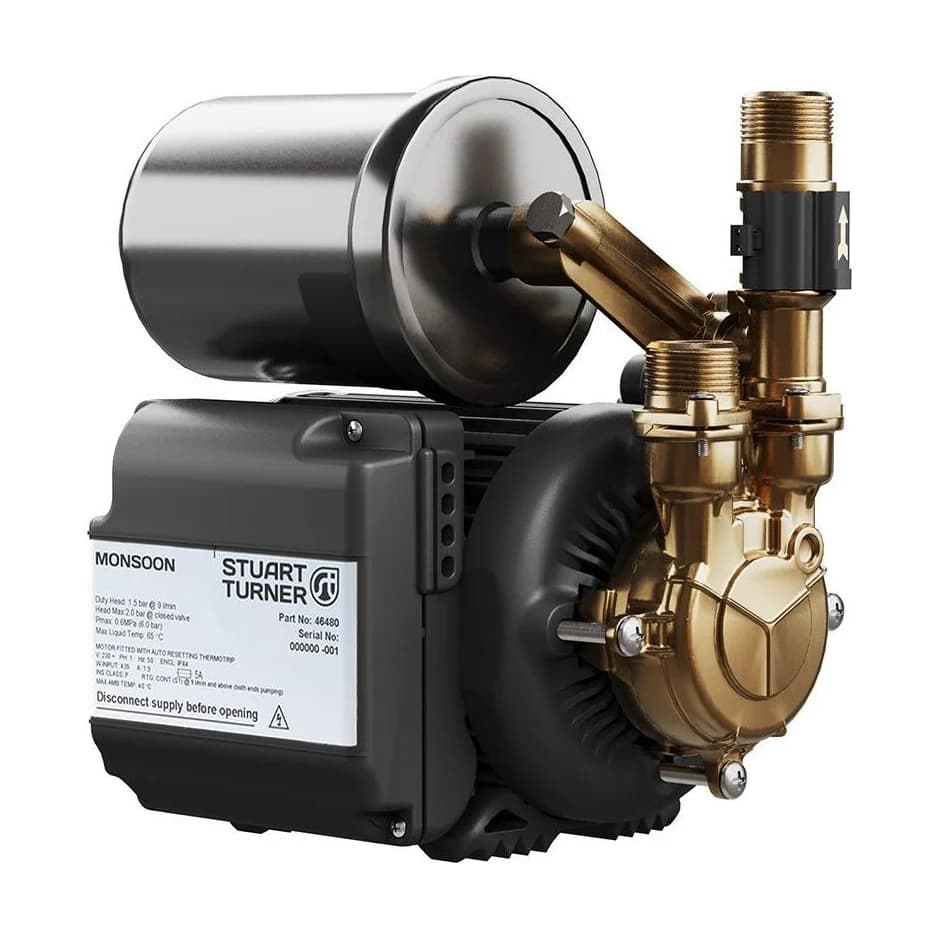
Monsoon Universal 2.0 Bar Single PumpCode: LP-TQHK92
inc VAT£311.57 ex VAT
✓ Delivery available✓ Collect today
 In stock
London Plumbing
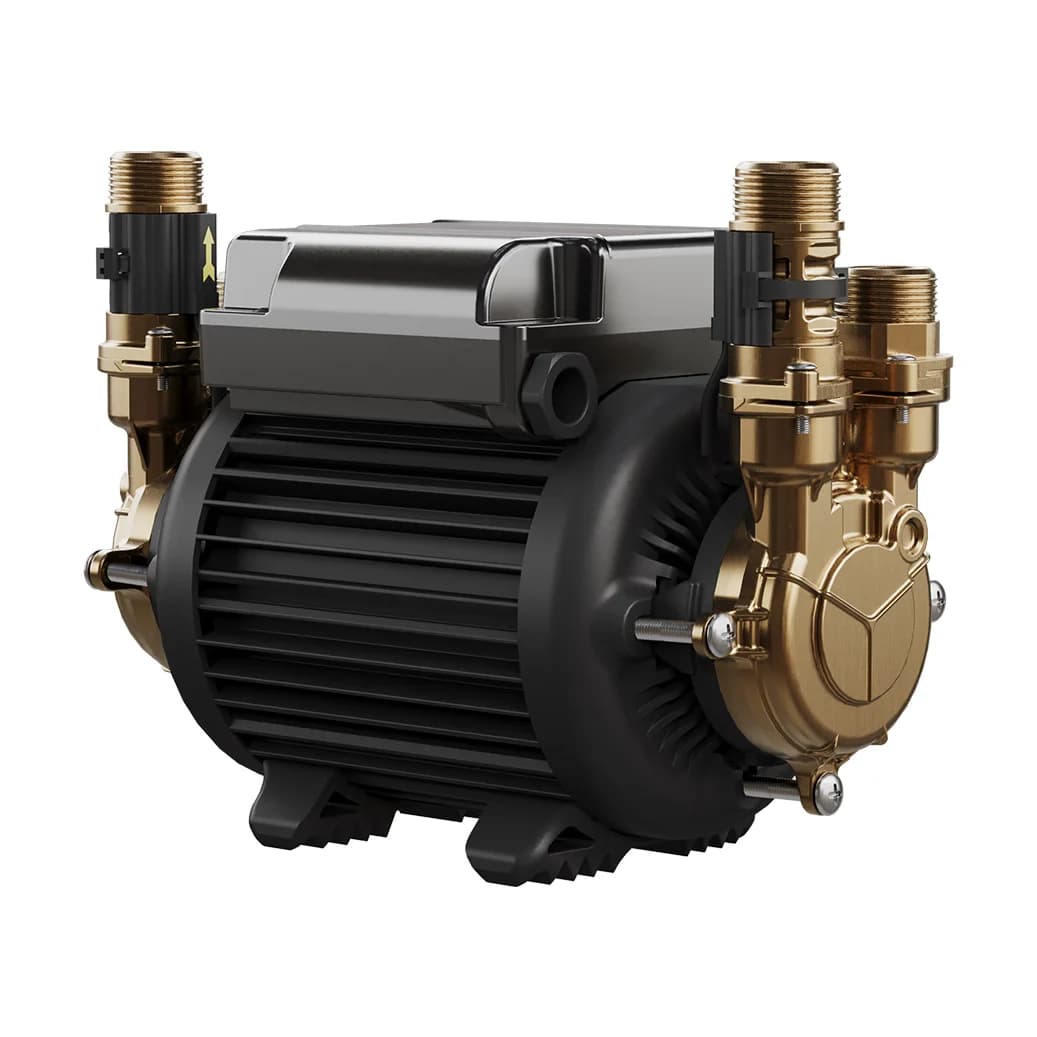
Monsoon Standard 1.5 Bar Twin PumpCode: LP-115BPYG
inc VAT£370.52 ex VAT
✓ Delivery available✓ Collect today
Electric showers, valves and heads
 In stock
London Plumbing
Compact Electric Shower - 9.5kWCode: LP-G28SLI
inc VAT£71.13 ex VAT
✓ Delivery available✓ Collect today
 In stock
Mira
Mira Jump Multi-Fit 8.5kW Electric Shower - White/Chrome - 1.1788.010Code: LP-2ADCOK
inc VAT£160.86 ex VAT
✓ Delivery available✓ Collect today
 In stock
Mira
Mira Advance Thermostatic 8.7kW Electric Shower - White/Chrome 1.1785.001Code: LP-1JMLGD1
inc VAT£282.33 ex VAT
✓ Delivery available✓ Collect today
Browse shower valves and kits, mixer taps and shower heads, or bring your old cartridge or valve to the counter and we'll match it.
Questions
- What is the minimum water pressure for a shower?
- It depends on the valve, so check its minimum working pressure. With only 0.1–0.2 bar at the shower on a gravity system, you'll need a valve rated for low pressure, a shower pump or an electric shower.
- Can I put a shower pump on a combi boiler?
- No. A combi runs at mains pressure, and the water regulations don't allow a pump drawing straight from the mains without the water company's consent. Shower pumps are for tank-fed systems.
- Why is my hot water pressure lower than my cold?
- Usually because the hot comes from a cylinder fed by the loft tank, while the cold comes straight from the mains. That's normal on a gravity system.
- Will a new shower head fix low pressure?
- It can help if the old one is scaled up, and a smaller head makes a weak flow feel stronger. A large drencher head makes it worse on gravity, as it needs plenty of flow.
- How do I check my water pressure at home?
- Time how long a tap takes to fill a 10-litre bucket: litres ÷ seconds × 60 gives litres a minute. For bar, fit a tap-on pressure gauge to the kitchen or outside cold tap.
Related guides
- Heating & boilersCombi vs System vs Regular Boiler: Which Do You Need?
- Bathrooms & showersVanity Unit Buying Guide: Sizes, Wall Hung vs Floor Standing, and Materials
- Bathrooms & showersShower Enclosure Buying Guide: Types, Sizes and Which to Choose