
The short answer
First work out which kind of tap you have. If the handle turns several times and you have to screw it ever tighter to stop the drip, it's a washer tap: replace the rubber washer on the jumper. If it stops dead after a quarter or half turn, it's a ceramic disc tap: replace the cartridge, matched by size and spline count. Single-lever mixers have one larger cartridge. Turn the water off at the isolating valve first.
Washer tap or ceramic disc tap?
Almost every dripping tap is one of two designs, and the repair is different for each. The quickest test is how the handle turns.
| Washer tap (compression) | Ceramic disc tap (quarter-turn) | |
|---|---|---|
| How the handle turns | Several full turns, getting stiffer as it closes | A quarter or half turn, then a firm stop |
| Why it drips | The rubber washer is worn, hard or split, or the brass seat under it is worn | Grit or scale has scored the ceramic discs, or the seal at the base of the cartridge has worn |
| Tell-tale sign | You have to screw it tighter and tighter to stop the drip | Tightening makes no difference |
| Where you'll find it | Older pillar taps, bath taps and outside taps | Most modern taps and mixers |
| The fix | A new washer, or new headwork if the seat is damaged | A new cartridge, matched to the old one |
Mixer taps follow the same rule. A two-handled mixer has a washer headwork or a ceramic cartridge under each handle; a single-lever mixer has one larger cartridge that controls both the flow and the temperature.
Where exactly is it leaking?
A drip from the spout is the classic fault, but water in other places points to other parts:
| What you see | Likely cause | Fix |
|---|---|---|
| Drip from the spout with the tap off | Worn washer or seat; worn ceramic cartridge | New washer, headwork or cartridge — see below |
| Water round the spindle or under the handle when the tap's on | Worn gland packing or spindle O-ring | Nip up the gland nut slightly, or renew the O-ring |
| Water round the base of a swivel spout | Worn spout O-rings | Renew the O-rings |
| Water under the sink or basin | Tap connector, back nut or valve, not the tap | Find the drip with dry tissue, then reseal or replace the connector |
Leaks under the basin are usually a flexible tap connector or a perished fibre washer on its nut. A dripping hot tap wastes heated water as well as water, so it's worth fixing promptly, and a constant drip leaves limescale stains on the basin.
Turn the water off first
- Look for an isolating valve on the pipe under the basin or sink. Turn the slot or lever a quarter turn so it's across the pipe.
- No isolating valve? Turn off the stop tap — our guide to turning off your water shows where to find it. On a combi or unvented cylinder that turns off the hot as well. For tank-fed hot water, close the gate valve on the cold feed to the hot cylinder, usually in the airing cupboard.
- Open the tap fully to let the pressure go and check the water's really off.
- Put the plug in, or a cloth over the plughole, so small screws and washers can't disappear down the waste.
How to change a tap washer
- Take the handle off. A cap on top, often marked hot or cold, prises or unscrews off to reveal a screw. On older shrouded taps the whole cover unscrews instead.
- Unscrew the headwork — the brass body under the handle — with a spanner on its hexagon. Hold the tap body steady with a second spanner or grips over a cloth, so you don't twist the tap on the basin or crack it.
- Change the washer. It sits on the jumper, the small disc with a stem at the bottom of the headwork, held by a small nut or pressed over a button. Fit the new one the same way.
- Check the seat inside the tap body with a torch. If it's pitted or has a groove worn into it, a new washer won't seal for long — fit new headwork or a reviver kit instead (below).
- Check the spindle seal while it's apart, and renew the O-ring or gland packing if water came out round the handle.
- Reassemble, open the isolating valve slowly and check for drips.
Basin and sink taps take 1/2" washers and bath taps 3/4". Bring the old one if you're not sure — washers and O-rings are on our tap spares and washers and seals shelves.
When the seat is worn: new headwork or a reviver kit
If the brass seat is damaged, or the tap is old and stiff, replace the whole headwork rather than chasing drips with washers. A new headwork screws into the tap body in place of the old one, so check the thread size and length match — 1/2" for basins and sinks, 3/4" for baths — and bring the old one to compare if you can.
Tap reviver and conversion kits give a tired tap new headwork and handles together, in crosshead, lever and Victorian styles. Check each kit's listing for whether it fits 1/2" taps, 3/4" taps or both.
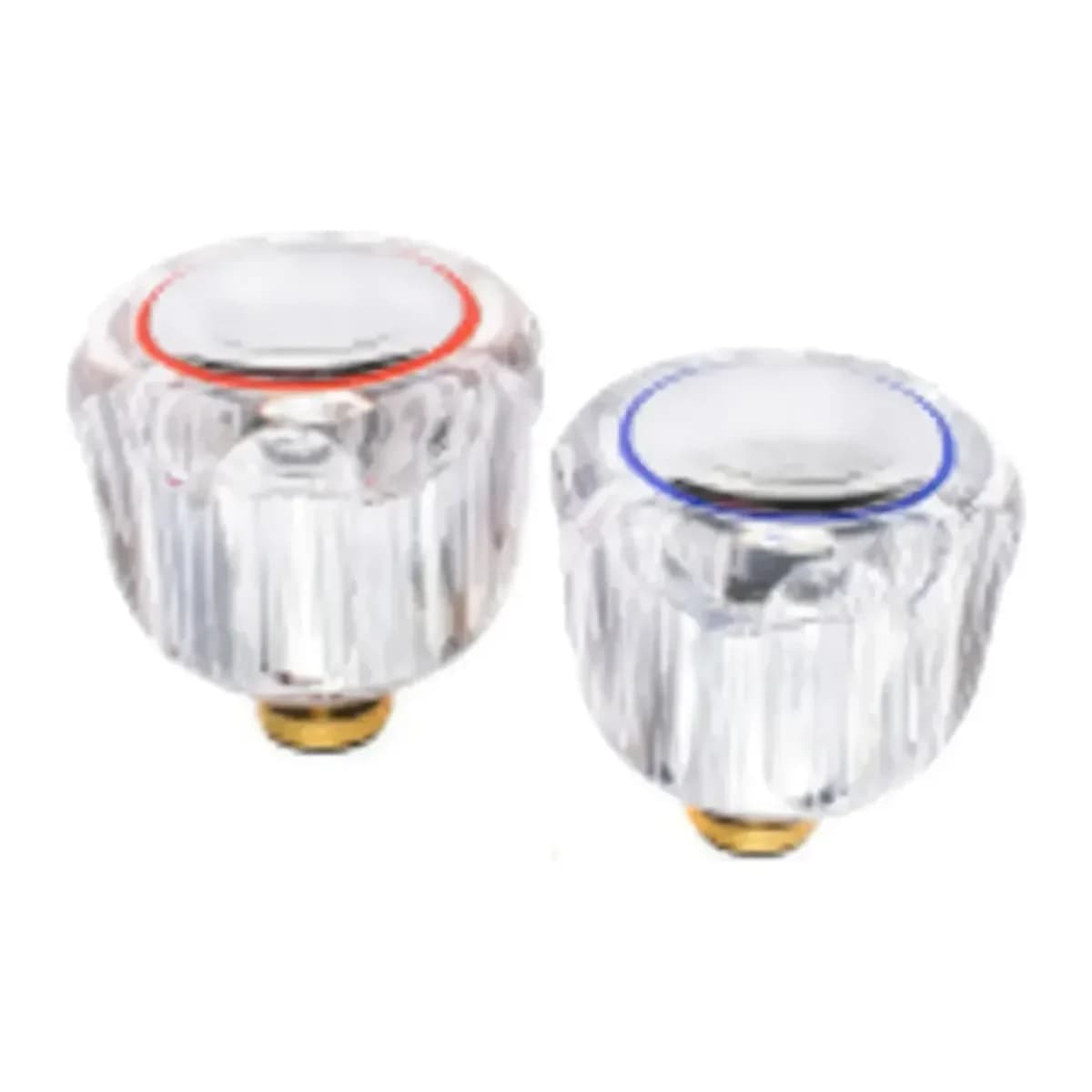 In stock1/2" / 3/4" Tap Reviver Kit Acrylic (BS1010 & BS5412)
Code: LP-4EXHI5
inc VAT£12.03 ex VAT
✓ Delivery available✓ Collect today
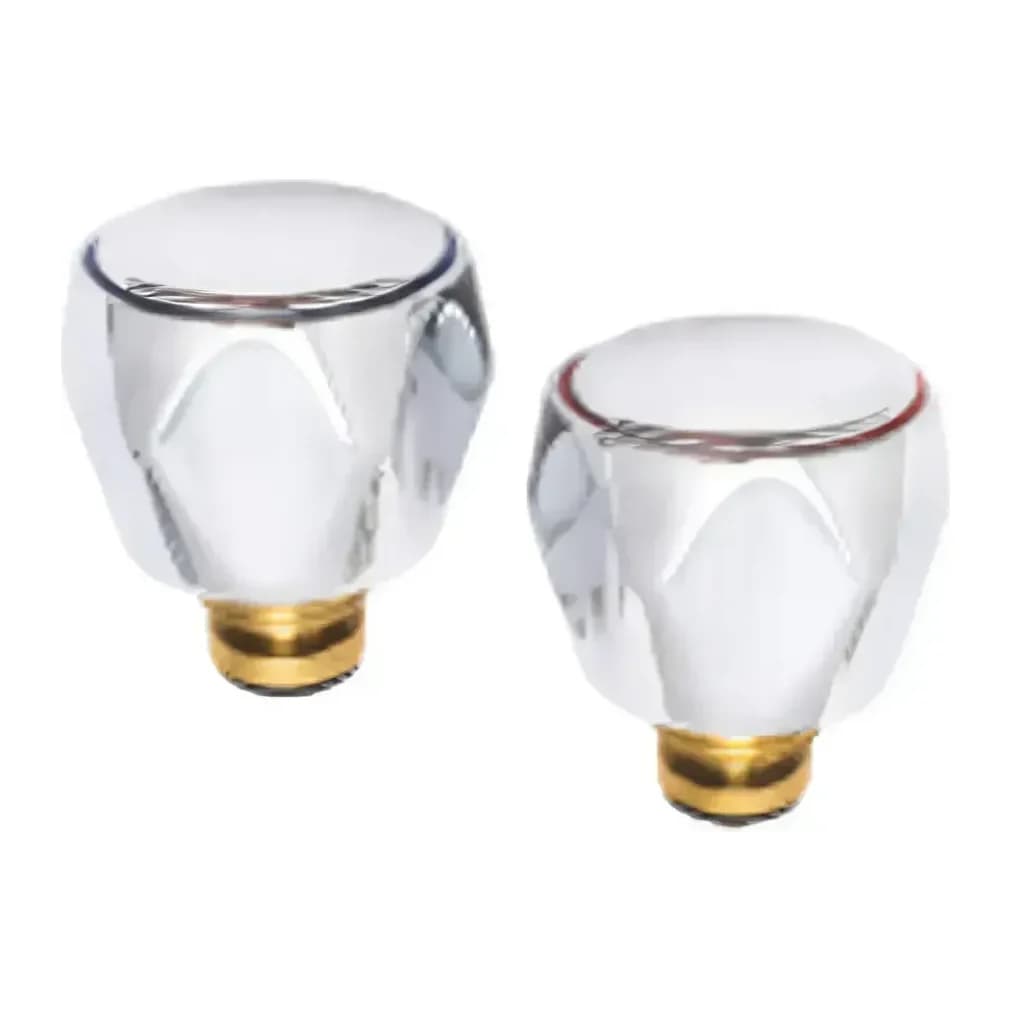 In stock1/2" / 3/4" Tap Reviver Kit Metal (BS1010 & BS5412)
Code: LP-1NN4P66
inc VAT£12.12 ex VAT
✓ Delivery available✓ Collect today
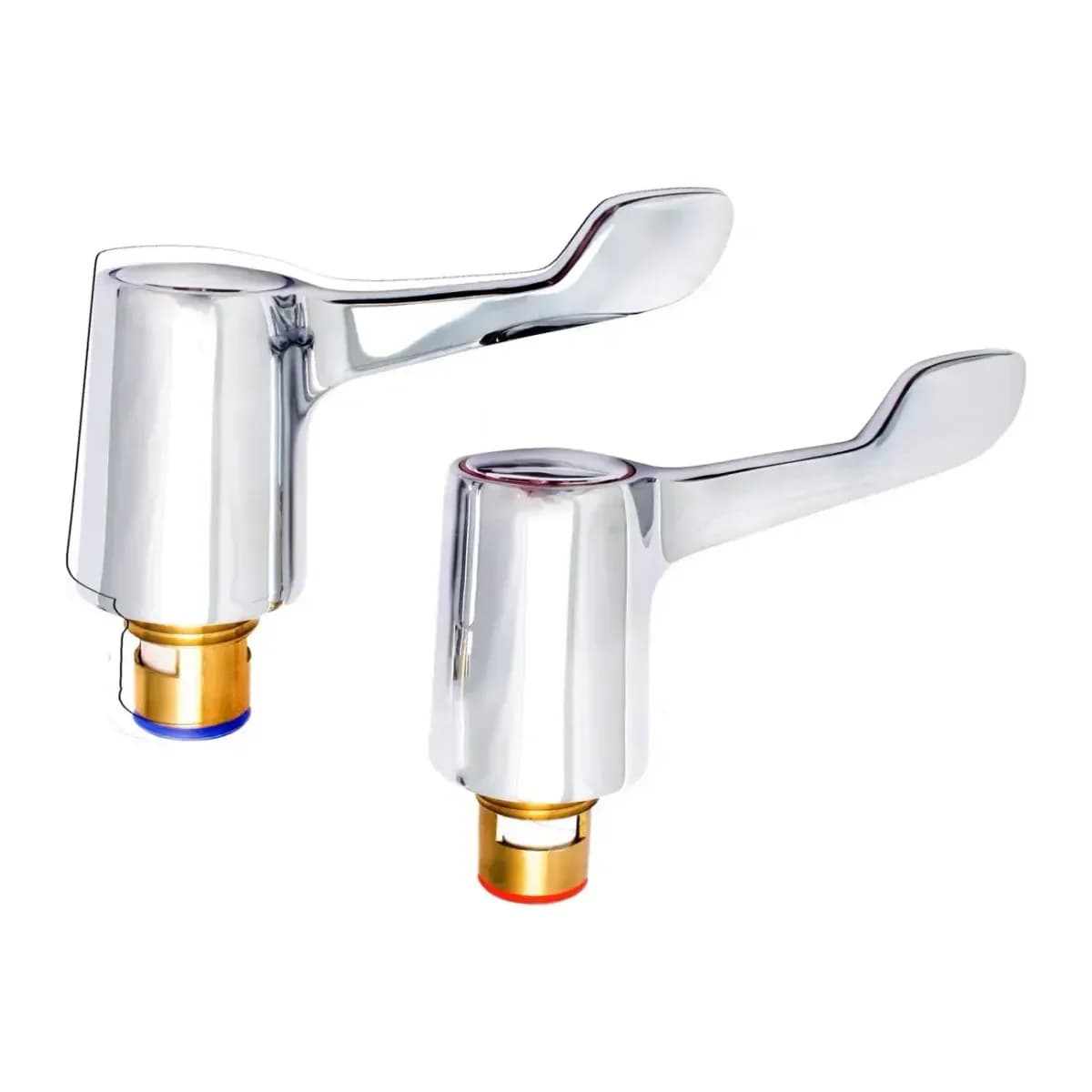 In stock1/2" Tap Reviver Kit Lever CP
Code: LP-1NMCANR
inc VAT£12.93 ex VAT
✓ Delivery available✓ Collect today
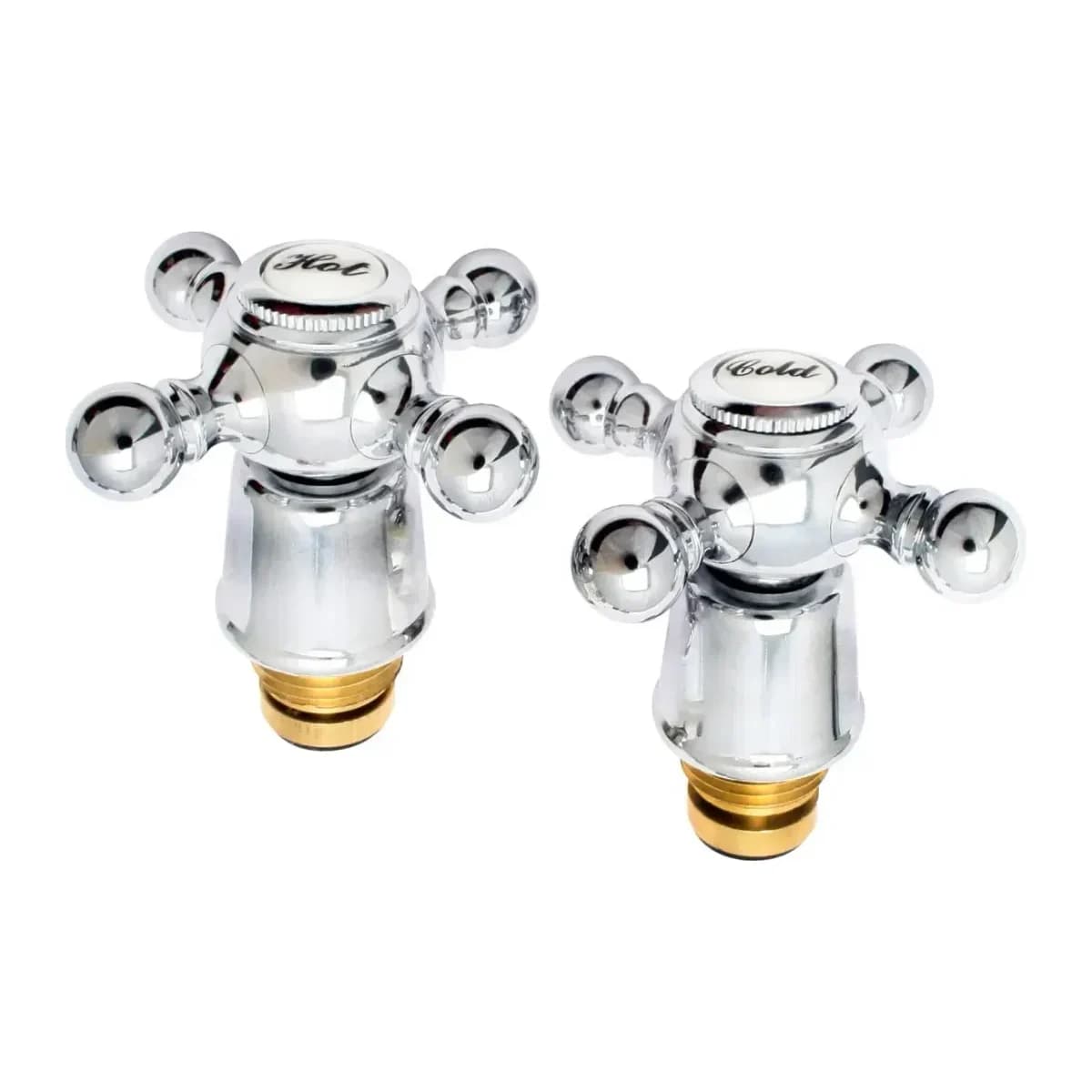 In stock1/2" Tap Reviver Kit Victorian CP
Code: LP-18ANN1O
inc VAT£16.16 ex VAT
✓ Delivery available✓ Collect today
How to replace a ceramic disc cartridge
A ceramic disc tap has no washer to change. Two polished discs inside the cartridge slide over each other to open and close, and once grit or scale scratches them, water gets past. The fix is a new cartridge.
- Turn off the water and open the tap.
- Take the handle off: a cap and screw on top, or a small grub screw under a lever.
- Unscrew the cartridge by its hexagon, holding the tap body steady.
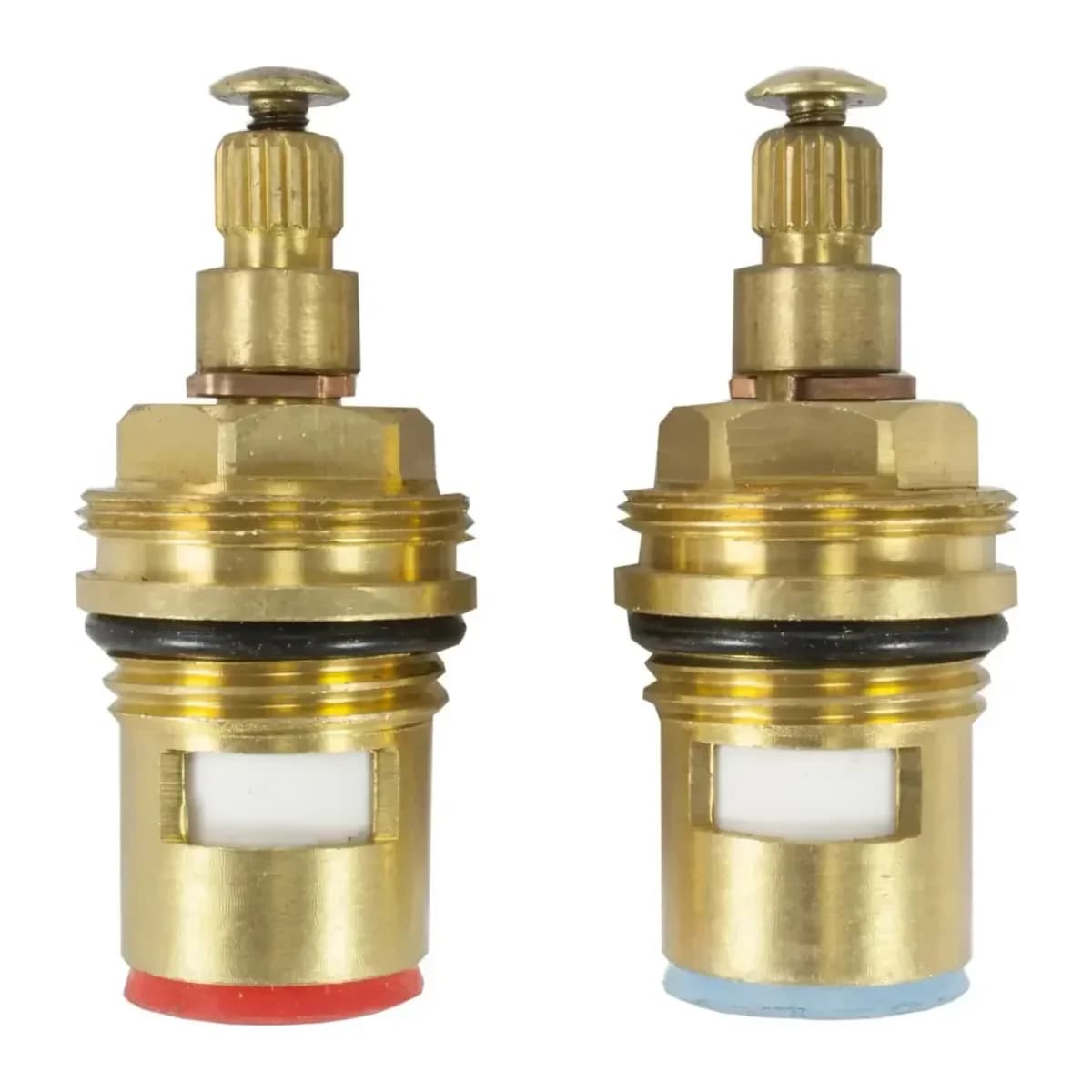
- Match the replacement: the thread (1/2" or 3/4"), the overall length, the number of splines on the spindle, and which way it turns to close. Hot and cold cartridges usually turn in opposite directions, which is why they're sold in pairs.
- Screw the new cartridge in firmly but not hard — it seals on its base washer — refit the handle and open the valve slowly.
Matching is the hard part: our guide to what to bring to the trade counter covers what to measure, and bringing the old cartridge is quickest. We stock 25 tap cartridges from £8.72.
 In stock
- In stockTap Headwork Mechanism BS5412
2 sizes available
inc VAT£7.99 ex VAT
✓ Delivery available✓ Collect today
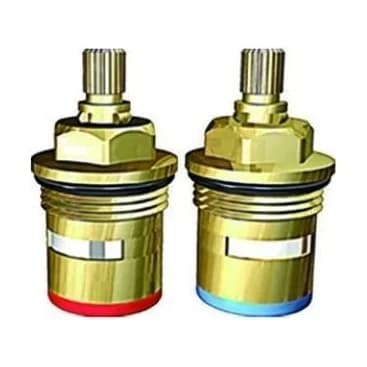 In stockPair Ceramic Disc Cartridges
2 sizes available
Frominc VAT£8.08 ex VAT
✓ Delivery available✓ Collect today
 In stock
Fixing a dripping mixer tap
- Two handles (dual control): each side has its own headwork or cartridge. Turn off one isolating valve at a time — if the drip stops, that's the side to fix, as above.
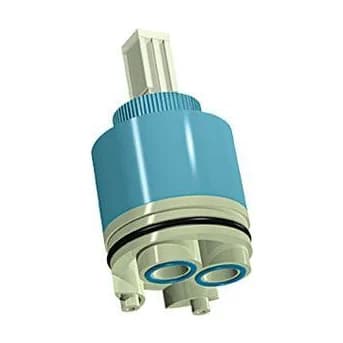
- Single lever: one cartridge controls flow and temperature. Prise off the cap, undo the grub screw, lift off the lever, unscrew the shroud and the retaining nut, and lift the cartridge out. 35mm and 40mm are common diameters, 25mm on small taps, but the stem, height and locating lugs vary from make to make — match the old one or the tap's model number.
- Swivel spout leaking at the base: the O-rings under the spout have worn. Lift the spout off (there's usually a grub screw at the back), fit new O-rings of the same size and smear them with silicone grease before refitting.
- Branded mixers often use their own cartridges. Find the make and model, then call or ask at the counter — if we don't stock the part, we can very often order it in.
If the tap body is cracked, the headwork won't budge, or the tap is simply worn out, a new tap may be the better fix. For taps bought from us, our supply & fit service can quote to fit them in Greater London.
Questions
- Why does my tap still drip after changing the washer?
- Usually the seat in the tap body is pitted or worn, so the new washer can't seal. Fit new headwork or a tap reviver kit. On a quarter-turn tap a washer won't help at all — it needs a new ceramic cartridge.
- How do I know if my tap has a washer or a cartridge?
- Turn the handle. Several turns that get stiffer as it closes means a washer; a quarter or half turn to a firm stop means a ceramic disc cartridge.
- Can I fix a dripping tap without turning off the water?
- No. Turn it off at the isolating valve under the tap, or at the stop tap. Taking the headwork out with the water on will flood the room.
- What size tap washer do I need?
- 1/2" for basin and kitchen sink taps, 3/4" for bath taps. Bring the old washer or headwork to the counter if the tap is unusual.
- Are tap cartridges universal?
- No. Thread size, length, spline count and the direction they turn all vary, and single-lever cartridges differ between makes. Match the old one, or bring it in.
- Why is my mixer tap dripping from the spout?
- The cartridge on a single-lever mixer, or one of the two headworks on a two-handled mixer, is worn. Isolate the hot and cold one at a time to find which side it is.