The short answer
For most home plumbing jobs you need water pump pliers (grips), two adjustable spanners, a 15mm pipe cutter, a deburrer, PTFE tape, a radiator key, a basin wrench and a torch. For copper pipework add a 22mm cutter, a blowtorch, soldering mat, flux and lead-free solder, and a pipe bender. Heating work calls for a pipe freezer and a voltage tester; drains for plungers, an auger and rods. Gloves and eye protection belong in every kit.
The starter kit: tools every home should have
These handle most leaks, tap and valve changes, radiator jobs and emergencies — and they're the first things a plumber reaches for too.
| Tool | What it's for | Example |
|---|---|---|
| Water pump pliers (grips), 10" | Gripping nuts, pipes and fittings of any size; holding a fitting while you turn its nut | Krobahn 10" water pump pliers, £8.98 |
| Two adjustable spanners | Compression nuts and tap connectors: one holds the fitting, the other turns the nut | 200mm adjustable wrench, £8.02 |
| 15mm pipe cutter | Square, clean cuts for repairs and new fittings | 15mm U-Cut pipe cutter, £10.66 |
| Deburring tool | Cleaning up the cut edge so olives and O-rings seal | Pipe deburring tool, £7.18 |
| PTFE tape | Sealing taper threads | PTFE tape, £0.34 |
| Radiator key | Bleeding air out of radiators | Radiator bleed keys, twin pack, £1.50 |
| Head torch | Under sinks, in lofts and cupboards, with both hands free | LED head torch, £15.24 |
Add a bucket, old towels and a flat screwdriver for isolating valves. And before you need any of it, find your stop tap and check it turns — how to fix a leaking pipe covers what to do when something goes.
Taps, wastes and toilets
The hard part of changing a tap is reaching the nuts behind the basin or sink. These make it easier:
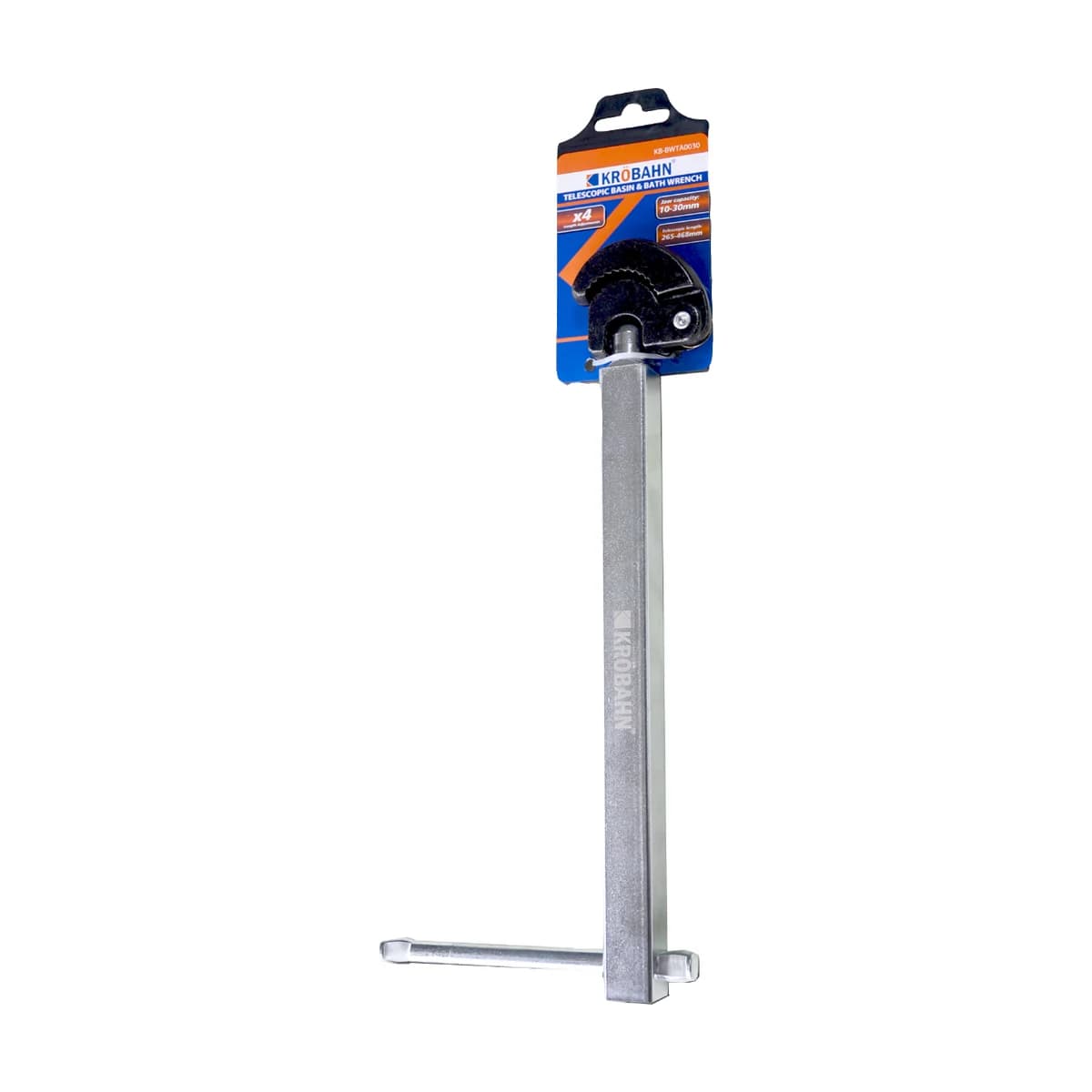
- Basin wrench. A long-handled wrench with a pivoting jaw that reaches up behind a basin to the tap connector nuts. Our telescopic basin wrench is £19.39.
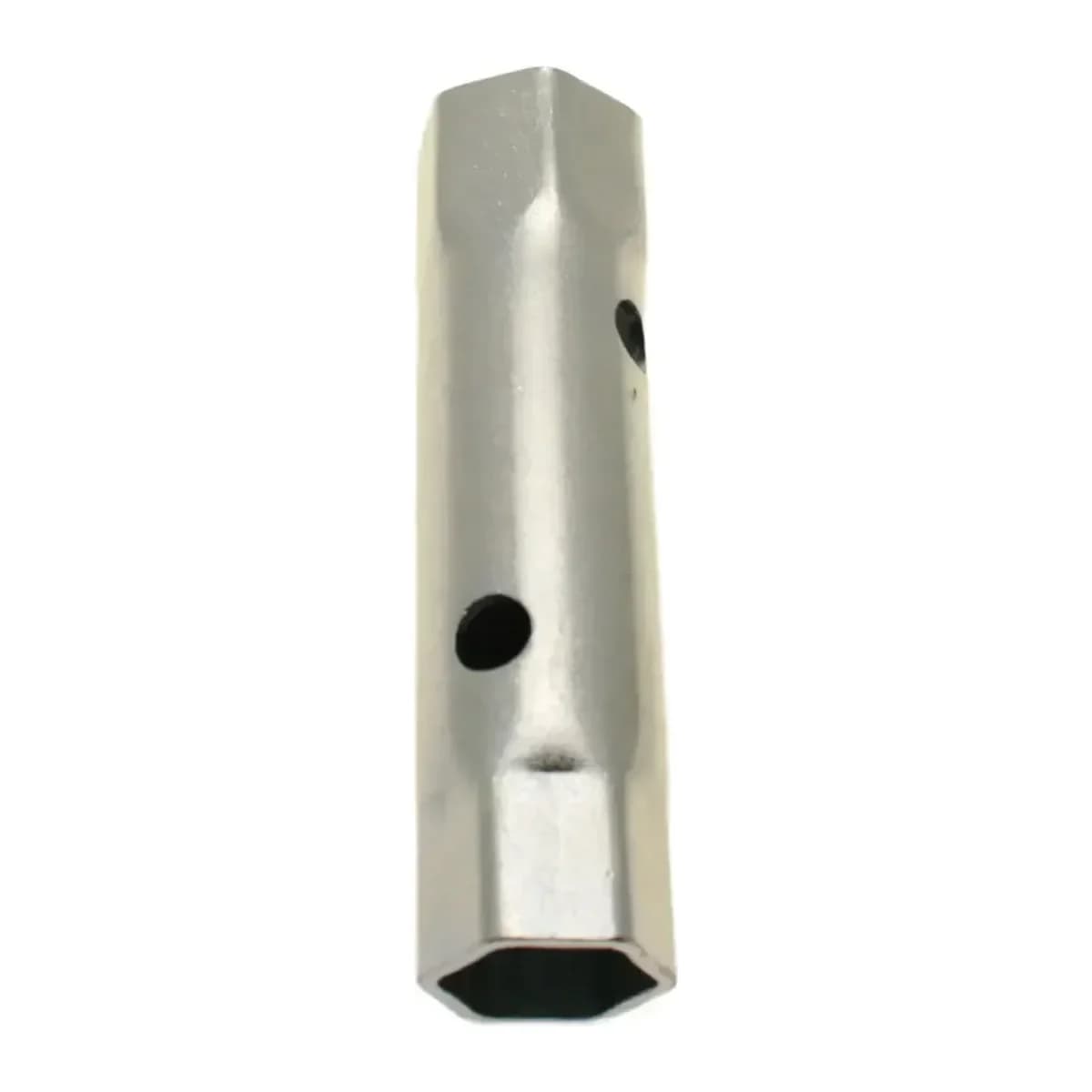
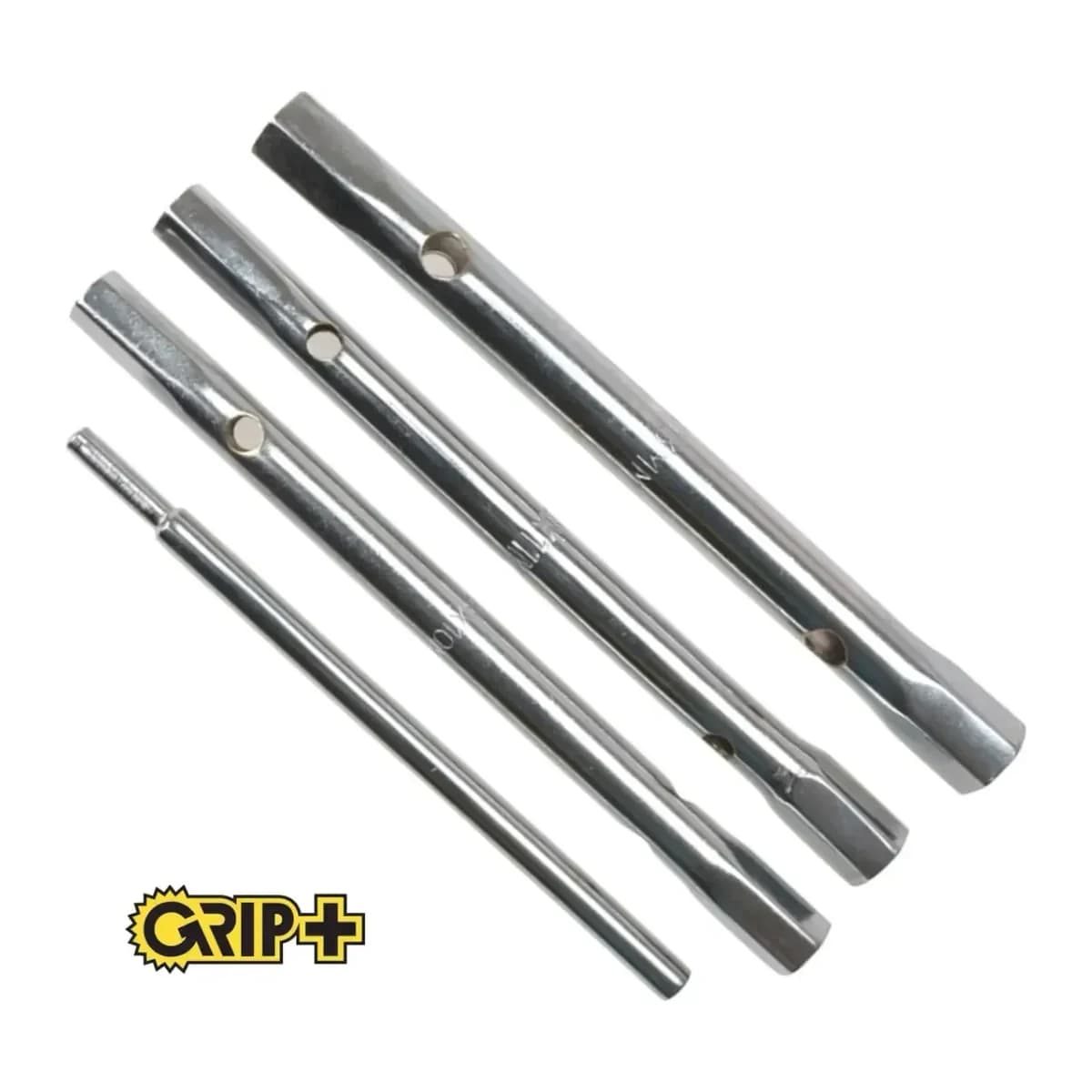
- Tap back-nut and box spanners. Older pillar taps have large back nuts; monobloc taps are held by a nut on a threaded stud, which is easiest to reach with a long monobloc box spanner.
- Wide-jaw adjustable spanners. They open wide enough for waste nuts and big tap connectors without slipping; soft-jaw versions protect chrome.
- Water pump pliers in two sizes — a 7" pair for tight spots, and a 10" or 12" pair for waste nuts and traps.
- PTFE tape and silicone. PTFE for taper threads, and silicone sealant to seal a basin or bath to the wall.
Flexible tap connectors and isolating valves go on with the same two-spanner method as any compression joint. If you're not sure which part you need, see what to bring to the trade counter.
 In stock
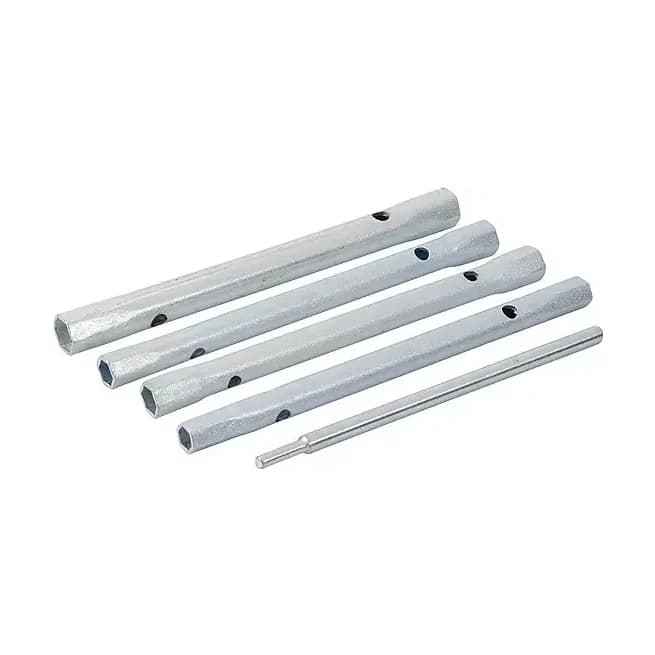 In stockBack Nut Tap Spanner 5 Piece 8/9, 9/11, 10/11 & 12/13mm
Code: LP-1BJ214C
inc VAT£7.28 ex VAT
✓ Delivery available✓ Collect today
 In stock
 In stock
Copper pipework: cutting, bending and soldering
Cutting copper and fitting compression or push-fit takes only a few tools; soldering and bending add a few more.
- Pipe cutters. A rotary cutter gives a square, clean end, where a hacksaw leaves a ragged, burred one. Slice cutters that clip over the pipe, like the 15mm and 22mm U-Cut (£19.39), work in tight gaps; an adjustable cutter such as the ROTHENBERGER Minicut II Pro (£19.39) covers 6–22mm. Keep a spare cutting wheel.
- Deburrer. Removes the burr inside and out after cutting, so fittings seat properly and O-rings aren't nicked.
- Abrasive strips or wire wool to clean pipe ends and fittings bright before soldering.
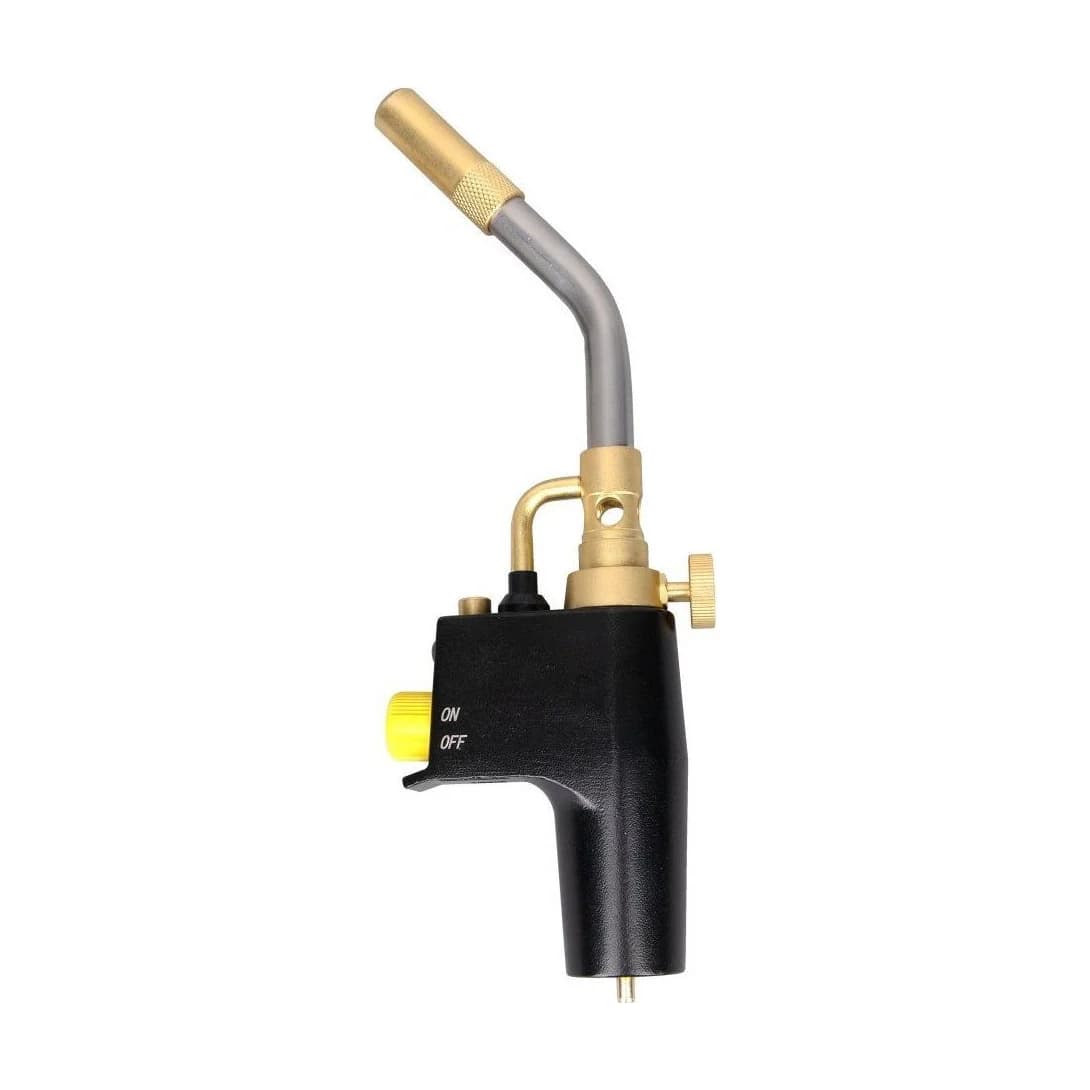
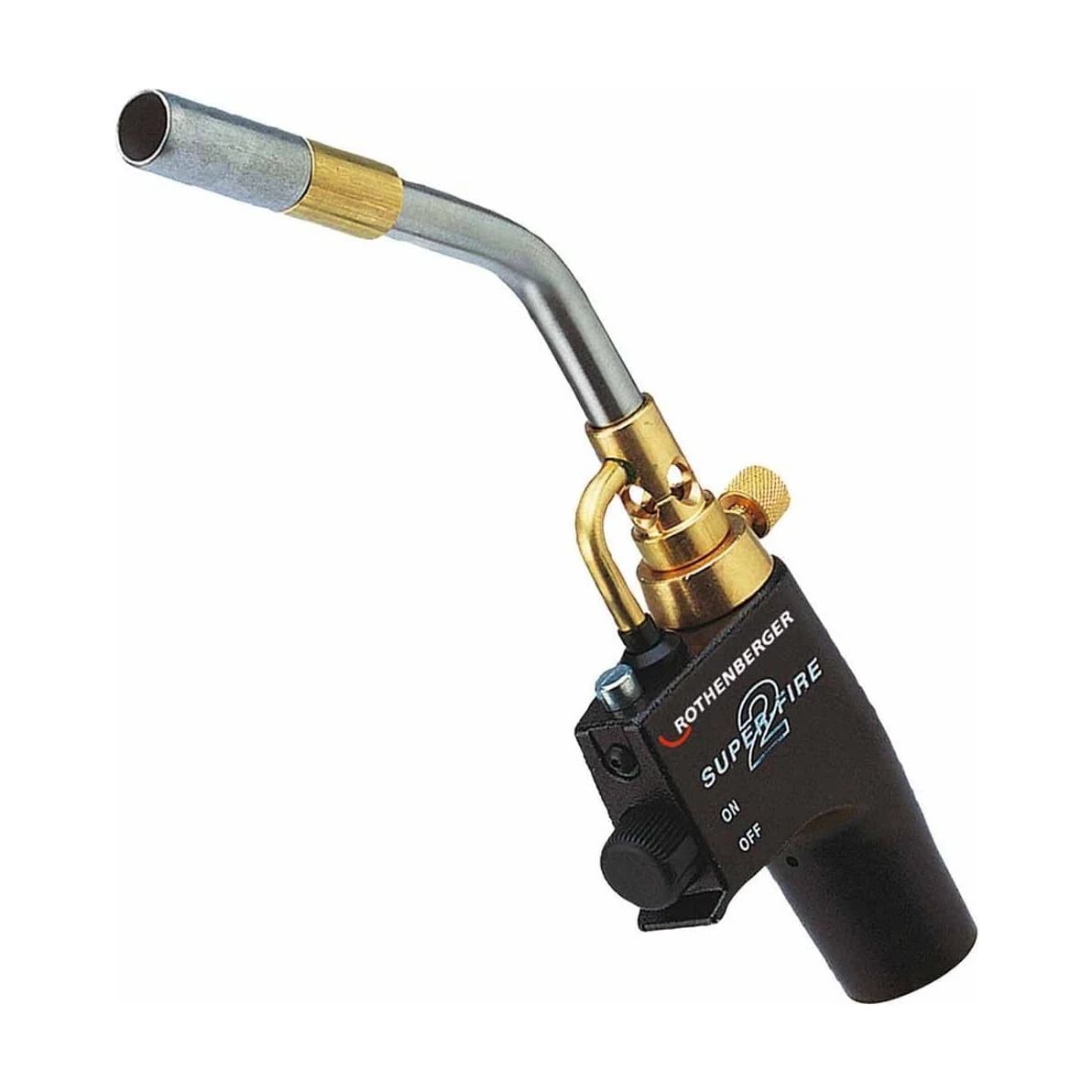
- Blowtorch and gas. A trigger-start torch on a gas cartridge handles 15mm and 22mm joints; MAP-type gas heats bigger joints faster than propane. Check the torch suits the cartridge's fitting before you buy gas.
- Soldering mat. A heat-resistant soldering mat protects timber, plaster and cables behind the joint.
- Flux and lead-free solder. Flux keeps the joint clean as it heats; use lead-free solder (£27.16) on any pipe carrying drinking water.
- Pipe bender. A lever pipe bender with 15mm and 22mm formers makes neat bends in half-hard copper; a bending spring pushed inside the pipe does gentle bends in 15mm by hand.
- Push-fit tools. A plastic pipe cutter, the pipe inserts the maker specifies, and the maker's release tool for taking fittings apart.
- Pipe wrench (Stillson). For threaded iron pipe and large seized fittings. Its teeth chew brass nuts, so keep it off compression fittings — see our pipe wrenches.
The copper pipe guide covers cutting, bending and clipping in more detail, and compression vs push-fit vs solder helps you choose the joint.
 In stock
Arctic Hayes
Arctic Hayes GT3 Gas Torch with 3 Interchangeable Burner TipsCode: LP-1A0TPLT
inc VAT£34.58 ex VAT
✓ Delivery available✓ Collect today
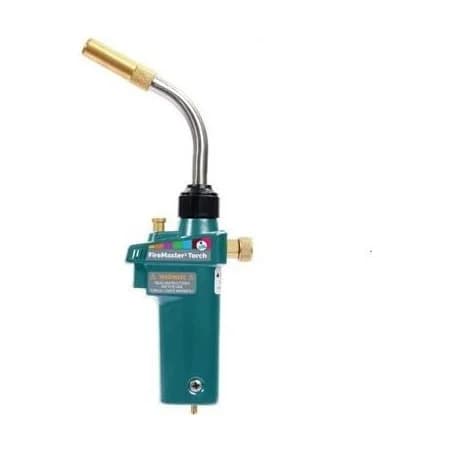 In stockTrigger Start H/D Adjustable Torch
Code: LP-LE8I7F
inc VAT£44.06 ex VAT
✓ Delivery available✓ Collect today
 In stock
Rothenberger
Rothenberger 35644X Superfire 2 Map & Propane Brazing TorchCode: LP-1E8RU6D
inc VAT£68.71 ex VAT
✓ Delivery available✓ Collect today
Heating: radiators, valves and controls
- Radiator keys for bleeding, and a radiator valve spanner for valve nuts. How to bleed and balance radiators shows how to use them.
- A pipe freezer. It freezes a plug of ice in the pipe so you can change a valve or radiator without draining the whole system. The Freeze-It spray kit is £17.46.
- An immersion heater box spanner for taking out and fitting immersion elements — the immersion heater box spanner is £17.99.
- Pressure testing. A pressure test pump proves new pipework is tight before it's boxed in — a trade tool, but worth hiring or borrowing for a big job.
- A voltage tester and multimeter for thermostats, motorised valves and wiring centres — see below.
Heating controls run at mains voltage. Before touching a wiring centre, thermostat or valve head, isolate the supply and prove it dead with a two-pole voltage indicator, checking the tester on a known live source before and after. A non-contact voltage detector (£16.91) is a handy first check but isn't proof, and a neon test screwdriver isn't a safe test at all. With the power off, a digital multimeter (£19.39) checks continuity through thermostats and valve end switches.
Drainage and blockages
- Plungers. A plunger for sinks and basins — block the overflow with a damp cloth so the pressure goes down the waste — and a larger one for toilets.
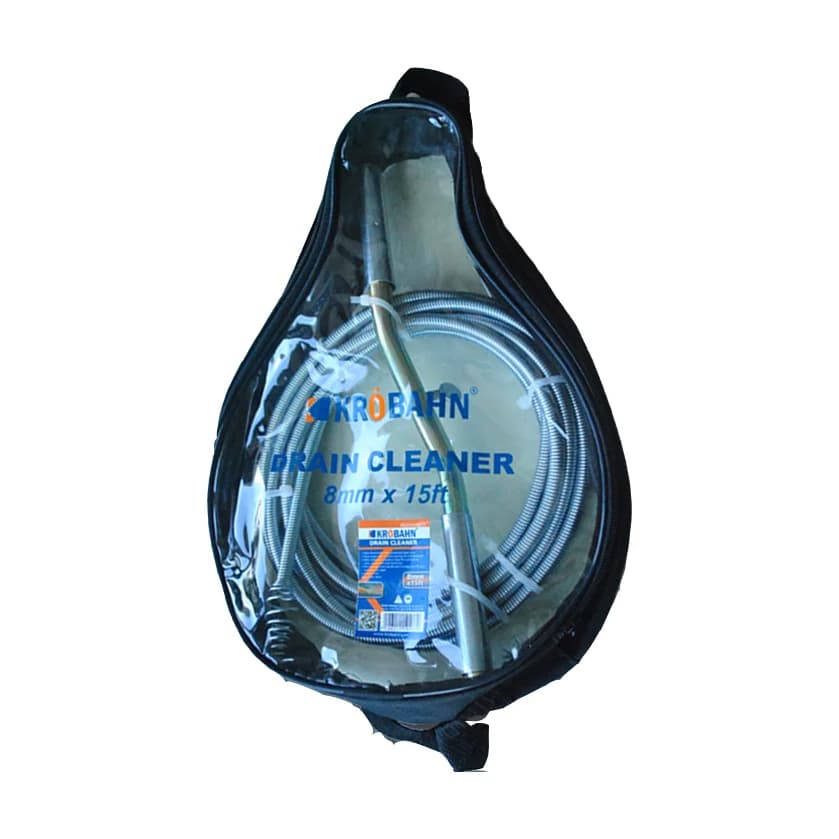
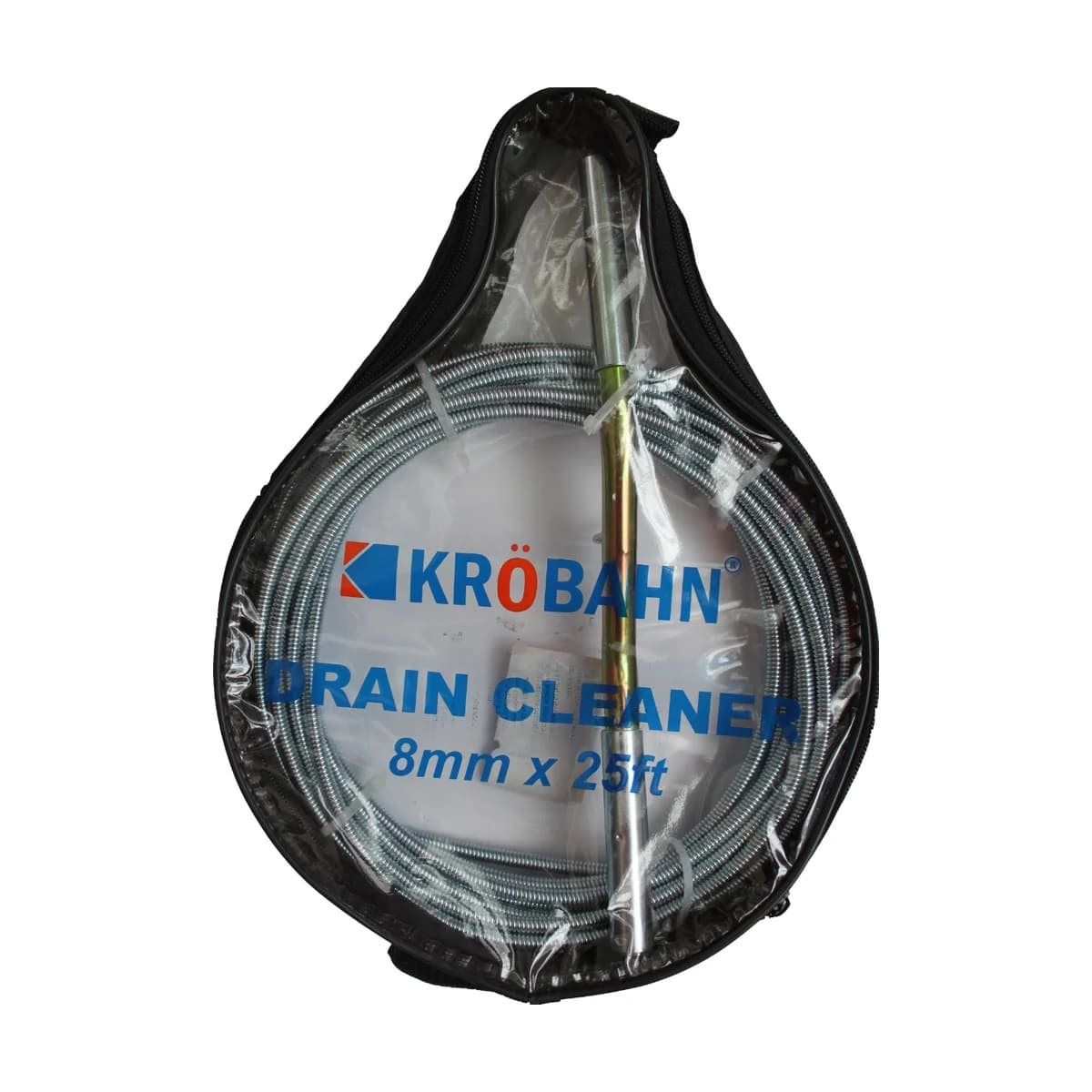
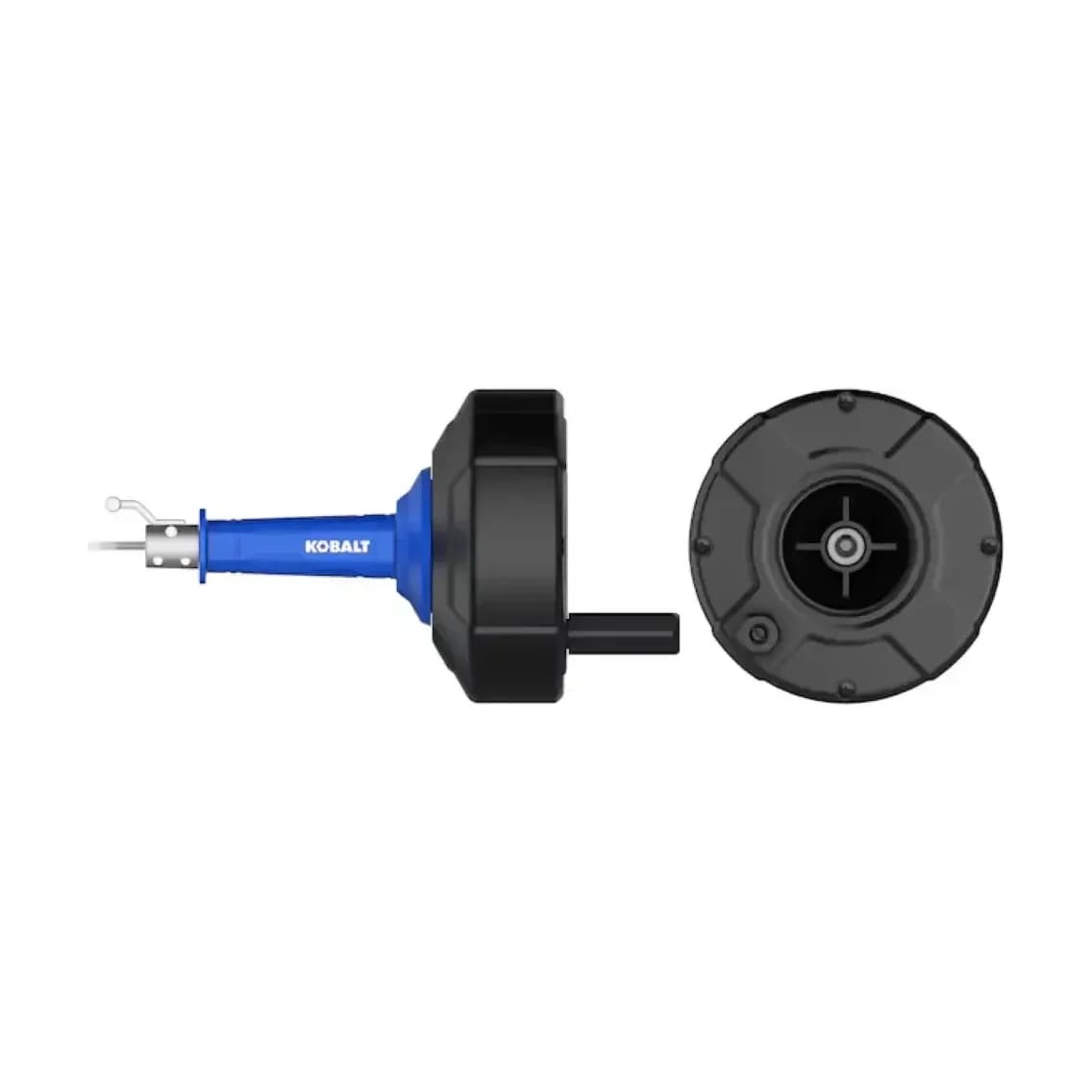
- Hand auger (drain snake). Feeds a flexible cable through a trap or waste pipe to break up a blockage further down; a 15ft drain auger reaches most internal wastes.
- Drain rods and a manhole key for blockages in the underground drains outside. Always turn screw-together drain rods clockwise, so the joints can't unscrew and leave a rod in the drain.
- Waste pipe tools. A fine-tooth saw or a plastic pipe cutter for 32mm and 40mm waste, a file to chamfer the cut end for push-fit, and solvent cement for welded joints.
- Test plugs and smoke matches for proving new drains and finding leaks in them — trade kit, on our test equipment shelf.
 In stock
Krobahn
Krobahn DRAIN CLEANER - 8mm x 15ftCode: LP-13O8Z1T
inc VAT£11.99 ex VAT
✓ Delivery available✓ Collect today
 In stock
Krobahn
Krobahn DRAIN CLEANER - 8mm x 25ftCode: LP-13O6KK2
inc VAT£16.08 ex VAT
✓ Delivery available✓ Collect today
 In stock
Safety gear and storage
- Gloves: coated work gloves for general jobs, disposable nitrile for dirty water and drains, and cut-resistant gloves for sheet metal and broken ceramics.
- Eye protection whenever you're drilling, cutting overhead, soldering or rodding drains.
- Dust masks — FFP2 or FFP3 — for drilling masonry, chasing plaster and working in lofts.
- Overshoes and dust sheets when you're working in someone else's home.
- A tool bag or box that keeps cutters, spanners and fittings apart, so nothing is lost under a floor.
We stock 25 lines of safety wear and PPE, and tool bags and boxes from the ROTHENBERGER Plumb Tub (£11.63) to an 18" plumber's tool box (£48.49).
Starter kit or trade kit: what to buy first
| Job | Starter | Add for regular or trade work |
|---|---|---|
| Gripping and turning | 10" water pump pliers, two adjustable spanners | 7" and 12" grips, wide-jaw and soft-jaw spanners, a pipe wrench |
| Cutting pipe | 15mm slice cutter, deburrer | 22mm and 28mm cutters, an adjustable cutter, a plastic pipe cutter |
| Joining | PTFE tape, jointing compound | Blowtorch and gas, soldering mat, flux, lead-free solder |
| Bending | — | Lever pipe bender for 15mm and 22mm |
| Heating | Radiator key | Pipe freezer, valve spanners, immersion box spanner, pressure test pump |
| Electrics and testing | — | Two-pole voltage indicator, multimeter, non-contact detector |
| Drains | Plunger | Hand auger, drain rods, manhole key, test plugs |
| Safety | Gloves, safety glasses | FFP3 masks, overshoes, cut-resistant gloves |
Buy the starter kit first, then add tools as jobs call for them — and buy decent ones, because a spanner that slips rounds off a nut and costs more than it saved. Our counter staff can tell you what a job needs; see buying from a plumbers' merchant for trade accounts and click and collect.
 In stock
Krobahn
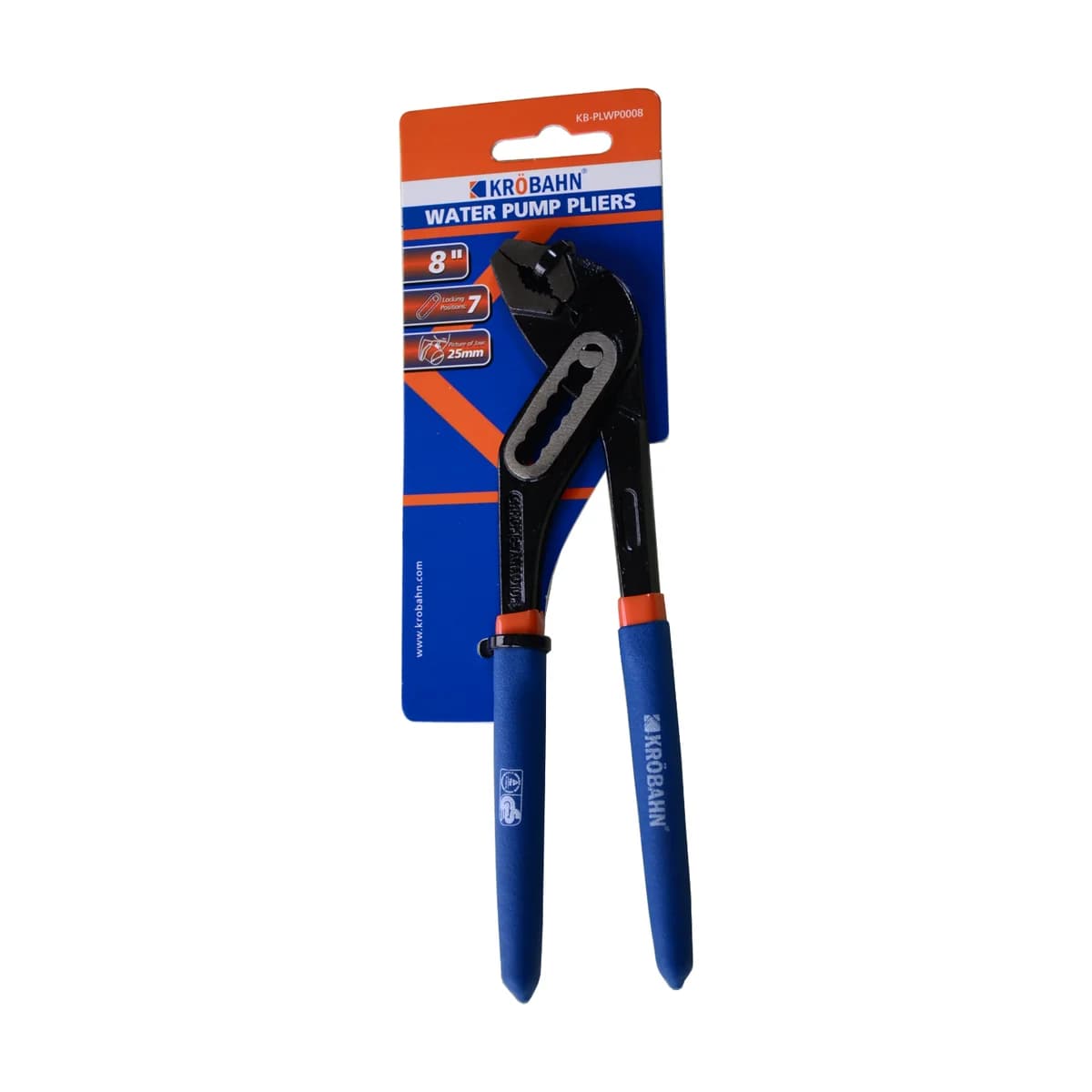
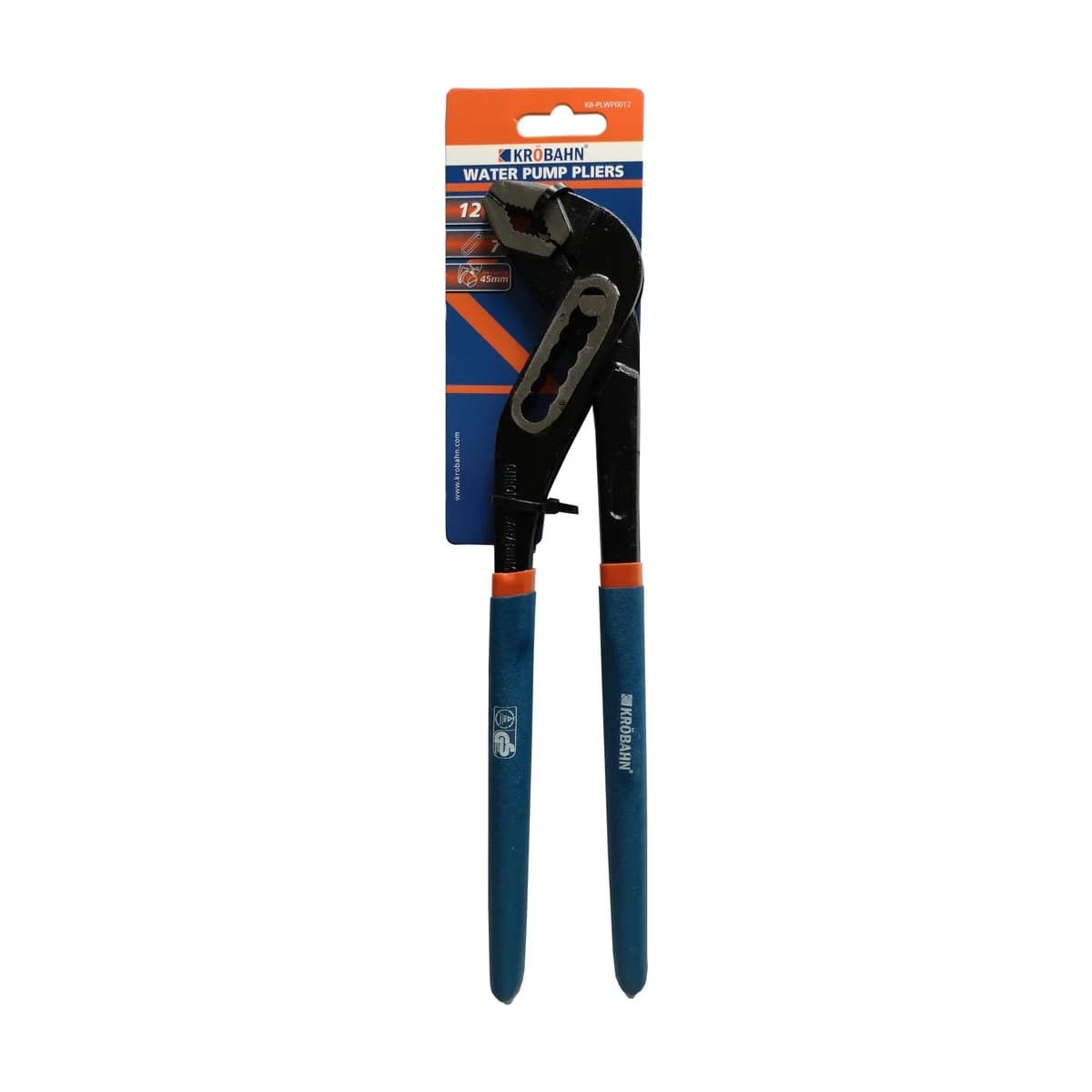
Krobahn Water Pump Pliers2 sizes available
Frominc VAT£6.33 ex VAT
✓ Delivery available✓ Collect today
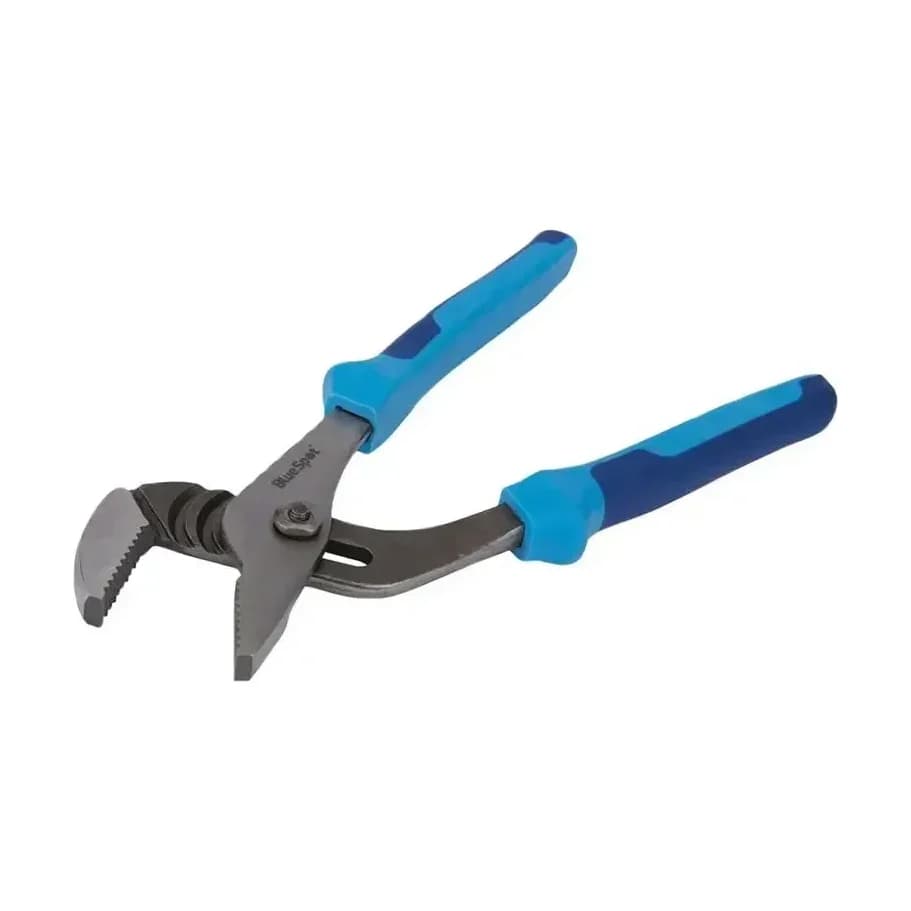 In stockBlueSpot Heavy-Duty Water Pump Pliers, 250mm
Code: LP-8C6E5P
inc VAT£6.88 ex VAT
✓ Delivery available✓ Collect today
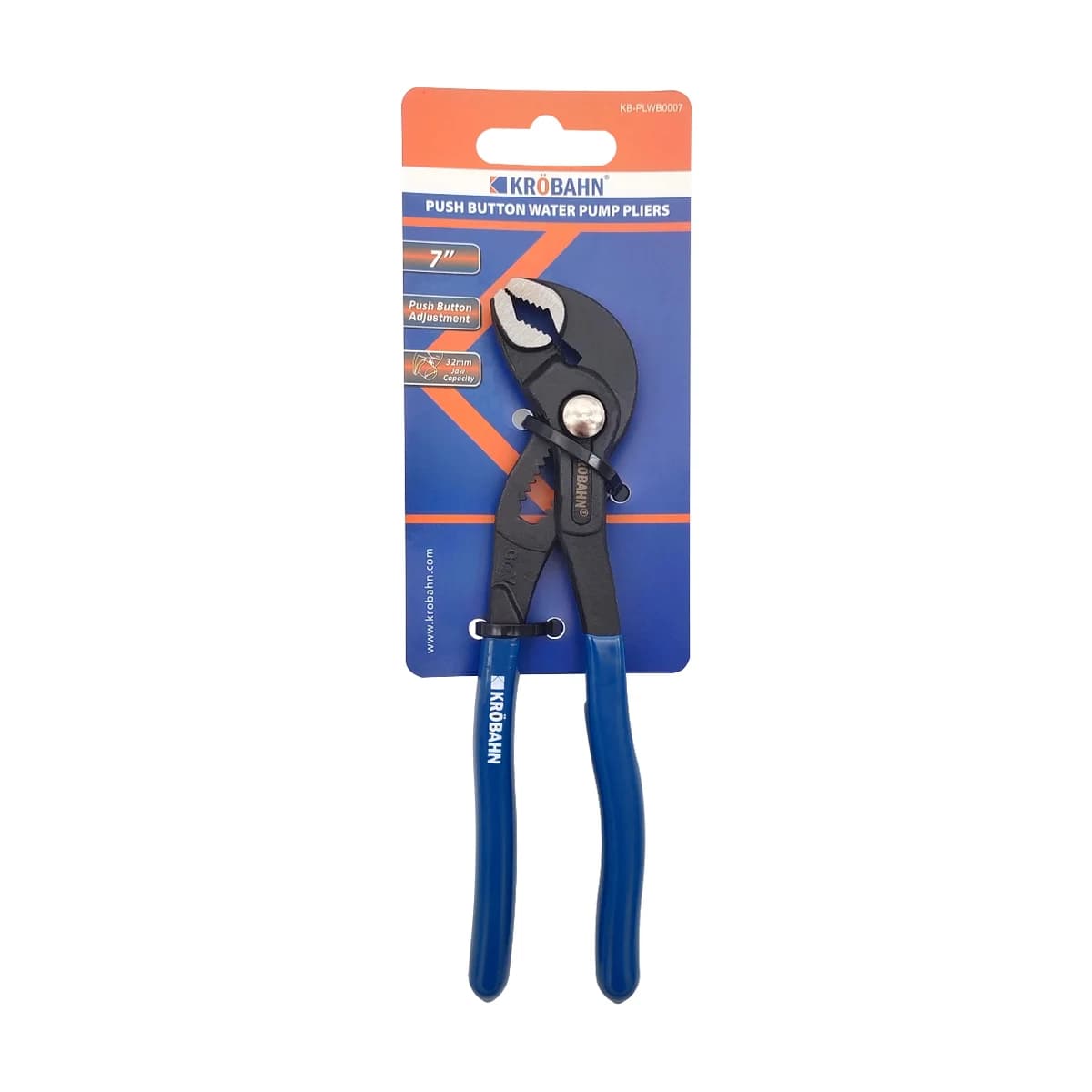 In stockPush Button Water Pump Pliers
2 sizes available
Frominc VAT£9.31 ex VAT
✓ Delivery available✓ Collect today
 In stock
Questions
- What tools does a plumber need?
- Water pump pliers, adjustable spanners, a basin wrench, pipe cutters and a deburrer, a blowtorch and soldering mat, a pipe bender, a pipe freezer, radiator and valve keys, a voltage tester and multimeter, plungers, an auger and drain rods, and PPE.
- What are grips in plumbing?
- "Grips" usually means water pump pliers — adjustable pliers with long handles and angled jaws, used to hold or turn nuts, pipes and fittings. Self-locking pliers are sometimes called grips too.
- Should I use a pipe cutter or a hacksaw for copper?
- A pipe cutter. It cuts square and leaves a clean end that compression and push-fit fittings seal on. A hacksaw leaves a ragged, burred end that needs filing and can cause leaks.
- What is a basin wrench used for?
- Reaching the tap connector nuts and back nuts behind a basin or sink, where there's no room for a spanner. Its jaw pivots so it can grip and turn a nut from below.
- Do I need a blowtorch for plumbing?
- Not for compression or push-fit fittings, which cover most repairs. You need one for soldered joints, along with a soldering mat, flux, solder and a fire extinguisher.
- What's the difference between a pipe wrench and water pump pliers?
- A pipe wrench (Stillson) has toothed jaws that bite harder the more you pull — for threaded iron pipe and large seized fittings. Water pump pliers are lighter and quicker to adjust, for everyday nuts and fittings. Protect chrome from both.
Related guides
- Heating & boilersHow to Bleed and Balance Radiators