The short answer
Compression fittings seal with a brass nut and olive, need only two spanners and can be undone — ideal for visible joints and connecting to taps and valves. Push-fit joints push together by hand on copper or plastic pipe, quick and flame-free. Soldered fittings (end feed or solder ring) are the neatest and cheapest per joint but need a blowtorch. Press-fit is fast and flame-free but needs a press tool. Most plumbers use a mix.
The four types compared
| Compression | Push-fit | Solder (end feed / solder ring) | Press-fit | |
|---|---|---|---|---|
| How it seals | Nut squeezes a brass olive onto the pipe | Rubber O-ring and grab ring | Molten solder in the joint | Fitting crimped onto the pipe |
| Tools | Two spanners | Pipe cutter; insert for plastic | Blowtorch, flux, solder for end feed | Press tool and jaws |
| Pipe | Copper; plastic with an insert | Copper or plastic | Copper | Copper (or its own system) |
| Can be undone | Yes | Yes, with a release tool | With heat | No |
| Look | Bulky brass or chrome | Bulky plastic | Neat and slim | Neat |
| Cost per joint | Medium | Highest | Lowest | Medium; tool is costly |
Compression fittings
A compression joint has a body, a nut and a brass ring called an olive. Tighten the nut and it squeezes the olive onto the pipe. Hand-tight plus about a half to three-quarters of a turn is usually enough — overtightening distorts the olive and causes leaks. Many plumbers add a little jointing compound or PTFE to the olive.
Use them where you want to undo the joint later, next to taps, valves and appliances, and where you can't use a flame. Keep them accessible: don't bury compression joints in walls or floors. We stock 96 compression couplers alone, from £0.78, plus elbows, tees and spare olives.
Push-fit fittings
Push-fit fittings such as Hep2O and Polyplumb grip the pipe with a stainless grab ring and seal with an O-ring. They're the quickest joint to make and need no flame, so they're popular under floors and in lofts, and with plastic pipe.
- Cut the pipe square with a proper cutter and remove any burr — a rough edge can cut the O-ring.
- On plastic pipe, always fit the pipe insert the maker specifies.
- Mark the insertion depth and push the pipe fully home, then pull back to check it's gripped.
- Most can be taken apart with the maker's release tool, but follow their rules on reusing a fitting.
Many boiler makers want the first length of pipework from the boiler in copper, so check the installation manual before running plastic right up to it.
Solder fittings: end feed or solder ring?
Soldered (capillary) joints are the plumber's traditional choice: slim, strong and cheap. Clean the pipe and fitting, apply flux, heat with a blowtorch and the solder is drawn into the gap.
- End feed fittings are plain copper; you feed solder wire into the joint as it heats. Cheapest per fitting.
- Solder ring (often called Yorkshire) fittings have the solder already inside, so you just heat until a bright ring of solder shows at the mouth. Quicker and more consistent.
Use lead-free solder on any pipe that carries drinking water, protect nearby timber with a soldering mat, and keep a damp cloth and an extinguisher handy.
Press-fit fittings
Press-fit fittings have an O-ring inside and are crimped onto the pipe with a battery press tool. A joint takes seconds, there's no flame (so no hot-works permit on commercial jobs) and they're very consistent. The tool and jaws are the expense, so they suit trades doing a lot of pipework. Make sure the fitting is rated for its use — some are for water only, not gas.
Which fitting should you use?
- Connecting a tap, valve or appliance: compression.
- A new run in copper you can heat safely: solder ring or end feed.
- Plastic pipe, under floors, or no flame allowed: push-fit.
- A lot of pipework, fast, on a commercial job: press-fit.
- A quick repair: a compression or push-fit coupler.
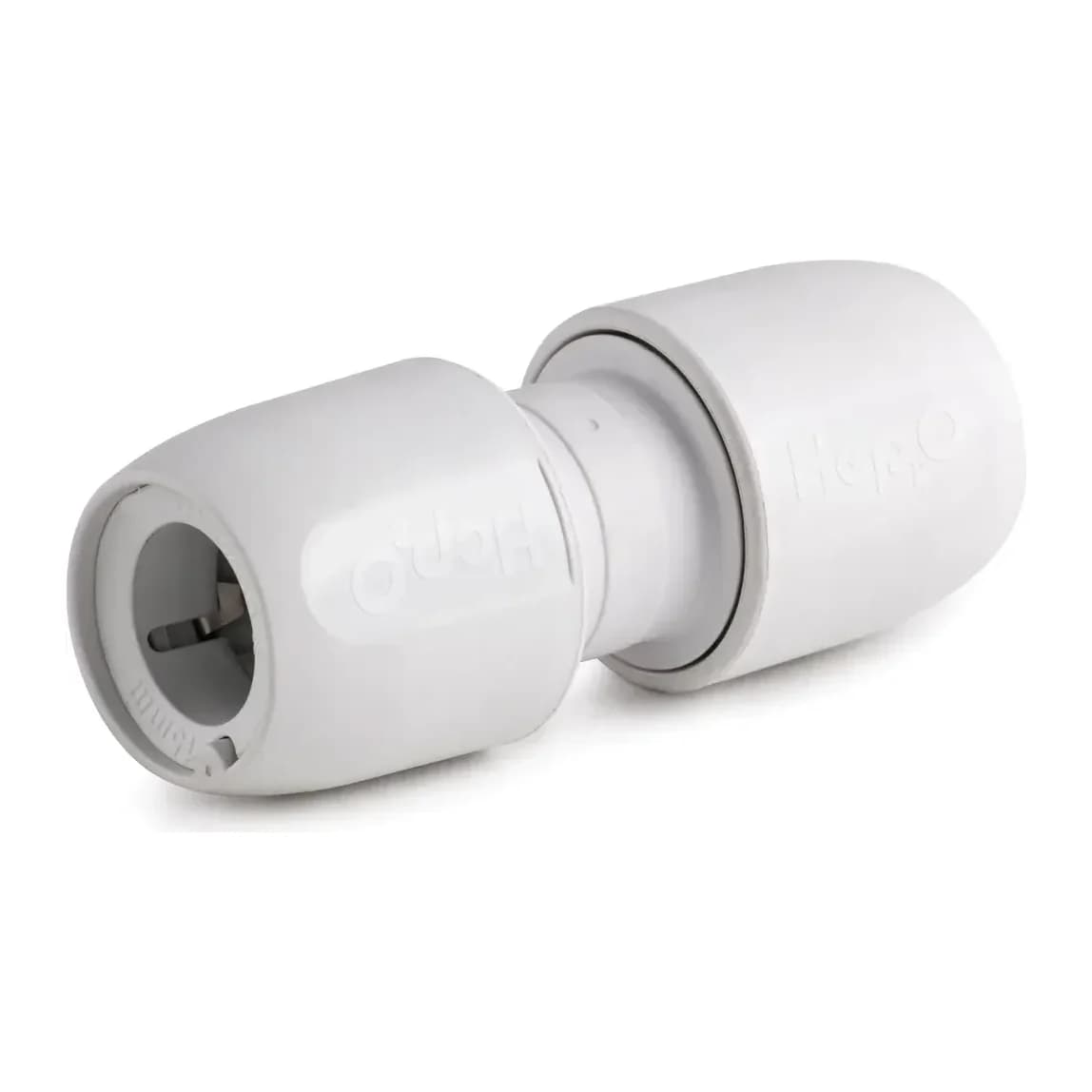 In stock
Hep2O
Hep2O Straight Connector HD12 options available
Frominc VAT£1.79 ex VAT
✓ Delivery available✓ Collect today
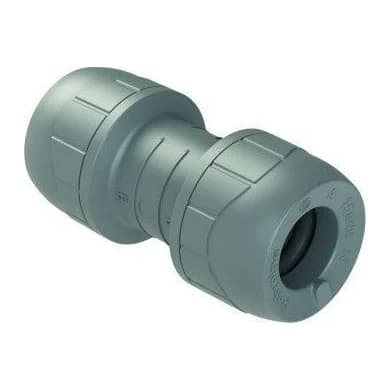 In stock
Polyplumb
Polyplumb Enhanced Coupler - Grey4 sizes available
Frominc VAT£1.99 ex VAT
✓ Delivery available✓ Collect today
- In stock
London Plumbing
Coupling Poly - Pack of 102 sizes available
Frominc VAT£16.17 ex VAT
✓ Delivery available✓ Collect today
Questions
- Is push-fit as good as compression?
- Made properly — square cut, deburred, insert fitted, pushed fully home — push-fit is reliable and widely used. Compression is better where you'll need to undo the joint or it's next to a tap or valve.
- Can I use push-fit fittings on copper pipe?
- Yes. Most push-fit fittings, including Hep2O and Polyplumb, work on copper as well as plastic pipe. Inserts are only needed in plastic pipe.
- What's the difference between end feed and solder ring?
- End feed fittings need solder wire fed in as you heat them; solder ring (Yorkshire) fittings have the solder built in. Solder ring is quicker, end feed cheaper.
- Should I put PTFE tape on a compression olive?
- It isn't required, but many plumbers add a little jointing compound or a wrap of PTFE to the olive. The olive does the sealing — don't overtighten.