
The short answer
Measure first: 1700 x 700mm is the standard UK bath and the easiest to match with panels and screens, with 1500mm and 1600mm lengths for small rooms and 1800mm, or 750–800mm widths, for more space. Choose single ended (taps and waste at one end) or double ended (waste in the middle, both ends sloped), or a P or L-shaped shower bath for showering. Acrylic is light and warm; enamelled steel is rigid and harder-wearing.
What size bath do you need?
Baths are sized length x width in millimetres, measured over the rim. The space inside is smaller, so if you can, lie down in one before you buy.
| Length | Usual widths | Suits |
|---|---|---|
| 1200–1400mm | 700mm | Very small bathrooms; you sit rather than lie |
| 1500mm | 700mm | Small bathrooms, children and shorter adults |
| 1600mm | 700mm | Where a 1700mm bath won't quite fit |
| 1700mm | 700mm, 750mm or 800mm | The UK standard: most bathrooms, panels and screens are built round it |
| 1800mm | 800mm | Taller bathers and bigger rooms |
Measure the alcove wall to wall at rim height before the walls are tiled or panelled — the bath has to slide in, so allow a few millimetres — and the tiles or panels then come down onto the rim. Check the bath will go through the doors and round the landing, too: an 1800 x 800mm bath on a tight staircase is a real problem.
A bigger bath also takes more hot water to fill. A combi fills it only as fast as it can heat, and a cylinder needs enough stored hot water, so check before you go up a size.
We stock SCN acrylic baths from 1200 x 700mm to 1800 x 800mm, alongside steel and double-ended baths: 19 on the baths shelf, from £199.82.
Single ended or double ended?
- Single ended: the waste and taps at one end and a sloped back at the other. The most common and usually the cheapest; you lie against the plain end, away from the taps. SCN's come with a softly rounded or a crisp square inner bowl.
- Double ended: both ends sloped and the waste in the middle, so two people can share, or one can lie either way. The taps go on the wall or the middle of the long side, or are replaced by an overflow filler. The Tempo Cube 1700 x 750mm on our shelf is double ended.
- Tap holes: baths come with no tap holes (NTH) or with two (2TH) for pillar taps or a deck mixer. Choose NTH for wall-mounted taps, a concealed valve with a bath spout, or an overflow filler.
P-shaped or L-shaped shower bath?
A shower bath is wider at one end, giving you room to stand and shower, with a screen shaped to match. A P-shaped bath curves out at the showering end and takes a curved screen; an L-shaped bath has a squared-off wide end and takes a straight screen. Both are handed, left or right, by which end the shower goes. Check the maker's drawing rather than guessing, because 'left hand' isn't always described the same way.
SCN's L-shaped shower bath set is 1700 x 850mm, left or right hand, and comes complete with its front panel and glass screen. A straight bath can take a shower too, with a bath screen; it just gives you less room to stand.
Whichever you choose, the rim must be flat where the screen stands, and the walls round the shower need tiles or PVC wall panels right down to the rim. Our shower types guide helps you pick the shower itself.
Steel vs acrylic: which bath is better?
| Acrylic | Enamelled steel | |
|---|---|---|
| What it is | Acrylic sheet, reinforced underneath | Pressed steel with a hard enamel fused onto it |
| Feel | Warm to the touch from the start | Cool at first; warms with the water |
| Rigidity | Can flex or creak if it isn't fully supported | Rigid |
| Surface | Softer; light scratches can usually be polished out | Very hard and scratch resistant, but can chip if something heavy is dropped |
| Weight | Light and easy to carry upstairs | Heavier than acrylic, far lighter than cast iron |
| Shapes | Every shape: straight, double ended, shower baths | Mostly straight baths |
Acrylic is the UK's everyday choice: affordable, light, comfortable and made in every shape, and every SCN bath we stock is acrylic. Steel suits a busy family bathroom or a rental, where a hard surface that shrugs off toys and cleaning products matters more than warmth. The Kal Eurowa 312 is a 1700 x 700mm steel bath, with or without tap holes.
Both last well if they're properly supported. What ruins a bath is movement: an acrylic bath that flexes cracks its silicone first and, in time, itself.
Bath panels: front, end and what they're made of
A bath against one wall needs a front panel the length of the bath. In a corner it also needs an end panel the width of it. Panels stand on a plinth at the floor and fix to a timber frame under the rim.
- Waterproof PVC: SCN's 15mm panels can't swell or rot, adjust down to 500mm high and include a 100mm plinth — £96.99 for a 1700mm front panel, with 1800mm fronts and 700mm and 800mm ends.
- Gloss white Halite panels: front panels from 1500mm to 1900mm and end panels from 700mm to 800mm.
- Acrylic: light and made to match, like SCN's acrylic end panel and the front panel for the L-shaped shower bath.
Build the frame so the panel can come off: one day you'll need to get at the trap and waste. Check the panel's height range against the bath on its legs before you buy, and avoid MDF panels in a steamy room, where they swell once water gets in at an edge.
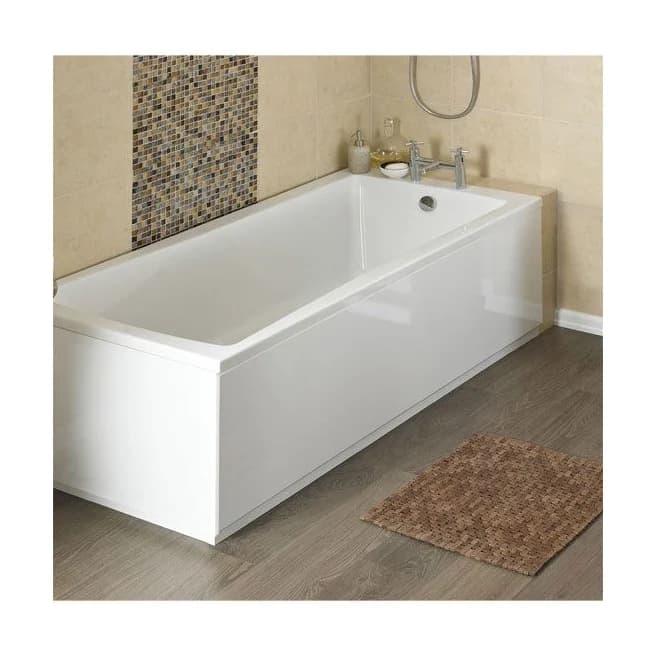 In stockHalite Front Bath Panel White Gloss
5 sizes available
Frominc VAT£62.24 ex VAT
✓ Delivery available✓ Collect today
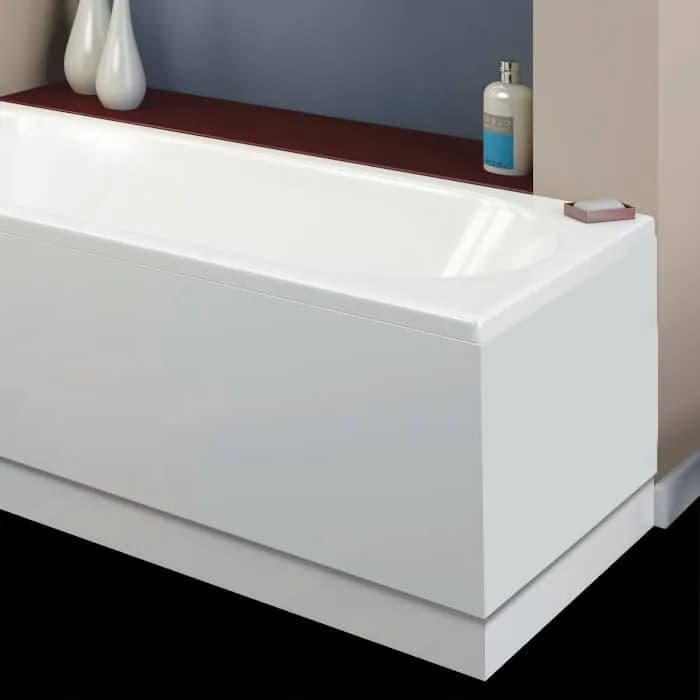 In stock
SCN
SCN Waterproof PVC Bath Panel4 options available
Frominc VAT£42.83 ex VAT
✓ Delivery available✓ Collect today
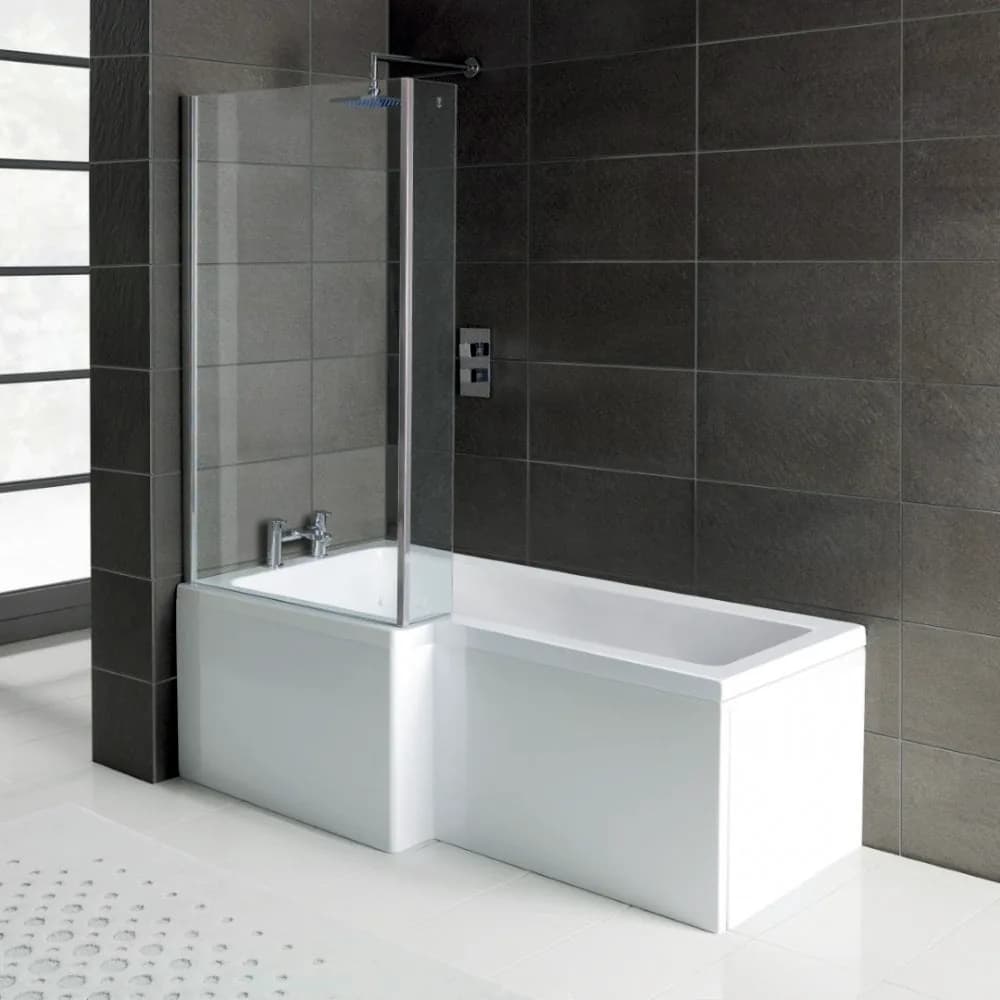 In stock
SCN
SCN L-Shaped Bath Front Panel 1700mmCode: SCN-LPANEL
inc VAT£84.06 ex VAT
✓ Delivery available✓ Collect today
Taps, fillers and wastes
Most bath taps and deck mixers have ¾" BSP tails, and suit a 2TH bath. For an NTH bath, fit wall-mounted taps, a concealed thermostatic valve with a bath spout, or an overflow bath filler, which fills the bath through the overflow so there's no spout at all. Because the water enters below the rim, the water regulations require backflow protection, usually check valves on the hot and cold, so fit whatever the filler's instructions specify.
The waste and overflow come as one combination waste, with a flexible pipe from the overflow down to the 1½" (40mm) waste. Choose how the plug works:
- Plug and chain: simple and cheap, with nothing to go wrong.
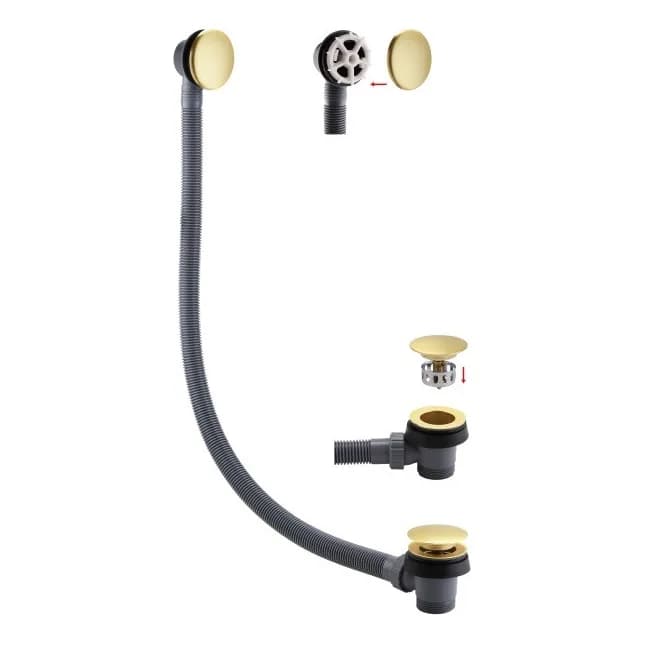
- Click-clack: a sprung plug. Press to close, press again to drain.
- Pop-up: turn the overflow handle to lift or drop the plug, so there's nothing to lose. On a long or deep bath, check the cable reaches; extended-cable versions are made.
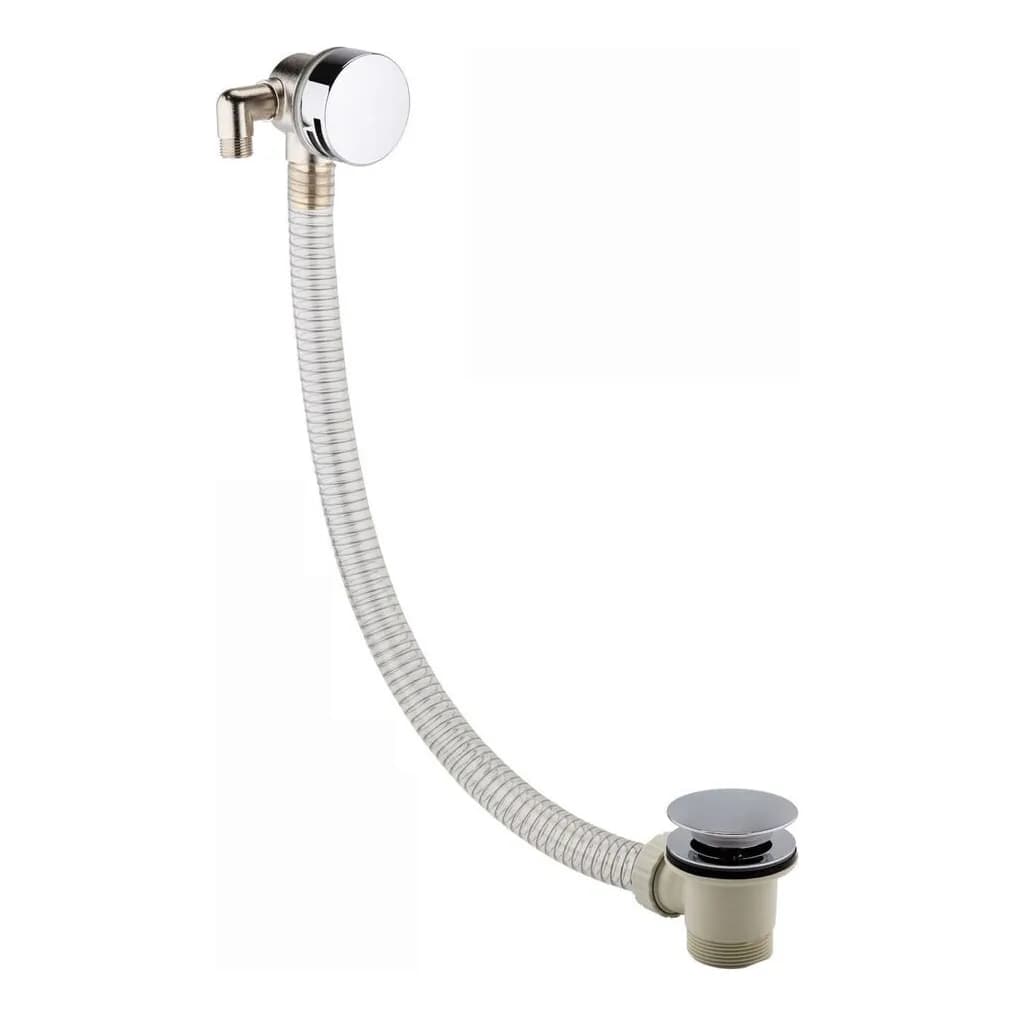
- Overflow filler: the filler, waste and overflow in one, like SCN's round and square bath filler wastes.
A thick-walled bath, such as cast iron or stone, needs a waste made for thick sections, so check the thickness at the waste hole. Under it goes a 1½" bath trap. Standard bath traps hold a 50mm water seal; shallow-seal versions are made for baths with very little room underneath, but a shallow seal is easier to pull dry and let drain smells through, so use a 50mm trap wherever it fits. Our waste pipe sizes guide covers the pipe run.
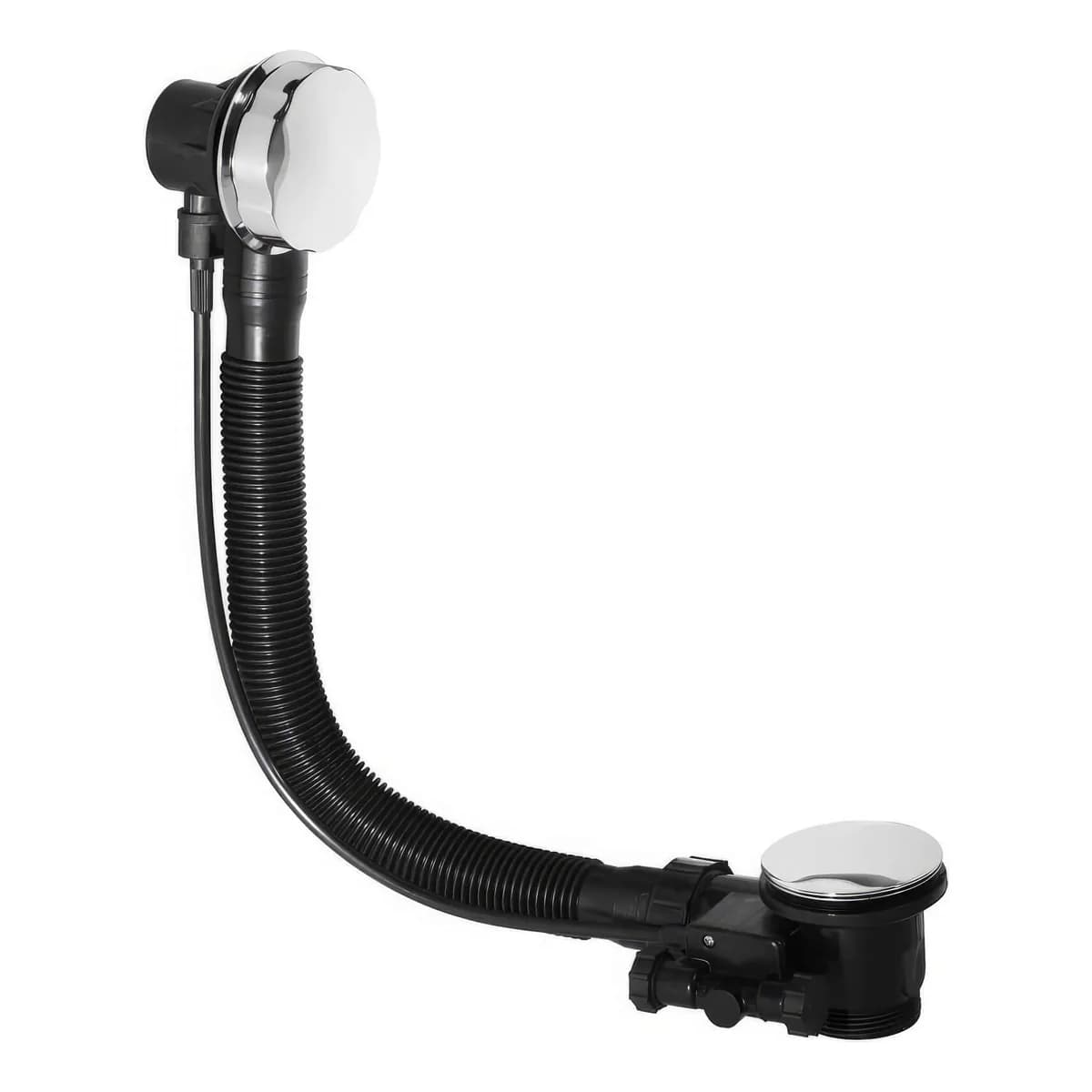 In stock
SCN
SCN Pop-Up Combination Bath Waste2 colours available
Frominc VAT£21.82 ex VAT
✓ Delivery available✓ Collect today
 In stock
Grohe
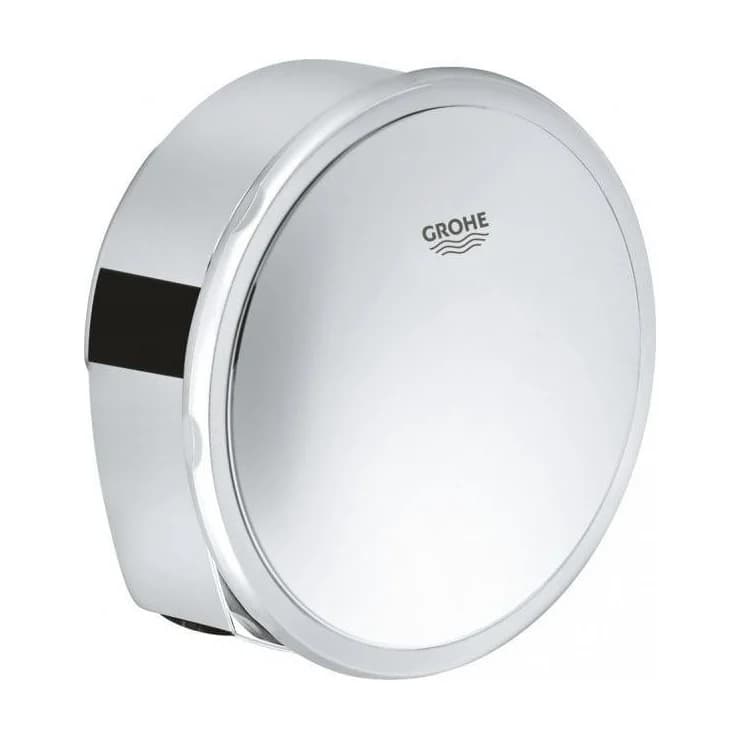
Grohe 19952 Sentosa Talentofil Trim ChromeCode: LP-1XX2H97
inc VAT£28.93 ex VAT
✓ Delivery available✓ Collect today
 In stock
SCN
SCN Bath Sprung Waste and Overflow2 colours available
Frominc VAT£49.30 ex VAT
✓ Delivery available✓ Collect today
 In stock
SCN
SCN Bath Filler Waste and Overflow7 options available
Frominc VAT£60.62 ex VAT
✓ Delivery available✓ Collect today
In a new-build home or a conversion, Part G of the Building Regulations limits the hot water to a bath to 48°C, usually with a thermostatic mixing valve on the supply.
How to fit a bath so it doesn't move or leak
A full bath with someone in it can weigh well over 200kg, carried on a few small feet. Almost every creaking, cracked or leaking bath comes down to support, so take your time:
- Fit the waste, overflow and taps first, with the bath on its side on a blanket. It's far easier than reaching underneath later.
- Assemble the legs or cradle exactly as the maker shows. On a timber floor, stand the feet on a strip of plywood or a board across the joists to spread the load, and screw it down.
- Level the rim both ways with a spirit level. The bottom is moulded with a fall to the waste, so it's the rim that should be level.
- Support the rim on the walls with the brackets or timber battens the maker specifies, so the edges can't drop when someone sits on them.
- Connect the trap and supplies, then fill the bath and check every joint, overflow included, before the panel goes on.
- Tile or panel the walls down onto the rim, so water runs into the bath, not behind it.
- Silicone with the bath full of water. A loaded bath sits a little lower; seal it empty and the joint tears the first time it's filled. Leave the water in until the silicone has cured — the tube gives the time.
- Fit the panel last, leaving a way to get at the trap.
Rather have it fitted? Our supply & fit service can quote to fit a bath bought from us, anywhere in Greater London.
Baths on our shelf
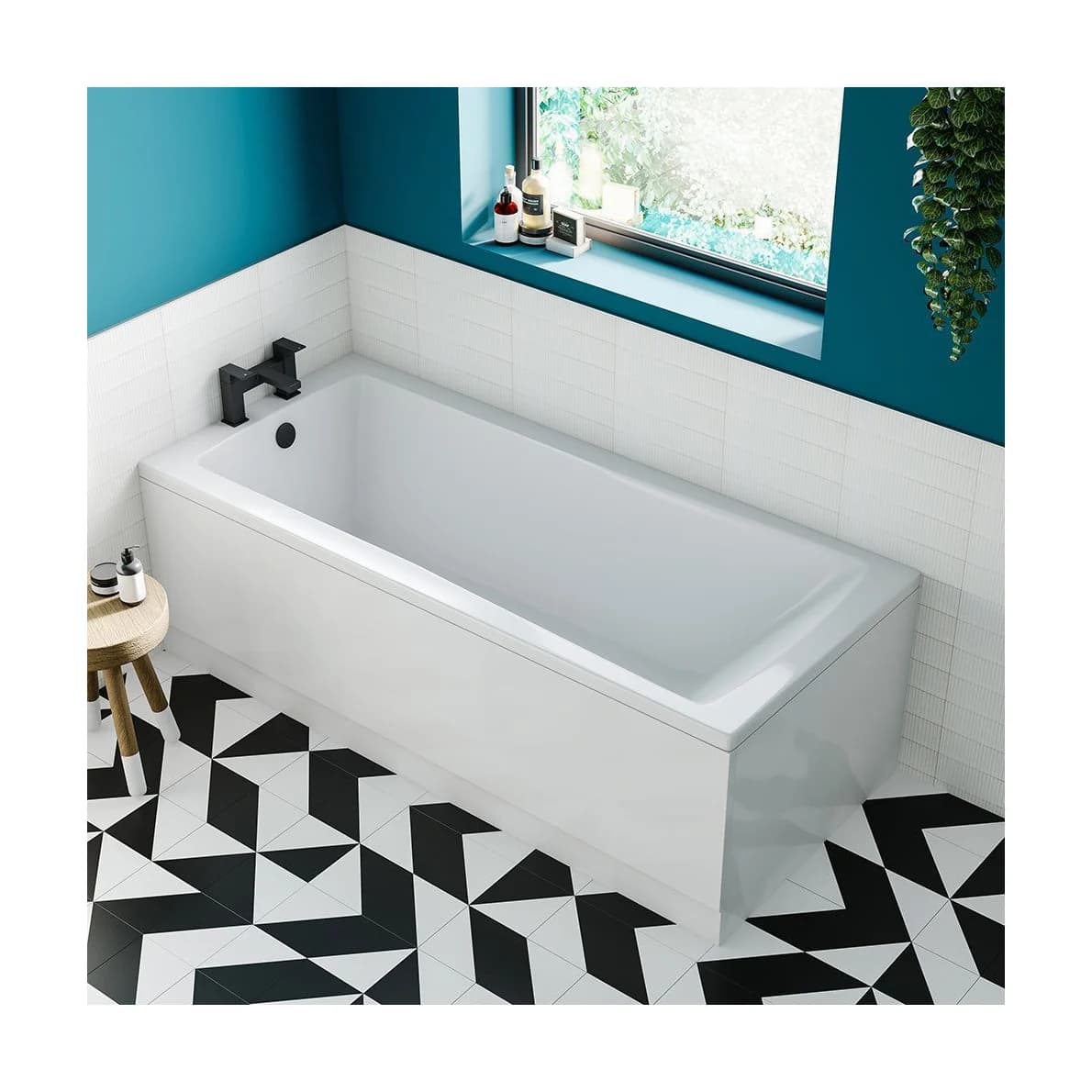 In stockKal Eurowa 312 2TH 1700 x 700 Steel Bath
Code: LP-1E7UXUJ-2
inc VAT£183.49 ex VAT
✓ Delivery available✓ Collect today
 In stock
SCN
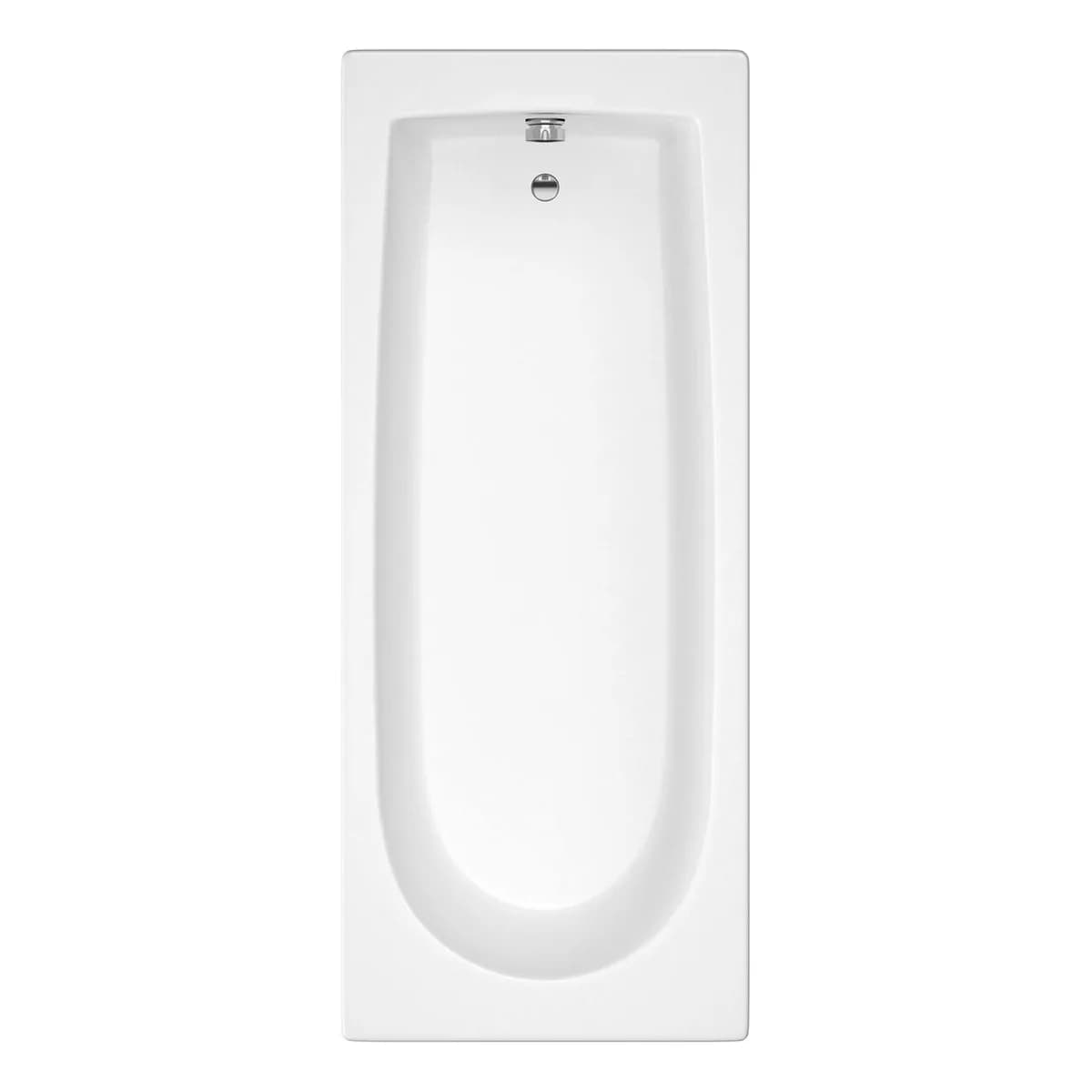
SCN Round Single Ended Acrylic Bath4 sizes available
Frominc VAT£189.95 ex VAT
✓ Delivery available✓ Collect today
 In stock
SCN
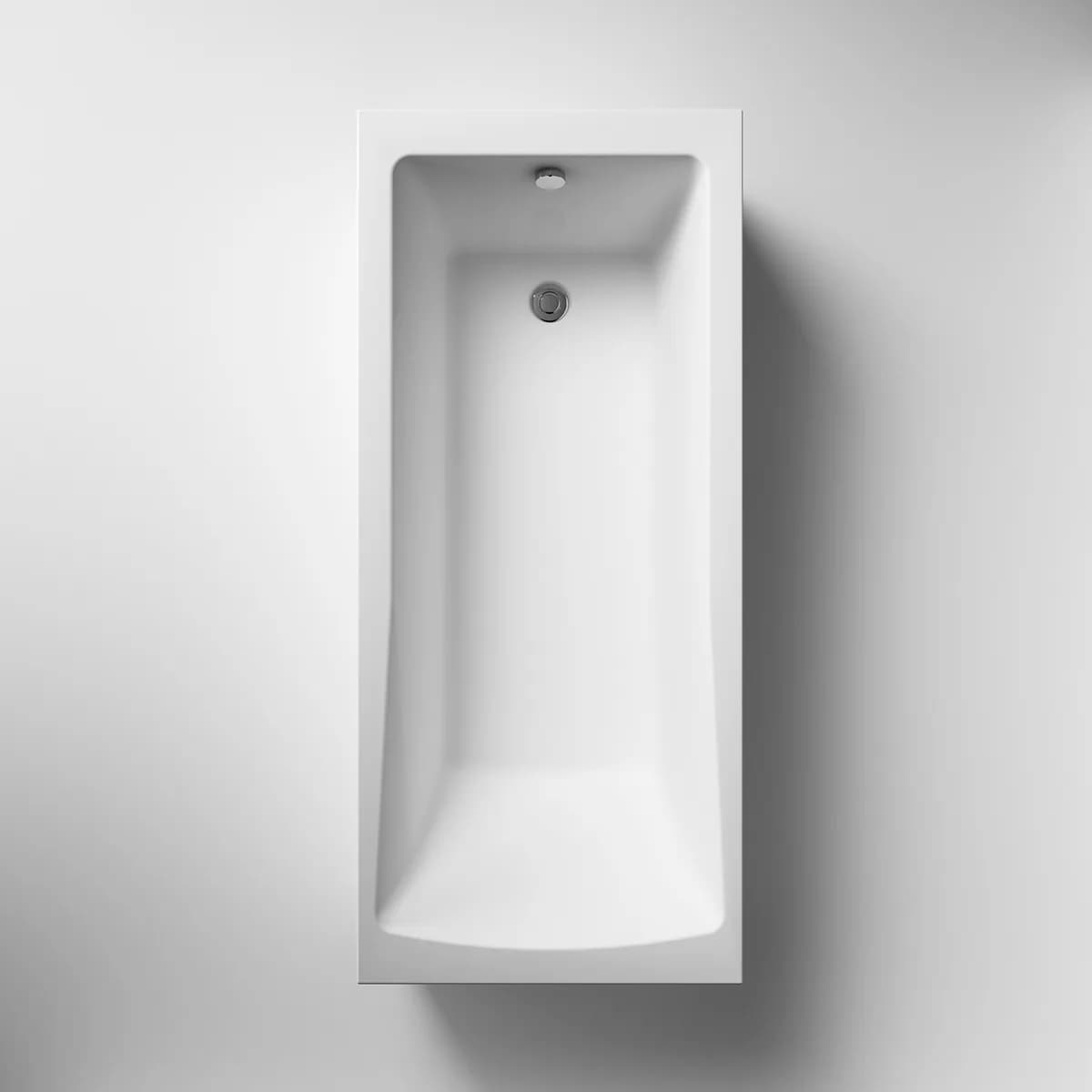
SCN Square Single Ended Acrylic Bath6 sizes available
Frominc VAT£211.78 ex VAT
✓ Delivery available✓ Collect today
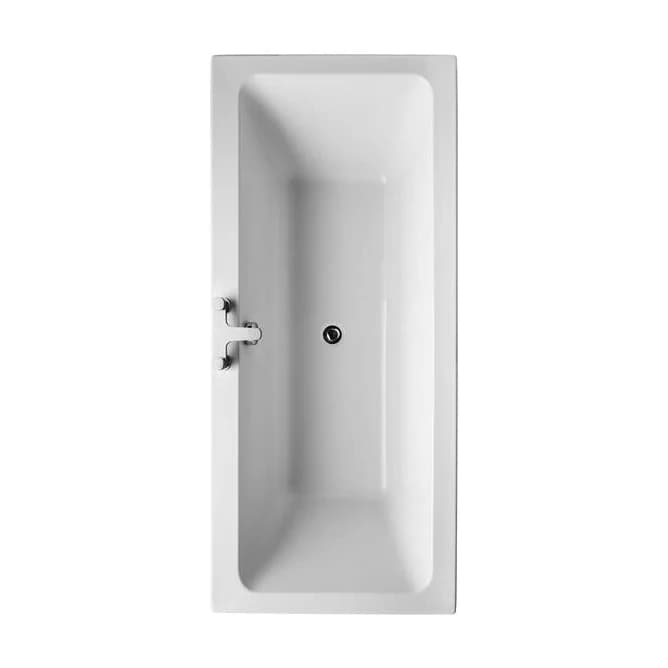 In stockTempo Cube Double Ended Bath 1700 x 750mm (E258301)
Code: LP-MB1Z7A
inc VAT£235.99 ex VAT
✓ Delivery available✓ Collect today
Not sure what will fit? Bring your measurements and a sketch of the room to our Chingford counter, open Mon–Fri 7am–7pm · Sat 7am–6pm · Sun 10am–4pm · Closed bank holidays.
Questions
- What is the most common bath size in the UK?
- 1700 x 700mm. Most bathrooms are built round it, so panels, screens and replacement baths are easiest to find in that size.
- Is a steel bath better than an acrylic one?
- Steel is harder and more rigid; acrylic is warmer, lighter, cheaper and comes in more shapes. For a hard-wearing family bathroom, steel; for comfort and choice, acrylic. Both last if they're properly supported.
- Does a steel bath need earthing?
- Not always. Under the current wiring regulations, extra bonding in a bathroom can often be left out if every circuit has 30mA RCD protection and the main bonding is in place. It's an electrician's decision, so ask before the bath is boxed in.
- Why fill a bath with water before siliconing?
- A bath settles a little under the weight of water. Sealed full, the silicone sets in the loaded position, so it isn't torn the first time someone has a bath.
- Can I put a shower over a normal bath?
- Yes, with a bath screen and the walls tiled or panelled down to the rim. A P or L-shaped shower bath gives you more room to stand, with a screen shaped to match.
- Do baths come with panels and a waste?
- SCN's straight baths are sold on their own, with panels, waste and trap bought separately; the SCN L-shaped set includes its front panel and screen. Check the product page for what comes with other baths.
Related guides
- Bathrooms & showersBasin Wastes and Traps: Slotted vs Unslotted, Plug Types and How to Fit One
- Bathrooms & showersPVC Shower Wall Panels vs Tiles: Which Is Better for Your Bathroom?
- Bathrooms & showersShower Tray Sizes UK: Standard Sizes Chart and How to Choose