
The short answer
If your basin has an overflow — a hole near the rim — fit a slotted waste so the overflow drains through it; with no overflow, fit an unslotted (solid) one. Basin wastes are 1¼" (32mm), not the 1½" of baths and sinks. Then choose the plug — click-clack, flip-top, pop-up or plug and chain — and a 1¼" trap with a 75mm seal: a bottle trap under a pedestal or vanity unit, or a tubular trap for the freest flow.
Slotted or unslotted: which basin waste do you need?
Look inside the basin, just below the rim — usually at the front, sometimes under the tap. A hole or slot there is the overflow: a channel moulded into the basin that runs down to the waste hole, so a tap left running can't flood the floor.
| Basin | Waste | Why |
|---|---|---|
| With an overflow | Slotted | Slots in the side of the waste let water from the overflow channel drain away |
| Without an overflow (many countertop and vessel basins) | Unslotted, also called solid | No slots for water to escape through round the waste |
Get it wrong and it shows. An unslotted waste blocks the overflow, so a basin left running spills over and stale water sits in the channel. A slotted waste in a basin with no overflow gives water a path out through the slots and round the waste body, a common cause of a drip underneath.
Some wastes are sold as universal, designed to suit either, so check how the one you choose is set up for your basin. A few inset and vanity basins have a separate overflow hole with no channel; those take a combination waste, with a flexible pipe from the overflow to the waste, much like a bath.
Peerless wastes on our shelf are labelled slotted or solid, and SCN's click-clack wastes come slotted or unslotted, from £9.69.
Click-clack, flip-top, pop-up or plug and chain?
| Type | How it works | Good to know |
|---|---|---|
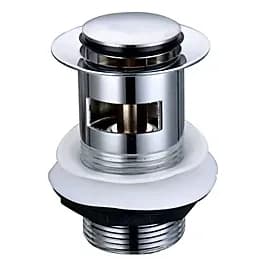
| Click-clack (clicker, sprung) | Press the plug to close; press again to drain | The most popular. Hair collects under the plug, so an easy-clean version is worth having |
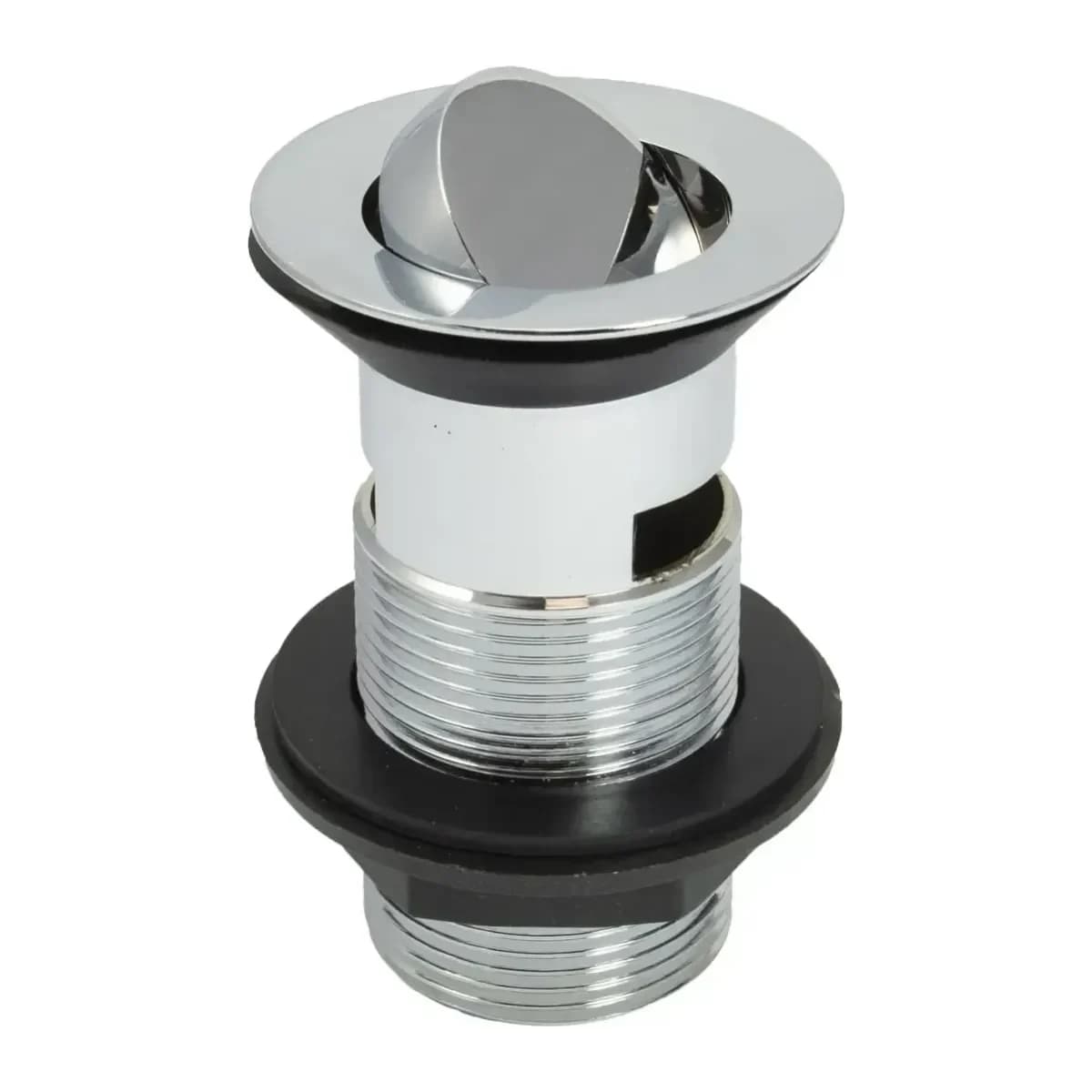
| Flip-top | Press one side and the plug tips on a pivot to open | Flat, neat and simple |
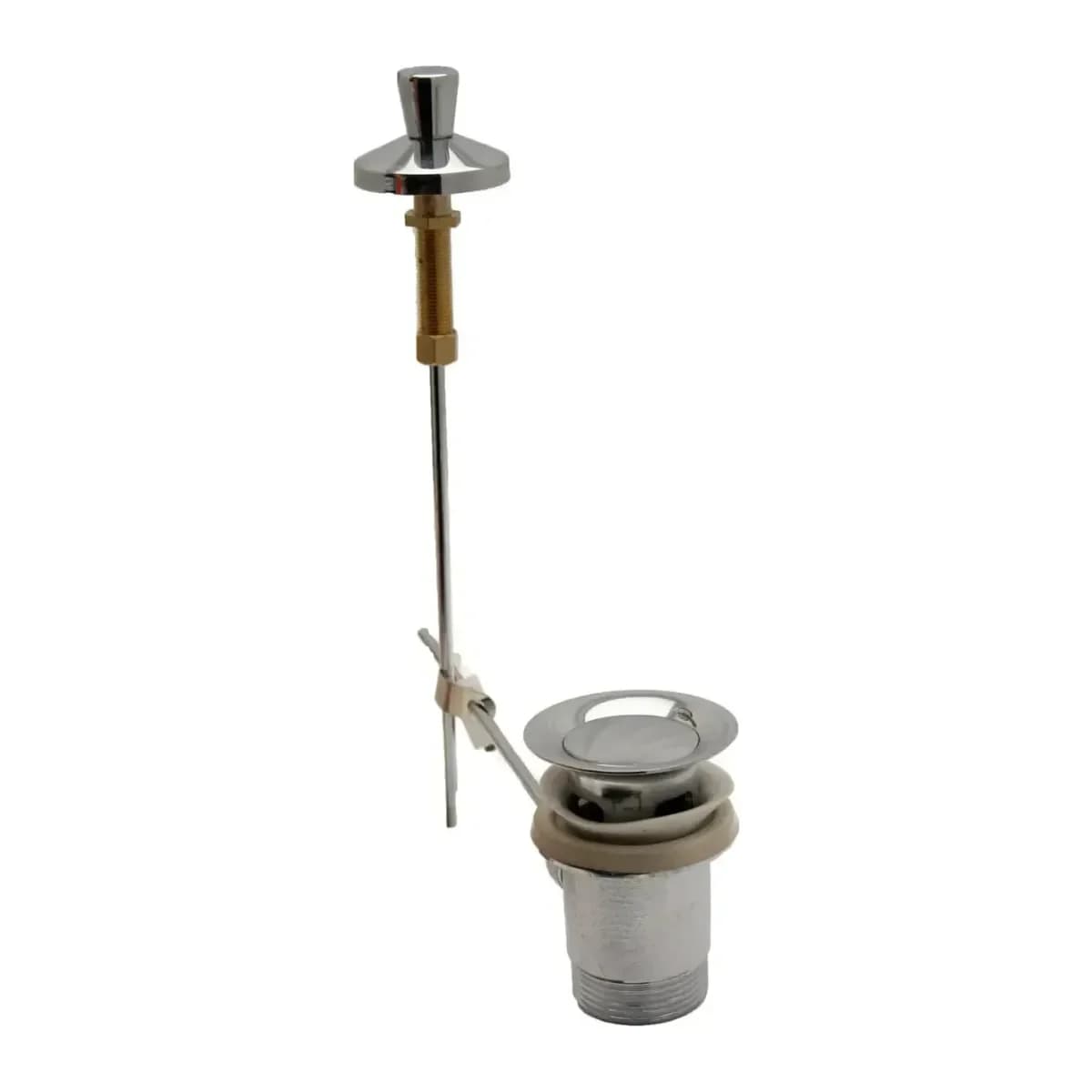
| Pop-up | A rod behind the tap lifts and drops the plug | Needs a tap with a hole for the rod, or a separate rod; many basin mixers include one |
| Plug and chain | A loose plug on a chain | The cheapest and simplest; needs a stay to anchor the chain |
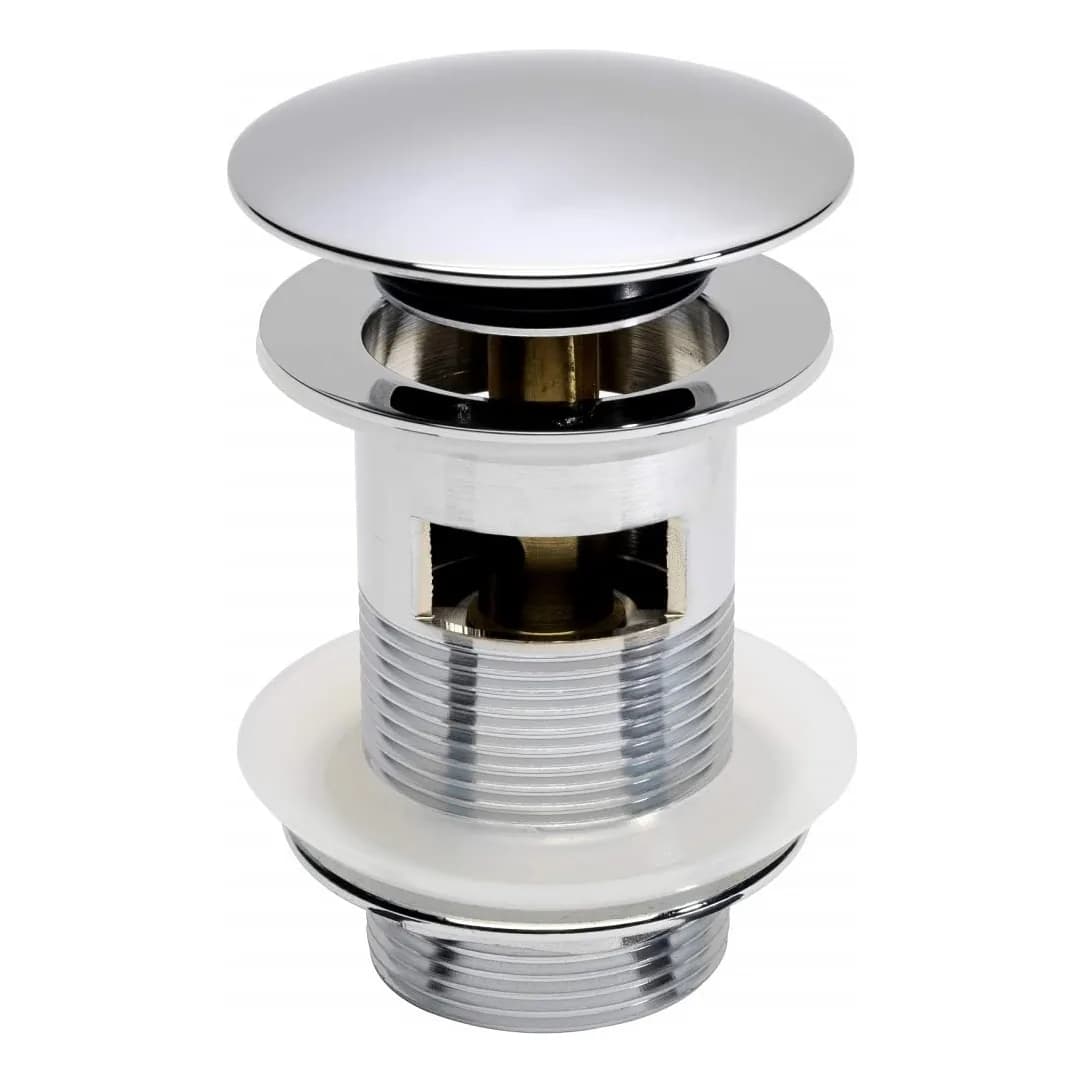
Mushroom or 'big dome' plugs are a style rather than a type: a rounded top on a click-clack waste. If the waste is on show, match the finish to the tap — chrome, matt black, brushed brass and brushed bronze are all on our shelf. Lost the plug? Replacement basin and bath plugs are from £1.83.
 In stock
SCN
SCN Click Clack Basin Waste2 options available
Frominc VAT£8.08 ex VAT
✓ Delivery available✓ Collect today
 In stock
SCN
SCN Big Dome Click Clack Basin Waste7 options available
Frominc VAT£9.69 ex VAT
✓ Delivery available✓ Collect today
 In stock
Peerless
Peerless Basin Waste Flip Plug3 options available
Frominc VAT£11.03 ex VAT
✓ Delivery available✓ Collect today
 In stock
Peerless
Peerless Basin Waste Pop Up Assembly (Brass Body, Brass Plug) - ChromeCode: LP-V4B0HX
inc VAT£21.65 ex VAT
✓ Delivery available✓ Collect today
What size is a basin waste?
Basin wastes have a 1¼" (32mm) thread, and connect to a 1¼" trap and 32mm waste pipe. Baths, showers and kitchen sinks are 1½" (40mm). The two don't mix: a 1½" trap won't fit a basin waste, so check the size on the trap before you buy.
The length of the waste's tail matters too. It has to pass through the basin and leave enough thread below for the back nut and the trap. A thick ceramic basin, or a countertop basin on a worktop, may need a longer-tailed waste or a basin waste thread extender, £2.43.
For pipe sizes, falls and how far a basin can be from the stack, see our waste pipe sizes guide.
Bottle trap, tubular trap or space-saving trap?
Every basin needs a trap: a bend that holds water to stop drain smells coming up. The main kinds:
- Bottle trap: compact and neat, the usual choice under a pedestal or inside a vanity unit. The bottom unscrews to clear a blockage or rescue a ring, and telescopic versions adjust in height to meet the pipe. A chrome bottle trap with a 300mm wall pipe looks smart under a wall-hung basin with nothing to hide it.
- Tubular P or S trap: a smooth, full-bore U-bend that's less likely to collect hair and soap than a bottle trap. A P trap goes out to the wall; an S trap goes down into the floor and is more prone to siphoning dry.
- Space-saving trap: a flat trap that hugs the wall, leaving room for vanity unit drawers. The McAlpine WHB-1 is one.
- Anti-siphon trap: has a small valve that lets air in when water rushing down the pipe tries to pull the trap dry, which stops gurgling and smells on long or steep runs.
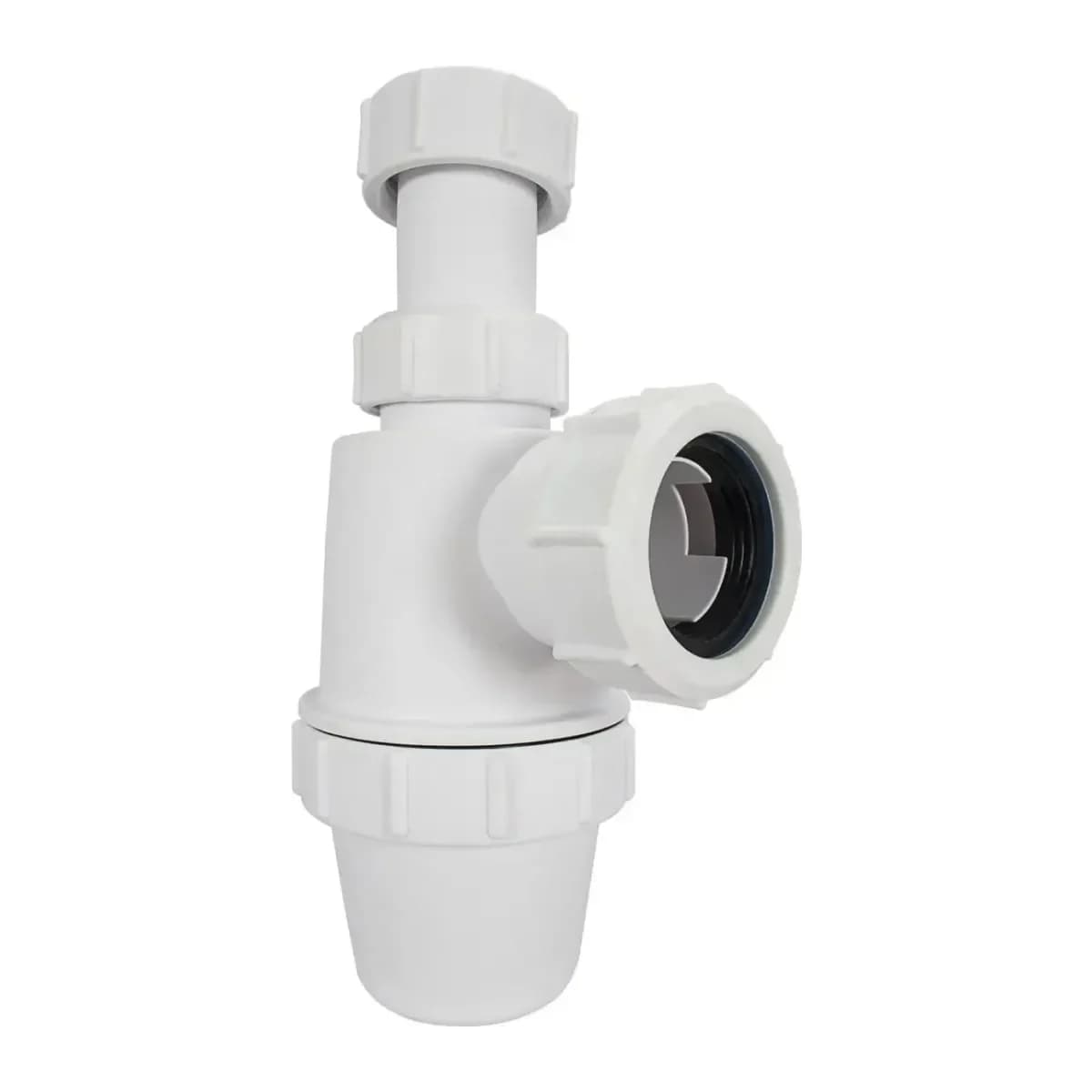 In stockPlastic Bottle Trap - Telescopic
2 sizes available
Frominc VAT£3.39 ex VAT
✓ Delivery available✓ Collect today
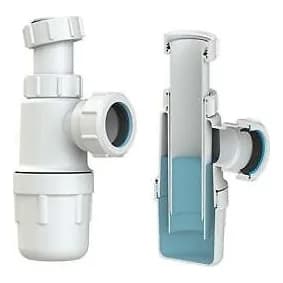 In stock
SCN
SCN Telescopic Bottle Trap2 sizes available
Frominc VAT£4.84 ex VAT
✓ Delivery available✓ Collect today
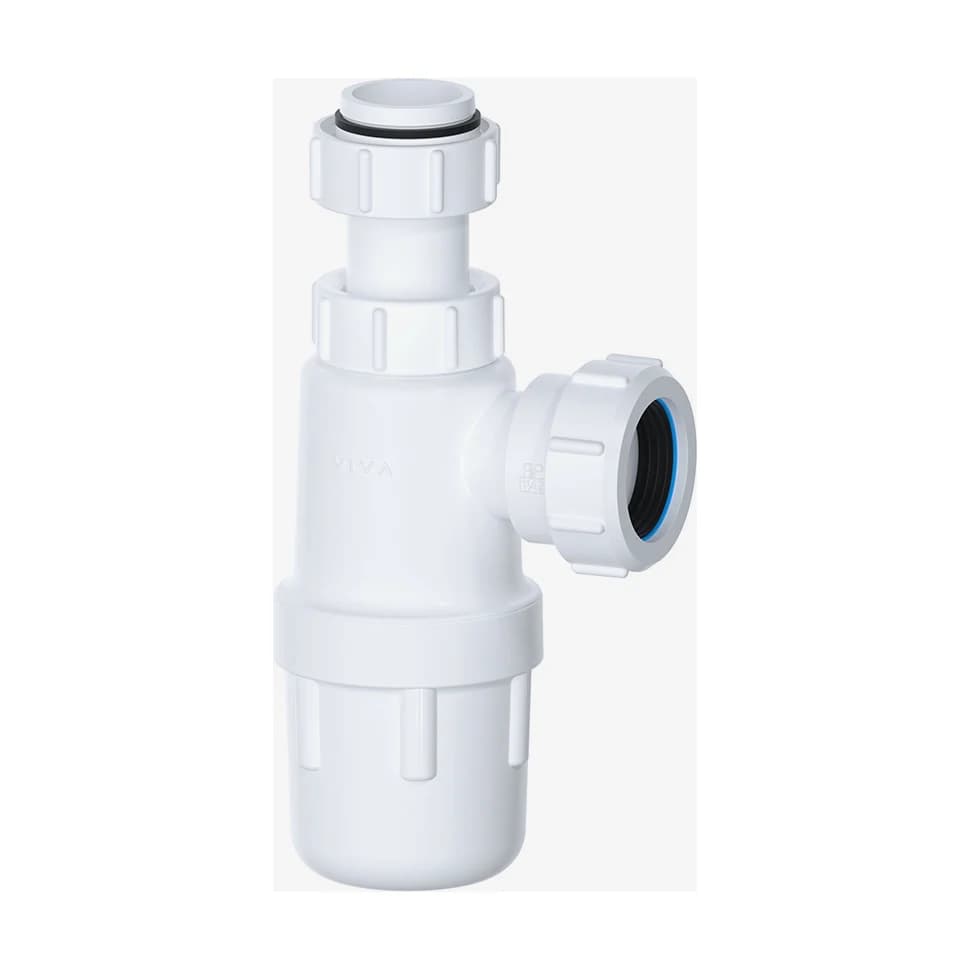 In stock
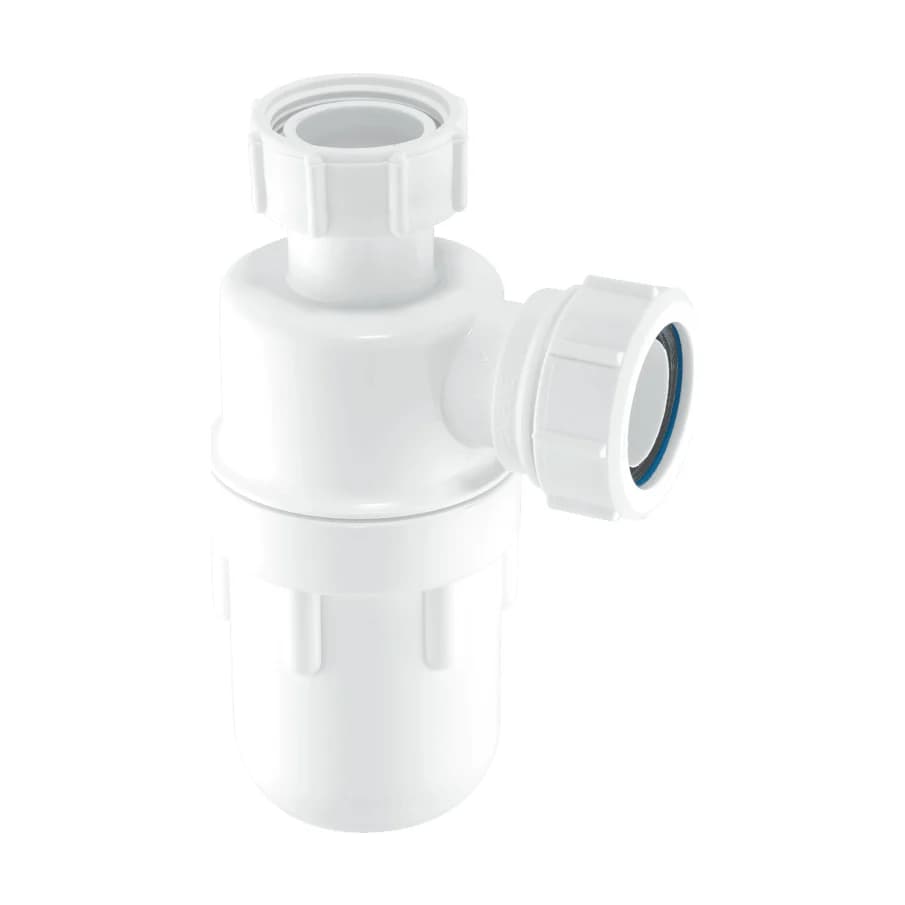 In stock
McAlpine
McAlpine A10 1 1/4" Bottle TrapCode: LP-WO6OIM
inc VAT£6.07 ex VAT
✓ Delivery available✓ Collect today
75mm or 38mm trap seal?
The seal is the depth of water the trap holds. Approved Document H asks for 75mm on a basin, so that's the trap to fit on any basin draining into a soil stack or an underground drain — which is nearly all of them.
Shallow-seal traps, usually 38mm, are made for the limited cases where the regulations allow less, such as a waste discharging over an open gully outside. Indoors, a shallow seal is easily pulled dry by water rushing down the pipe, and then drain smells come straight up. If you're not sure, fit 75mm. The seal depth is printed on the trap or its packaging.
How to fit a basin waste and trap, step by step
- Check the waste suits the basin: slotted or unslotted, 1¼", with a tail long enough for the basin's thickness.
- Seal the flange. Fit the rubber washer supplied under the top flange, or a thin bead of sanitary silicone if the instructions allow it. On a slotted waste, keep silicone well away from the slots.
- Push the waste through the hole from above. From below, fit the washers in the order the instructions show, then the back nut.
- Tighten the back nut by hand, then snug it with a spanner while someone holds the flange so it doesn't turn. Firm, not forced: ceramic cracks.
- Connect a pop-up, if you have one, by linking the rod behind the tap to the waste's lever, and adjust it until the plug opens fully.
- Fit the trap hand-tight onto the waste tail, with its washer the right way round. Adjust a telescopic trap to meet the pipe without straining either joint.
- Connect the outlet to the 32mm pipe, keeping a steady fall with no dips.
- Test it. Fill the basin, run water into the overflow, pull the plug, and check every joint with dry tissue. Check again an hour later.
Under a vanity unit, check the trap clears any drawer before you fix the unit. Use a flexible waste connector only where rigid pipe can't line up, and keep it short, with no sags for water to sit in. Our vanity unit guide covers the unit itself.
Smells, slow draining and drips
- Smells: the trap is losing its water. Check it's a 75mm seal. An S trap or a long, steep run can siphon it dry, and an anti-siphon trap or a vented run is the fix.
- Slow draining: usually hair and soap round a click-clack plug. Unscrew or lift out the plug top and clean it, then unscrew the bottle trap's base over a bowl.
- A drip underneath: check the back nut washer is seated squarely and the waste matches the basin; a slotted waste in a basin without an overflow is a classic leak.
- A smelly overflow: soap and grime build up in the channel. Flush it through with hot water and clean the opening with a bottle brush.
Not sure what you've got? Bring the old waste or trap to our Chingford counter and we'll match the size and type — see what to bring to the trade counter.
Wastes and traps on our shelves
We stock 118 wastes, 18 bottle traps and 35 P and S traps. Click & collect from our Chingford counter, usually ready in about an hour, or delivery anywhere in Great Britain — free over £250 ex VAT, otherwise £8.34.
Questions
- How do I know if my basin needs a slotted waste?
- Look for an overflow hole near the rim. If there is one, fit a slotted waste; if the basin has no overflow, fit an unslotted (solid) one.
- Is a basin waste 1¼ or 1½ inch?
- 1¼" (32mm), with a 1¼" trap. Baths, showers and kitchen sinks use 1½" (40mm).
- Bottle trap or P trap for a basin?
- A bottle trap is neater and fits under a pedestal or inside a vanity unit; a tubular P trap flows more freely and is less prone to blocking. Either works with a 75mm seal.
- Do basin mixer taps come with a waste?
- Many do, usually a click-clack or pop-up. Check the product page before you buy a separate one, and make sure it suits a basin with or without an overflow.
- Why does my basin waste smell?
- Usually the trap is being siphoned dry, or it's a shallow-seal type. Fit a 75mm-seal trap, and an anti-siphon trap if the pipe run is long or steep.
- Can I fit a basin waste myself?
- Yes — it's a straightforward job with a spanner and the right waste. Take care not to over-tighten the back nut on a ceramic basin, and test it before you close up the vanity unit.
Related guides
- Bathrooms & showersVanity Unit Buying Guide: Sizes, Wall Hung vs Floor Standing, and Materials
- Bathrooms & showersBath Buying Guide: Sizes, Shower Baths, Steel vs Acrylic, Panels and Wastes