
The short answer
It depends on your hot water. An electric shower heats cold mains water itself (7.5–10.5kW), so it works with any system but gives a gentler flow and needs its own circuit. A thermostatic mixer blends your hot and cold: ideal on a combi or unvented cylinder, and on a gravity system only with enough height or a pump. Power showers and pumped mixers boost tank-fed water, and must never be connected to the mains.
Electric, mixer, power or pumped: what's the difference?
Every shower does two jobs: it gets hot water to the head, and it controls the temperature. The four types split those jobs differently, which is why the right one depends on the hot water system you already have.
| Electric | Thermostatic mixer | Power shower | Pumped mixer | |
|---|---|---|---|---|
| How it works | Heats cold mains water inside the unit as it flows | Blends hot and cold from your system | One wall unit with a built-in pump and mixer | A mixer valve fed by a separate shower pump |
| Hot water from | Heats its own | Boiler or cylinder | Cylinder | Cylinder |
| Flow | Gentle: about 3.5–6 litres a minute | Strong on a combi or unvented cylinder; weak on gravity without a pump | Strong | Strong, set by the pump |
| Electrics | Its own circuit from the consumer unit | None for a manual or thermostatic valve | A supply for the pump | A supply for the pump |
| Not for | A cold supply from a loft tank, unless the model is made for it | Gravity systems without enough height, unless pumped | Mains, combi or unvented supplies | Mains, combi or unvented supplies |
Our low water pressure guide shows how to tell which system you have and how to measure your pressure and flow. This guide picks up from there.
Which shower suits a combi, gravity or unvented system?
- Combi boiler: a thermostatic mixer. Hot and cold both arrive at mains pressure, so the shower is as strong as the combi can heat — about 10 litres a minute from a 24kW combi and 14 from a 35kW one. An electric shower makes a good second shower, because it doesn't share the combi's hot water.
- Unvented cylinder: a thermostatic mixer, and the strongest shower of all. Hot and cold are both at mains pressure and balanced, so big rain heads and multi-outlet valves work well while the cylinder has hot water.
- Gravity (a cold tank in the loft and a vented cylinder): a pumped mixer or power shower for a strong shower, a mixer rated for low pressure if the tank sits well above the shower head, or an electric shower on the cold mains.
- Gravity hot, mains cold: common in older homes. An electric shower avoids the problem; a mixer only works if its instructions allow unequal pressures, and a pump can't go on the mains side.
- No hot water near the bathroom: an electric shower, which needs only a cold main and a cable. It suits a loft conversion or an en-suite a long way from the boiler.
The combi figures assume a 35°C rise from cold mains in winter. Our combi size guide explains the sum, and our boiler guide the systems themselves.
Electric showers: kW ratings and flow
An electric shower is a small instant water heater on the wall. Cold mains water runs through a heating can, and the unit sets the temperature by how fast it lets the water through: hotter means slower. So its power in kilowatts matters more than anything else, and it gives less in winter, when the mains arrives colder.
| Rating | Winter (30°C rise) | Summer (25°C rise) |
|---|---|---|
| 7.5kW | About 3.6 | About 4.3 |
| 8.5kW | About 4.1 | About 4.9 |
| 9.5kW | About 4.5 | About 5.4 |
| 10.5kW | About 5.0 | About 6.0 |
Compare that with a mixer on a combi at around 10–14 litres a minute and you can see why electric showers feel gentler. For the best flow, choose the highest rating your electrician says the circuit can take.
Electric showers also need a minimum mains pressure to run, so check the figure in the instructions against your supply. A thermostatic electric shower, like the Mira Advance, holds the temperature steadier when the pressure changes. A multi-fit model, like the Mira Jump Multi-Fit, has several cable and water entry points to make replacing an old unit easier.
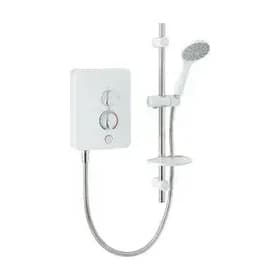 In stockCompact Electric Shower - 9.5kW
Code: LP-G28SLI
inc VAT£71.13 ex VAT
✓ Delivery available✓ Collect today
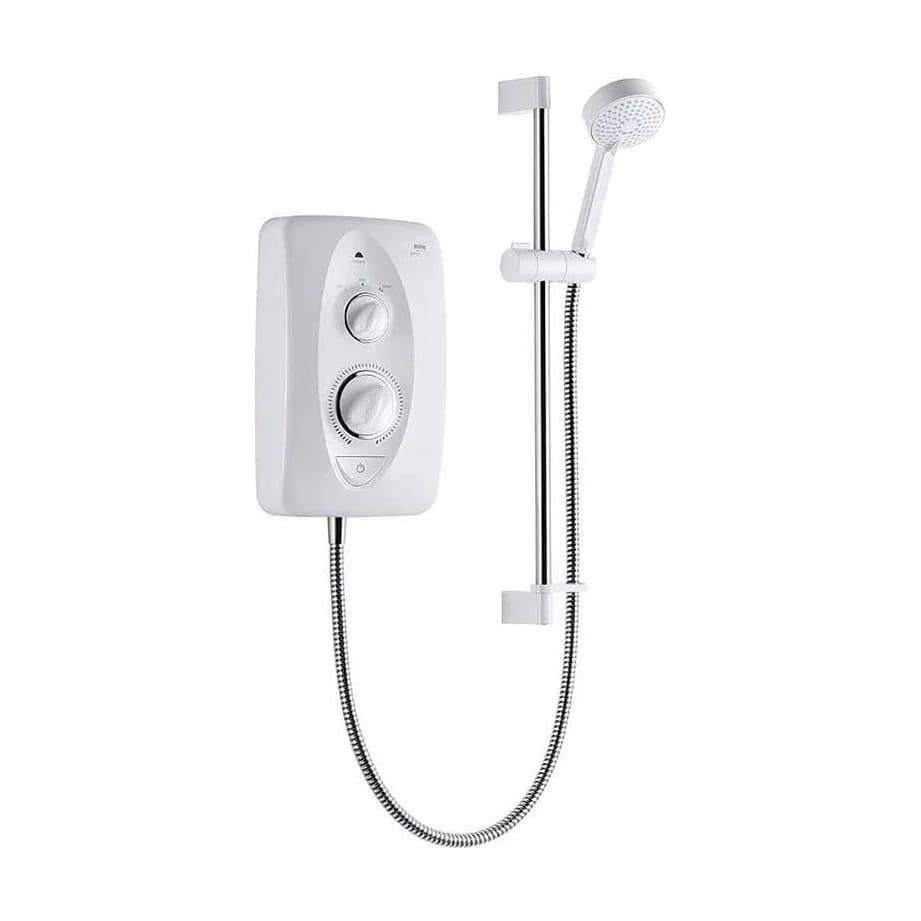 In stock
Mira
Mira Jump Multi-Fit 8.5kW Electric Shower - White/Chrome - 1.1788.010Code: LP-2ADCOK
inc VAT£160.86 ex VAT
✓ Delivery available✓ Collect today
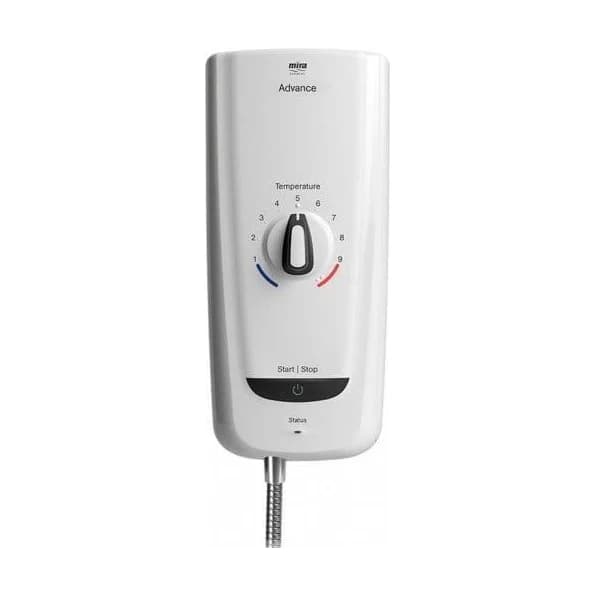 In stock
Mira
Mira Advance Thermostatic 8.7kW Electric Shower - White/Chrome 1.1785.001Code: LP-1JMLGD1
inc VAT£282.33 ex VAT
✓ Delivery available✓ Collect today
Does an electric shower need its own circuit?
Yes. A 9.5kW shower draws around 40 amps, one of the biggest loads in the house, so it has its own circuit from the consumer unit: cable sized for the rating and the length of the run, 30mA RCD protection, and a double-pole isolating switch, usually a ceiling pull-cord such as our 45A pull-cord switch.
In England a new circuit is notifiable under Part P of the Building Regulations, so a new electric shower is a job for a registered electrician, who certifies it for you. Swapping an old shower like for like on the same circuit usually isn't notifiable, but a more powerful model often needs a heavier cable and a different breaker. Have an electrician check the circuit before you choose the kW, not after.
Our supply & fit service covers Greater London. Electric showers need electrical work as well as plumbing, so call us on 020 3802 3275 and we'll talk it through.
Thermostatic mixer showers
A mixer shower takes hot and cold from your system and blends them. Choose thermostatic: its cartridge holds the temperature you set when someone flushes the toilet or runs a tap, and most shut down quickly if the cold supply fails, so they can't scald. A manual mixer only sets the proportions, and drifts whenever the pressure on either side changes.
Exposed bar valves sit on the surface of the wall, with the hot and cold usually coming out 150mm apart, so they're the easy choice for a refit: no chasing the wall. Concealed valves go into the wall, leaving just the handles and plate on show, and need a recess deep enough for the valve body; SCN's have a short recess for shallow walls. Either can feed a handset, a fixed head, or both through a diverter.
On a combi, the shower can only be as strong as the boiler can heat, and a 300mm or 400mm rain head can ask for more than a smaller combi gives, so it runs cooler than you set. On a gravity system, check the valve's minimum working pressure: some need 1 bar or more, which is 10m of height. Our shower head guide covers matching the head to the supply.
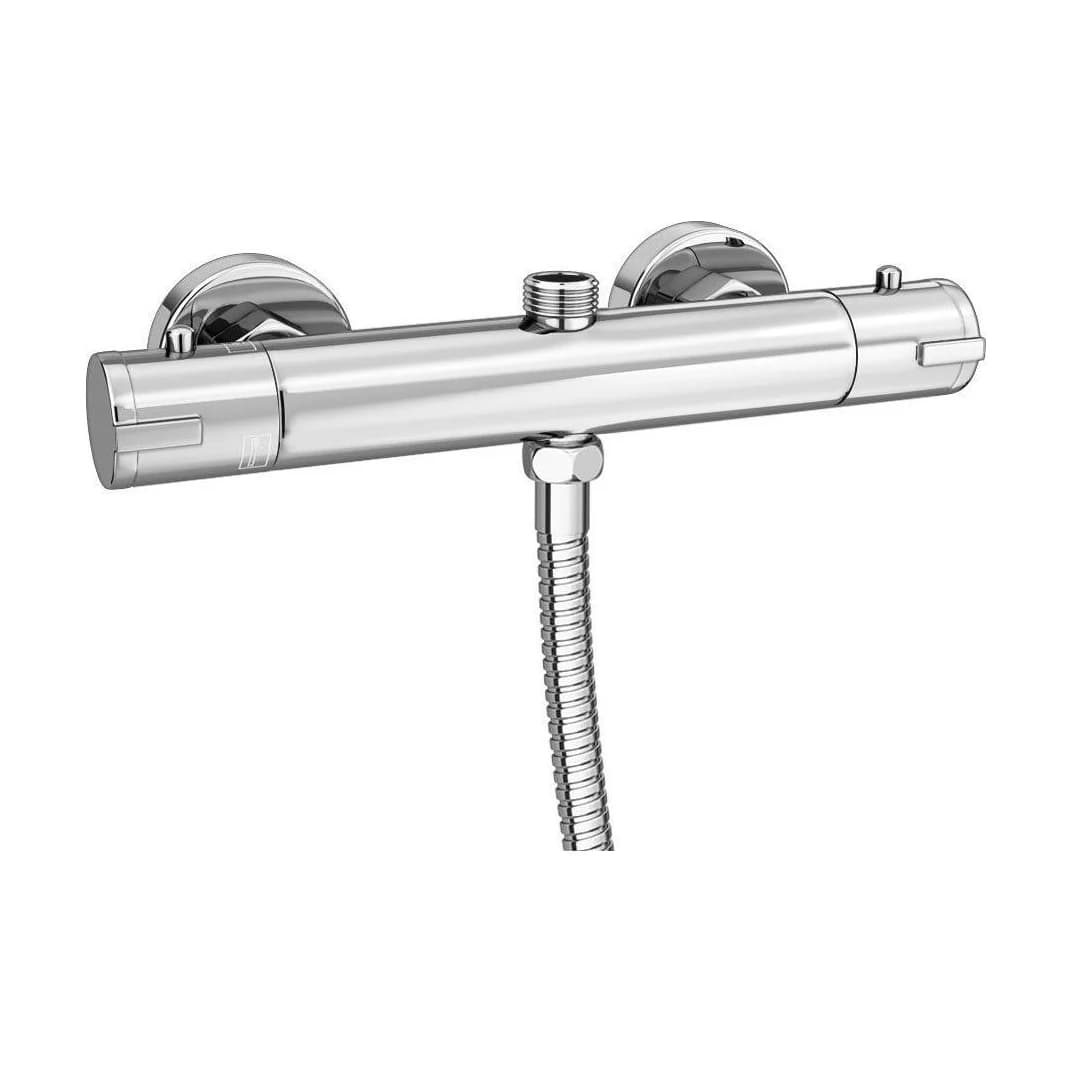 In stockThermostatic Bar Shower Valve Chrome
Code: LP-1F54NS7
inc VAT£59.03 ex VAT
✓ Delivery available✓ Collect today
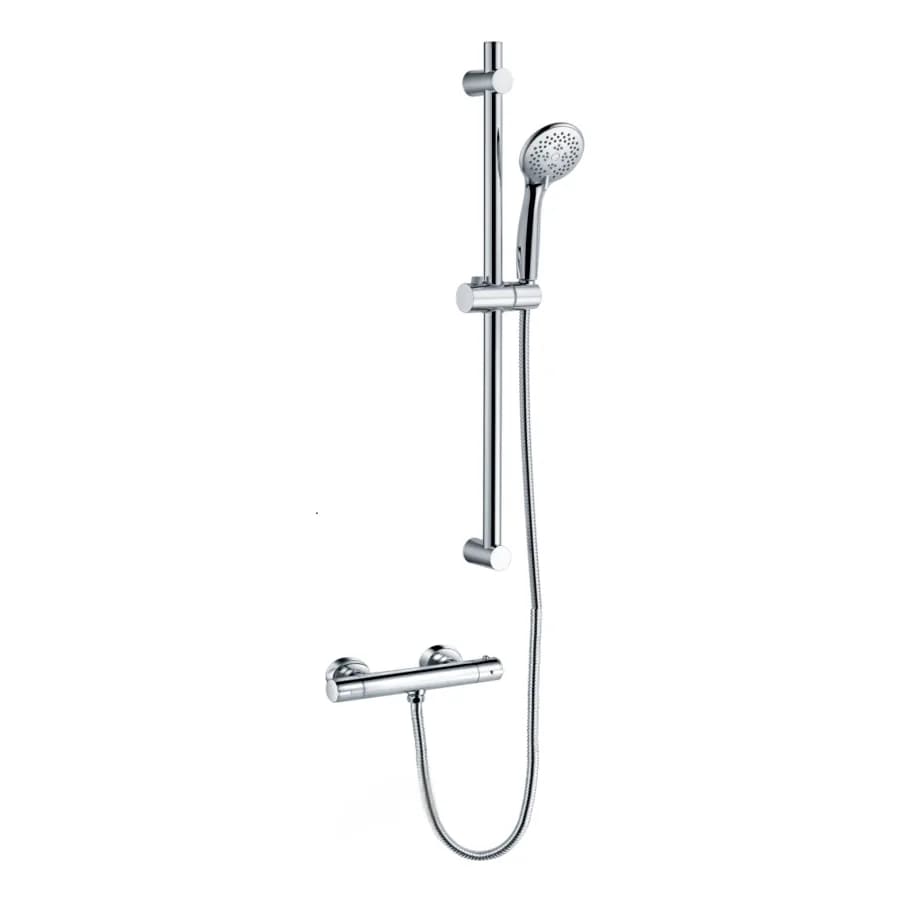 In stock
SCN
SCN Thermostatic Exposed Shower16 options available
Frominc VAT£80.02 ex VAT
✓ Delivery available✓ Collect today
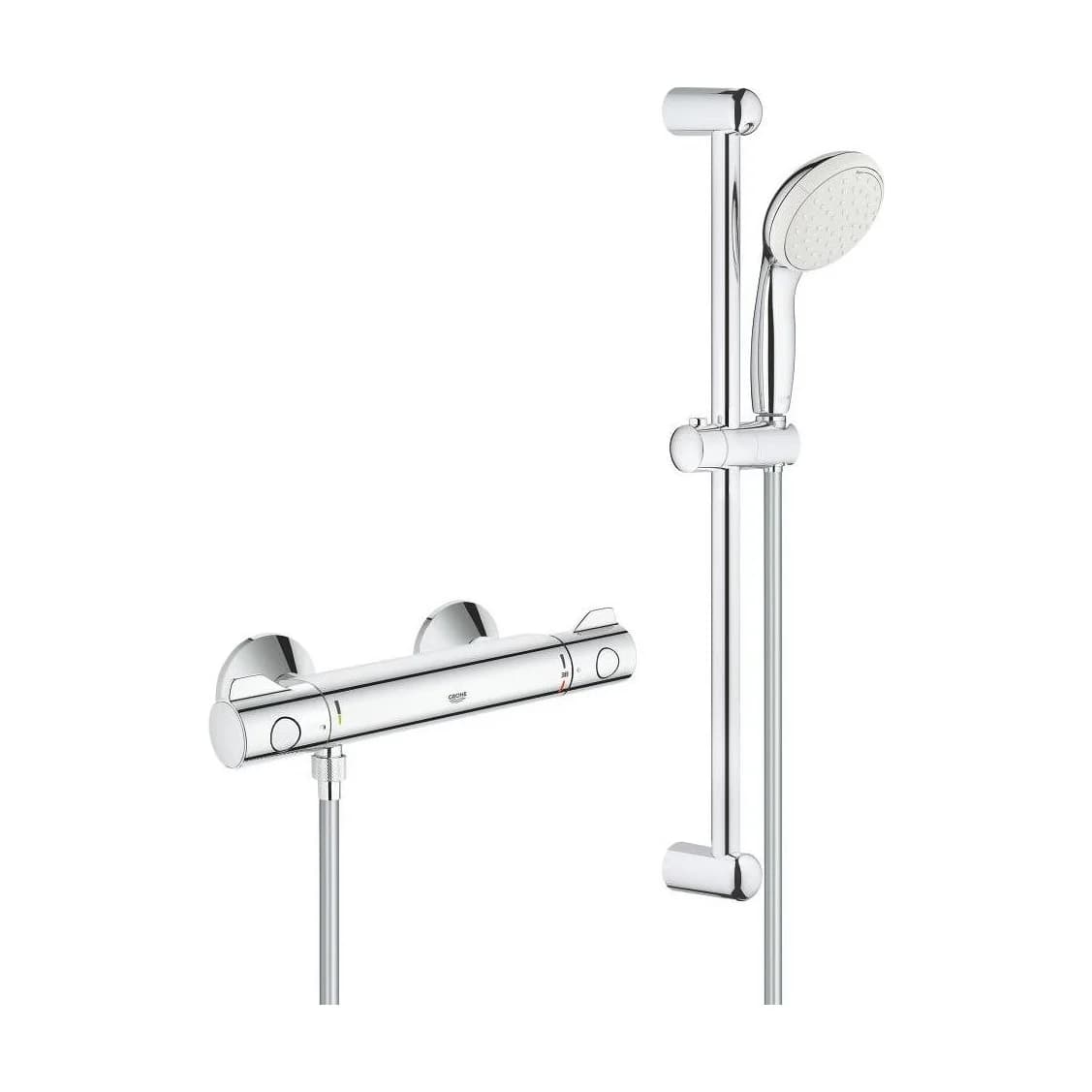 In stock
Grohe
GROHE Grohtherm 800 Thermostatic shower mixer 1/2" with shower set (34565001)Code: LP-19F1LSB
inc VAT£121.21 ex VAT
✓ Delivery available✓ Collect today
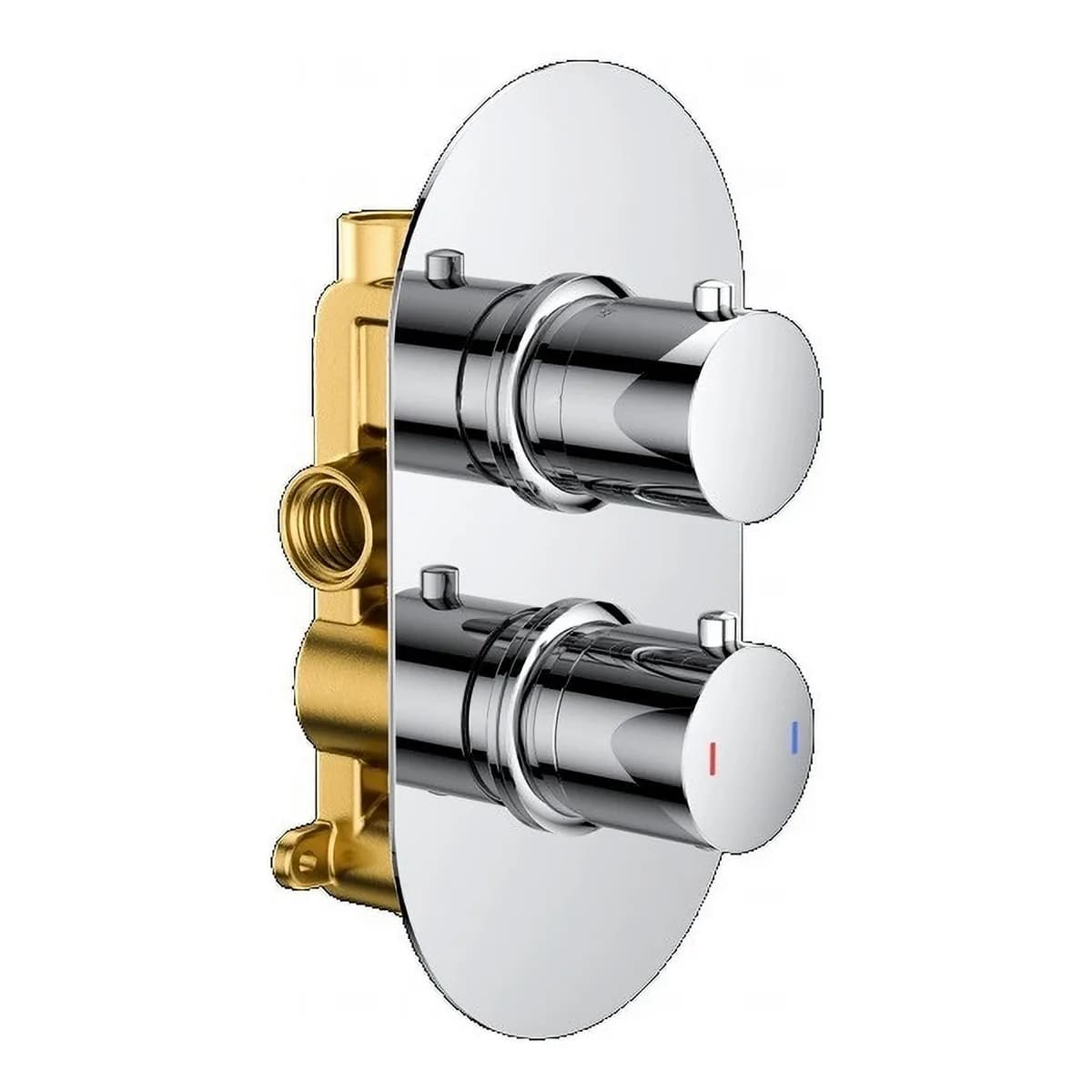 In stock
SCN
SCN Concealed Thermostatic Shower Valve26 options available
Frominc VAT£146.30 ex VAT
✓ Delivery available✓ Collect today
Power showers and pumped mixers: gravity systems only
Both boost tank-fed water. A power shower is a single unit on the wall with a pump built in: it draws hot from the cylinder and cold from the loft tank and pumps the mixed water to the head. A pumped mixer is an ordinary mixer valve with a separate shower pump, usually near the cylinder. A twin-impeller pump boosts hot and cold separately, and because it's out of the bathroom, it's quieter in use.
Either gives a strong shower on a gravity system, but they use a lot of water. The cold tank has to keep up and the cylinder has to hold enough hot water, so check the pump maker's minimum tank size, and whether it needs a dedicated hot feed from the cylinder so it doesn't draw air. Our low water pressure guide covers choosing and plumbing a pump.
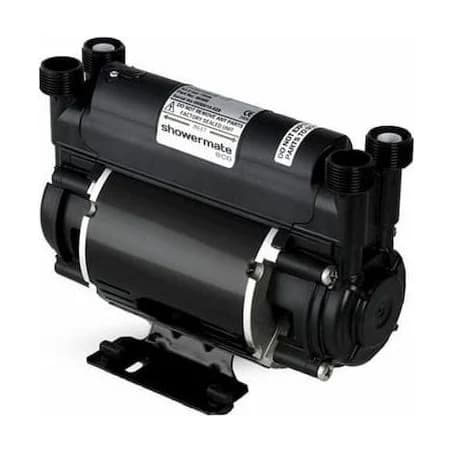 In stock
Stuart Turner
Stuart Turner Showermate Eco Standard Twin Shower Pump - 2.0 BarCode: LP-YUJHZJ
inc VAT£186.63 ex VAT
✓ Delivery available✓ Collect today
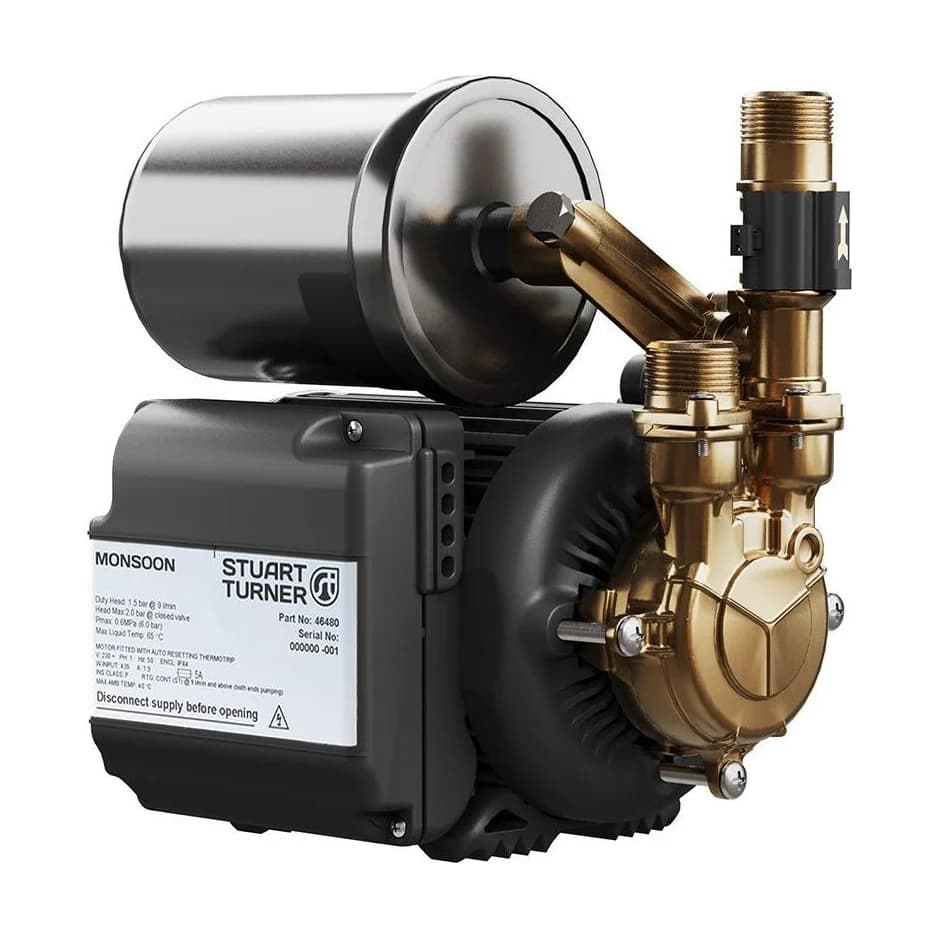 In stockMonsoon Universal 2.0 Bar Single Pump
Code: LP-TQHK92
inc VAT£311.57 ex VAT
✓ Delivery available✓ Collect today
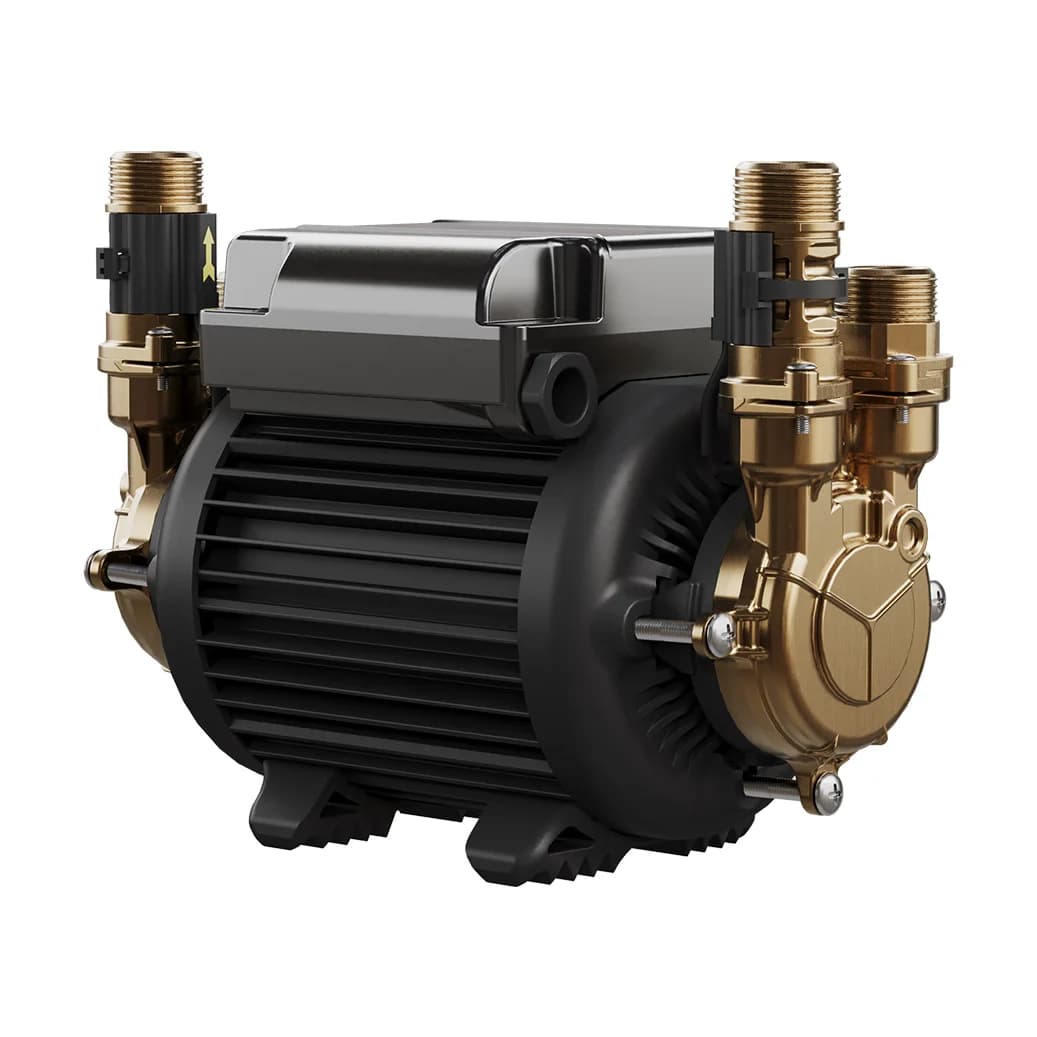 In stockMonsoon Standard 1.5 Bar Twin Pump
Code: LP-115BPYG
inc VAT£370.52 ex VAT
✓ Delivery available✓ Collect today
Where do thermostatic mixing valves (TMVs) fit in?
A TMV is an inline valve, not a shower. It blends hot and cold to a fixed, safe temperature for a bath, a basin or a whole bathroom. TMV2 valves are approved for homes and TMV3 for healthcare, and most on our shelf are marked TMV2/TMV3. A thermostatic shower valve already has this protection built in, so a shower doesn't need a separate TMV.
In England, Part G of the Building Regulations limits the hot water to a bath in a new home, or one created by a conversion, to 48°C, and a TMV on the bath supply is the usual way to do it. They're also fitted to protect children and older people at basins. We stock 5 thermostatic mixing valves in 15mm and 22mm, from £33.34.
So which shower should you choose?
- Choose an electric shower for a second bathroom or en-suite on a combi, a home with tank-fed hot water and a decent mains supply, or anywhere hot water is hard to reach. Accept a gentler flow.
- Choose a thermostatic mixer on a combi or an unvented cylinder, or on a gravity system with plenty of height. It's the simplest, quietest route to a strong shower.
- Choose a pumped mixer or a power shower for a strong shower on a gravity system you're keeping.
Not sure what you've got? Bring photos of the boiler, the airing cupboard and the loft tank to our Chingford counter and we'll talk it through, or call 020 3802 3275.
Questions
- Is a mixer shower better than an electric shower?
- On a combi or an unvented cylinder, usually: it gives two to three times the flow. An electric shower wins where the hot water is tank-fed or a long way off, and as a second shower that doesn't share the boiler.
- Can I put a power shower on a combi boiler?
- No. Power showers and shower pumps are for tank-fed systems only. A combi already supplies mains pressure, so fit a thermostatic mixer instead.
- What kW electric shower do I need?
- The highest rating your circuit can safely take. 9.5kW or 10.5kW gives a noticeably better winter flow than 8.5kW, but an electrician has to confirm the cable and breaker suit it.
- Do I need an electrician to fit an electric shower?
- Yes. It needs a dedicated circuit, RCD protection and an isolating switch, and in England a new circuit is notifiable under Part P. A plumber can make the water connection.
- Why does my shower run hot when someone flushes the toilet?
- The cistern refilling takes cold water, so a manual mixer gets more hot than you set. A thermostatic valve senses the change and corrects it, which is why it's the safer choice.
- Is an electric shower cheaper to run?
- It depends on your tariffs and habits. Electricity usually costs more per unit than gas, but an electric shower uses less water and heats only what you use, with no stored hot water cooling in a cylinder.
Related guides
- Bathrooms & showersLow Water Pressure: Which Taps and Showers Will Work?
- Bathrooms & showersHow to Choose a Shower Head: Rainfall vs Handset, Hoses, Rails and Fittings
- Heating & boilersCombi vs System vs Regular Boiler: Which Do You Need?
- Heating & boilersWhat Size Combi Boiler Do I Need? kW Explained