The short answer
In UK homes, basins and bidets use 32mm (1¼") waste pipe; baths, showers, kitchen sinks, washing machines and dishwashers use 40mm (1½"); 50mm is for long runs and commercial kitchens; and WCs use 110mm soil pipe. Each appliance needs a trap — 75mm deep for basins, sinks and machines, 50mm for baths and showers — and the pipe needs a steady fall to the drain.
Waste pipe size by appliance
| Appliance | Waste pipe | Trap seal depth |
|---|---|---|
| Basin, bidet | 32mm (1¼") | 75mm |
| Bath | 40mm (1½") | 50mm |
| Shower | 40mm (1½") | 50mm |
| Kitchen sink | 40mm (1½") | 75mm |
| Washing machine, dishwasher | 40mm (1½") | 75mm |
| Long runs, several appliances, commercial kitchens | 50mm | — |
| WC | 110mm (4") soil pipe | 50mm, in the pan |
Inch sizes are still printed on many waste fittings, so you'll see 1¼" and 1½" alongside 32mm and 40mm.
How long can a waste pipe run be?
Approved Document H sets maximum lengths for a single appliance's waste branch before it needs venting or a larger pipe. Run too far and the water can siphon the trap dry, letting drain smells in.
| Pipe size | Maximum length | Typical fall |
|---|---|---|
| 32mm | 1.7m | 18–22mm per metre, more for short runs |
| 40mm | 3m | 18–90mm per metre |
| 50mm | 4m | 18–90mm per metre |
| 100mm (single WC) | 6m | At least 18mm per metre |
Beyond these, step up a size or add an air admittance valve. Approved Document H has the full rules, and Building Control can advise on anything unusual.
Choosing the trap
- Basins: a 32mm bottle trap under pedestals and vanity units, or a P or S trap.
- Kitchen sinks: a 40mm trap; a two-bowl sink uses a sink plumbing kit with a single trap.
- Washing machines: a 40mm standpipe with its own trap, or a spigot on the sink trap. Follow the machine's instructions on standpipe height.
- Showers: a shower trap to match the tray's waste hole, usually 90mm, with a low-profile body where the tray is close to the floor.
- Baths: a 40mm bath trap, often combined with the waste and overflow.
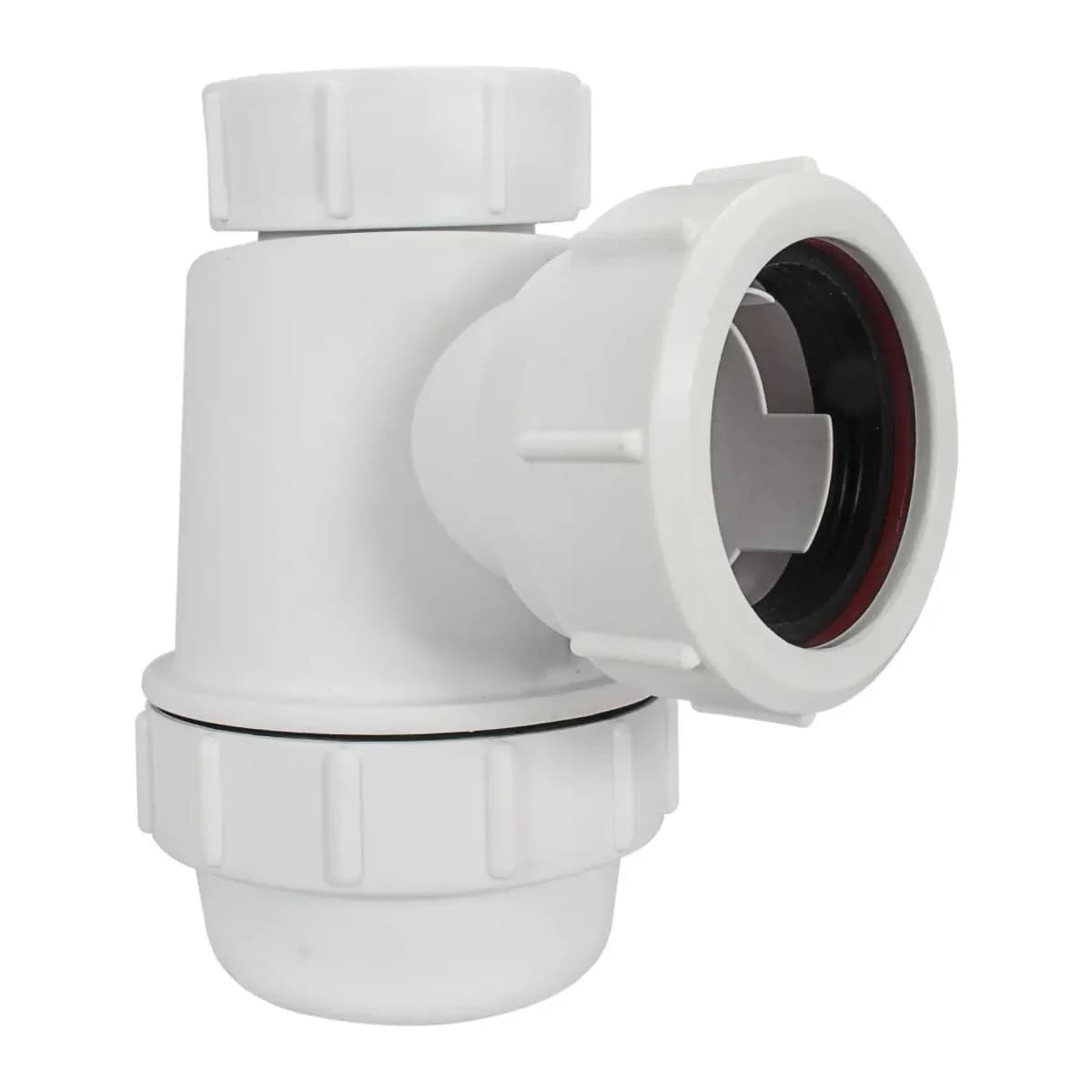 In stock
London Plumbing
Plastic Bottle Trap3 sizes available
Frominc VAT£2.75 ex VAT
✓ Delivery available✓ Collect today
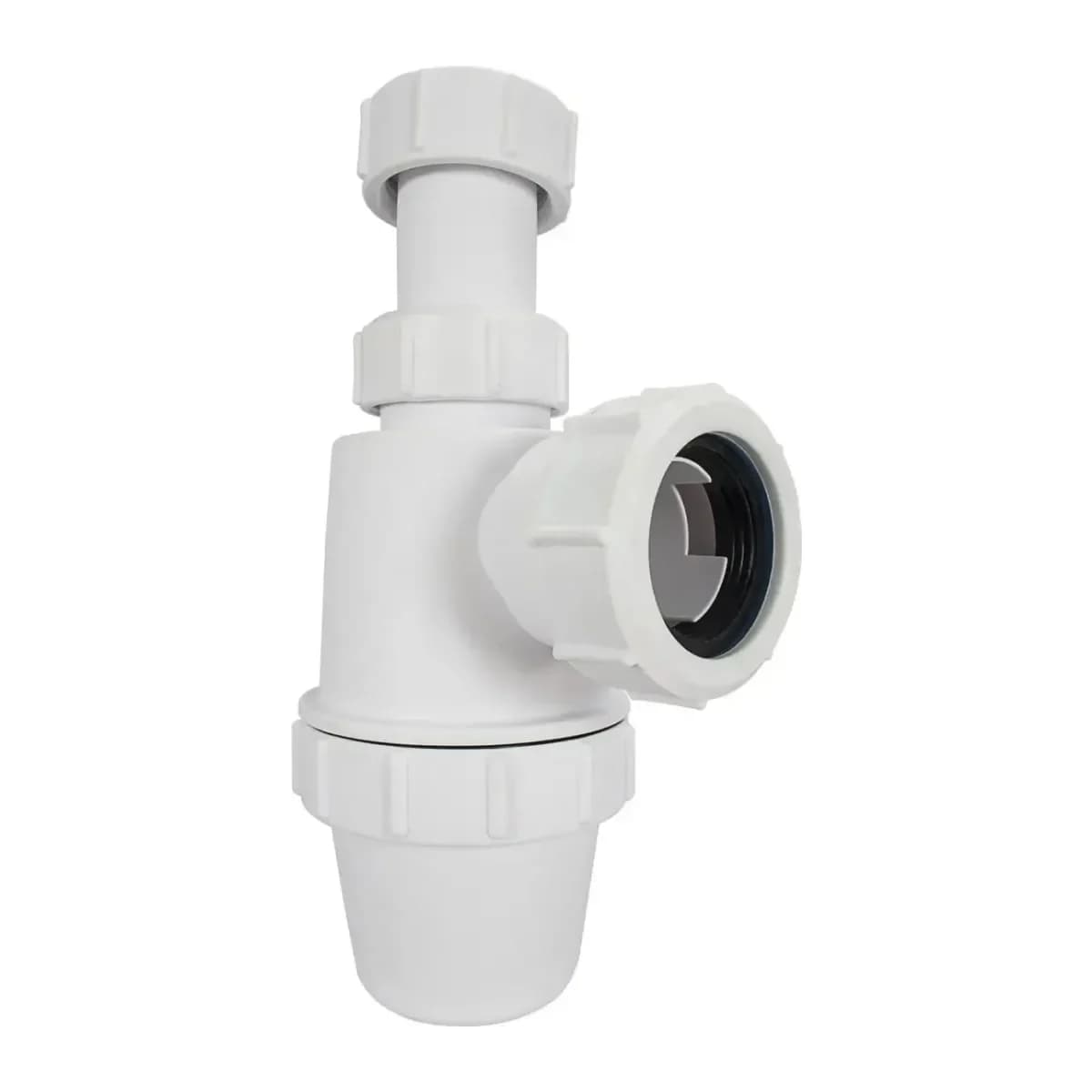 In stock
London Plumbing
Plastic Bottle Trap - Telescopic2 sizes available
Frominc VAT£3.39 ex VAT
✓ Delivery available✓ Collect today
 In stock
SCN
SCN Telescopic Bottle Trap2 sizes available
Frominc VAT£4.84 ex VAT
✓ Delivery available✓ Collect today
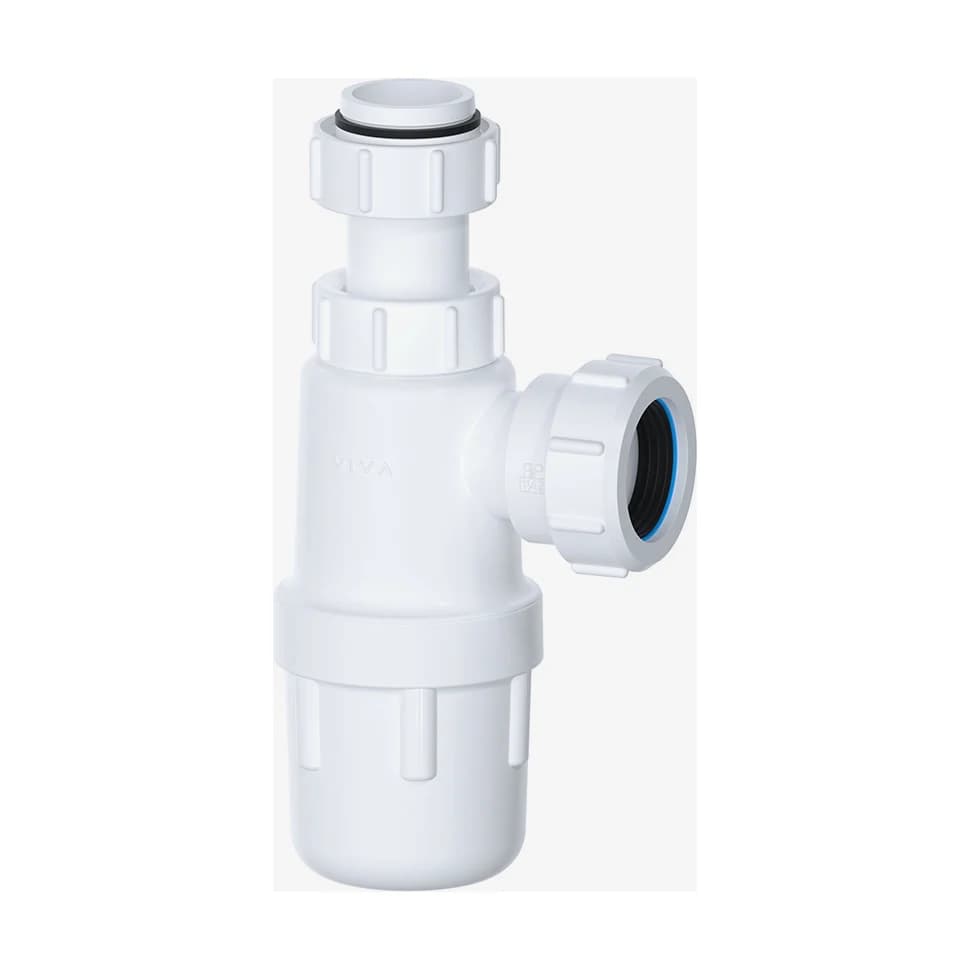 In stock
London Plumbing
1 1/4" Telescopic Bottle TrapCode: LP-182AT0C
inc VAT£5.01 ex VAT
✓ Delivery available✓ Collect today
Push-fit, solvent weld or compression waste?
- Push-fit waste pushes together on rubber seals: quick, and it can be taken apart. Good under sinks and baths.
- Solvent weld is glued with solvent cement: permanent, neat and slim. Clean, prime if the maker says, and let it cure before use.
- Compression or multifit waste fittings tighten with a nut and seal — useful to join different makes or to old pipe.
Systems from different makers don't always fit each other exactly. Use the same make throughout a run, or a proper adaptor between them.
Questions
- What size waste pipe does a kitchen sink need?
- 40mm (1½"), with a 75mm-seal trap. A sink plumbing kit connects both bowls of a double sink, and often the washing machine, to one trap.
- What size waste pipe for a shower?
- 40mm (1½"), with a 50mm-seal shower trap. Over a long run, or for a high-flow shower, 50mm drains more quickly.
- Can a washing machine share the sink waste?
- Yes, through a sink trap with an appliance spigot, or a separate 40mm standpipe and trap. Use a non-return valve where the instructions call for one.
- Is 40mm waste the same as 1½ inch?
- Yes — 40mm waste is sold as 1½" and 32mm as 1¼".
Related guides
- Bathrooms & showersShower Tray Sizes UK: Standard Sizes Chart and How to Choose