
The short answer
An air admittance valve (AAV), often called a Durgo valve, is a one-way valve that lets air into a drainage pipe when water rushing down it would otherwise suck the water out of the traps, then closes so drain smells can't escape. A 110mm AAV ends an internal soil stack instead of a vent through the roof; smaller 32–50mm valves stop basin and sink traps gurgling. It must be accessible, sit above the flood level of the highest appliance, and the drain still needs an open vent somewhere.
What does an air admittance valve do?
Every sink, basin, bath, shower and toilet has a trap: a bend that holds water to stop drain smells coming up into the room. When water rushes down a pipe it drags air with it. Unless air can get in behind it, the pressure in the pipe drops and can suck the water out of the traps.
Traditionally the soil stack is carried up through the roof as an open vent pipe, letting air in from outside. An air admittance valve (AAV) does the same job from inside the building: a light seal lifts to let air in when the pressure in the pipe drops, then drops back as soon as it evens out, so smells stay in the pipe. They're often called Durgo valves, after one maker, and should be made to BS EN 12380.
Why traps gurgle, smell or empty
| What happens | Cause | Usual fix |
|---|---|---|
| A basin gurgles as the last of the water goes, and the trap is low afterwards | Self-siphonage: the basin's own water fills a long or steep waste pipe and pulls the trap out behind it | A shorter or larger waste, an AAV, or a self-sealing waste valve |
| A trap gurgles or bubbles when another appliance — often the toilet — is used | Induced siphonage: water passing in a shared pipe or stack sucks on the trap | An AAV on the branch or stack |
| Water bubbles up into a ground-floor toilet or trap when upstairs drains | Back pressure at the foot of the stack | An open vent or better stack design — an AAV can't fix this |
| Slow draining with gurgling | A partial blockage | Clear it first — see how to unblock a drain |
| Smell from a little-used shower or floor drain | The trap's water has evaporated | Run the water regularly, or fit a self-sealing waste valve |
Approved Document H limits how long each size of waste pipe can run, and at what fall, before it needs venting; the waste pipe sizes guide has the figures.
110mm stack AAVs vs 32mm and 40mm waste AAVs
| Type | Fits | Used for |
|---|---|---|
| Soil stack AAV | 110mm (4-inch) soil stack | Ending an internal soil stack in the loft or boxing, instead of a vent through the roof |
| Waste AAV | 32mm, 40mm or 50mm waste pipe | Venting one branch — a basin, sink, bath or washing machine — where the trap is being siphoned |
On our shelves, the stack valve is the internal-use air admittance valve from our 4-inch soil range. For wastes there's a multi-size 32/40/50/63mm AAV and McAlpine's Ventapipe valves, including the 1¼ to 2-inch VPSF-40/50.
For a single basin or sink, a self-sealing waste valve is an alternative: it replaces the water trap with a membrane, so there's no water to siphon or evaporate. We stock them in 32mm and 40mm.
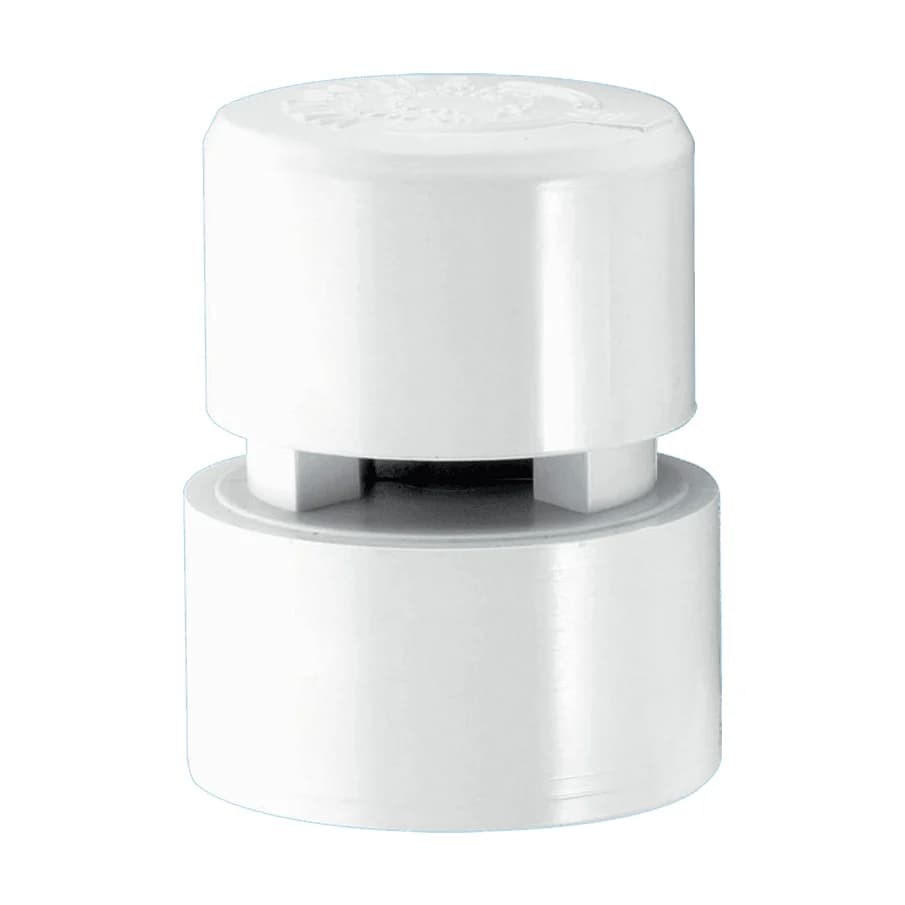 In stock
McAlpine
1 1/4" - 2" VPSF-40/50 VentapipeCode: LP-1531O3F
inc VAT£5.08 ex VAT
✓ Delivery available✓ Collect today
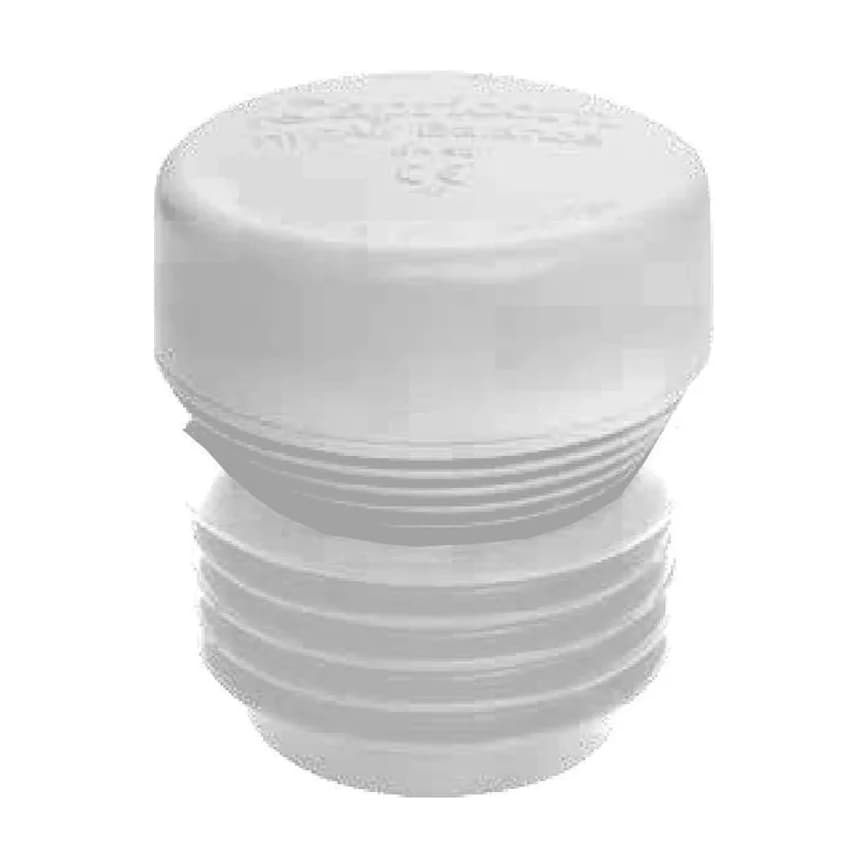 In stock32/40/50/63mm Air Admittance Valve
Code: LP-1RTAM0L
inc VAT£14.87 ex VAT
✓ Delivery available✓ Collect today
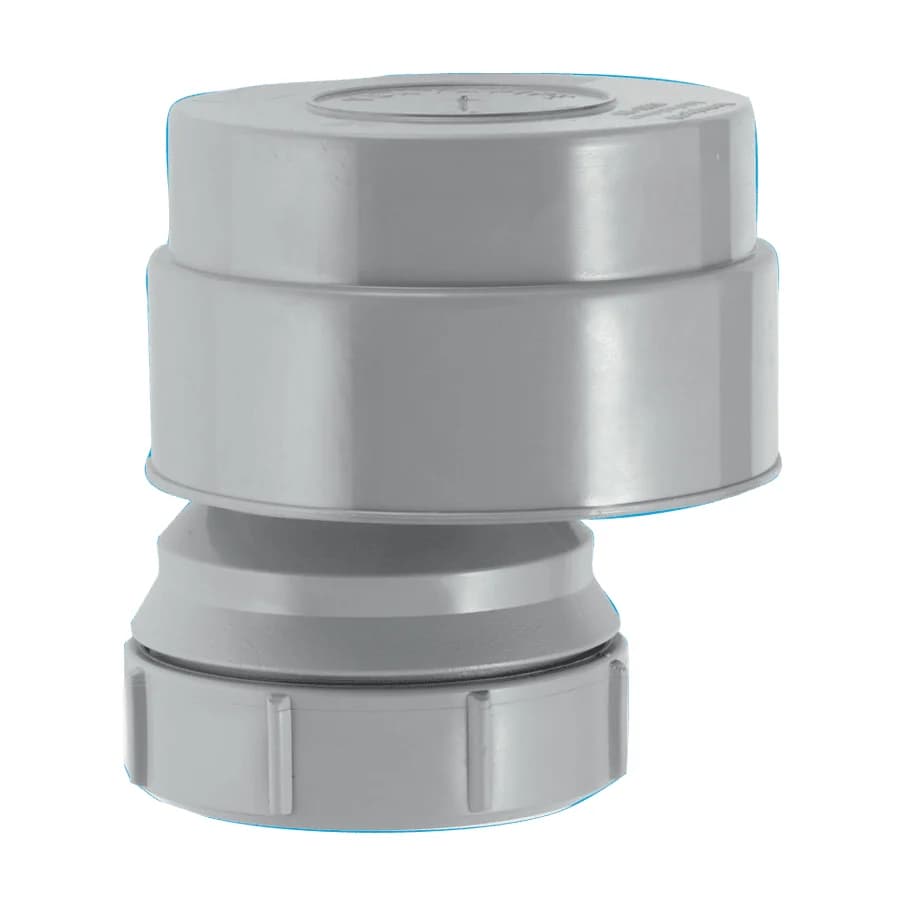 In stock
McAlpine
McAlpine VP50 Ventapipe GreyCode: LP-YAEMPM
inc VAT£14.96 ex VAT
✓ Delivery available✓ Collect today
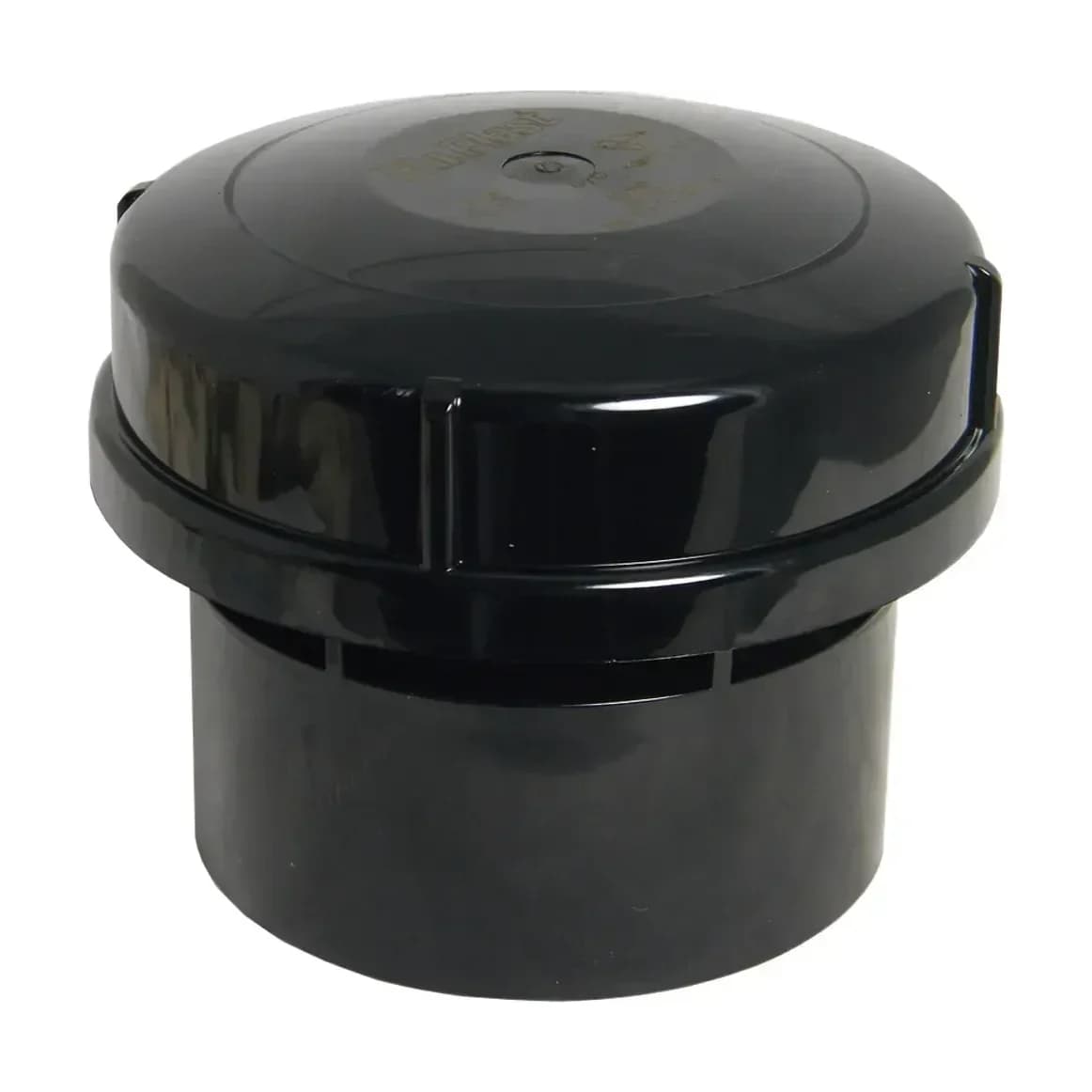 In stockAir Admittance Valve Internal Use Only
Code: LP-1O9LA4V
inc VAT£18.50 ex VAT
✓ Delivery available✓ Collect today
Where can you fit an AAV? What Approved Document H says
Part H of the Building Regulations covers drainage in England. Its guidance, Approved Document H, allows a stack or branch to end inside the building with an AAV, with conditions. In summary:
- Above the flood level. The valve should sit above the flood (spill-over) level of the highest appliance it serves, so a blockage can't back water up and out through it.
- Accessible. It must be reachable for maintenance and removable to give access for clearing blockages: behind an access panel, not boxed in for good.
- Ventilated. It should be in a space with adequate ventilation, so it has air to draw on. If it's boxed in, the boxing needs a vent.
- Not the only vent. The underground drain still needs ventilating. Approved Document H says AAVs mustn't stop the underground drainage working properly, and drains normally rely on at least one open vent pipe to the outside — usually the stack at the head of the drain run. If every stack on the run ends in an AAV, including your neighbours' on a shared drain, there may be no vent at all.
- Made to BS EN 12380, and fitted upright, as the maker's instructions say.
New drainage work — a new stack, or new connections to the drain — usually comes under the Building Regulations, so check with Building Control or your installer before you start. In a cold loft, follow the maker's advice on insulating the valve so it can't freeze. Wales and Scotland have their own versions of these rules.
How to fit an AAV to a 110mm soil stack
- Check the rules above: the drain must still have an open vent, and the valve must end up above the flood level of the highest appliance on the stack.
- Tell everyone not to use the toilets, basins, baths or showers that drain into the stack until you've finished.
- Mark the stack, leaving room above it to lift the valve off later, and cut it square with a fine-toothed saw.
- Deburr the cut and chamfer the outside edge so it won't roll the seal as it goes in.
- Fit the valve as its instructions say — most stack valves push into a 110mm ring-seal socket or have their own seal. On a ring seal, use silicone grease or pipe lubricant, not solvent cement.
- Make sure the valve is upright and the stack is clipped firmly near the top.
- Run water through the highest appliances and flush the toilets, listening for gurgles and checking each trap still holds its water.
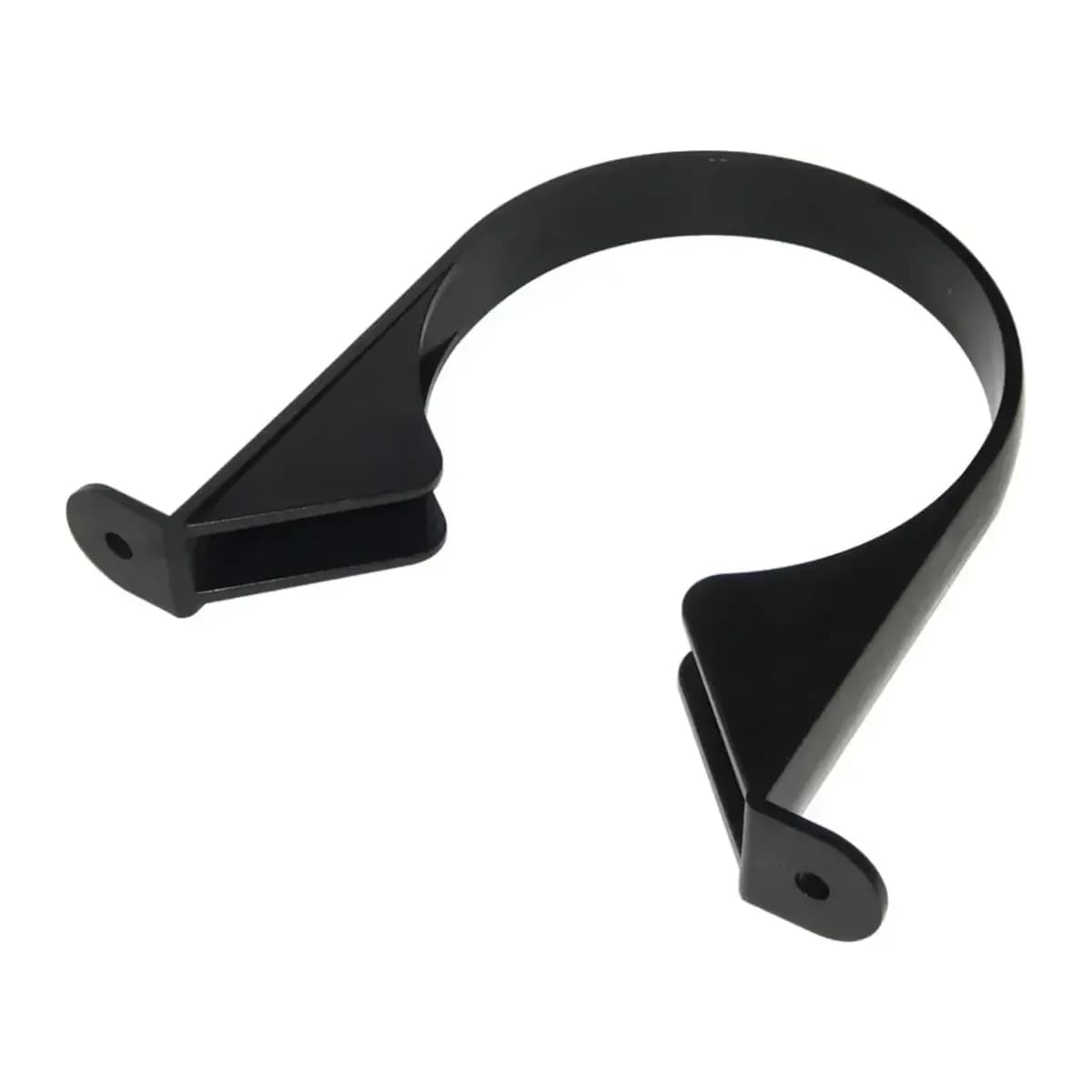 In stock
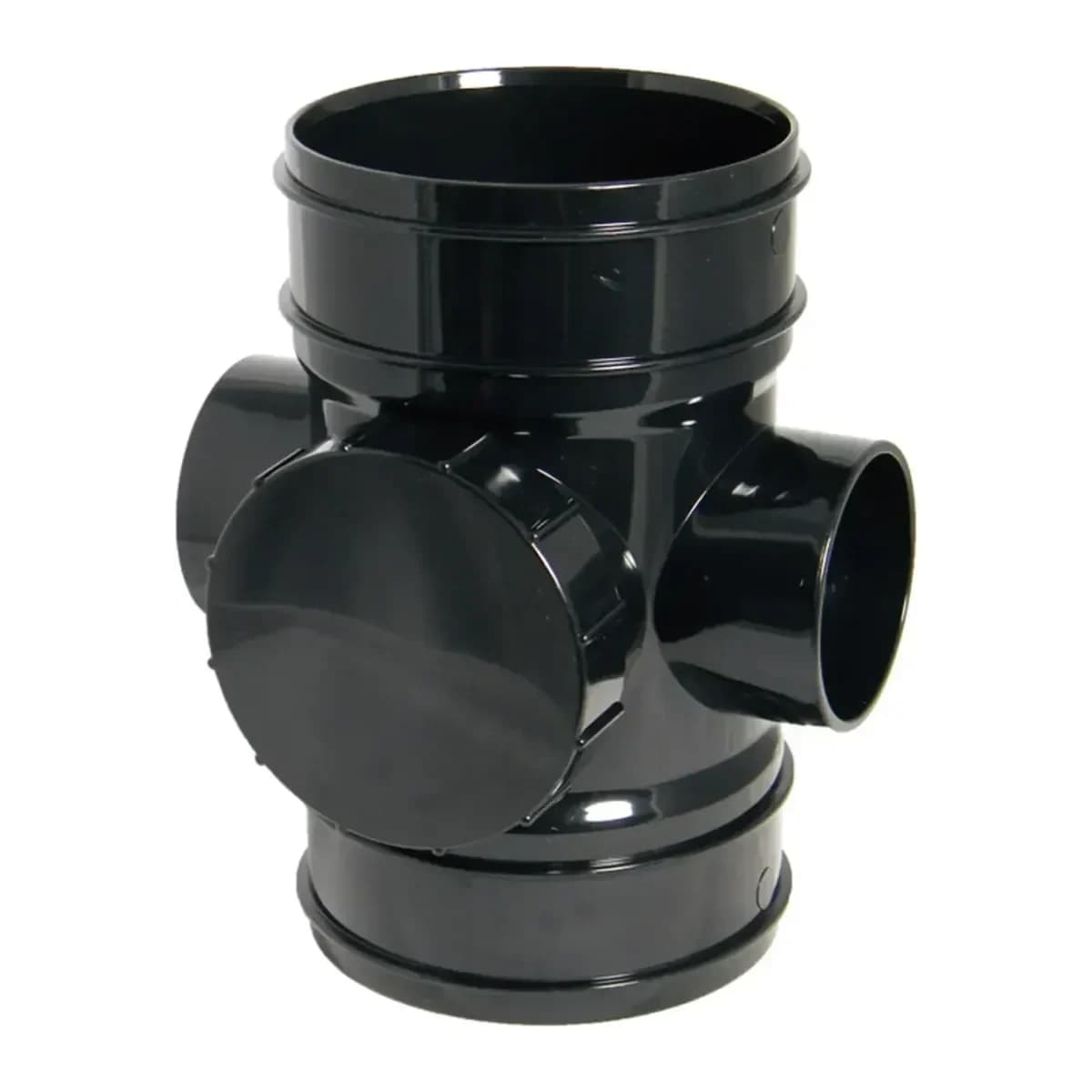 In stock
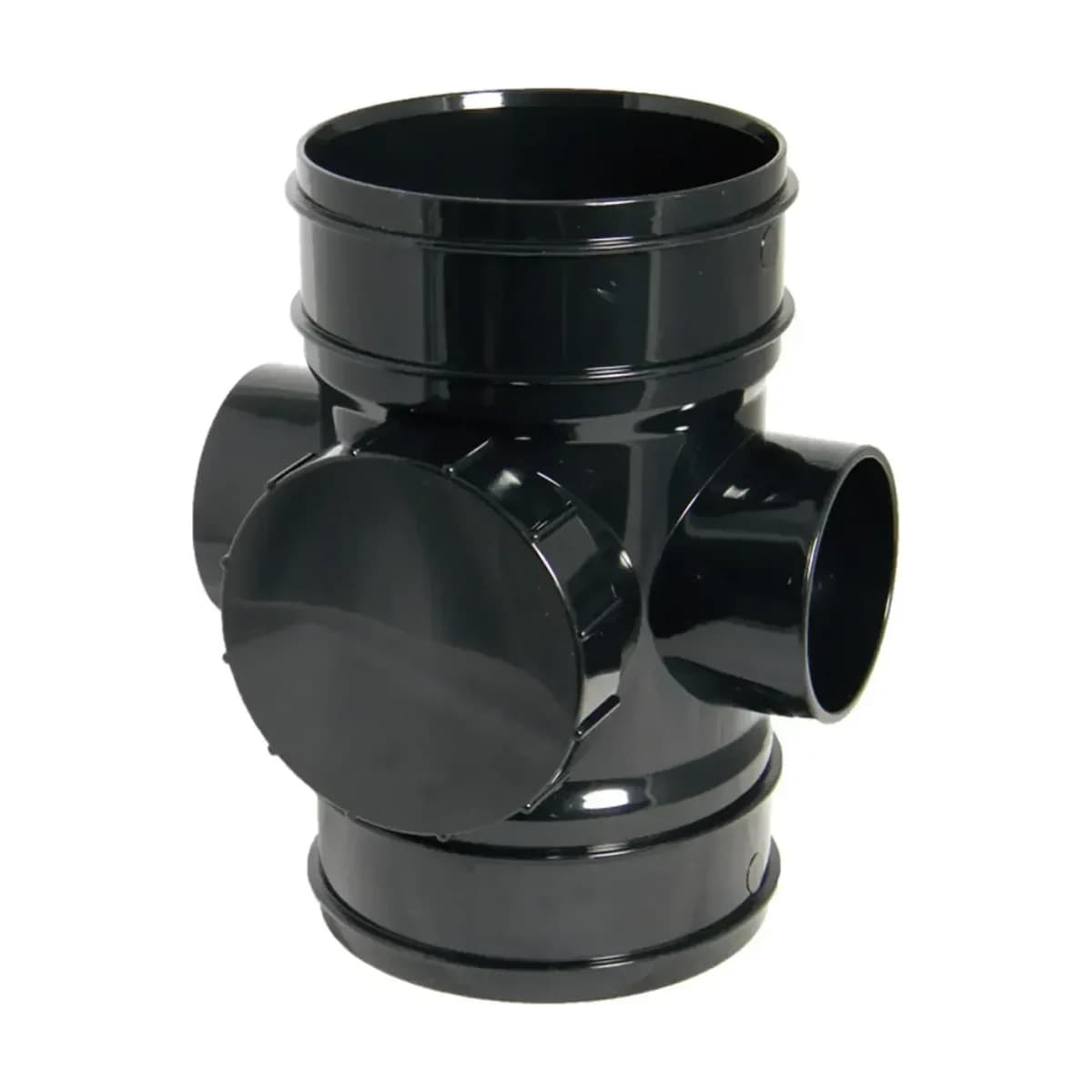 In stock
FloPlast
FloPlast Soil - 110mm Solvent PVC-U Access Pipe - Double Socket - BlackCode: LP-2O3UII
inc VAT£12.93 ex VAT
✓ Delivery available✓ Collect today
Connecting wastes to the stack: boss connectors
Smaller wastes join a soil stack through a boss: a 32mm, 40mm or 50mm outlet on the side of the 110mm pipe.
- Boss pipes and branches come with the outlets already moulded in, ready to go into a new stack — such as a 3-way short boss pipe or a 110mm × 50mm short boss pipe.
- Strap-on bosses clamp round an existing stack over a hole you cut with a hole saw, like the 100mm strap-on boss.
- Mechanical boss connectors fit into a hole cut in the pipe and are tightened to seal, such as McAlpine's 4 × 1½-inch and 4 × 2-inch connectors.
Cut the hole to the size in the connector's instructions and clean out the swarf. Approved Document H also controls where a branch may join the stack — not too close to the bend at its foot, and not where water from a toilet branch can flow across into it — so check before you cut.
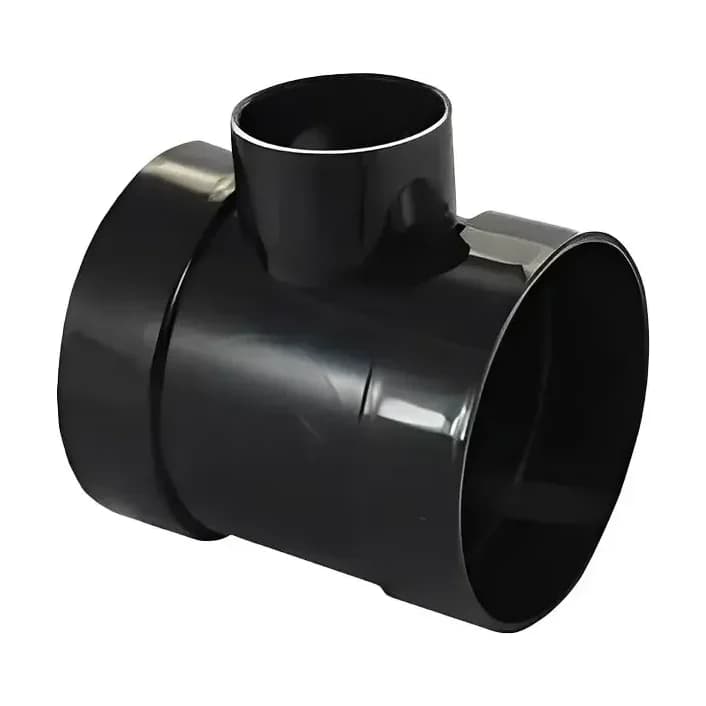 In stock3 x 50mm Short Boss Pipe Connector
Code: LP-1499BUJ
inc VAT£6.47 ex VAT
✓ Delivery available✓ Collect today
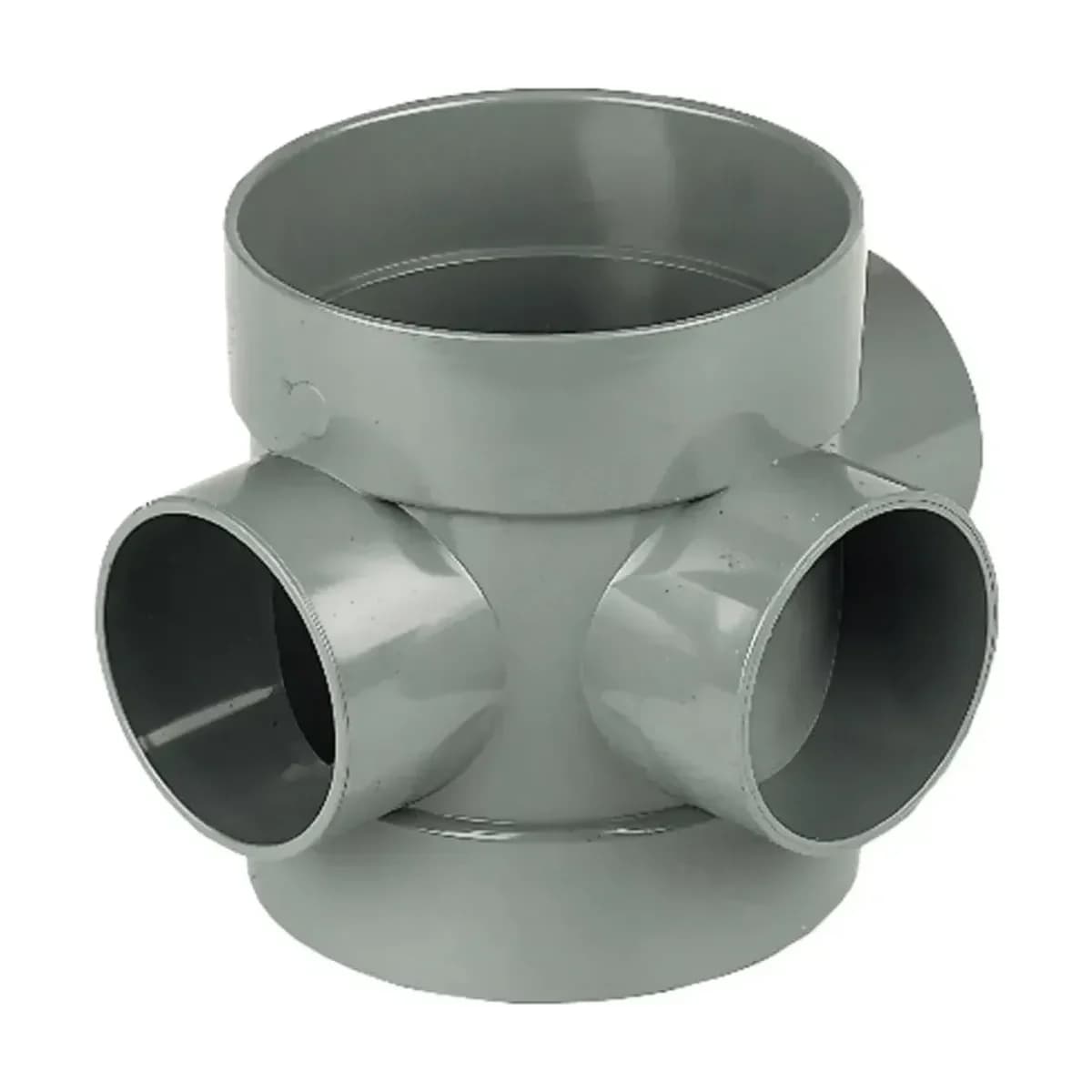 In stock3 Way Short Boss Pipe Connection
Code: LP-14UI2FW
inc VAT£6.89 ex VAT
✓ Delivery available✓ Collect today
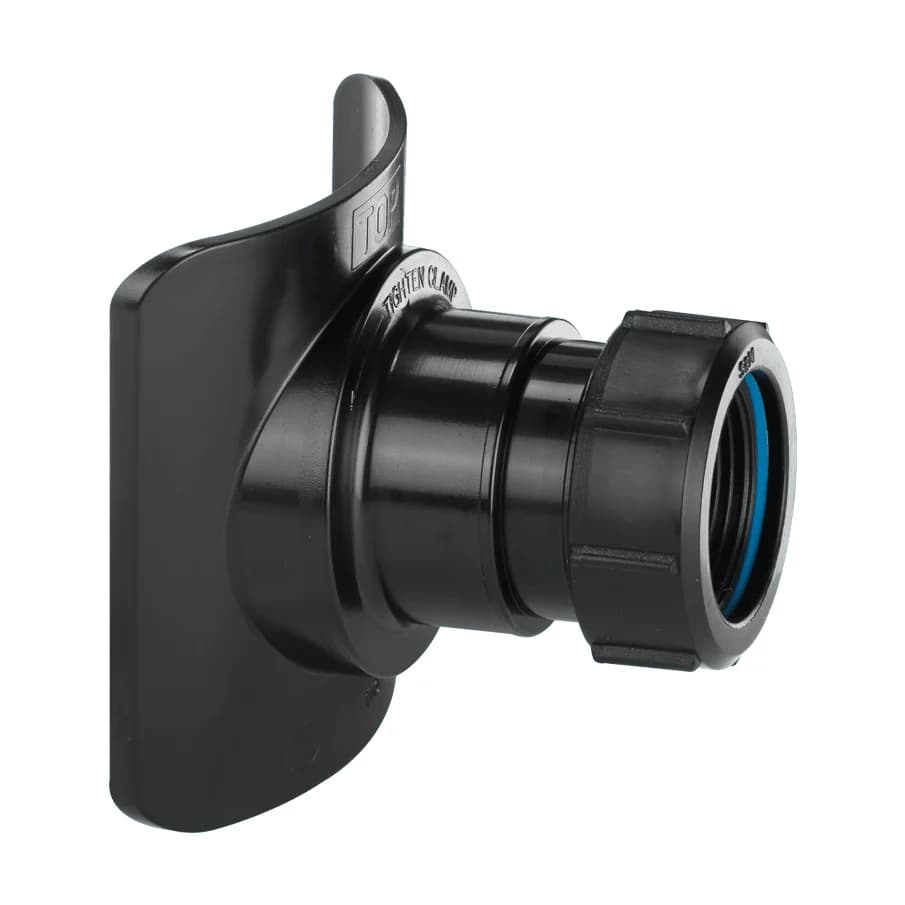 In stock
McAlpine
McAlpine Mechanical Pipe Soil Boss Connector 4" x 1 1/2" Black BOSSCONN110T-BLCode: LP-YBH4M2
inc VAT£10.51 ex VAT
✓ Delivery available✓ Collect today
- In stock
McAlpine
McAlpine Mechanical Pipe Soil Boss Connector 4" x 2" Black BOSSCONN110Z-BLCode: LP-KPX7DL
inc VAT£10.51 ex VAT
✓ Delivery available✓ Collect today
AAV problems: smells and gurgling that won't stop
- A drain smell near the valve usually means its seal is stuck open with dirt or has perished. Lift the valve off, check it's clean, and replace it if it won't close.
- Gurgling that carries on after fitting an AAV can mean the valve is too small for the job or in the wrong place, or that the real problem is a blockage or back pressure.
- A valve in a cold loft can freeze shut in a hard frost if it isn't insulated as the maker recommends.
Because an AAV is a moving part, it's the one piece of the drainage that has to stay where you can get at it.
Questions
- Do I need an air admittance valve?
- Only if a stack or waste pipe needs venting and can't easily be vented to the outside. The usual reasons are an internal soil stack you don't want through the roof, or a long basin or sink waste that gurgles and loses its trap water.
- Can an air admittance valve replace a vent pipe through the roof?
- Often, on an internal stack, as long as the drain is still ventilated by at least one open vent elsewhere — usually the stack at the head of the drain run. If you're not sure, ask Building Control.
- Can you fit an air admittance valve outside?
- Most stack AAVs are made for use inside the building — the one we stock is labelled internal use only. Outside, an open vent pipe does the job without a valve.
- Why does my air admittance valve smell?
- Its seal is probably stuck open with dirt or has perished. Clean it or replace the valve, and check the traps are holding water.
- How high should an air admittance valve be?
- Above the flood level of the highest appliance connected to that stack or branch, so a blocked drain can't back up and spill out through it.
- What's a Durgo valve?
- Another name for an air admittance valve. Durgo is one maker's brand, and the name stuck for all of them.