
The short answer
Start with the simplest fix that suits the blockage. For a sink, basin, bath or shower, clear the plughole, then use a cup plunger with the overflow blocked; if that fails, take off and clean the trap, then feed a drain auger down the pipe. For a toilet, use a flange plunger or a toilet auger. For an outside drain, lift the inspection chamber cover and use drain rods. If the blocked pipe is shared with neighbours, it's the water company's job.
Where is the blockage?
Where the water backs up tells you where to look. Start with the fitting that's blocked, and check what else in the house is draining slowly.
| What you see | Likely place | Start with |
|---|---|---|
| One sink, basin, bath or shower slow; everything else fine | The plughole, trap or that fitting's waste pipe | Clearing the plughole, then a plunger, then the trap |
| Toilet water rises, then drains away slowly | The pan's outlet or the soil pipe just behind it | A flange plunger |
| Several fittings slow, or one gurgles when another drains | A shared waste pipe or the soil stack | The lowest fitting on that pipe, then an auger |
| Downstairs toilet or outside gully overflows when upstairs is used | The underground drain | Lifting the inspection chamber covers |
| Gurgling and smells, but the water drains | A partial blockage, or traps being siphoned | Cleaning the traps; see the air admittance valve guide |
Plungers, augers or rods: which do you need?
| Tool | Use it for | Good to know |
|---|---|---|
| Cup plunger | Sinks, basins, baths and shower trays | A plain rubber cup that seals on a flat surface. Block the overflow first |
| Flange plunger | Toilets | A cup with an extra rubber sleeve that folds out to seal in the pan's outlet |
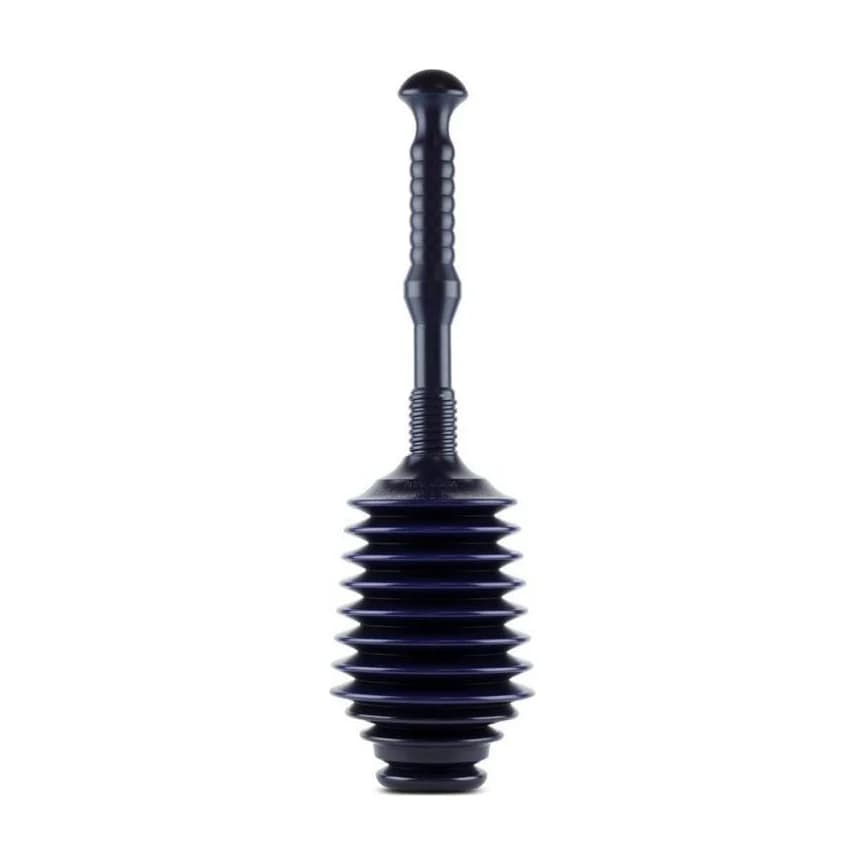
| Pump-action cleaner | Sinks, wastes and toilets | Pushes and pulls a column of water with more force than a plunger |
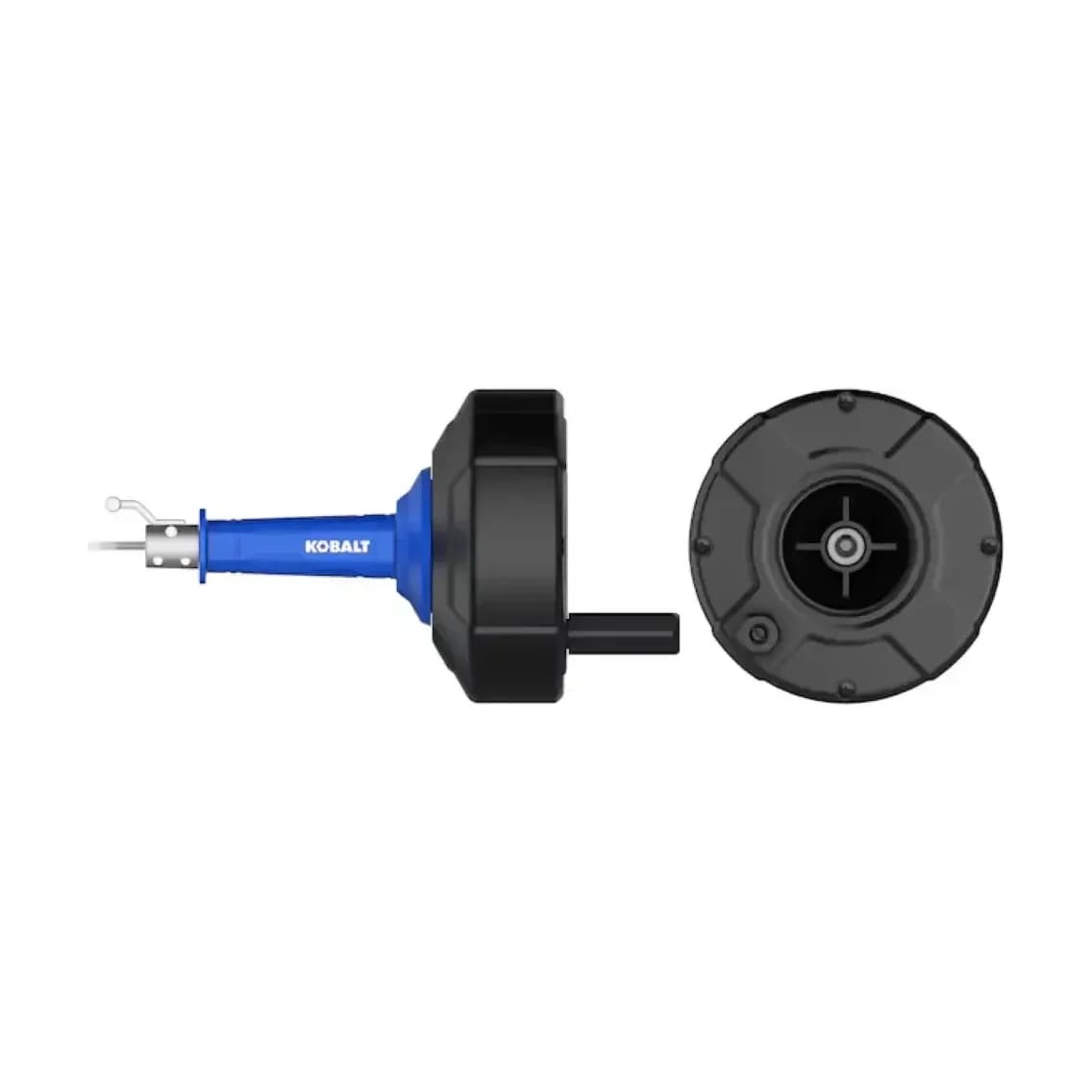
| Drain auger (snake) | Blockages past the trap in waste pipes | A coiled steel cable you feed in and turn, by hand or with a drill |
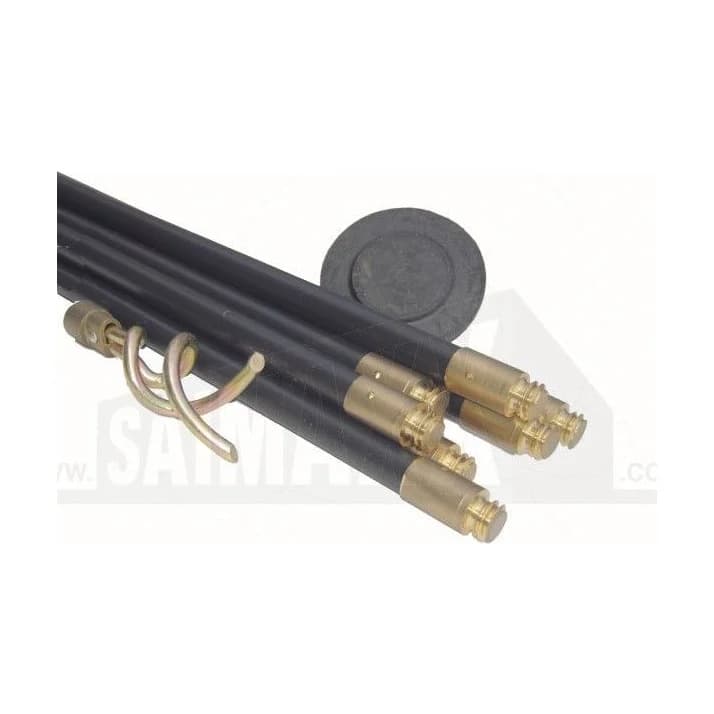
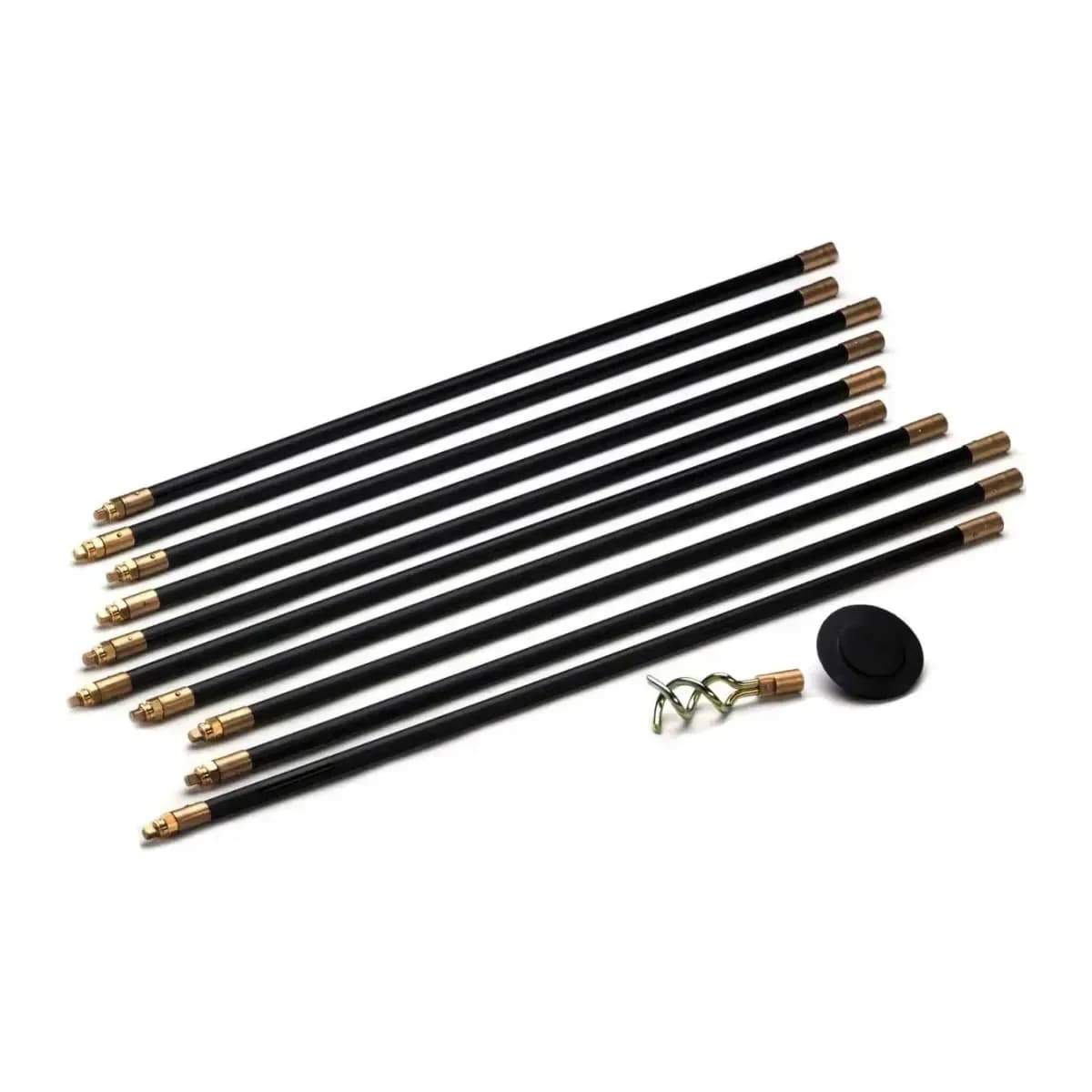
| Drain rods | Outside drains, gullies and inspection chambers | Screw-together rods with a rubber plunger or corkscrew-style worm head |
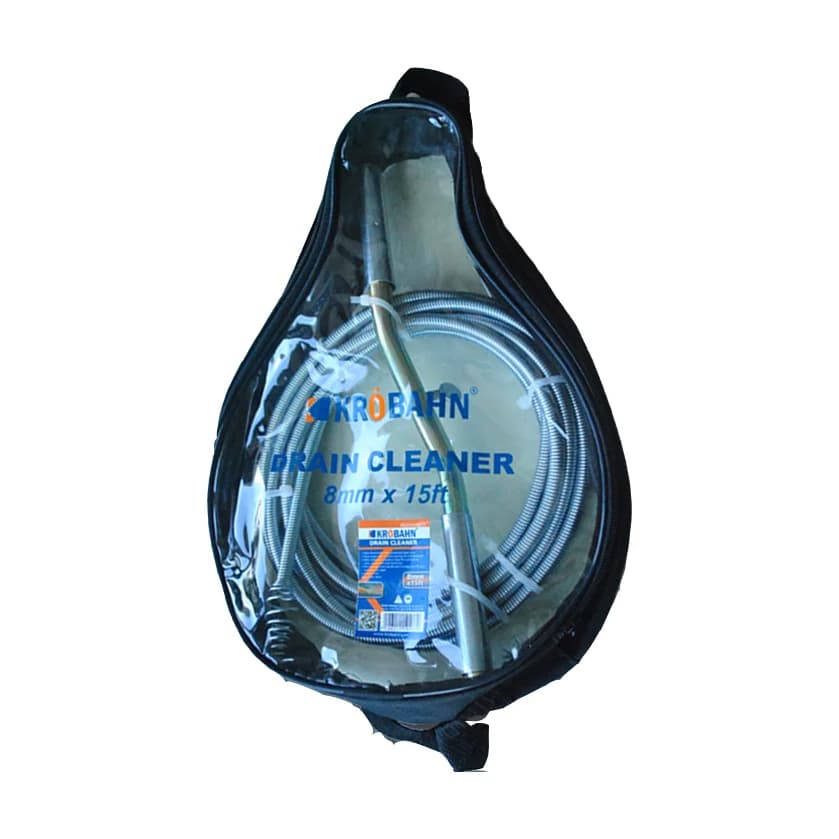
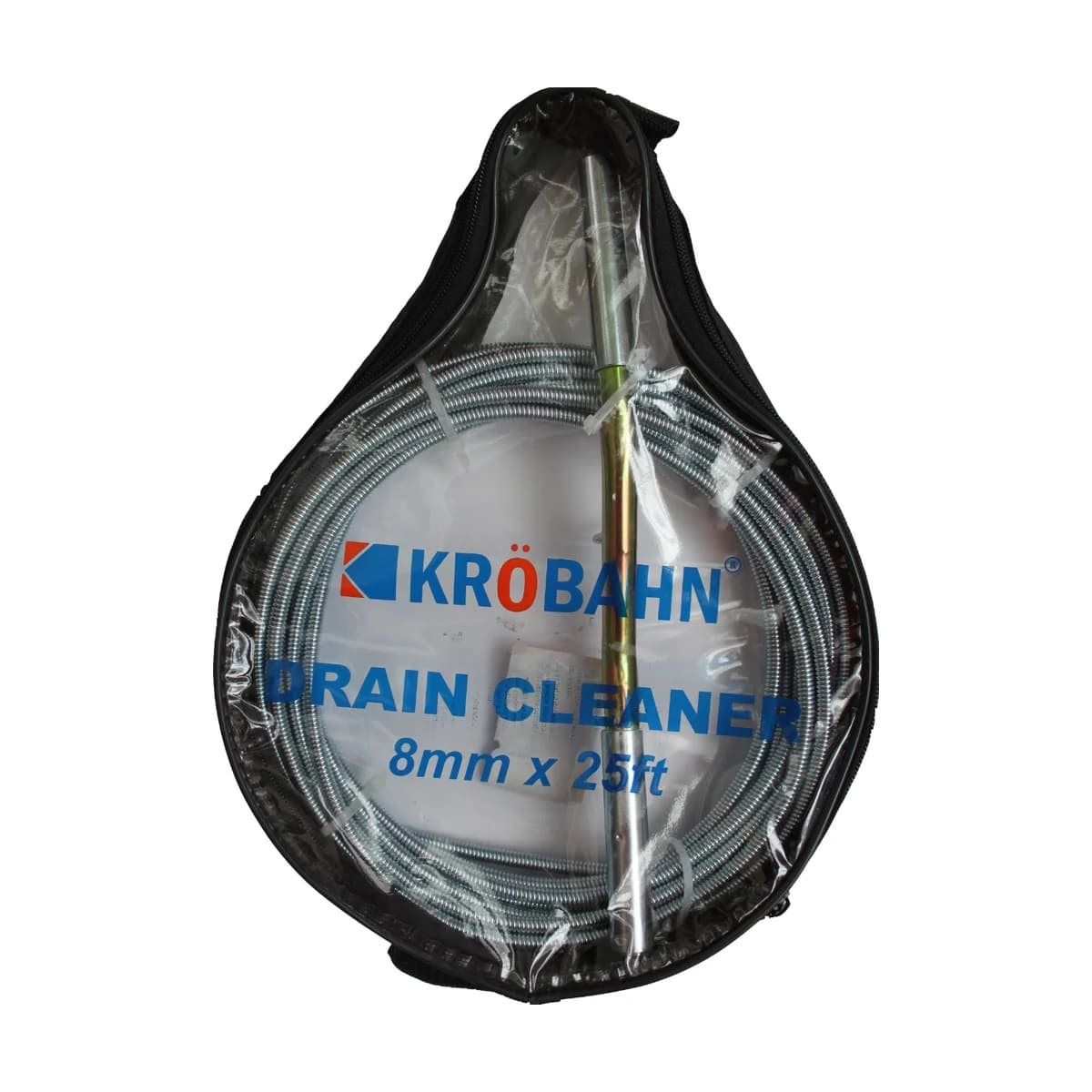
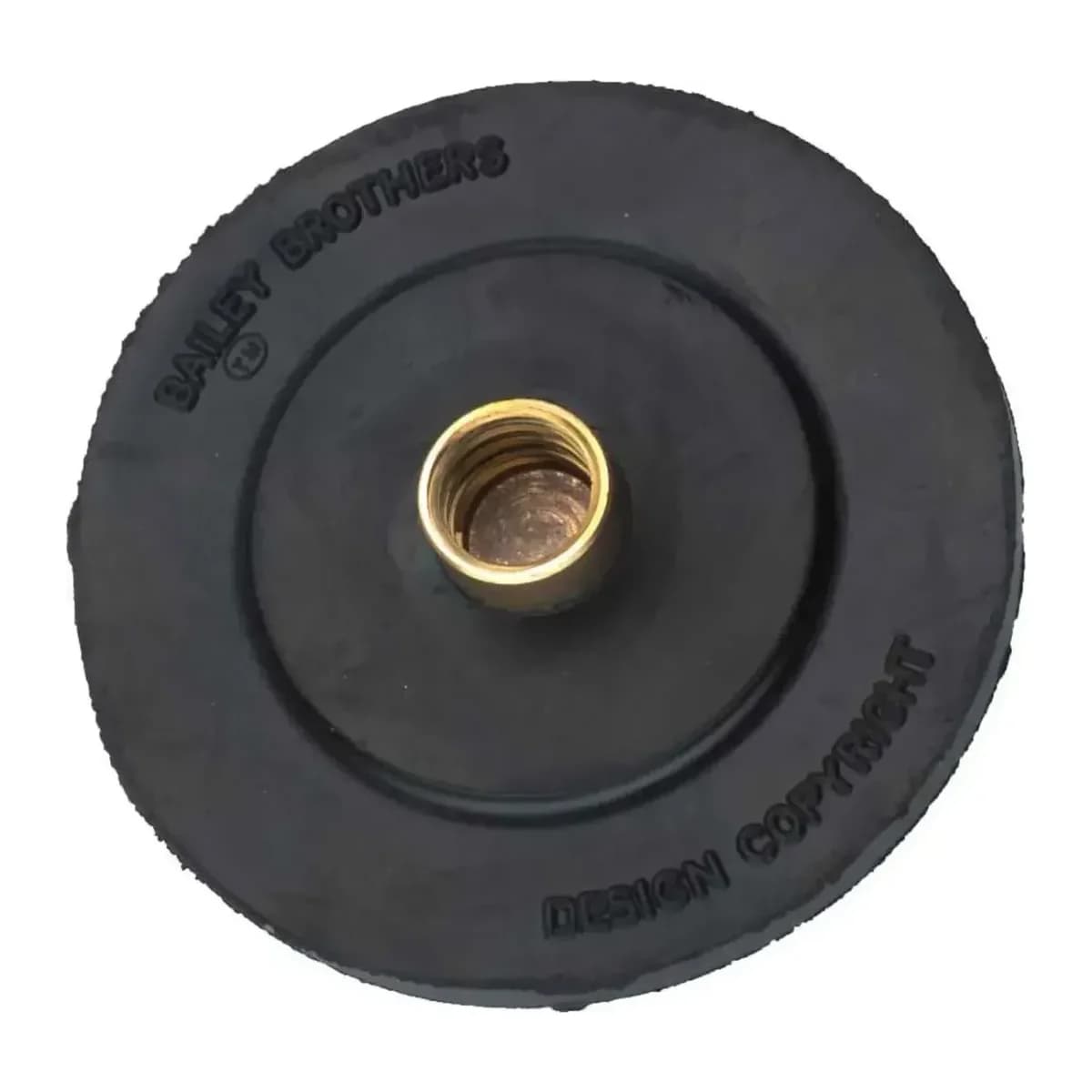
On our shelves: plungers in two cup sizes, a heavy-duty plunger and a Rothenberger pump-action waste and toilet cleaner; drain augers in 15ft and 25ft lengths, including drill-driven ones; and drain rod sets, such as Bailey's set with a plunger and a worm screw.
 In stock
Krobahn
Krobahn DRAIN CLEANER - 8mm x 15ftCode: LP-13O8Z1T
inc VAT£11.99 ex VAT
✓ Delivery available✓ Collect today
 In stock
Krobahn
Krobahn DRAIN CLEANER - 8mm x 25ftCode: LP-13O6KK2
inc VAT£16.08 ex VAT
✓ Delivery available✓ Collect today
 In stock
How to unblock a sink or basin
- Take out the plug, strainer or pop-up and pull out any hair or food from the plughole. On a basin, that alone often does it.
- Stuff a damp cloth into the overflow (and the other plughole on a double sink) so the plunger's push goes down the pipe, not back out.
- Leave enough water in the bowl to cover the plunger cup. Push down gently to get the air out, then pump firmly 10 to 15 times and pull away sharply. Repeat a few times.
- If a dishwasher or washing machine drains into the sink trap, clamp or hold its hose while you plunge, or you'll push dirty water back into the machine.
- Still blocked? Clean the trap, as below.
- If the trap is clear, feed an auger into the waste pipe at the trap connection, turning the handle clockwise as you push. When you feel resistance, keep turning to break through or hook the blockage, then pull back slowly.
- Refit the trap, run hot tap water for a few minutes, and check the joints for drips.
Kitchen sinks block mostly with fat, oil and grease (FOG) and food scraps; basins with hair, soap and toothpaste.
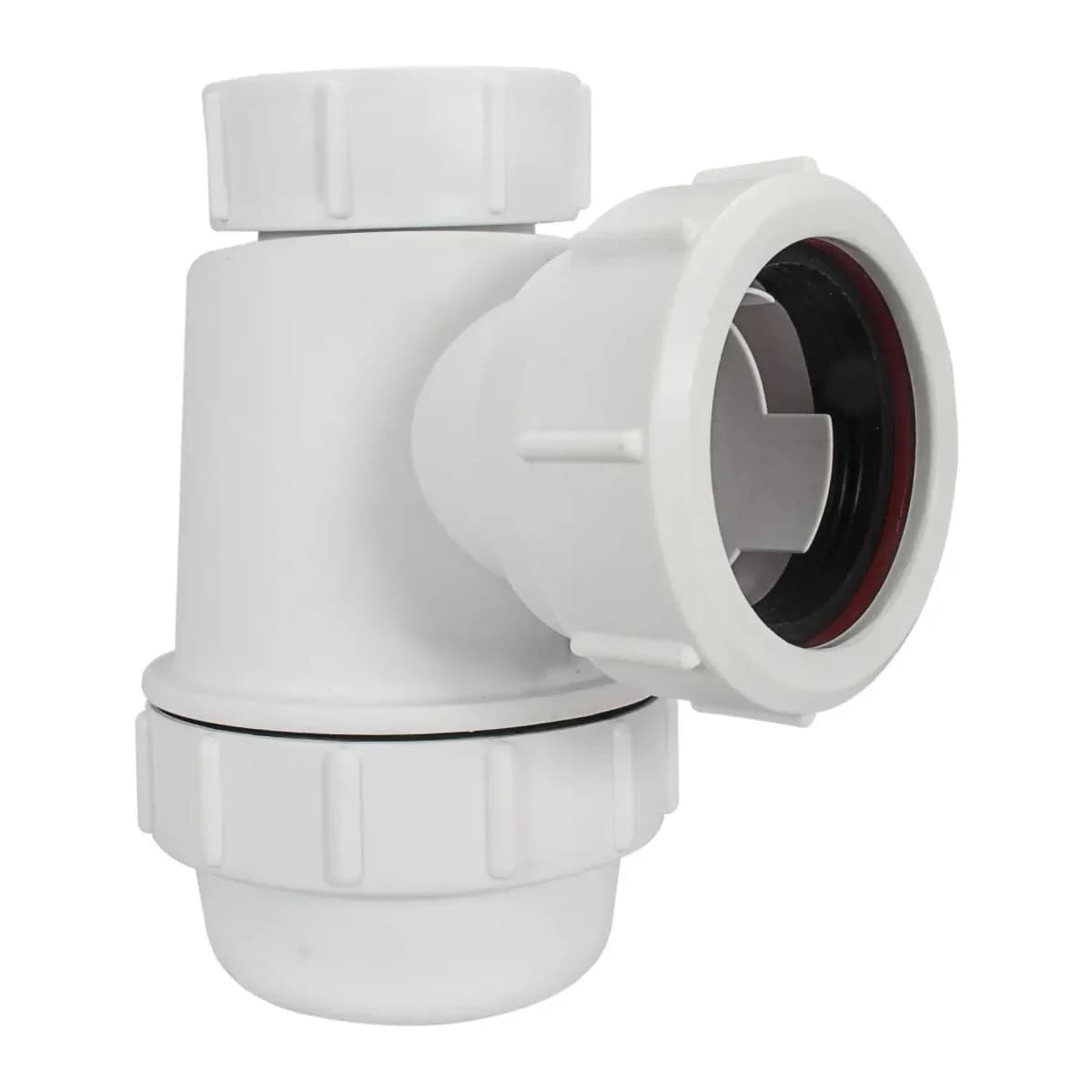
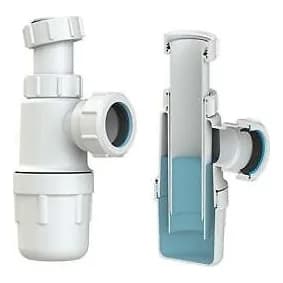
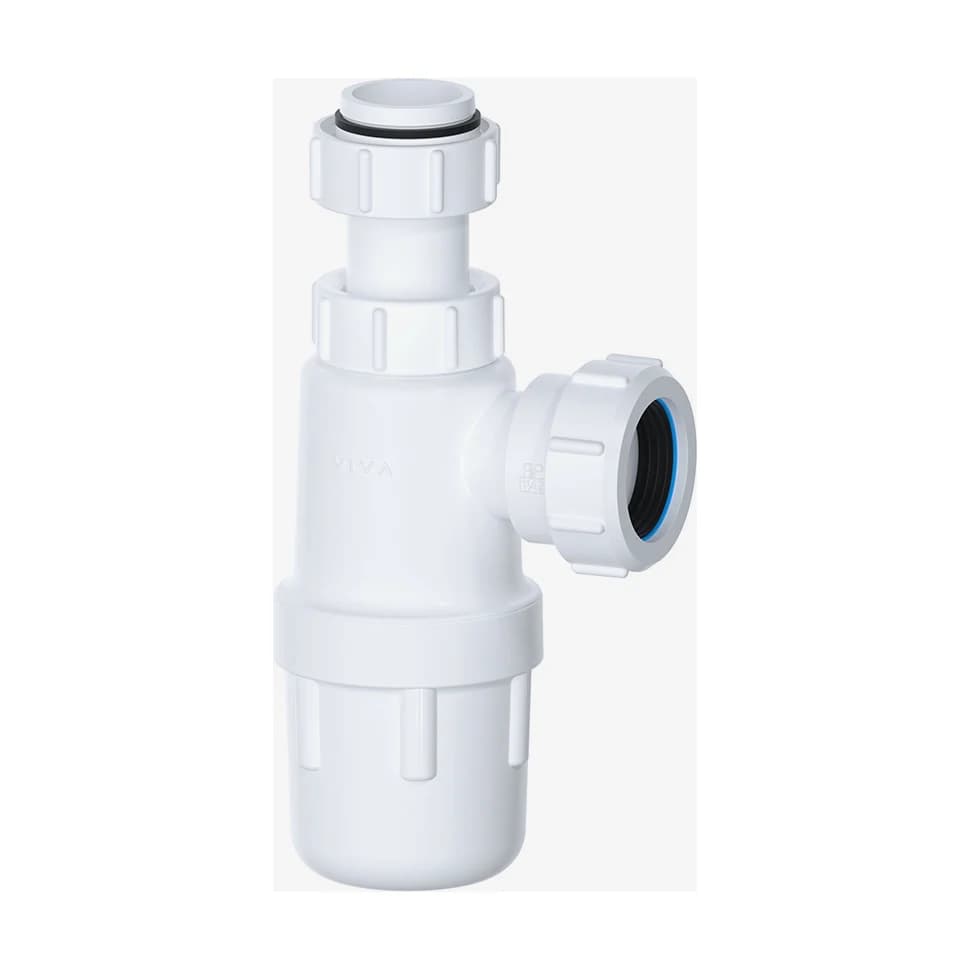
How to clean a bottle trap or sink trap
- Put a bowl or bucket under the trap — it's full of water — and have a cloth handy.
- Unscrew the bottom of a bottle trap by hand, or undo the nuts on a P or S trap. They're usually hand-tight; don't put grips on plastic nuts.
- Empty the trap, clear out the gunk and rinse it. Look into the pipes either side and pull out anything you can reach.
- Check the sealing washers and O-rings are seated and undamaged.
- Reassemble hand-tight, run the tap and check for leaks.
A cracked trap, or one whose seals won't stop weeping, is easier to replace than to fight. Basins use 32mm (1¼-inch) traps; sinks, baths and showers 40mm (1½-inch). The waste pipe sizes guide has the details.
 In stock
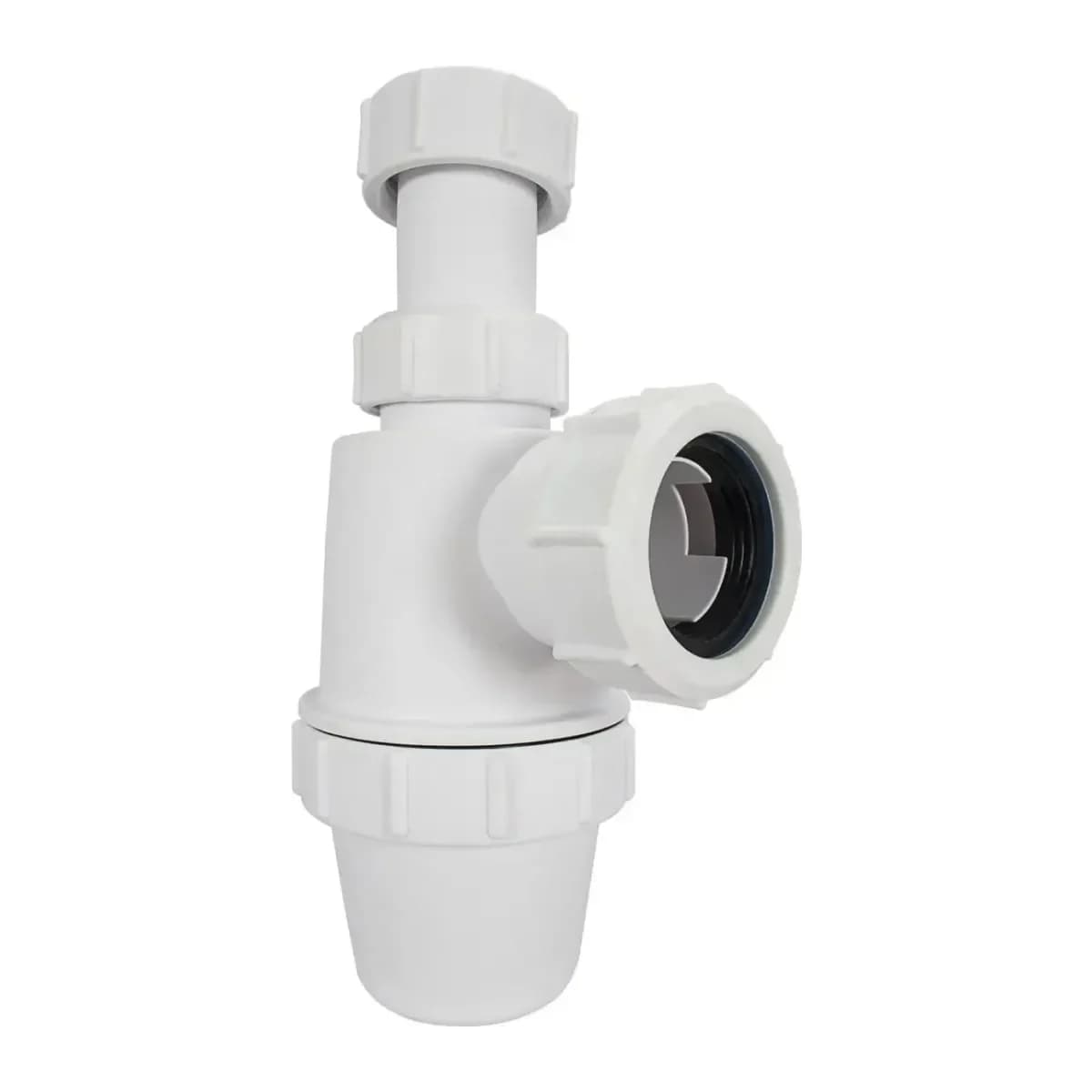 In stockPlastic Bottle Trap - Telescopic
2 sizes available
Frominc VAT£3.39 ex VAT
✓ Delivery available✓ Collect today
 In stock
SCN
SCN Telescopic Bottle Trap2 sizes available
Frominc VAT£4.84 ex VAT
✓ Delivery available✓ Collect today
 In stock
How to unblock a bath or shower
Hair, bound together with soap, is nearly always the cause.
- Shower trays: lift off the waste cover. Many shower traps have a removable dip tube or cleaning insert you can pull out from above and rinse, and linear drains usually have a hair catcher. Clear what you can reach before plunging.
- Baths: take out the plug, or unscrew the pop-up or click-clack plug, and clear the hair from underneath. Block the overflow with a damp cloth before plunging.
- Plunge with a cup plunger, as for a sink. If that doesn't shift it, feed a small auger through the plughole or, where you can get at it, through the trap.
- If the bath and basin are both slow, the blockage is probably in a shared waste pipe further on.
A hair catcher over the plughole saves most of these jobs.
How to unblock a toilet
- Don't keep flushing — it can overflow. If the pan is very full, wait for the level to drop, or bail some out into a bucket wearing rubber gloves.
- Put old towels round the base of the pan.
- Fold out the flange on the plunger and fit it into the outlet at the bottom of the pan so it seals. Push down slowly first, then pump firmly 10 to 20 times, keeping the seal.
- When the water suddenly drains away, it's cleared. Let the level settle, then flush once to check.
- If plunging doesn't work, try a pump-action cleaner, or a toilet auger with a guard tube so the steel doesn't scratch the glaze.
- If the toilet still won't clear, or other fittings are backing up too, the blockage is further down: check the drain outside.
Hand-hot water poured in from a bucket can help soften a paper blockage, but don't use boiling water, which can crack the pan.
Outside gullies, manholes and drain rods
Gullies — the grids at the foot of the kitchen waste pipe or a downpipe — block with leaves, silt and fat. Wearing rubber gloves, lift the grid, scoop out what you can by hand or with an old trowel, then flush through with a hose or buckets of water.
If water is backing up further down, lift the inspection chamber (manhole) covers. They're heavy: lift with your legs, keep your fingers clear, and never leave an open chamber unattended.
- Work out which chamber is the problem. A chamber full of water means the blockage is downstream of it; an empty one means it's upstream. The blockage is between the last full chamber and the first empty one.
- Screw two or three rods together with the rubber plunger on the end. From the empty chamber, where you can see the pipe opening, push the rods up the pipe towards the blockage; otherwise feel for the outlet at the bottom of the full chamber and push them down the pipe.
- Add rods as you go, pushing and pulling firmly. Only ever turn the rods clockwise: turning them the other way can unscrew a joint and leave rods stuck in the drain.
- If the plunger won't shift it, swap to the worm screw to break the blockage up.
- When the water rushes away, flush the drain through with a hose. Clean the rods and your boots, wash your hands well, and put the covers back securely.
 In stock
 In stock
Bailey
Bailey Contract Drain Rod Set 3/4" x 3ft with Worm Screw & Plunger, Universal JointCode: LP-1FPQPG9
inc VAT£31.33 ex VAT
✓ Delivery available✓ Collect today
If rods won't clear it, or the blockage keeps coming back — tree roots, a collapsed pipe or a build-up of fat — a drainage contractor can jet the drain and survey it with a camera. Keep gully grids clear, and replace a broken one; we stock 150mm gully covers.
Drain unblockers: enzyme, caustic or acid?
Chemicals can help with a slow drain, but treat them with care. Don't pour one into a sink full of standing water: it can't reach the blockage, and you're left with a bowl of caustic water to deal with.
| Type | How it works | Best for | Take care |
|---|---|---|---|
| Enzyme or bacterial | Slowly digests fat, hair and food waste | Keeping drains clear, smells, slow drains | Too slow for a full blockage; gentle on pipes |
| Caustic (alkali) | Dissolves fat, grease, hair and soap | Slow sinks, basins and showers | Burns skin and eyes; can damage some finishes |
| Acid (often sulphuric) | Breaks down hair, paper and fat fast | Stubborn blockages, as a last resort | Extremely corrosive and gets very hot as it reacts; can damage chrome, enamel and metal pipes |
- Wear gloves and eye protection, ventilate the room, and follow the label exactly.
- Never mix two products or use one straight after another — acids and alkalis react violently, and bleach with some drain cleaners gives off toxic gas.
- Never plunge or rod after adding a chemical: it can splash back into your face.
- Check the label says it's safe for your pipes and fittings, and tell any plumber you call what you've used.
We stock an alkali drain cleaner and stronger trade unblockers alongside our other cleaners and descalers.
Is it my drain or the water company's?
In England and Wales, responsibility changed in October 2011, when most shared private drains and sewers passed to the water companies.
| Pipe | What it is | Who's responsible |
|---|---|---|
| Your drain | A pipe carrying waste from your property only, inside your boundary | You — or the freeholder or landlord, depending on the lease or tenancy |
| Lateral drain | A pipe carrying waste from your property only, outside your boundary, such as under the pavement | The water company |
| Sewer | A pipe carrying waste from more than one property, even inside your garden | The water company |
So if your neighbours are blocked too, the inspection chamber you've lifted takes their waste as well, or the blockage is past your boundary, report it to your water company — Thames Water across most of London. If it turns out to be in your own drain, clearing it is down to you. Scotland has different arrangements.
How to stop drains blocking again
- Fat, oil and grease: let it cool and set, scrape it into the bin, and wipe greasy pans with kitchen roll before washing up. Hot water and washing-up liquid only carry it further down the pipe, where it sets.
- Toilets: flush only pee, poo and paper. Wet wipes — including many labelled flushable — cotton buds, sanitary products and nappies don't break down.
- Hair: fit hair catchers in showers and baths, and clean bottle traps and shower traps every few months.
- Food: use a sink strainer and bin the scraps, coffee grounds included.
- Outside: keep gully grids clear of leaves and silt.
 In stock
 In stock
Questions
- What's the quickest way to unblock a sink?
- Clear the plughole, block the overflow with a damp cloth and use a cup plunger. If that fails, take off and clean the trap — it's where most sink blockages are.
- Can I use boiling water or bleach to unblock a drain?
- Hot tap water helps shift soft fat and soap, but boiling water can crack a toilet pan. Bleach disinfects but doesn't dissolve blockages — and never mix it with a drain unblocker.
- Who is responsible for a blocked drain outside my house?
- In England and Wales, you're responsible for pipes that serve only your property and sit inside your boundary. Pipes shared with neighbours, and your pipe once it leaves your boundary, belong to the water company.
- Should I use a cup plunger or a flange plunger?
- A cup plunger for flat surfaces — sinks, basins, baths and shower trays. A flange plunger for toilets: its extra rubber sleeve seals in the pan's outlet.
- Why is my sink gurgling?
- Usually a partial blockage in the trap or waste pipe, or the trap being siphoned as the water drains. Clean the trap first; if it still gurgles, the pipe may need venting — see our air admittance valve guide.
- How do I unblock a toilet without a plunger?
- A squirt of washing-up liquid followed by a bucket of hand-hot (not boiling) water poured from waist height can shift a soft blockage. For anything more, a flange plunger or toilet auger is the right tool.