
The short answer
A macerator is a pump unit, usually behind the WC, that breaks down waste and pumps it through small-bore pipe — typically 22mm or 32mm — to the soil stack, so a toilet, basin or shower can go where gravity drainage can't reach. Approved Document H treats it as a fallback: generally only where gravity drainage isn't practical and there's another WC in the building that drains by gravity. It needs a fused spur, regular descaling, and nothing flushed but toilet paper.
What does a macerator toilet do?
A normal WC needs a 100–110mm soil pipe falling all the way to the drain. A macerator does away with that: the pan's outlet goes into a box behind or beside it, and when water flows in, a switch starts the motor. Spinning blades break the waste down and a pump pushes it up and along a small-bore pipe to the soil stack. It runs for a short time after each flush and then stops, and a non-return valve, usually built in, stops the pumped water running back.
That makes it possible to put a toilet in a basement, a loft conversion, under the stairs or anywhere else that's far from the soil stack or below it — as long as the regulations allow it. You'll also hear macerators called sanitary pumps, or Saniflos after one well-known brand.
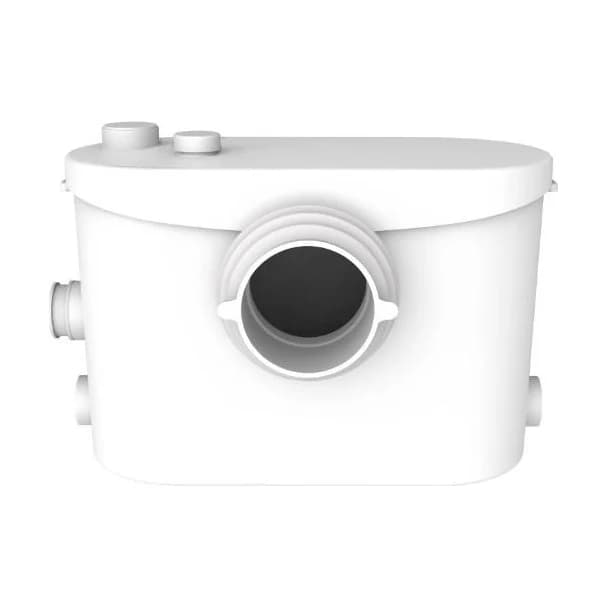
- WC macerators take a toilet, and often a basin or shower as well. The FP400 Beta is sold for a WC and bathroom.
- Grey-water pumps have no WC inlet and handle only water from showers, basins and sinks — the FlowPro FP250 is sold for showers. They're the answer for a shower or basin whose waste can't fall to a drain.
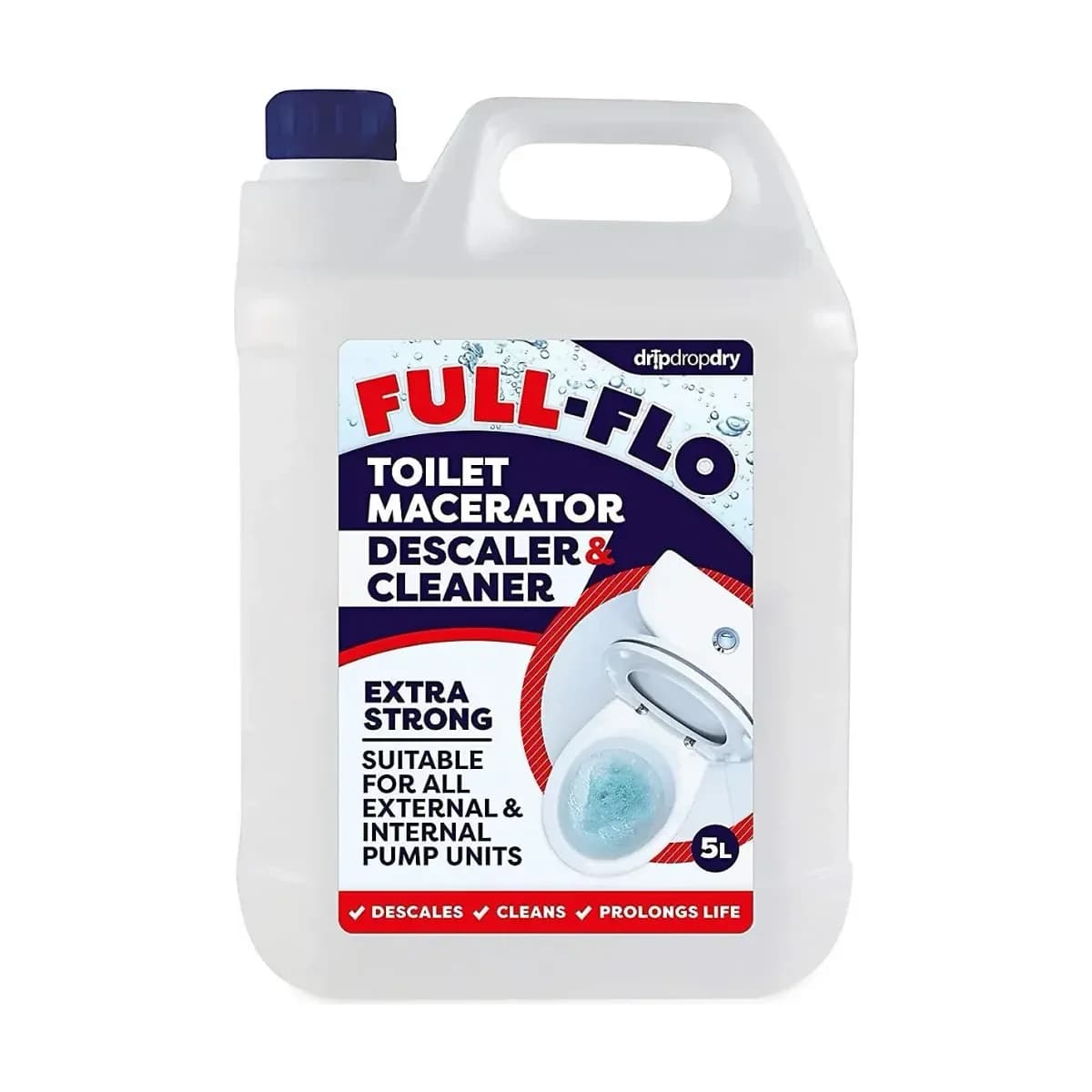 In stockMacerator Cleaner & Descaler - 5L
Code: LP-4TUQ3I
inc VAT£17.94 ex VAT
✓ Delivery available✓ Collect today
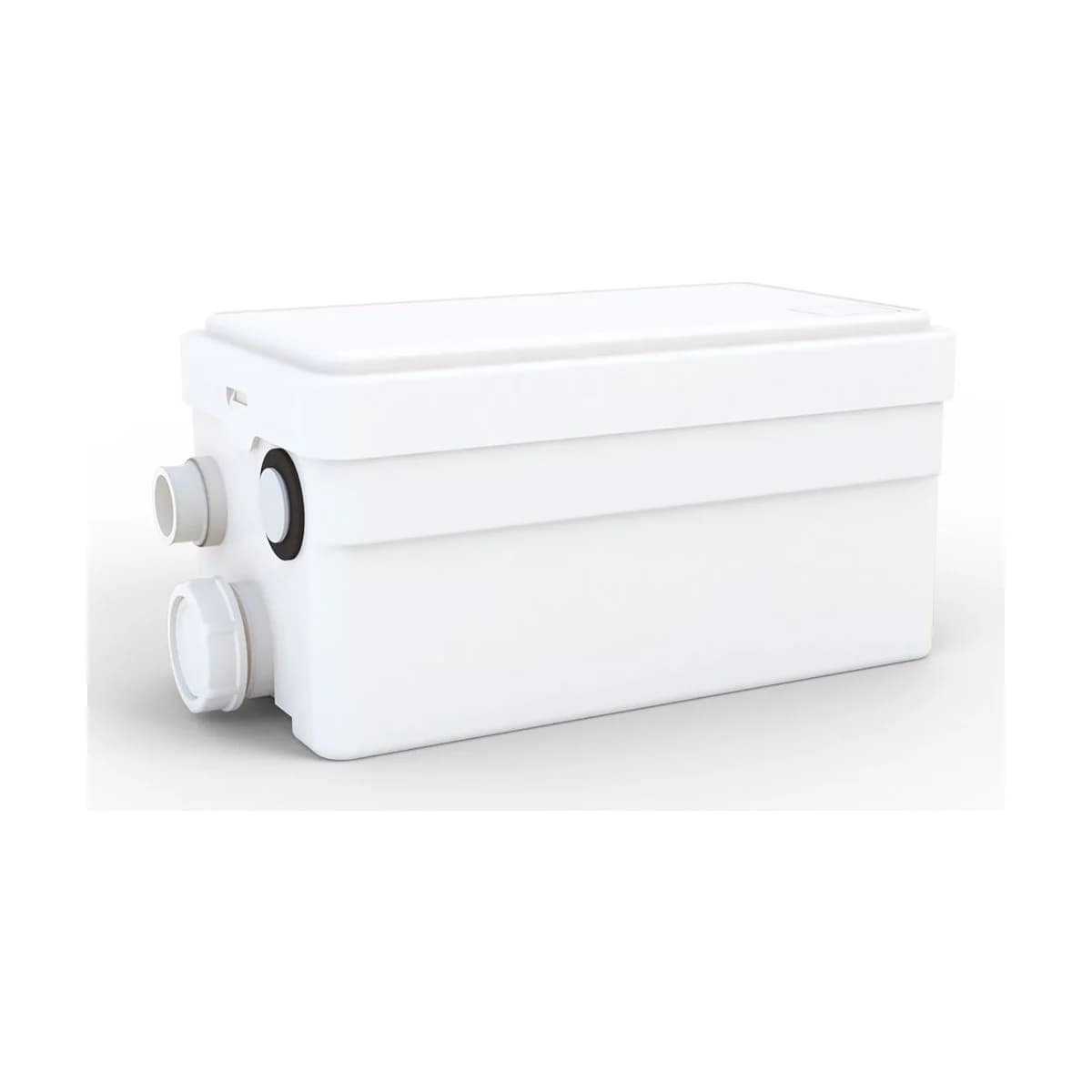 In stockFlowPro FP250 Macerator For Showers
Code: LP-16TD0S4
inc VAT£177.83 ex VAT
✓ Delivery available✓ Collect today
 In stock
Are macerator toilets allowed under Building Regulations?
Yes, but as a fallback rather than a first choice. In England, Approved Document H — the official guidance on drainage under the Building Regulations — accepts a WC that discharges through a macerator and pump, but generally only where a gravity connection isn't practical, and only where there's also access to a WC in the building that drains by gravity. Wales has its own Approved Document H along similar lines, and Scotland has separate building standards.
In practice that means a macerator can't normally be the only toilet in a home. The typical use is an extra cloakroom, en-suite or basement WC in a house whose main bathroom drains by gravity.
Planning permission isn't usually needed for internal work like this, but listed buildings have extra rules, and in a flat you'll usually need the freeholder's consent too.
What can you connect to a macerator?
| Fitting | What you need | Good to know |
|---|---|---|
| WC only | A compact WC macerator | The pan needs a horizontal outlet that fits the unit's inlet sleeve |
| WC plus basin and shower | A WC macerator with extra inlets | Check how many inlets it has and which fittings it's rated for |
| Shower or basin only | A grey-water pump | No WC inlet, so it can't take a toilet |
| Kitchen sink, washing machine or dishwasher | A unit the maker rates for them | Hot, soapy or greasy water and large volumes need a model made for it |
| Bath | A unit rated for a bath | A full bath empties a lot of water at once, and not every unit can take it |
Every basin, shower and sink still needs its own trap before it reaches the unit, and its waste pipe must fall to the inlet. A shower tray usually has to be raised on a riser or plinth so its trap can fall to the unit, so check the inlet height in the instructions before you plan the floor.
What size pipe does a macerator need?
| Pipe | Typical size | Notes |
|---|---|---|
| Pumped discharge | 22mm or 32mm | Set by the unit; check its instructions |
| Basin waste into the unit | 32mm | With its own trap |
| Shower or bath waste into the unit | 40mm | With its own trap, falling to the inlet |
| WC pan to the unit | The unit's inlet sleeve | Fits over the pan's horizontal outlet |
- Lift first, then fall. Most makers want any vertical rise straight away, close to the unit, with the horizontal run after it falling steadily to the stack. The maximum lift and the maximum run trade off against each other, and the unit's chart gives both.
- Gentle bends. Makers usually ask for swept or large-radius bends on the discharge rather than tight elbows.
- Materials and support. Use the pipe and joints the instructions specify — typically solvent-weld plastic or copper — and clip the run so it can't sag.
- The connection. Join the soil stack with a boss connector, such as a strap-on boss or a mechanical boss.
Basin and shower wastes follow the normal sizes in our waste pipe sizes guide, and 32mm and 40mm waste pipe is on our shelf from £6.40.
What electrical supply does a macerator need?
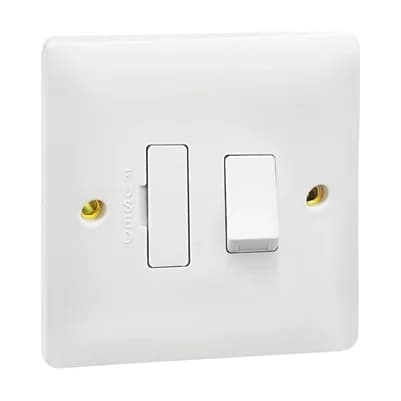
Makers generally want a macerator wired permanently to a fused spur — a switched fused connection unit — fitted with the fuse they specify, rather than plugged into a socket, on an RCD-protected circuit. The spur also lets you isolate it for servicing.
In a bathroom, the spur has to go where the wiring regulations (BS 7671) allow, which usually means outside the zones round the bath and shower, or outside the room. Electrical work in a room with a bath or shower is often notifiable under Part P of the Building Regulations in England, so use a registered electrician who can certify it.
 In stock
CED
Curvex Fused Connection Unit SwitchedCode: LP-99SM6D
inc VAT£2.65 ex VAT
✓ Delivery available✓ Collect today
- In stock
CED
Curvex Fused Spur Switched 13ACode: LP-K3SFZ3
inc VAT£2.94 ex VAT
✓ Delivery available✓ Collect today
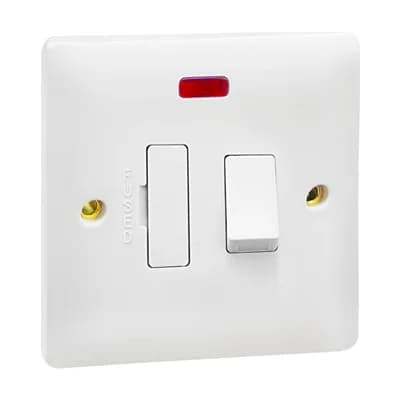 In stock
CED
Curvex Fused Connection Unit Switched WCode: LP-99SM67
inc VAT£3.08 ex VAT
✓ Delivery available✓ Collect today
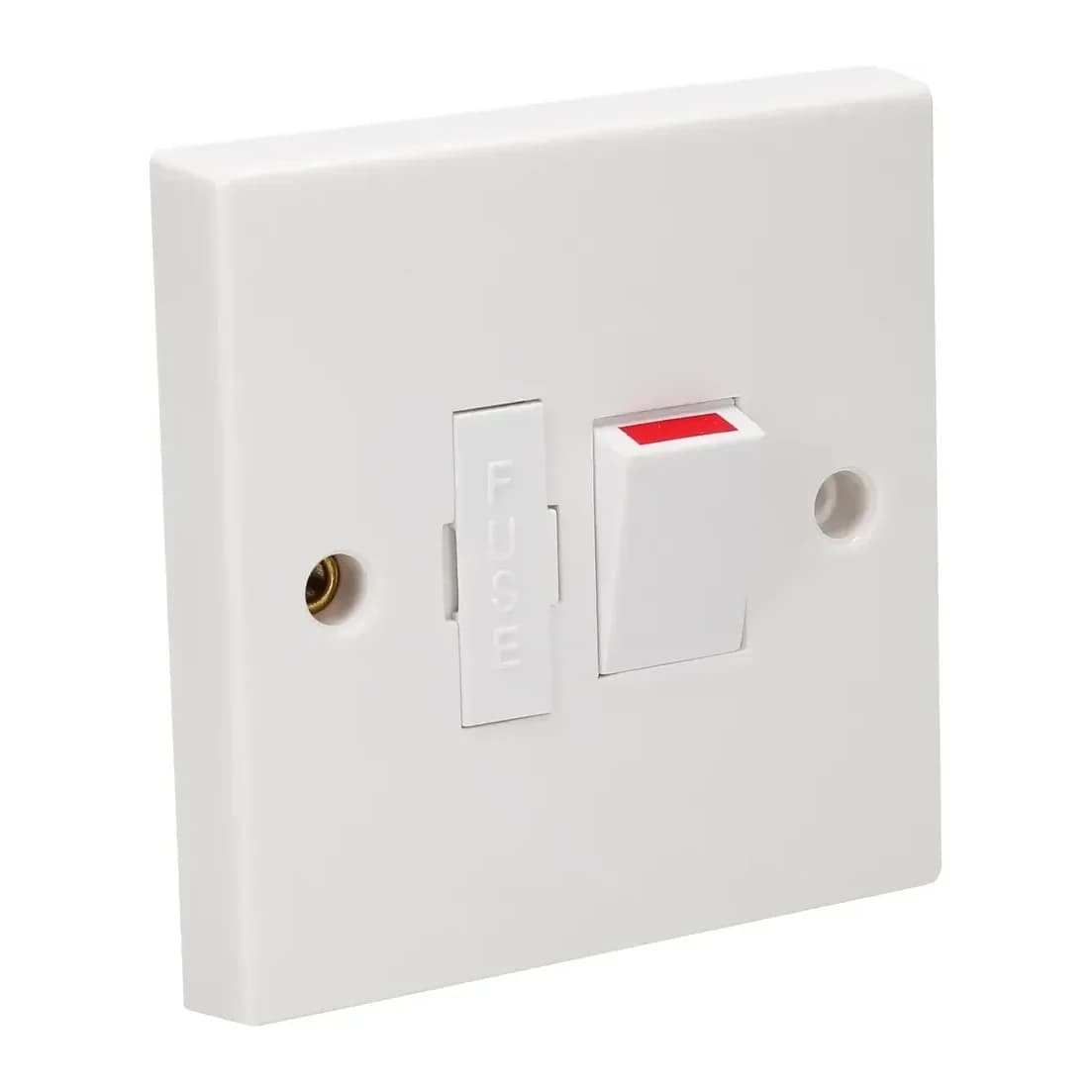 In stock
What can you flush down a macerator toilet?
Only toilet paper and what the toilet is for. The blades are made for that and nothing else.
- Never flush wet wipes (even ones labelled flushable), sanitary towels, tampons, nappies, cotton buds, condoms, dental floss, kitchen roll, hair, cat litter, food, fat or oil.
- Never pour in paint, solvents, plaster, grout or tile adhesive — keep building work well away from it.
- Avoid drain unblockers, especially acid or caustic ones, which can damage the unit. Use an ordinary toilet cleaner on the pan.
- Descale it regularly with a descaler made for macerators, more often in hard-water areas such as London. We stock a 5-litre Macerator Cleaner & Descaler at £21.53.
- Don't flush in a power cut — nothing pumps the water away until the power comes back.
A short note on the wall for guests is worth it: many macerator breakdowns start with something that should never have been flushed.
Servicing and common faults
Keep the unit accessible — behind a removable panel, never tiled in — and have it serviced as the maker recommends.
| What happens | Likely cause | What to do |
|---|---|---|
| Starts on its own every so often | The cistern leaking into the pan, a dripping tap or shower, or a leaking non-return valve | Fix the leak — see how to fix a running toilet |
| Runs for a long time or empties slowly | Scale build-up, or a partly blocked discharge pipe | Descale; check the pipe for kinks and blockages |
| Hums but doesn't pump | Something jammed in the blades or motor | Isolate at the fused spur and call a service engineer |
| Water backs up into the shower tray or basin | The unit isn't pumping | Stop using the fittings and get it checked |
| A bad smell | A worn vent filter (on models that have one) or seal | Replace the filter or seal as the maker advises |
Spares are model-specific, so note the make and model before you call. For anything inside the unit, a service engineer is the safest choice.
Questions
- Can a macerator toilet be the only toilet in a house?
- Generally not. Approved Document H accepts a macerator WC where there's also access to a WC that drains by gravity. Check with building control for your property.
- Do I need building regulations approval for a macerator?
- Adding a new WC and its drainage is normally building work, so talk to building control or an approved inspector first. The electrical connection may also be notifiable under Part P.
- Can you put a shower on a macerator?
- Yes, with a WC macerator that has a shower inlet, or a grey-water pump made for showers. The tray usually needs raising so its trap can fall to the unit.
- What size pipe does a macerator use?
- The pumped discharge is typically 22mm or 32mm, depending on the unit. Basins feed in through 32mm waste pipe and showers through 40mm.
- Does a macerator need a fused spur?
- Usually, yes. Makers generally want it wired to a fused spur with the fuse they specify, not plugged into a socket, on an RCD-protected circuit installed by an electrician.
- Are macerator toilets noisy?
- You'll hear the motor for a short time after each flush, more than a normal toilet. A firmly fixed unit and a well-clipped discharge pipe keep vibration down.
- How often should a macerator be descaled?
- As often as the maker advises, and more often in hard-water areas such as London. Use a descaler made for macerators, not a drain unblocker.
Related guides
- Bathrooms & showersShower Tray Sizes UK: Standard Sizes Chart and How to Choose