
The short answer
With the heating off and cold, check the gauge: most combis want about 1–1.5 bar, but your boiler's manual has the exact figure. Find the filling loop under the boiler — a braided hose with a valve at each end, or a built-in key or lever — open it slowly until the needle reaches the right pressure, then close it firmly. If you're topping up more than once or twice a year, there's a leak or a fault to find.
What should the boiler pressure be?
A combi or system boiler runs on a sealed heating circuit, topped up from the mains rather than from a tank in the loft. It needs some pressure in that circuit to push water round the radiators, and its safety sensor won't let it fire without it. Read the gauge on the front or underside of the boiler — or the display, if it's digital — with the heating off and the radiators cold.
| Reading | When | What it means |
|---|---|---|
| Below about 1 bar, or in the red | Cold | Low: top it up. If it falls far enough, most boilers stop and show a low-pressure fault |
| About 1–1.5 bar | Cold | Where most boilers should sit |
| A little higher, often up to about 2 bar | Heating on | Normal: water expands as it heats |
| Close to 3 bar | Any time | Too high: the pressure relief valve on most boilers opens at about 3 bar. Turn the boiler off and call an engineer |
Some gauges have a second, adjustable needle that the installer set to the system's cold pressure; if yours does, fill to that. Gauges marked in psi read about 14.5 psi to the bar.
Filling loop or filling key: which do you have?
Everything you need is underneath the boiler or on the pipes beside it. You won't need to take any covers off — never open the boiler casing; anything behind it is work for a Gas Safe registered engineer.
| Type | What it looks like | How it works |
|---|---|---|
| External filling loop | A short silver braided hose between two pipes, with a valve at each end — a lever, a small handle or a screwdriver slot | Open both valves to let mains water into the heating, then close both |
| Integral filling key | A small removable key or link that pushes into a socket under the boiler | Push it in and turn it as the manual shows; take it out afterwards and keep it safe |
| Built-in tap or lever | A tap, knob or lever on the pipework under the boiler | Turn it slowly to fill and back to close |
The water regulations treat an external filling loop as a temporary connection between drinking water and heating water, so disconnect it once you've finished and keep it, with its caps, somewhere you'll find it. A lost or leaking loop is a cheap, common part.
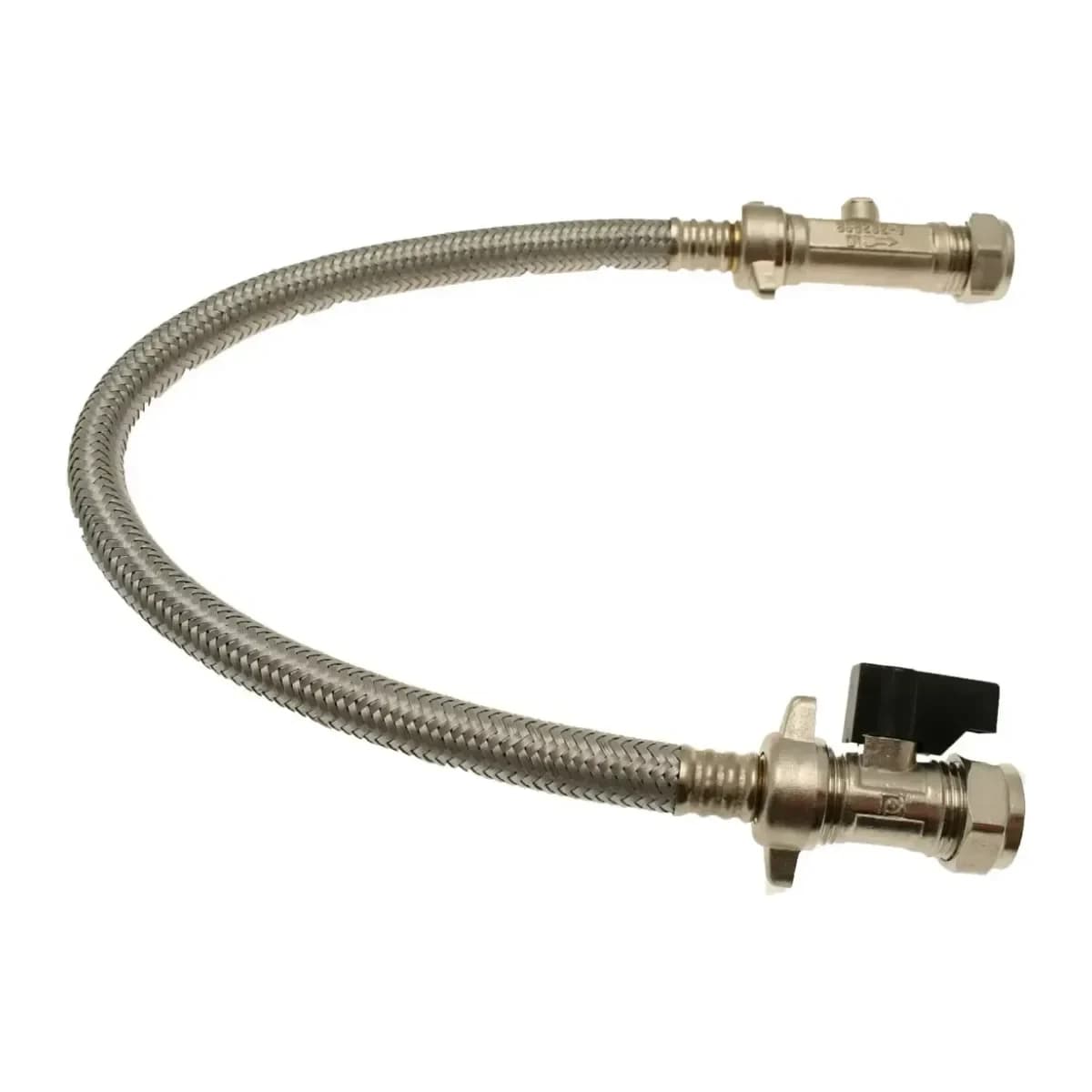 In stock
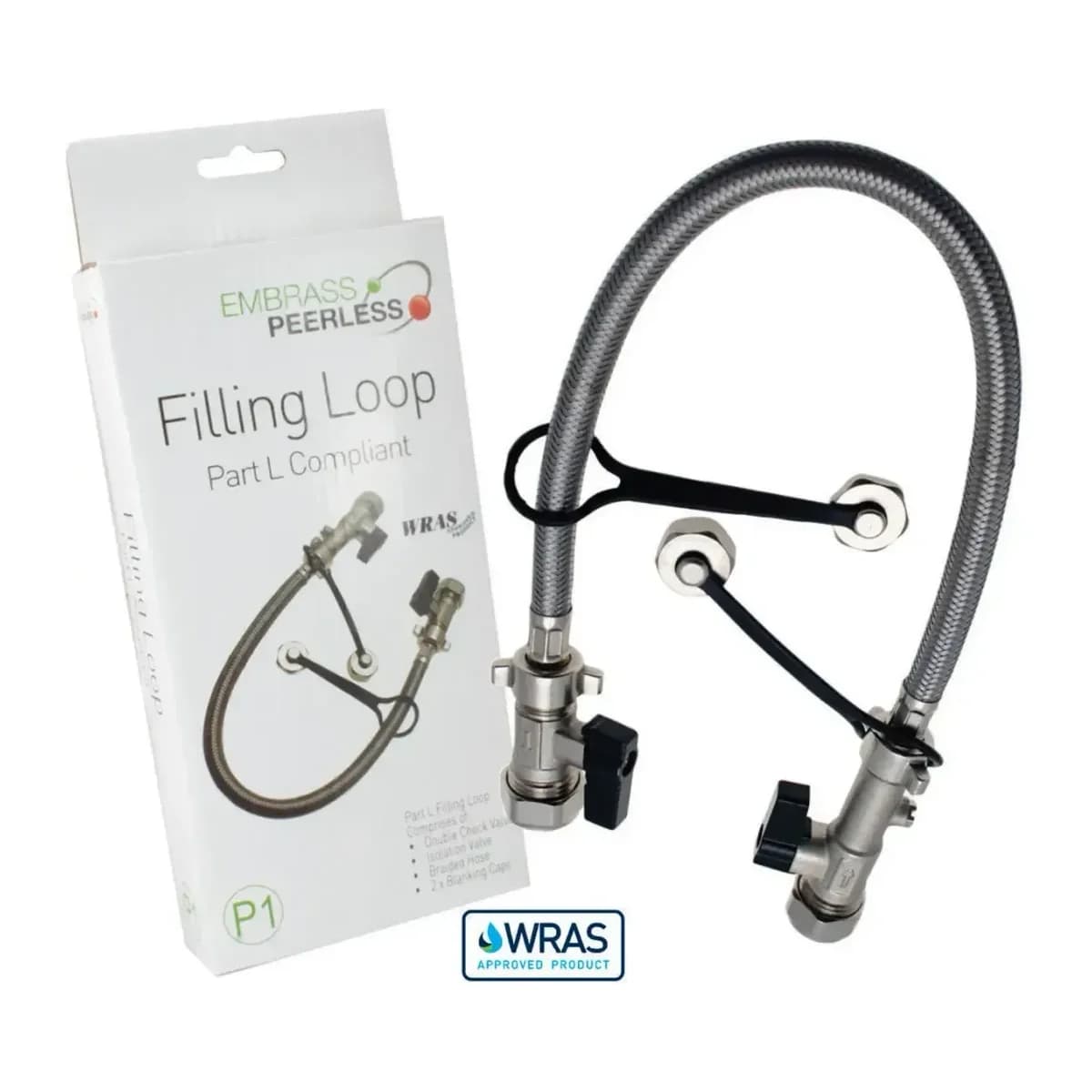 In stockFilling Loop Straight - Part L Approved
2 sizes available
Frominc VAT£10.50 ex VAT
✓ Delivery available✓ Collect today
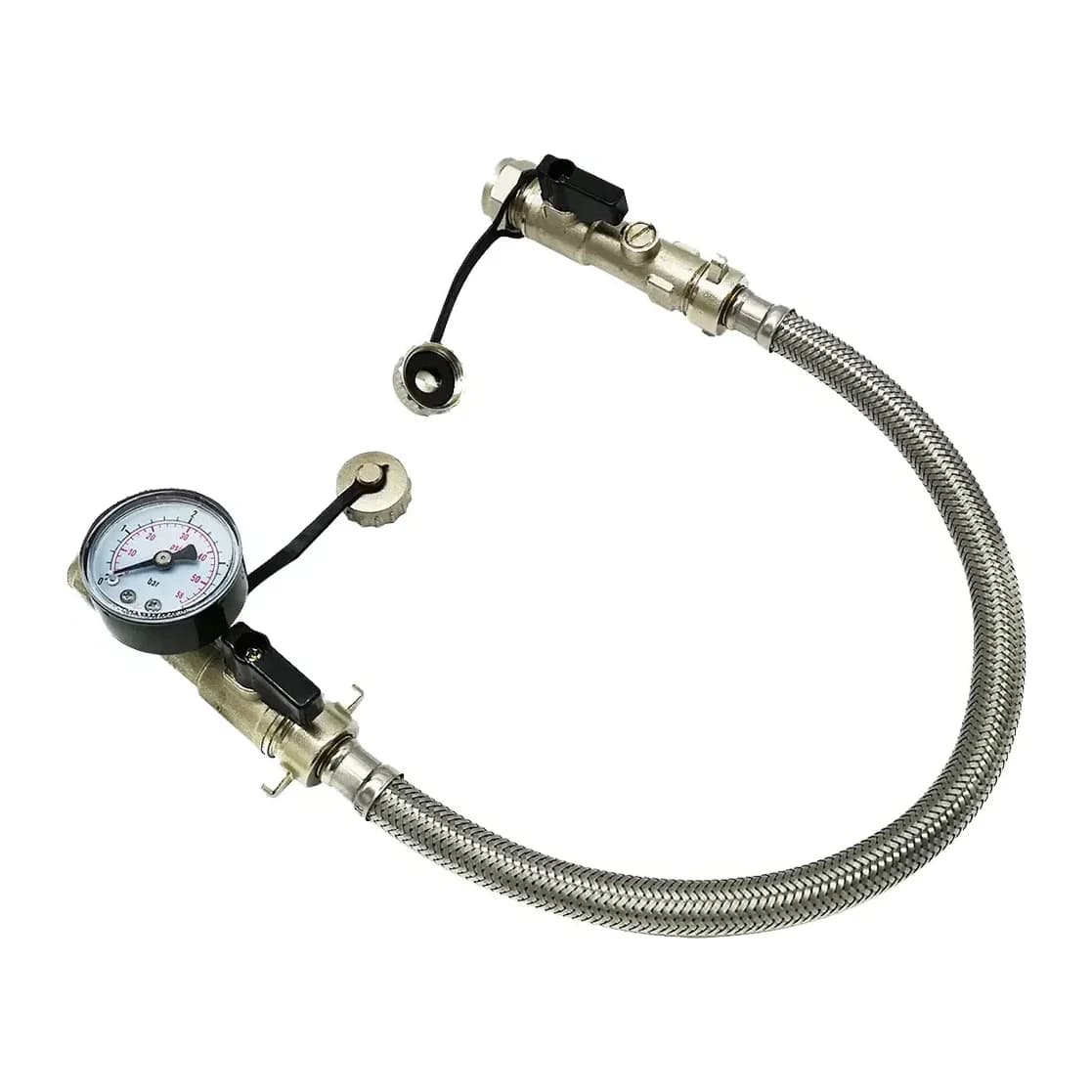 In stock15mm Filling Loop c/w Gauge Part L Approved - Straight
Code: LP-16O4ZAF
inc VAT£17.69 ex VAT
✓ Delivery available✓ Collect today
 In stock
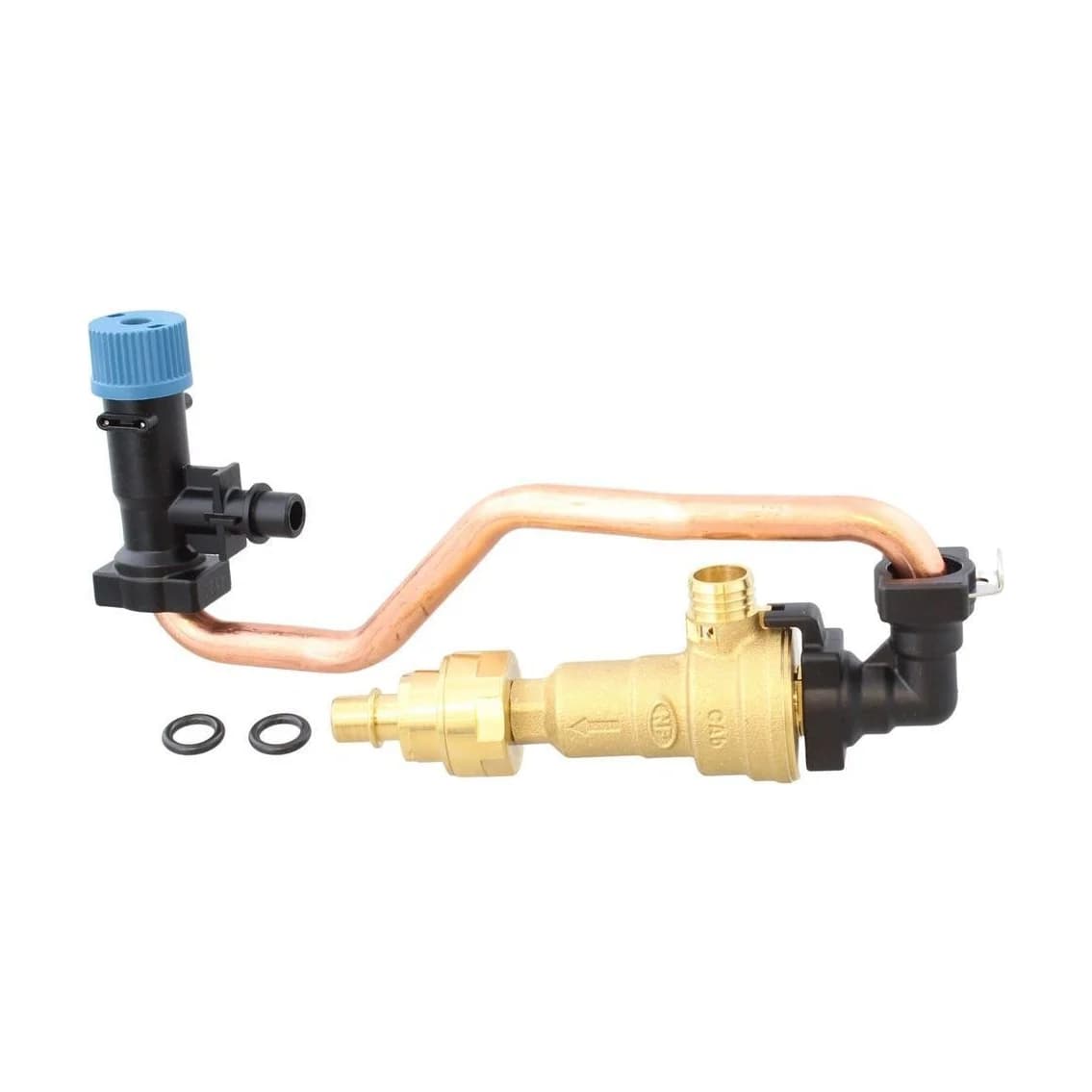
Glow-worm
Glow-worm 2000802600 Filling Loop - DINCode: LP-10DK6ZW
inc VAT£43.94 ex VAT
✓ Delivery available✓ Collect today
How to repressurise a combi boiler, step by step
- Turn the heating off and let the radiators cool. A hot system reads high, so you'd underfill it.
- Note the reading on the gauge, and find your boiler's recommended cold pressure in the manual — usually 1–1.5 bar.
- Find the filling loop or key under the boiler. If the braided hose has been taken off, screw both ends back on firmly with their rubber washers in place.
- Open one valve fully, then open the second slowly. You'll hear water hiss into the system and see the needle start to rise.
- Watch the gauge, not the clock. When it reaches the cold pressure from the manual, close both valves firmly.
- With a cloth underneath to catch the drips, disconnect the loop and refit the caps.
- If the boiler shows a low-pressure fault and doesn't restart on its own, reset it as the manual shows. Turn the heating on and check the gauge again once it's hot.
With a filling key or a built-in lever the steps are the same: go slowly, watch the gauge and close it firmly. If the pressure creeps up over the next few days with the heating off, the filling valve isn't sealing and needs replacing.
Why does my boiler pressure keep dropping?
Topping up after bleeding radiators or draining down for a job is normal — that water has gone. Otherwise a sealed system shouldn't lose pressure. If you're topping up more than once or twice a year, one of these is usually why:
- A leak in the heating. Check radiator valves (especially round the spindle and nuts), towel rails, joints under the boiler and any pipes you can see, for drips, green or white crust, rust marks or stains. A pinhole leak under a floor can lose water without ever showing.
- The pressure relief valve (PRV) letting water out. Its discharge pipe — usually a short copper pipe through the wall near the boiler, turned down, or a pipe to a tundish — should be dry. Drips or a stain below it mean the valve has been opening or is weeping.
- A flat expansion vessel. When the vessel loses its air charge, the pressure leaps as the system heats, the relief valve opens, and once it cools the pressure is lower than before — see the expansion vessel guide.
- A leak inside the boiler, from a pump seal, heat exchanger or internal joint. Look for drips or staining under the boiler, but don't open it.
The relief valve and the vessel are often linked: a flat vessel pushes the pressure up, the relief valve opens, and debris on its seat keeps it weeping afterwards. On a combi, both are inside the boiler.
| What you see | Likely cause | Who fixes it |
|---|---|---|
| Drops slowly, hot or cold | A leak on the radiators, valves or pipework | You or a plumber, once it's found |
| Jumps when the heating comes on, then falls when it cools | The expansion vessel has lost its charge | A Gas Safe engineer, for a vessel inside the boiler |
| The pipe outside by the boiler drips | The relief valve is opening or weeping | A Gas Safe engineer |
| Creeps up with the heating off | The filling loop isn't fully closed, or on a combi, an internal fault letting mains water across | Close the loop firmly; if it still rises, a Gas Safe engineer |
| Drops, and there's water under the boiler | A leak inside the boiler | A Gas Safe engineer |
When to call a Gas Safe engineer
You can safely read the gauge, top up with the filling loop and look for leaks on radiators and pipework. Anything inside the boiler casing — the relief valve, the expansion vessel's charge, the pump, a heat exchanger — is a job for a Gas Safe registered engineer. Call one if:
- You're topping up more than once or twice a year without having bled or drained anything.
- The pressure climbs towards 3 bar when the heating is on, or the discharge pipe outside drips.
- There's water under the boiler, or the casing is wet or stained.
- The boiler shows a fault that won't clear after topping up and resetting.
- The pressure rises on its own with the boiler off and the filling loop closed.
Check an engineer's registration on the Gas Safe Register before they start: every registered engineer carries an ID card showing the work they're qualified to do.
Parts for the job
| Part | What it's for | Lines in stock |
|---|---|---|
| Filling loops, from £9.69 | Replacing a lost or leaking external loop | 7 |
| Pressure gauges | System gauges, and test gauges for water and gas | 9 |
| Expansion vessels | External heating vessels, brackets and fixing kits | 24 |
Boiler-specific parts such as relief valves are on the boiler spares shelf — have your engineer confirm the part number for your model.
Questions
- What should my combi boiler pressure be?
- Usually about 1–1.5 bar with the heating off and cold, rising a little — often to around 2 bar — when it's hot. Your boiler's manual gives the exact figure.
- Is it safe to repressurise a boiler myself?
- Yes. The filling loop or key under the boiler is there for the householder to use — just go slowly and close the valves firmly. Don't take the casing off: anything inside is for a Gas Safe registered engineer.
- How often should I need to top up my boiler pressure?
- Rarely — after bleeding radiators or draining down for a job. If you're doing it more than once or twice a year without either, look for a leak, a weeping relief valve or a flat expansion vessel.
- Why does my boiler pressure go up when the heating is on?
- Water expands as it heats, so a small rise is normal. A jump of a bar or more, or a rise towards 3 bar, usually means the expansion vessel has lost its charge.
- Can low boiler pressure stop the hot water on a combi?
- Yes. A combi uses the same burner and safety sensors for hot water and heating, so when the pressure is too low it locks out and you lose both until it's topped up.
- Should I leave the filling loop connected?
- No. It's a temporary connection between the mains and your heating water, so close both valves and disconnect it when you've finished. Left open, or with a valve letting by, it can push the pressure up.
Related guides
- Heating & boilersHow to Bleed and Balance Radiators
- Heating & boilersHow to Drain a Central Heating System (and Refill It Properly)
- Heating & boilersCombi vs System vs Regular Boiler: Which Do You Need?