
The short answer
Fit a 15mm x 3/4" appliance valve on the cold supply — usually teed into the pipe under the kitchen sink — and screw the machine's fill hose on hand-tight; its rubber washer makes the seal. Most machines are cold fill only. Run the outlet hose into a 40mm standpipe with its own trap, or on to a spigot on the sink trap with the hose looped up high, keeping to the manual's height limits so the machine can't siphon. Then remove the transit bolts and level it.
What you need
| Part | What it does | Where to find it |
|---|---|---|
| Appliance valve, 15mm x 3/4" | Isolates the machine; the fill hose screws on to its 3/4" BSP thread | Appliance valves |
| 15mm tee, or a washing machine valve tee | Takes a branch off the cold pipe | Compression tees |
| 15mm pipe and clips | Runs the supply from the tee to the valve | Copper tube, pipe clips |
| Standpipe and trap, or a trap with an appliance spigot | Takes the dirty water away | Traps, appliance traps |
| Fill and outlet hoses | Usually supplied with the machine; longer ones if it's further away | Hoses, hose connectors |
A dishwasher needs exactly the same parts, so if both are going in, plan the two together.
Connecting the water supply
Most modern washing machines and many dishwashers are cold fill only — they heat their own water — so check the manual. If the machine has one inlet, connect it to the cold. Where a machine can take hot, the manual will say so and give the maximum temperature.
- Turn off the water at the stop tap and drain the cold pipe from the kitchen tap.
- Cut into the mains cold pipe — usually under the kitchen sink — and fit a 15mm tee. Machines need the pressure the mains gives; the manual lists the minimum.
- Run 15mm pipe to where the valve will go: on the wall beside or above the machine, where you can reach it without pulling the machine out.
- Fit the washing machine valve (£1.94), with its blue lever for cold and its 3/4" thread pointing where the hose can reach it without kinking.
- Turn the water back on and check every joint before you connect the machine.
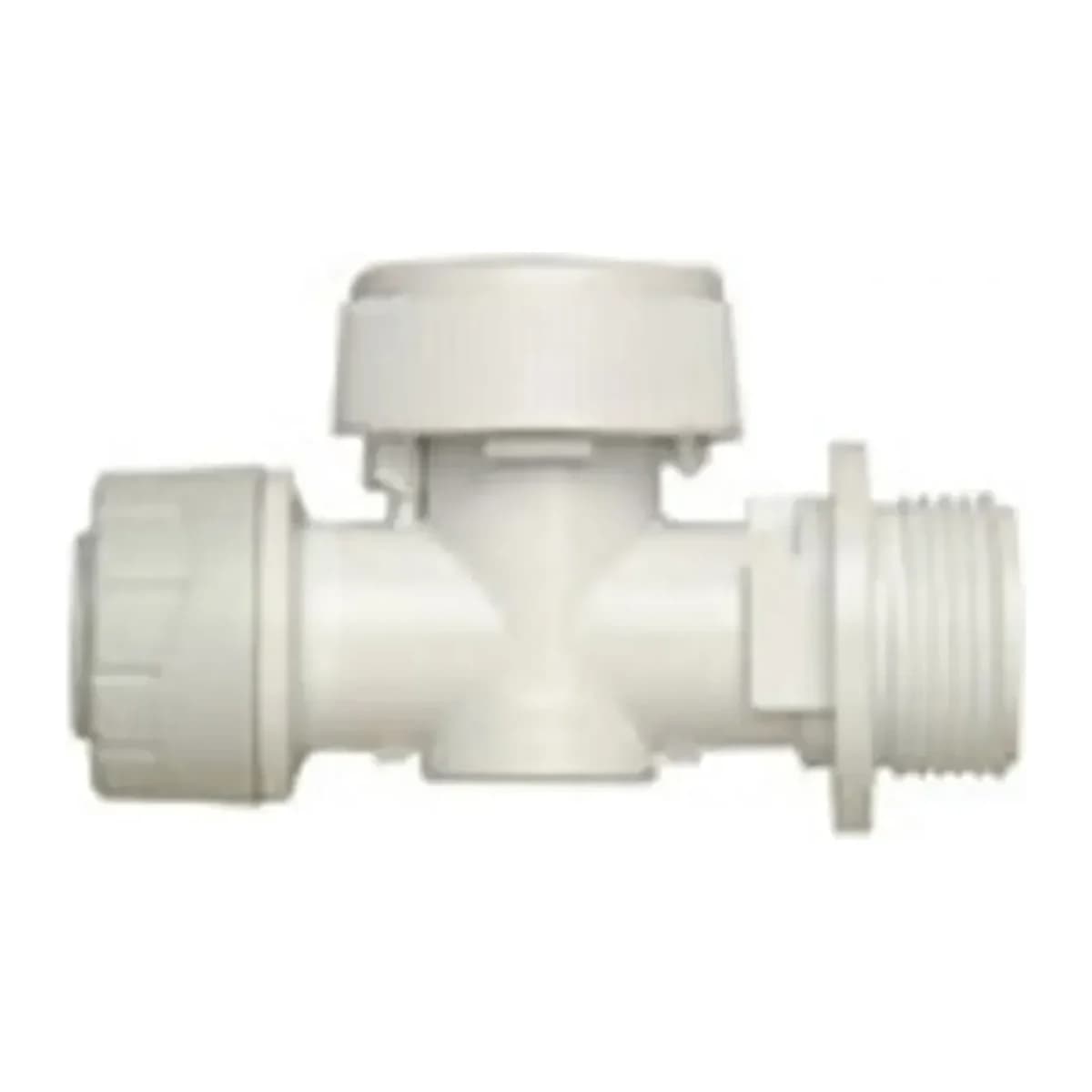
If the valve can go right on the cold pipe, a washing machine valve tee (£2.38) combines the tee and the valve in one fitting. On plastic pipe, use pipe inserts with compression fittings, or a push-fit appliance valve such as the JG Speedfit appliance tap.
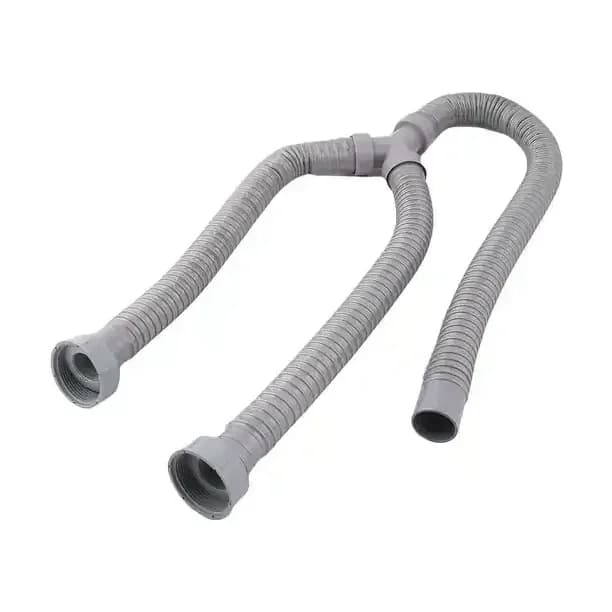 In stockY Adaptor for Washing Machine Hoses
Code: LP-1C2BG5S
inc VAT£1.46 ex VAT
✓ Delivery available✓ Collect today
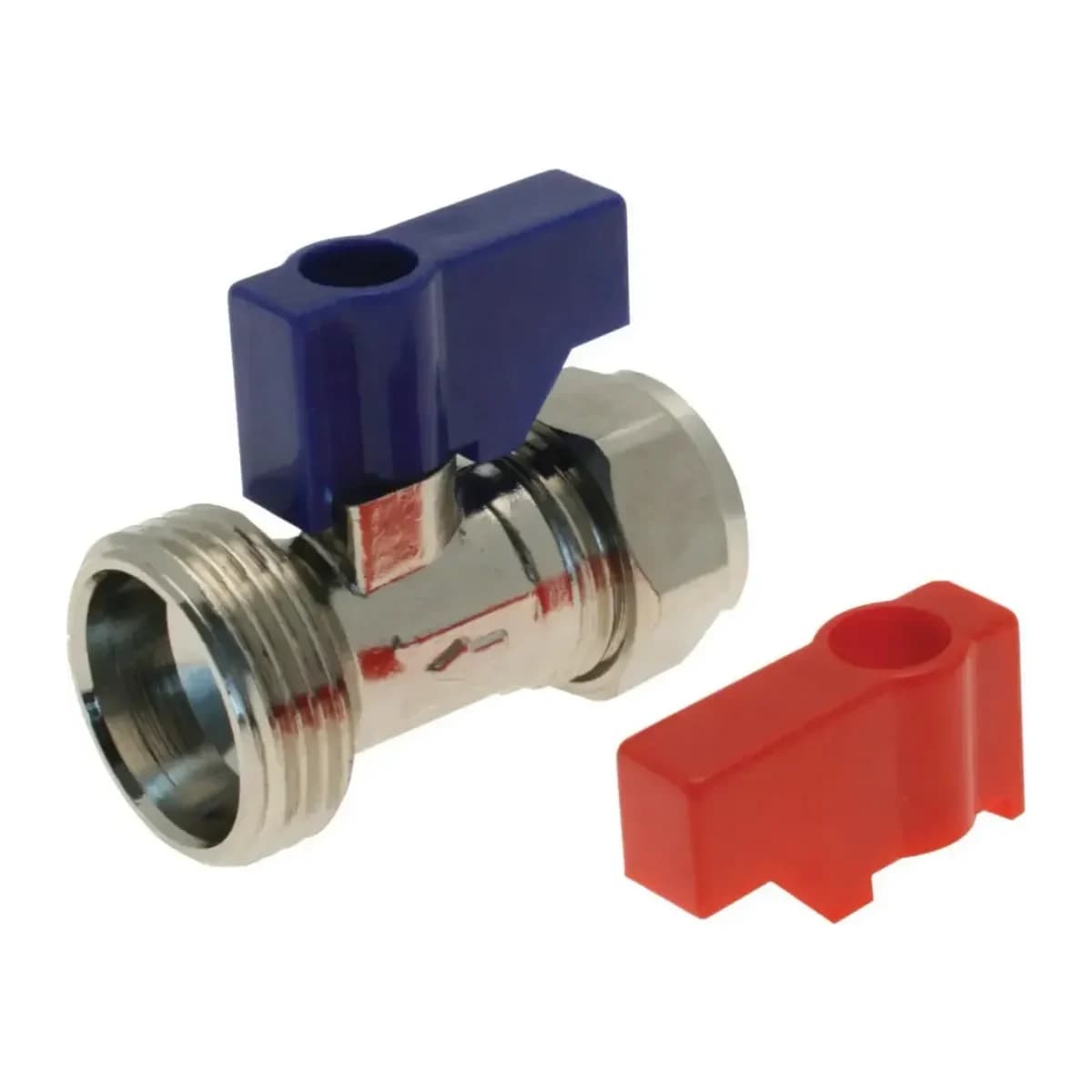 In stock
 In stock
Polyplumb
15mm x 3/4" Polyplumb Appliance ValveCode: LP-1AJPR96
inc VAT£5.26 ex VAT
✓ Delivery available✓ Collect today
Self-cutting valves vs teeing in
Self-cutting (self-boring) valves clamp round an existing copper pipe and pierce it as you screw them down, so you don't have to cut the pipe or drain down. They're quick, but many plumbers avoid them:
- The hole they cut is small, so they restrict the flow.
- The seal is a rubber gasket held by a clamp, which can weep over time in a cupboard where nobody looks.
- They're made for copper pipe, not plastic.
A tee and a proper appliance valve take a little longer, but you get a standard joint you can rely on and undo later — which is why that's what we stock.
Fill and outlet hoses
- Use new hoses. Machines come with a new set, and makers generally advise against reusing old ones.
- Hand-tight plus a little. The fill hose's 3/4" nut seals on its rubber washer, so don't use PTFE tape — it can stop the washer seating. See BSP thread sizes.
- Don't kink or stretch either hose when you push the machine back. Longer inlet hoses are available if the valve is a way off.
- Extending the outlet hose needs a proper outlet hose connector and hose clips, and must stay within the manual's maximum length — too long and the pump struggles.
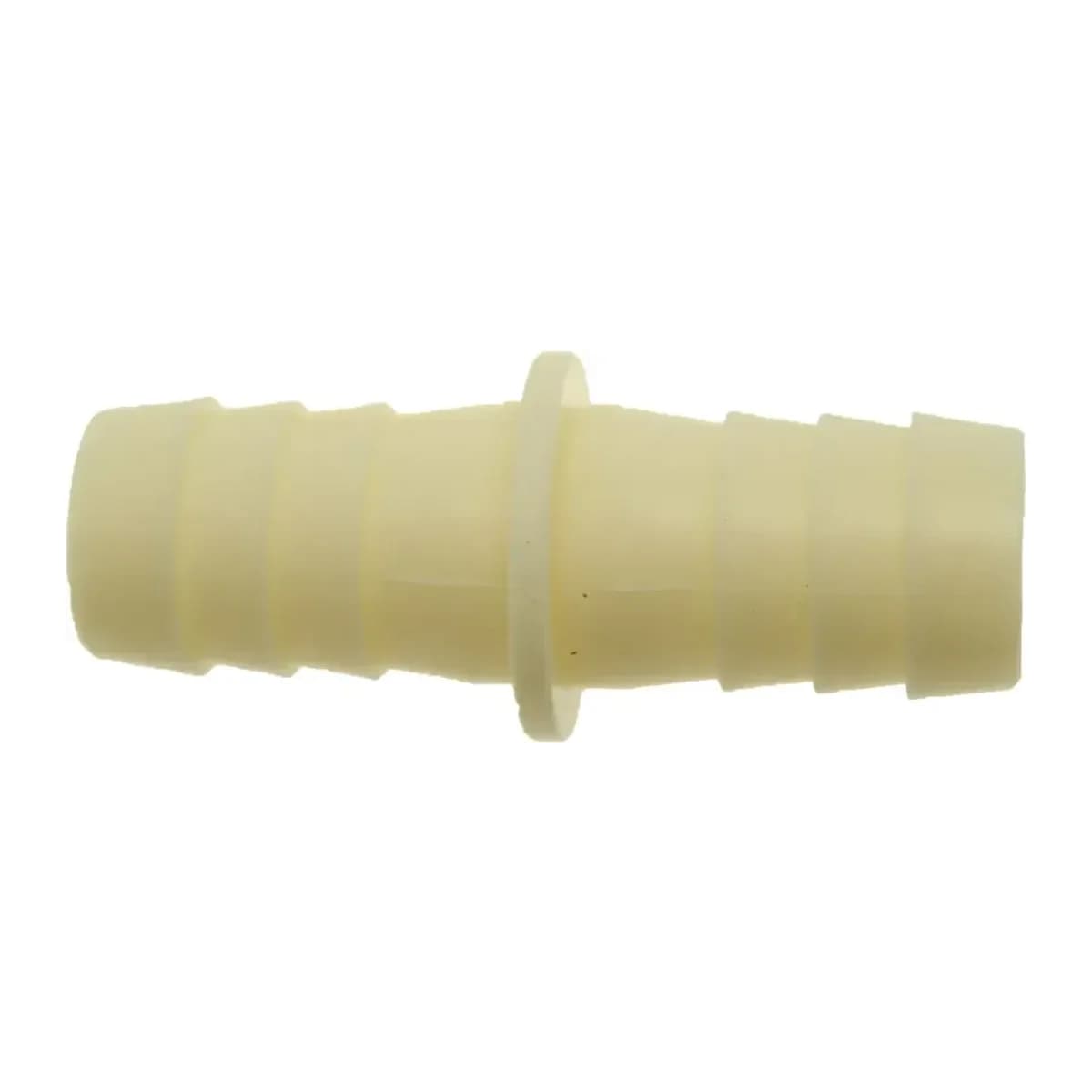 In stockWashing Machine / Appliance Outlet Hose Connector
3 sizes available
Frominc VAT£1.61 ex VAT
✓ Delivery available✓ Collect today
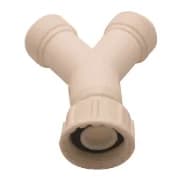 In stockWashing Machine / Appliance Hose Joiner - Y Piece
Code: LP-1FKKBP4
inc VAT£1.98 ex VAT
✓ Delivery available✓ Collect today
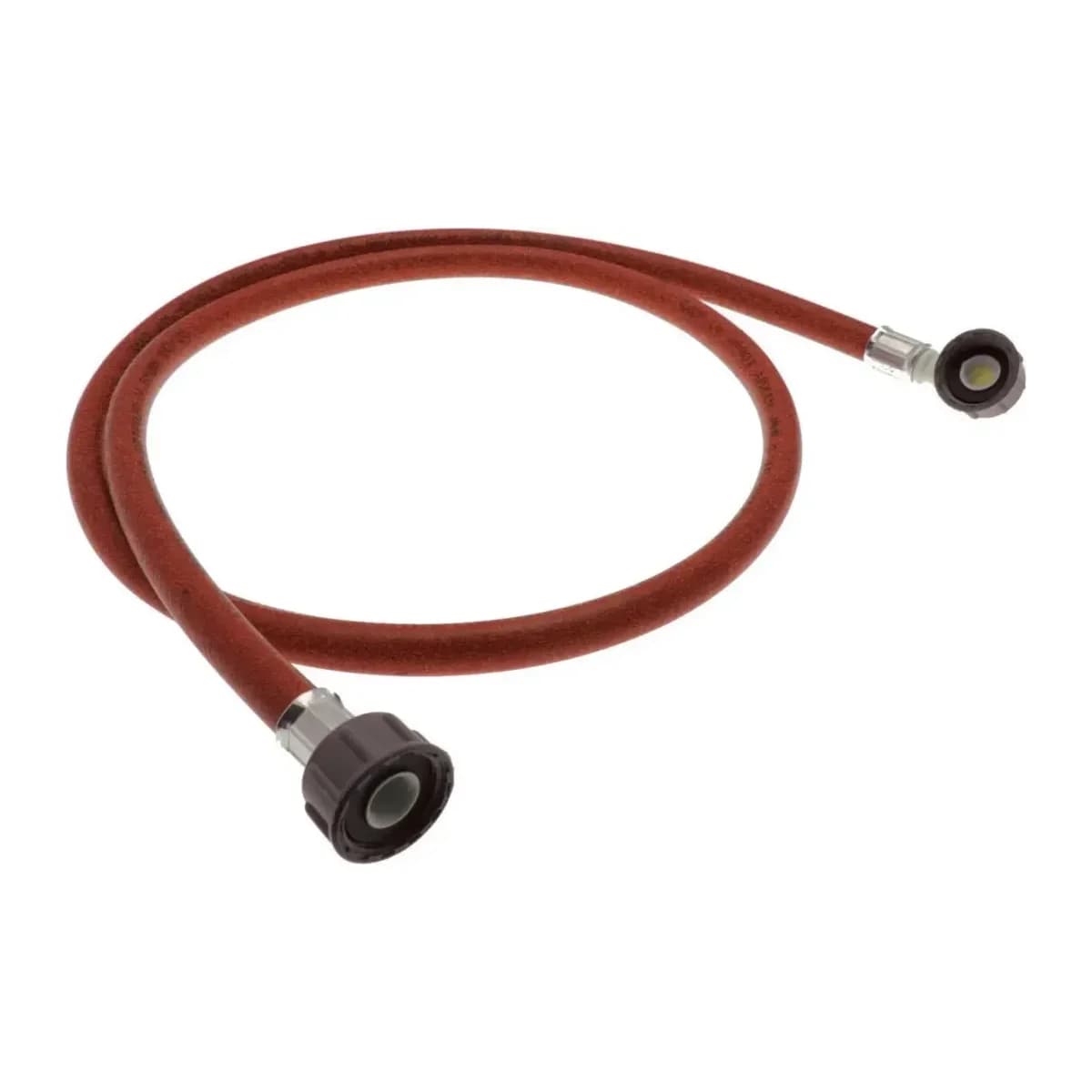 In stock
- In stockWashing Machine / Appliance Inlet Hose
4 sizes available
Frominc VAT£3.41 ex VAT
✓ Delivery available✓ Collect today
Waste: standpipe or sink trap spigot?
The outlet hose has to discharge into a trapped waste, so drain smells can't come back up. There are two usual ways:
| Standpipe and trap | Spigot on the sink trap | |
|---|---|---|
| How it works | The hose hooks into the top of an open 40mm standpipe with its own trap | The hose pushes on to a spigot (nozzle) on the sink trap or waste pipe and is clipped on |
| Good points | Independent of the sink; the open top gives an air gap | Neat, with no extra pipe to box in |
| Watch for | The standpipe height in the manual; don't push the hose too far down | Loop the hose up high first; fit a non-return valve if the instructions call for one, so sink water can't back up into the machine |
| Parts | Standpipe traps | Appliance traps and nozzles |
A washing machine or dishwasher needs a 40mm (1½") waste and a trap with a 75mm seal. Our waste pipe sizes guide covers falls and maximum run lengths.
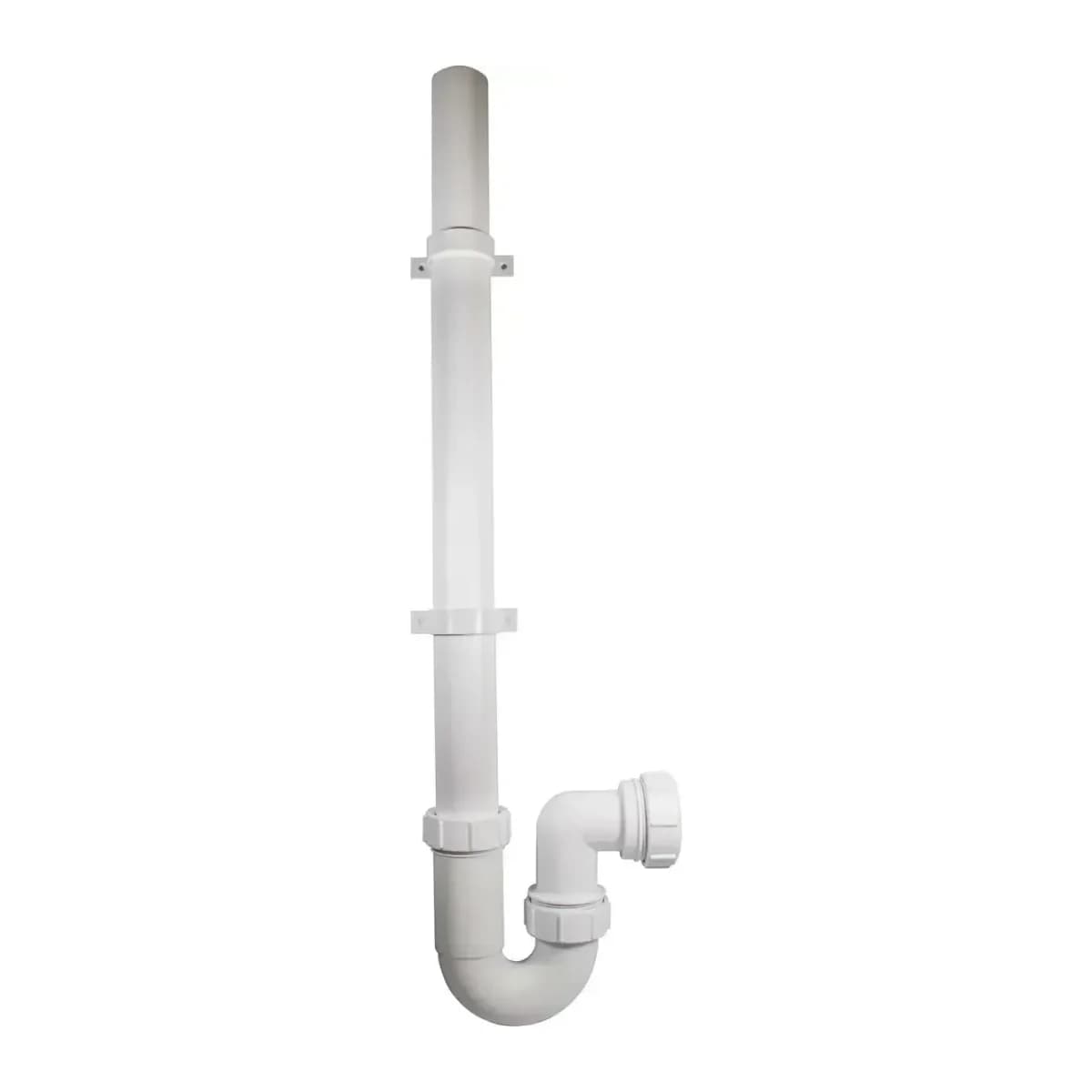 In stock1 1/2" x 75mm Plastic Appliance/Standpipe Trap
Code: LP-1WP6NLJ
inc VAT£7.92 ex VAT
✓ Delivery available✓ Collect today
 In stock1 1/2" x 75mm Plastic Appliance Swivel P Trap c/w Twin 135° Nozzle
Code: LP-COEQ0D
inc VAT£8.08 ex VAT
✓ Delivery available✓ Collect today
 In stock1 1/2" x 75mm Plastic Appliance/Swivel P Trap c/w Nozzle
Code: LP-1GP8B1I
inc VAT£9.13 ex VAT
✓ Delivery available✓ Collect today
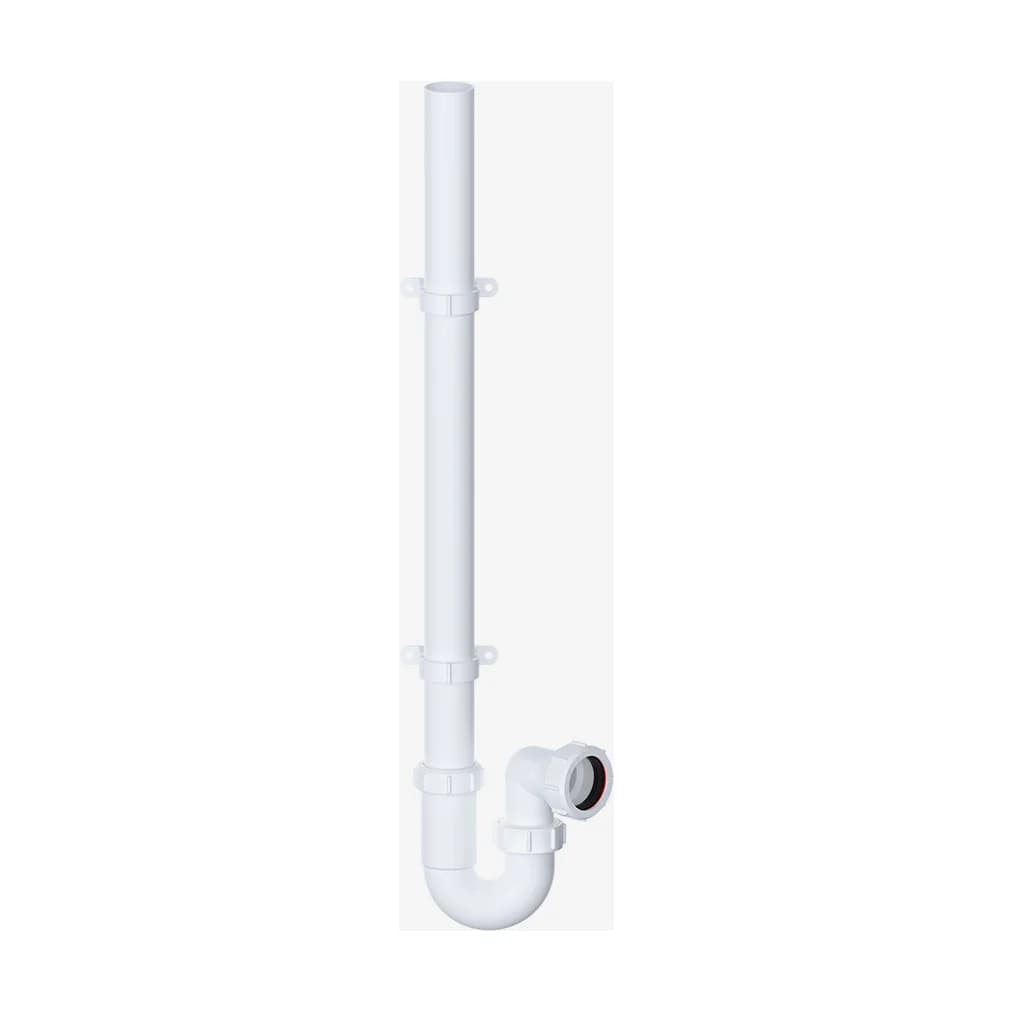 In stock1 1/2" Standpipe Trap WashMachine
Code: LP-4TRZIJ
inc VAT£9.18 ex VAT
✓ Delivery available✓ Collect today
Why the height of the waste matters
If the outlet sits lower than the water in the drum, the machine can siphon — emptying as fast as it fills, so the wash never finishes. Too high, and the pump has to work harder and may not empty the drum. That's why every manufacturer gives a minimum and maximum height for the top of the standpipe or the hose loop, and a limit on how far the hose goes into the standpipe.
- Follow your own machine's figures: they vary from make to make.
- At a sink spigot, take the hose up to the hook or clip on the back of the machine, or up under the worktop, before it drops to the spigot.
- Don't seal the hose airtight into the standpipe — the air gap is part of what stops siphoning.
- If you can't get the height right, ask at the counter with the machine's model about an anti-siphon trap or a non-return valve.
Plumbing in a dishwasher
A dishwasher goes in the same way: a 15mm x 3/4" appliance valve on the supply — cold unless the manual allows hot — and the outlet hose to the sink trap or a standpipe. Most dishwashers sit next to the sink, so a sink trap with an appliance nozzle is the usual route, with the hose looped up under the worktop as the manual shows.
With a washing machine as well, a trap with twin appliance nozzles takes both outlet hoses, or a swept tee with a nozzle adds a connection to a 40mm waste pipe.
Before the first wash
- Remove the transit bolts from the back of a washing machine. They lock the drum for delivery and will damage the machine if left in; fit the blanking caps supplied.
- Push the machine back without kinking the hoses, and level it by adjusting the feet.
- Open the valve and check both ends of the fill hose for drips.
- Run a rinse or drain cycle and watch the waste connection and trap while it pumps out.
Questions
- Can I connect a washing machine to the hot water?
- Only if the manual allows it. Most current machines are cold fill only and heat their own water, so the cold valve is the only one they need.
- What size is a washing machine valve?
- 15mm on the pipe side, with a 3/4" BSP male thread for the hose. The fill hose has a 3/4" female nut with a rubber washer.
- Can a washing machine and dishwasher share a waste?
- Yes. A sink trap with twin appliance nozzles takes both outlet hoses, or one can go to a standpipe and the other to the sink trap.
- Why does my washing machine keep filling and draining?
- If it drains while it's filling, it's usually siphoning: the outlet is too low or the hose is pushed too far into the standpipe. Raise it to the height in the manual.
- Are self-cutting washing machine valves any good?
- They save cutting and draining the pipe, but they restrict the flow, rely on a clamped gasket and are for copper only. A tee and an appliance valve is the more reliable job.
- How high should a washing machine standpipe be?
- It depends on the machine: the manual gives a minimum and maximum height for the top of the standpipe. Use those figures rather than a rule of thumb.