
The short answer
Count the basin's tap holes first. One hole takes a monobloc mixer; two take a pair of pillar taps; three take a three-hole mixer with a separate spout and handles; no holes means a wall-mounted tap, or a tall mixer on the worktop beside a counter-top basin. Then check the tap suits your water pressure, the spout reaches towards the plug, and the waste — click-clack or pop-up, slotted or unslotted — suits the basin.
What types of basin tap are there?
| Type | Tap holes | Best for | Watch out for |
|---|---|---|---|
| Monobloc mixer | 1 in the basin | Most modern basins and vanity units | Its minimum working pressure; splashing on a small basin |
| Pillar taps | 2 in the basin | Traditional basins and gravity-fed systems | Separate hot and cold, so no mixed water |
| Three-hole mixer | 3 in the basin | Larger traditional and designer basins | More connections to make under the basin |
| Tall mixer | 1 in the worktop, or in the bowl | Counter-top (vessel) basins | Spout height and reach over the rim |
| Wall-mounted | None: the tap comes out of the wall | Basins without tap holes and counter-top bowls | Parts are built into the wall before it's finished |
| Non-concussive (self-closing) | 1 or 2 | Public and workplace washrooms | Runs for a set time when pushed, then shuts off |
Most ranges match their basin taps to bath taps so the whole bathroom looks the same: SCN's ranges, for example, pair a basin mixer with a bath filler and a bath shower mixer in each finish. For a busy washroom, non-concussive basin taps shut themselves off so they can't be left running.
One, two or three tap holes?
The basin decides. Count the holes, and look for any that are marked but not pierced through: some basins have them so you can knock out an extra hole for a different tap. Follow the basin maker's instructions if you do — ceramic cracks easily.
- One hole: a monobloc mixer — the usual choice for vanity units and modern pedestal basins such as our SCN 500mm round basin.
- Two holes: a pair of pillar taps, as on the Milton 550mm basin and the Lifestyle 450mm basin. A standard monobloc mixer won't use both.
- Three holes: a three-hole (deck) mixer, with the spout in the middle and a handle either side.
- No holes: a wall-mounted tap, or a tall mixer on the worktop.
Don't leave a spare hole open: a chrome tap hole stopper covers it neatly. Still choosing the basin? See our vanity unit guide.
Which tap suits a counter-top basin?
A counter-top (vessel) basin sits on top of the vanity unit or worktop, so its rim is much higher than a set-in basin's. A standard monobloc on the worktop beside it would barely reach over the rim, so you need a tall basin mixer or a wall-mounted tap.
- Tall mixers have a raised body and spout. Some makers sell their basin mixers in sizes — Grohe's run from S and M up to L and XL, for example, with the larger sizes meant for counter-top bowls. Measure from the worktop to the basin rim, then choose a spout that clears the rim comfortably and lands towards the plug.
- Wall-mounted taps keep the worktop clear. The valve body is built into the wall, so it has to be fitted and pressure-tested before the wall is tiled, at a height and position that suits the basin. The spout must reach far enough to run into the bowl, not onto the rim.
Not sure which height you need? Call the counter on 020 3802 3275 with the basin's measurements and the tap holes it has.
Which waste goes with which basin tap?
Basin wastes are 1¼" (32mm). Two things matter: how the plug works, and whether the basin has an overflow.
| Waste | How it works | Pairs with |
|---|---|---|
| Click-clack (sprung) | Press the plug to close it, press again to open | Any tap — the waste works on its own |
| Pop-up with lift rod | A rod behind the spout lifts and drops the plug | A mixer with a rod hole; usually supplied with the tap |
| Plug and chain | A loose plug on a chain | Pillar taps and traditional basins |
Use a slotted waste if the basin has an overflow, so the overflow can drain through the slots, and an unslotted waste if it doesn't.
Many mixers come with a waste. SCN's "with waste" mixers, such as the Prestige and the Standard, include a click-clack waste, and the Grohe Essence M-size has a pop-up. Check the listing before you buy a waste separately.
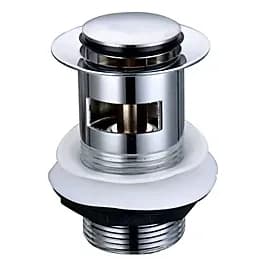 In stock
SCN
SCN Click Clack Basin Waste2 options available
Frominc VAT£8.08 ex VAT
✓ Delivery available✓ Collect today
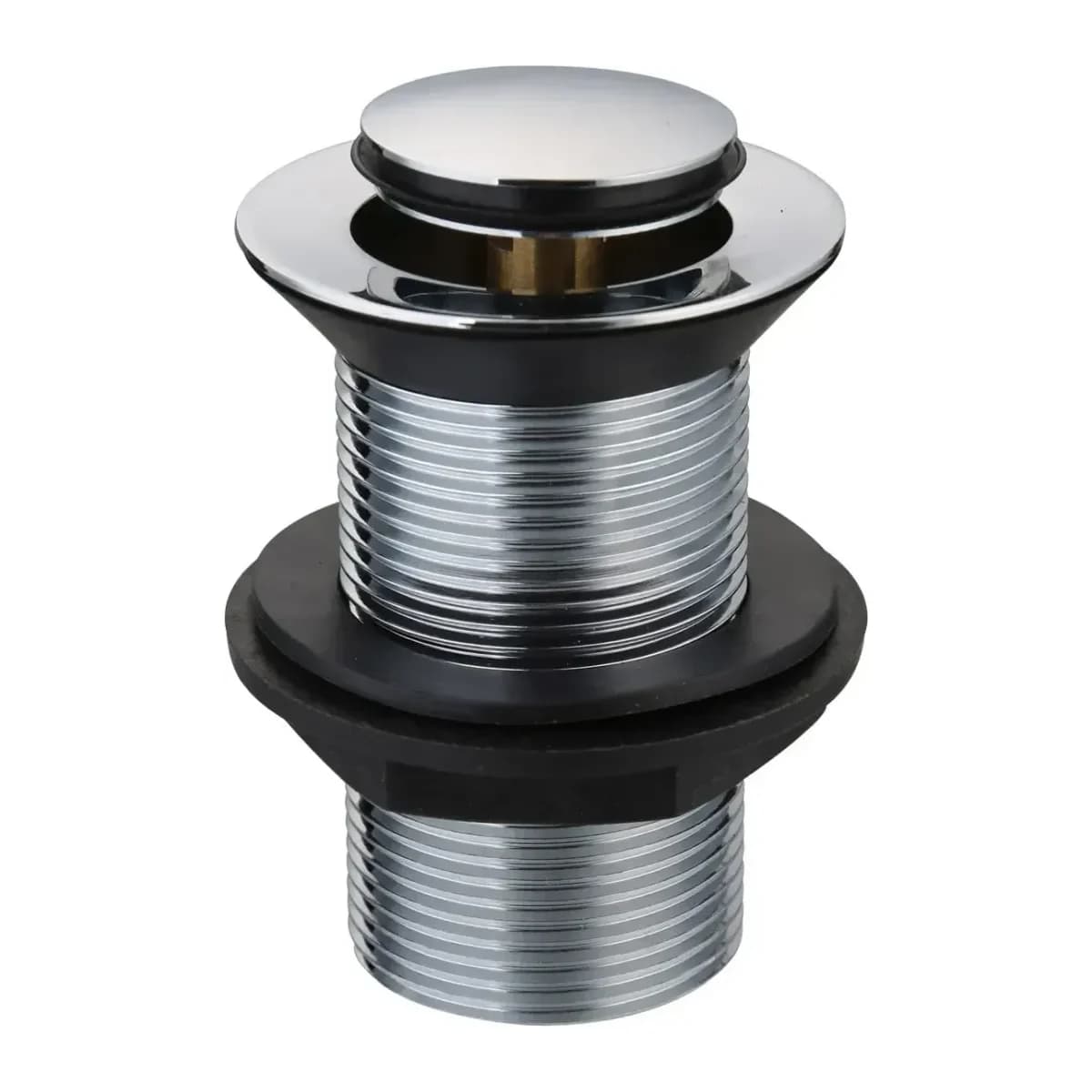 In stock
Peerless
Peerless Easy Clean Basin Waste Clicker Plug2 options available
Frominc VAT£8.89 ex VAT
✓ Delivery available✓ Collect today
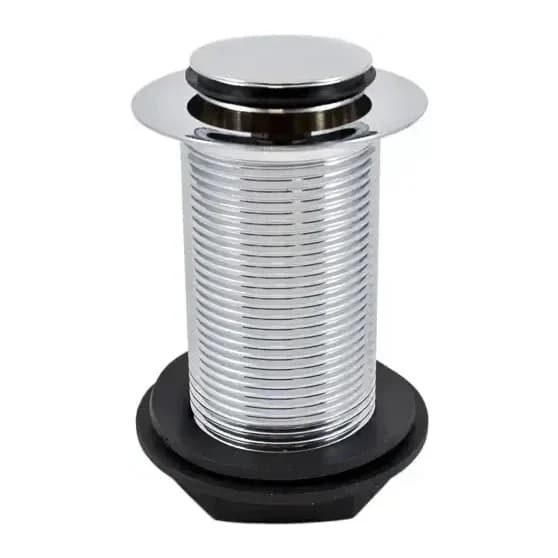 In stock
Peerless
Peerless Basin Waste Clicker Plug3 options available
Frominc VAT£9.67 ex VAT
✓ Delivery available✓ Collect today
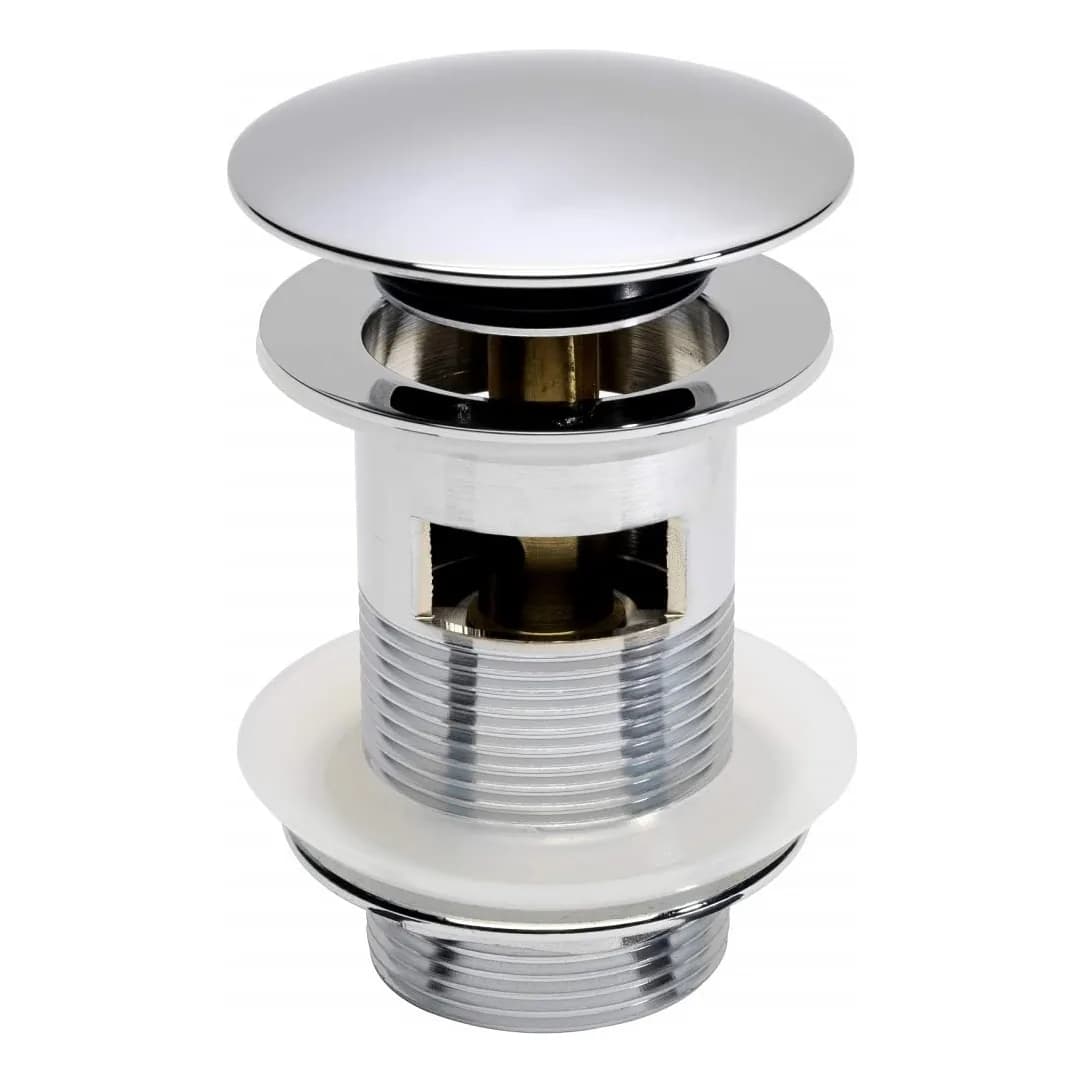 In stock
SCN
SCN Big Dome Click Clack Basin Waste7 options available
Frominc VAT£9.69 ex VAT
✓ Delivery available✓ Collect today
Thick basin? A basin waste thread extender adds length. The trap comes next — see waste pipe sizes.
Will the tap work on your water pressure?
On a combi boiler or unvented cylinder, both supplies arrive at mains pressure and most basin mixers work well. On a gravity system — a cold tank in the loft feeding a hot cylinder — an upstairs basin may get only about 0.2 bar, and many modern mixers are designed for about 1 bar or more. Check the tap's minimum working pressure and choose one rated for low pressure, or fit pillar taps, which have a wider waterway. Our low water pressure guide shows how to check what you have.
More flow isn't always better at a basin. A powerful mixer over a small, shallow cloakroom basin splashes, so look for a soft, aerated flow and a spout that reaches towards the plug. Some taps limit flow to save water: the Grohe BauEdge S-size, for example, has Grohe's EcoJoy flow limiting and a temperature limiter.
If the hot is tank-fed and the cold comes from the mains, a mixer needs single check valves on its supplies unless they're built in — our kitchen tap guide explains why.
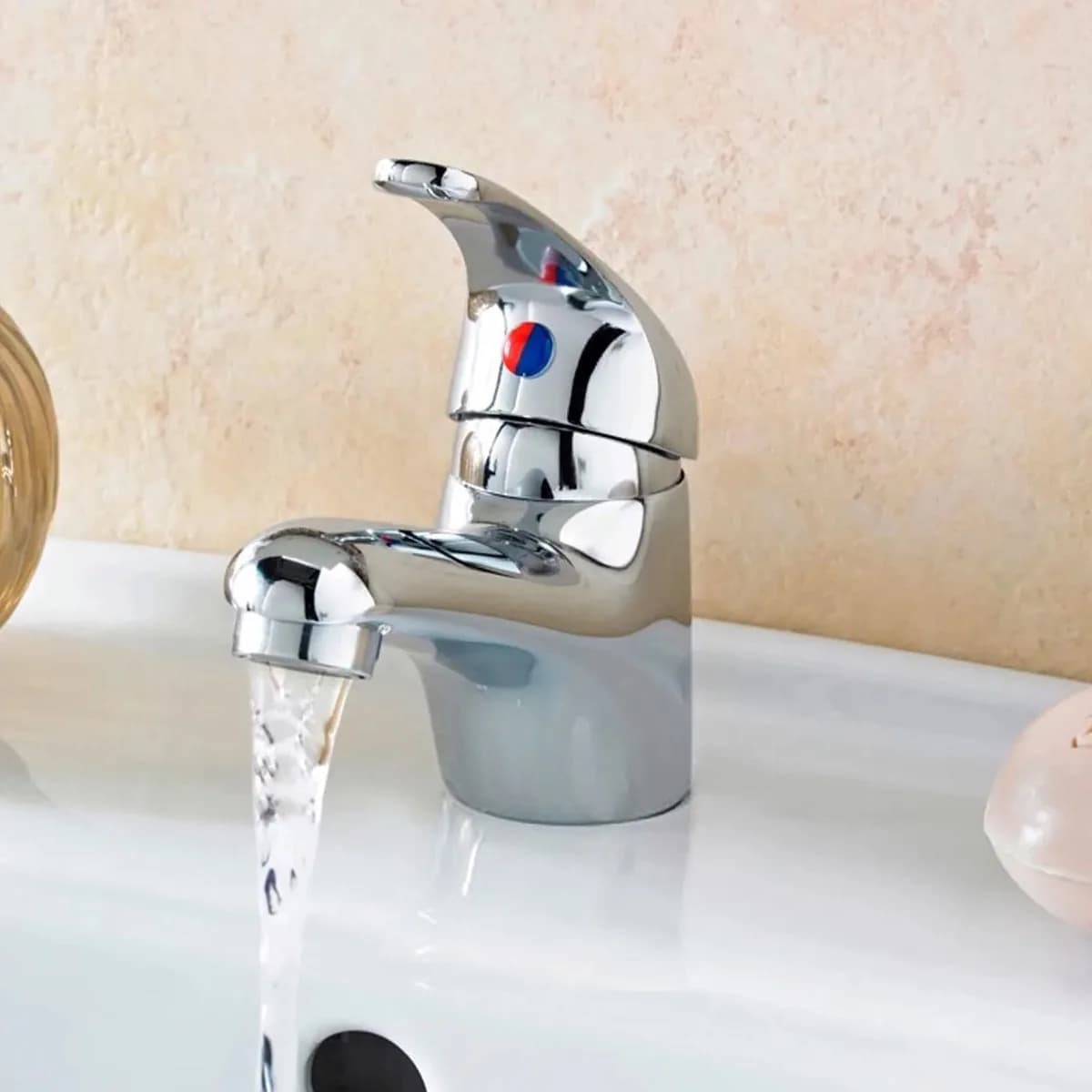 In stock
SCN
SCN Standard Basin Mixer Tap with Waste (40mm Cartridge), ChromeCode: SCN-SD05
inc VAT£32.33 ex VAT
✓ Delivery available✓ Collect today
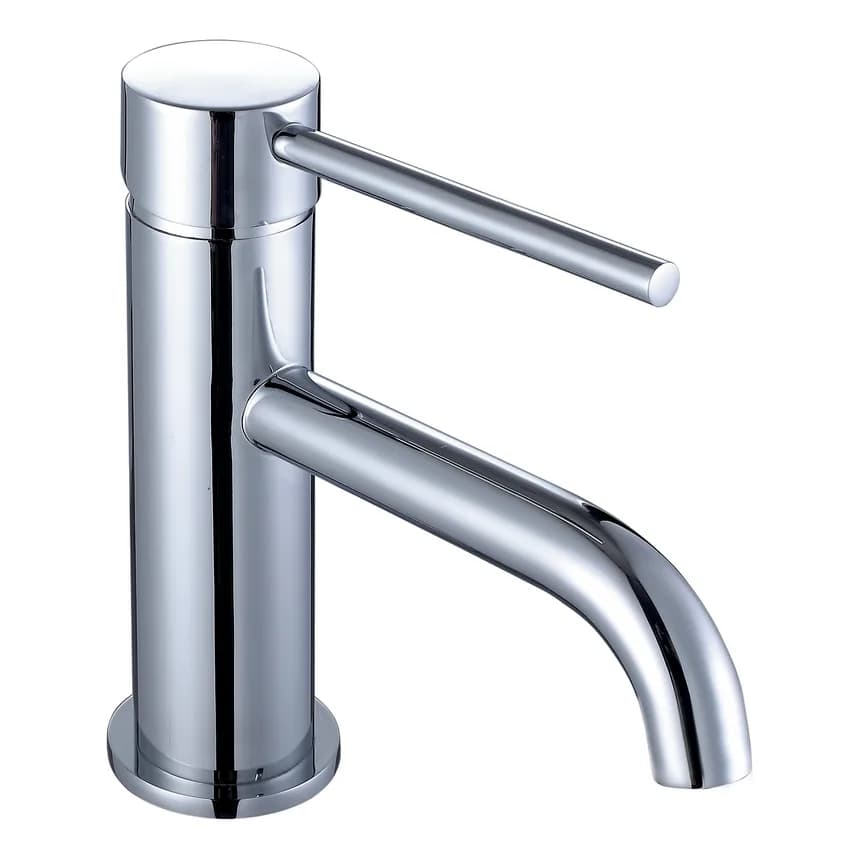 In stock
SCN
SCN Sleek Basin Mixer Tap4 colours available
Frominc VAT£42.83 ex VAT
✓ Delivery available✓ Collect today
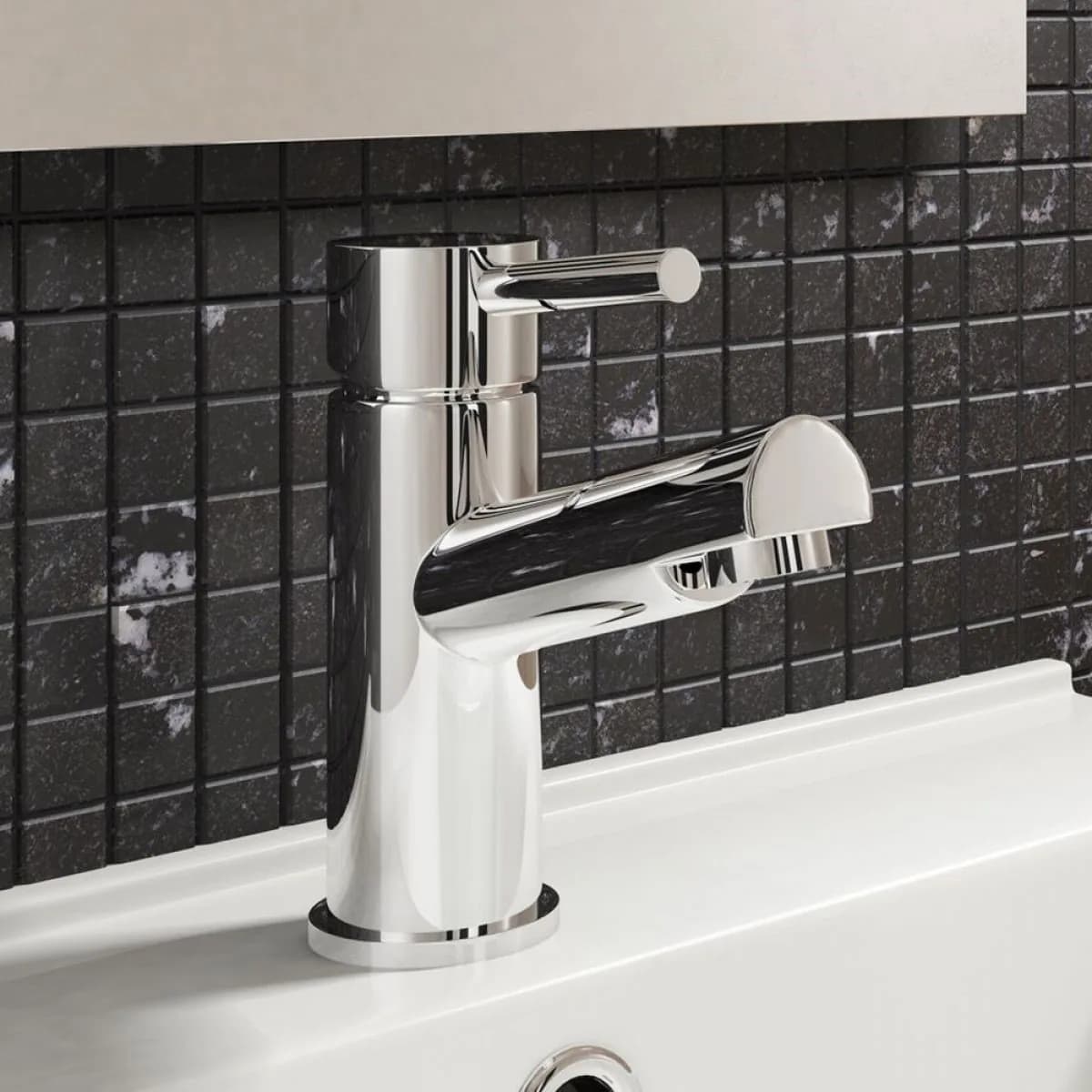 In stock
SCN
SCN Repute Basin Mixer Tap with Waste, ChromeCode: SCN-RP05
inc VAT£46.88 ex VAT
✓ Delivery available✓ Collect today
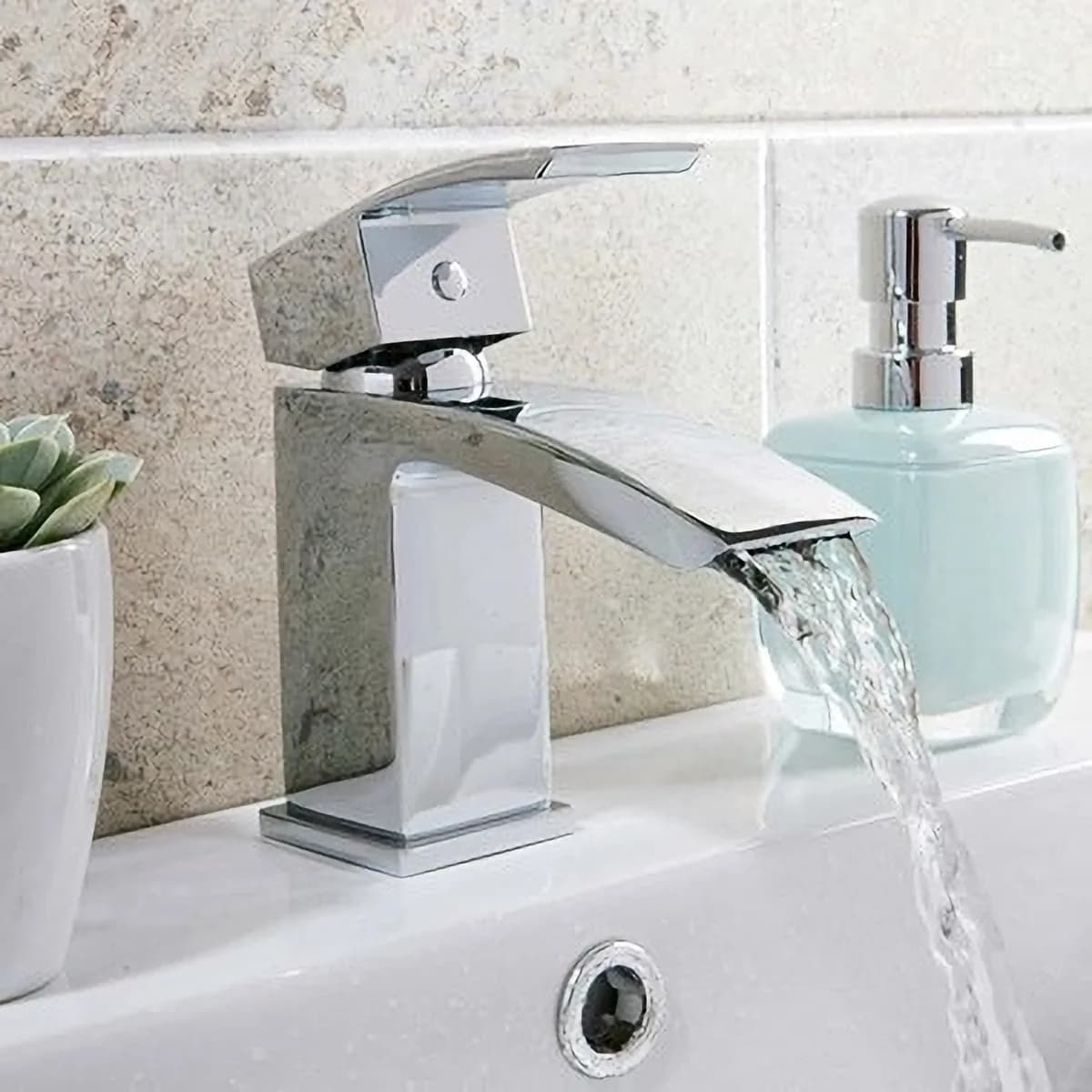 In stock
SCN
SCN Elite Basin Mixer Tap with Waste2 colours available
Frominc VAT£50.92 ex VAT
✓ Delivery available✓ Collect today
How do you replace a basin tap?
- Turn off the hot and cold at the isolating valves under the basin, or at the stop tap, and open the tap to drain it.
- Clear the space. Empty a vanity unit; on a pedestal basin, you may need to move the pedestal to reach the back nuts.
- Disconnect the supplies — the tap connectors on pillar taps, or a mixer's flexible tails at the isolating valves. Keep a towel and a bowl handy.
- Undo the back nut or fixing stud with a basin wrench and lift the old tap out. Clean the basin round the hole.
- For a mixer, screw the flexible tails into the new tap by hand, fit its seal and feed it through. For pillar taps, fit the washers either side of the basin and then the back nuts — a tap fixing set replaces worn ones.
- Hold the tap straight and tighten from below. Firm is enough: ceramic cracks if you overdo it.
- Flush the supply pipes into a bowl, then connect: tails to the isolating valves, or tap connectors to the pillar taps' ½" threads. Hot goes on the left.
- If you're changing the waste as well, fit it now with its seals as its instructions say, and reconnect the trap.
- Turn the water on slowly, run both sides, and check every joint for drips — then again an hour later.
Rather have it fitted? Our supply & fit service covers Greater London.
Which tap connectors do basin taps need?
| Tap | Connector | From our shelf |
|---|---|---|
| Monobloc mixer | Flexible tails, M10 or M12 into the tap and 15mm to the supply; usually supplied | M10 tail £3.74, M12 tail £3.59 |
| Pillar tap, flexible | 15mm × ½" flexible tap connector | 300mm connector £2.99 |
| Pillar tap, rigid copper | 15mm × ½" end feed tap connector, bent or straight, soldered to the pipe | Bent connector £1.99 |
| Pillar tap, short tail | A ½" tap tail extension | Tap tail extension £1.75 |
| Any tap | A 15mm isolating valve on each supply | Isolating valves |
The whole range — 71 lines from £0.87 — is on the tap connectors shelf. Bath taps use the larger ¾" thread; our BSP thread guide has the sizes.
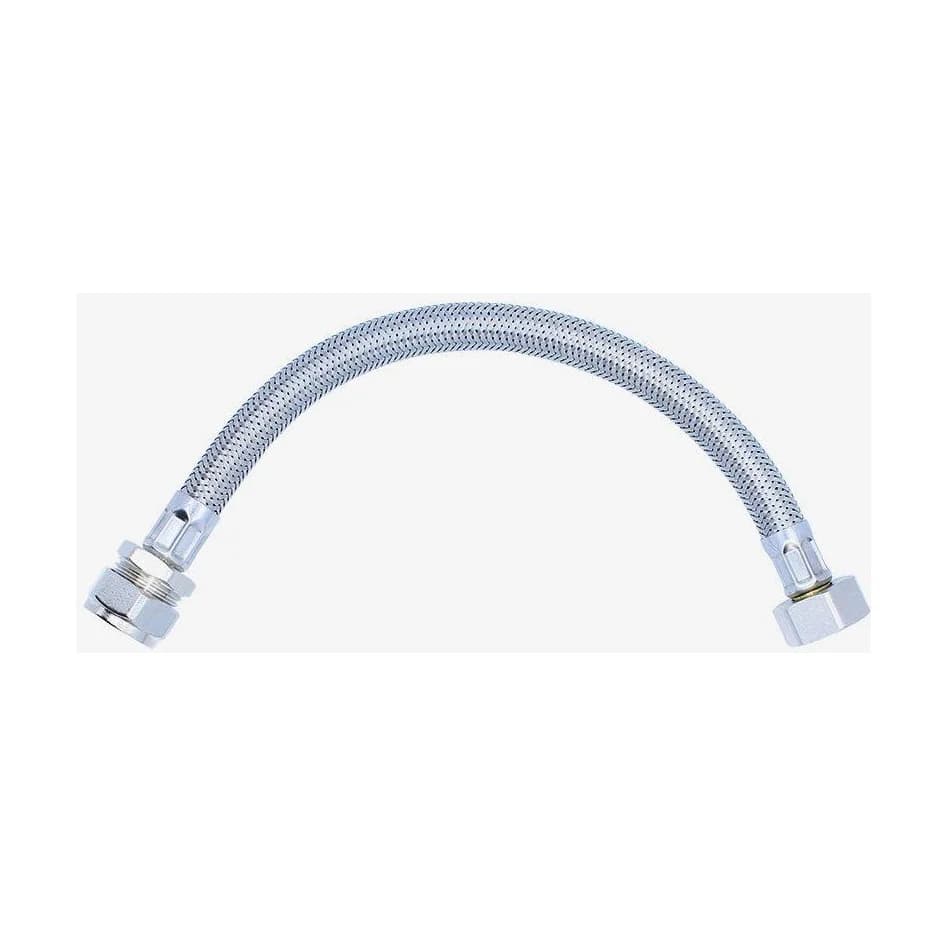 In stock
Viva
Viva 1/2" x 15mm Long Flexible Hose (SSH1)2 sizes available
Frominc VAT£2.25 ex VAT
✓ Delivery available✓ Collect today
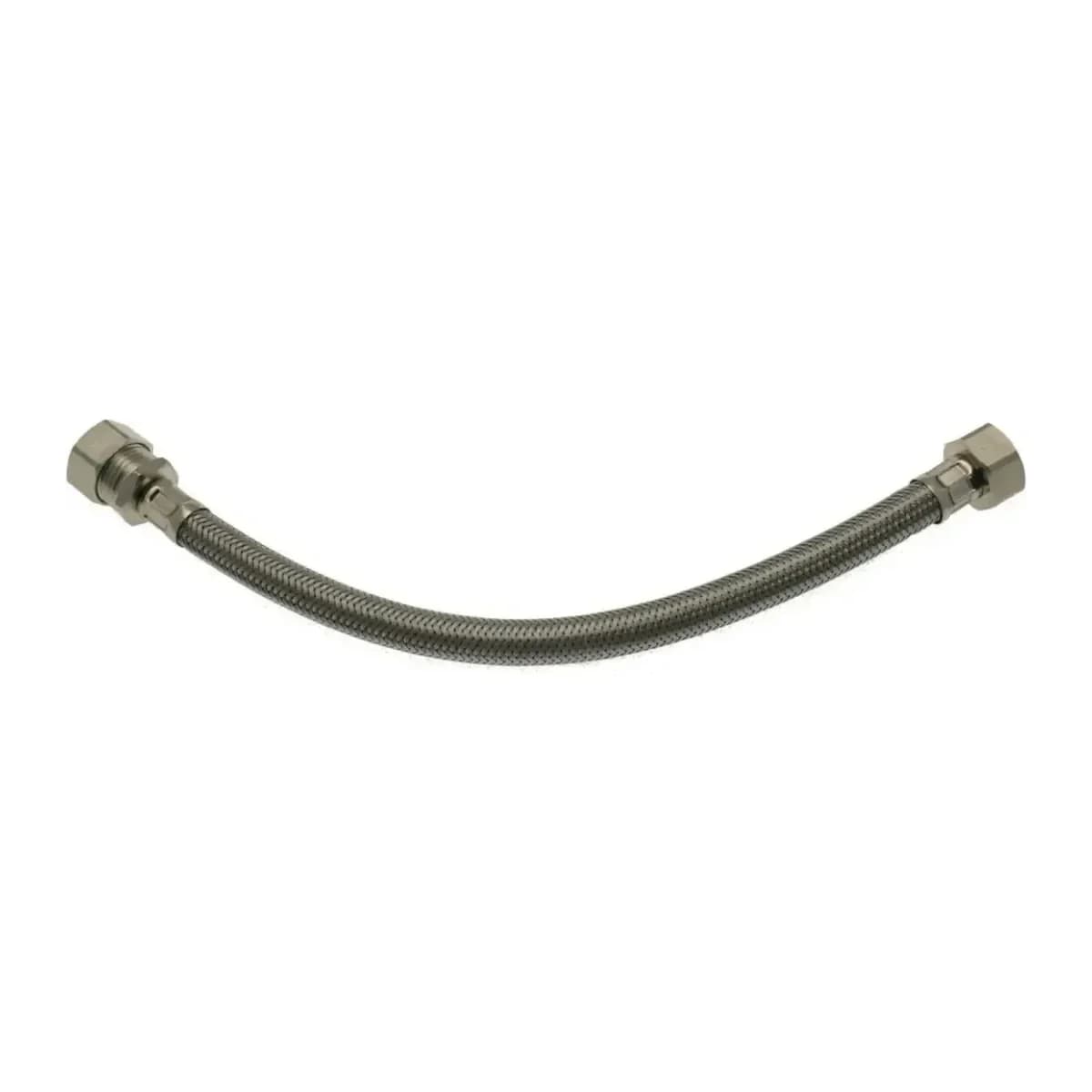 In stockFlexible Tap Connector Standard Bore
19 sizes available
Frominc VAT£2.27 ex VAT
✓ Delivery available✓ Collect today
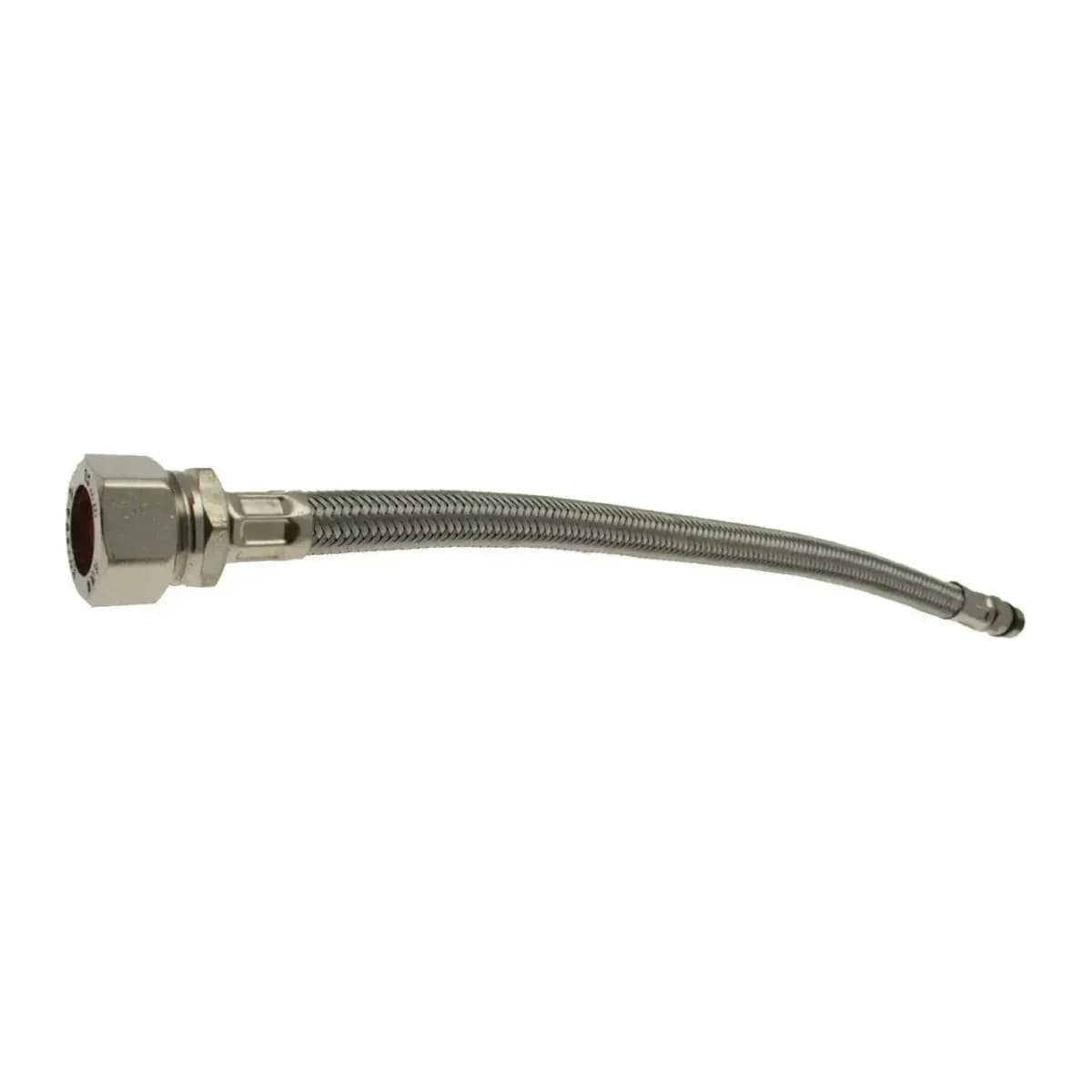 In stockFlexible Tap Tail Standard Bore Monobloc
4 sizes available
Frominc VAT£2.99 ex VAT
✓ Delivery available✓ Collect today
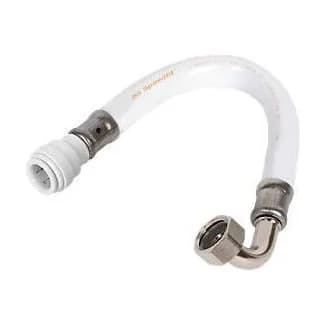 In stockSpeedfit Flexi Tap Connector Elbow 15mm x 1/2" 300mm
Code: LP-N94P1T
inc VAT£3.14 ex VAT
✓ Delivery available✓ Collect today
Questions
- What's the difference between a monobloc mixer and pillar taps?
- A monobloc mixer has one body and spout that mixes hot and cold, through one tap hole. Pillar taps are a separate hot tap and cold tap, each through its own hole.
- Can I fit a mixer tap to a basin with two holes?
- Not a standard monobloc. Fit a pair of pillar taps, a mixer made for two holes, or change to a one-hole basin.
- What size are basin tap tails?
- Pillar basin taps have ½" BSP threaded tails. Monobloc mixers use flexible tails with an M10 or M12 thread into the tap and a 15mm connection to the pipe.
- Do basin mixer taps come with a waste?
- Many do — look for "with waste" in the name or the listing. If not, add a basin waste to suit the basin's overflow.
- Should I choose a slotted or unslotted basin waste?
- Slotted if the basin has an overflow, so it can drain through the slots; unslotted if it doesn't.
- What tap do I need for a countertop basin?
- A tall basin mixer whose spout clears the basin rim, or a wall-mounted tap. Measure from the worktop to the rim before you choose.
- Which basin taps work on low water pressure?
- Pillar taps, or a mixer whose minimum working pressure is at or below what your system gives — on a gravity system that may be only about 0.2 bar at an upstairs basin.
Related guides
- Bathrooms & showersVanity Unit Buying Guide: Sizes, Wall Hung vs Floor Standing, and Materials
- Bathrooms & showersLow Water Pressure: Which Taps and Showers Will Work?