
The short answer
Fitting a split air conditioner means mounting the indoor unit high on a wall, drilling a core hole (often 65mm) through to the outdoor unit, and running insulated copper refrigerant pipe, cable and a condensate drain between them, with a suitable electrical supply. An F-gas certified engineer must make the refrigerant connections, pressure-test and vacuum the pipework and commission the system. Check planning rules, and the freeholder's consent in a flat, before you buy.
What does an installation involve?
A split system is two units joined by refrigerant pipe, so fitting one is part building work, part electrics and part refrigeration. Here's who usually does what:
| Job | Who does it |
|---|---|
| Choosing where both units go, and getting any permission | You, with the installer |
| Fixing the indoor unit's mounting plate and drilling the core hole | Installer |
| Mounting the outdoor unit on a wall bracket or the ground | Installer |
| Running the pipes, cable and condensate drain, and boxing them in | Installer |
| A suitable electrical supply and isolator | Qualified electrician |
| Connecting the refrigerant pipes, pressure test, vacuum and commissioning | F-gas certified engineer |
| Making good inside and out | Installer, or you |
Often one company does all of it, with an F-gas certified engineer on the team. A single wall unit with a short pipe run is often a day's work; long runs, multi-splits and awkward access take longer. We supply the units and installation parts; we don't fit air conditioning.
Where should the indoor unit go?
- High on an outside wall, ideally, so the pipes go straight through to the outdoor unit. An inside wall works, but the pipes then have to run along walls or through a ceiling to get out.
- With clear space around it. The installation manual gives the minimum gaps to the ceiling and side walls, so the unit can draw air in.
- Blowing along the room, not straight at a bed, sofa or desk.
- Away from heat sources such as radiators, and out of direct sun where possible, so its sensor reads the room's temperature properly.
- Where the condensate can fall to the outside, or where a condensate pump can be hidden.
- On a solid fixing. The mounting plate carries the whole unit, so it needs fixings into masonry or studs, not plasterboard alone.
Where should the outdoor unit go?
- On a solid wall or the ground, level, on anti-vibration mounts. Our outdoor unit wall bracket set (£29.09) is rated up to 120 kg and comes with anti-vibration mounts.
- With free airflow — the clearances in the manual, not boxed in or blowing straight into a fence or hedge.
- Away from bedroom windows, yours and your neighbours'. The fan and compressor make a steady hum.
- Where its water can drain. In heating mode the outdoor unit defrosts in cold, damp weather and drips water, so keep it off paths and steps where that could freeze.
- Reachable for servicing, ideally without scaffolding.
- Within the pipe length and height limits in the manual. Every AURA unit comes with 5 m of pipe and cable, and a 5 m pipe and cable kit (£69.83) extends it.
The core hole and pipe run
The pipes, cable and drain go through the wall in one core hole, often 65mm across, cut with a diamond core drill. It's drilled with a slight fall to the outside so rain can't run back in, and lined with a wall sleeve to protect the pipe insulation. Some installers go larger for bigger units, and the manual gives the size each model needs. Before drilling, the installer checks for cables and pipes in the wall.
Through the hole goes a bundle of two separately insulated copper refrigerant pipes, the interconnecting cable and the condensate hose, wrapped together. The pipe sizes depend on the unit, so check the manual; our 5 m pipe kit is 1/4" and 3/8". Outside, the bundle is usually boxed in with PVC trunking, which looks neater and protects the insulation from sunlight.
Our installation kit (£58.19) has the trunking, anti-vibration pads, drain hose, wall sleeve and fixings. The pipe kit comes with flare nuts: the pipes join each unit with flared connections, and making those is F-gas work — a poorly made flare is a classic cause of a slow refrigerant leak.
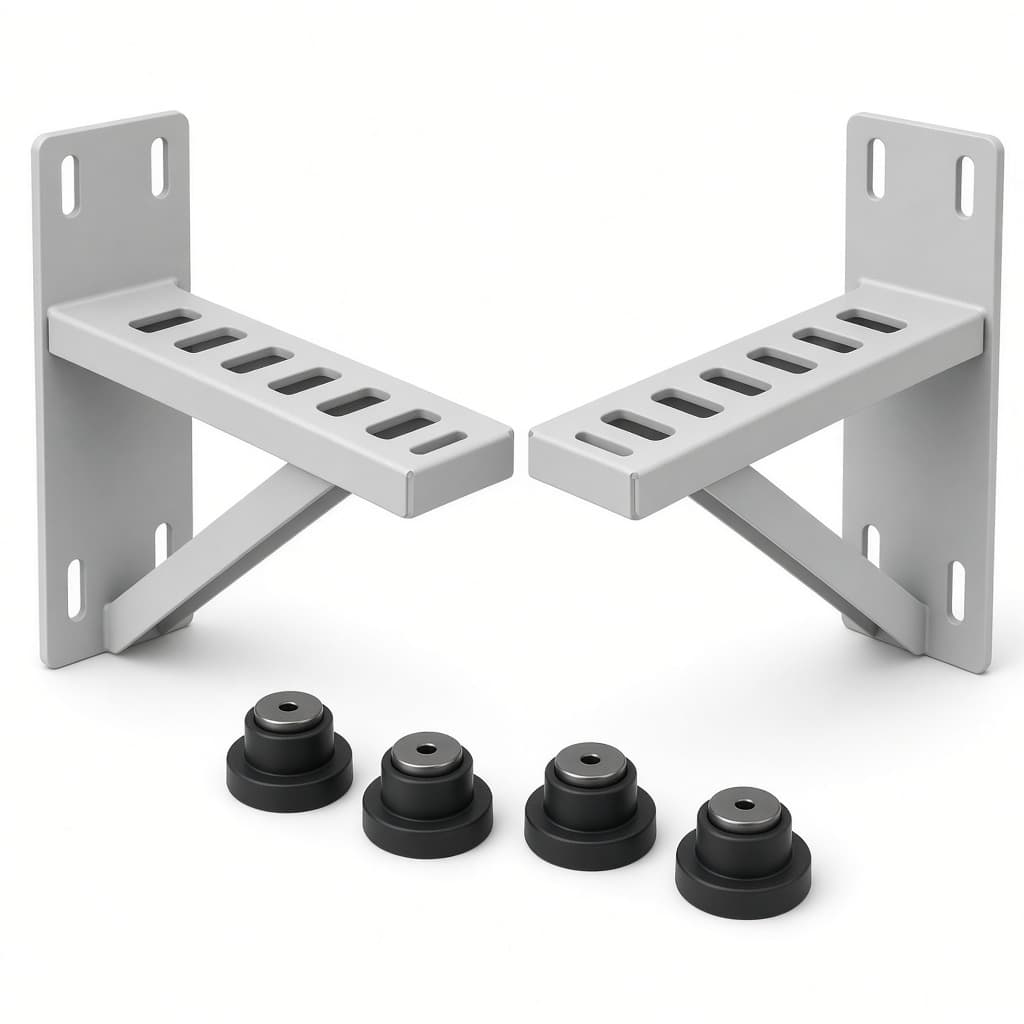 In stockAURAAir Conditioning Outdoor Unit Wall Bracket Set
Code: AURA-BRACKET
inc VAT£24.24 ex VAT
✓ Delivery available✓ Collect today
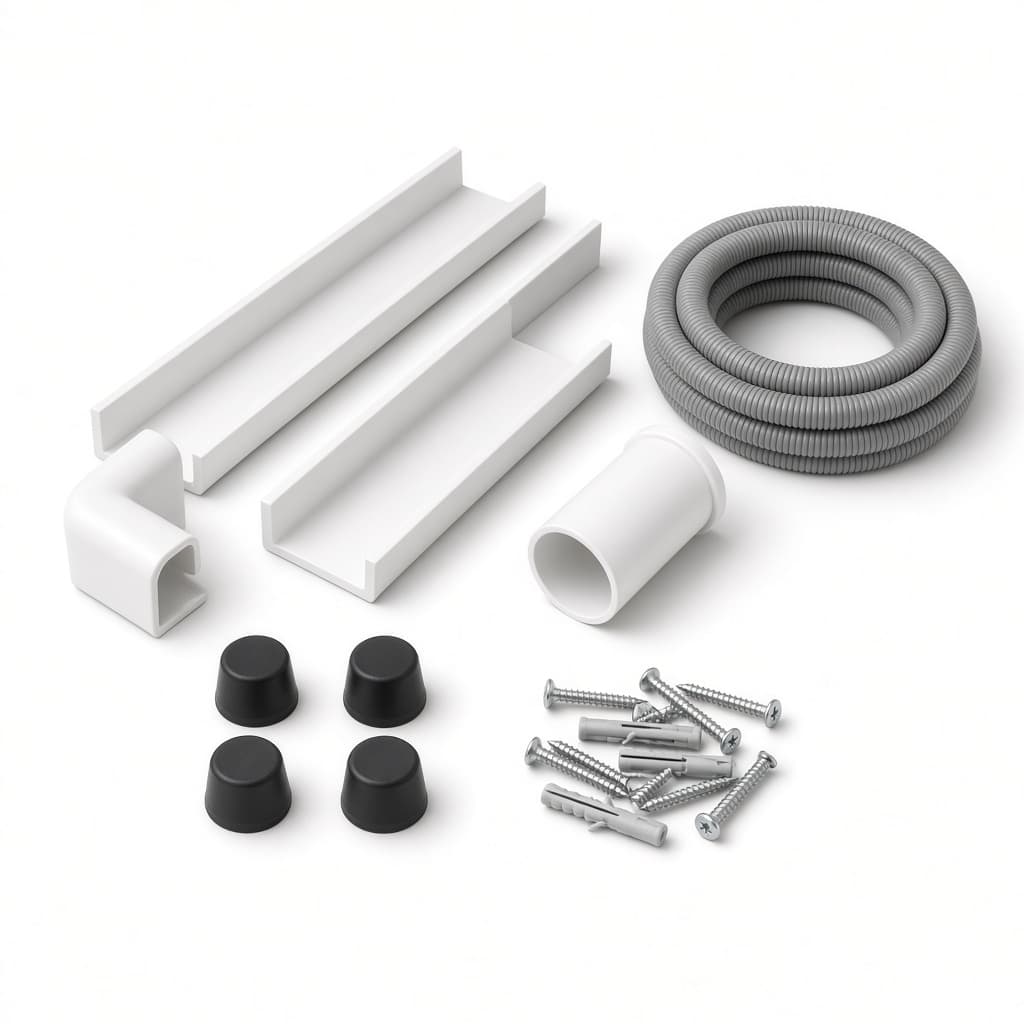 In stockAURAAir Conditioning Installation Kit (Trunking, Pads & Sundries)
Code: AURA-KIT-INSTALL
inc VAT£48.49 ex VAT
✓ Delivery available✓ Collect today
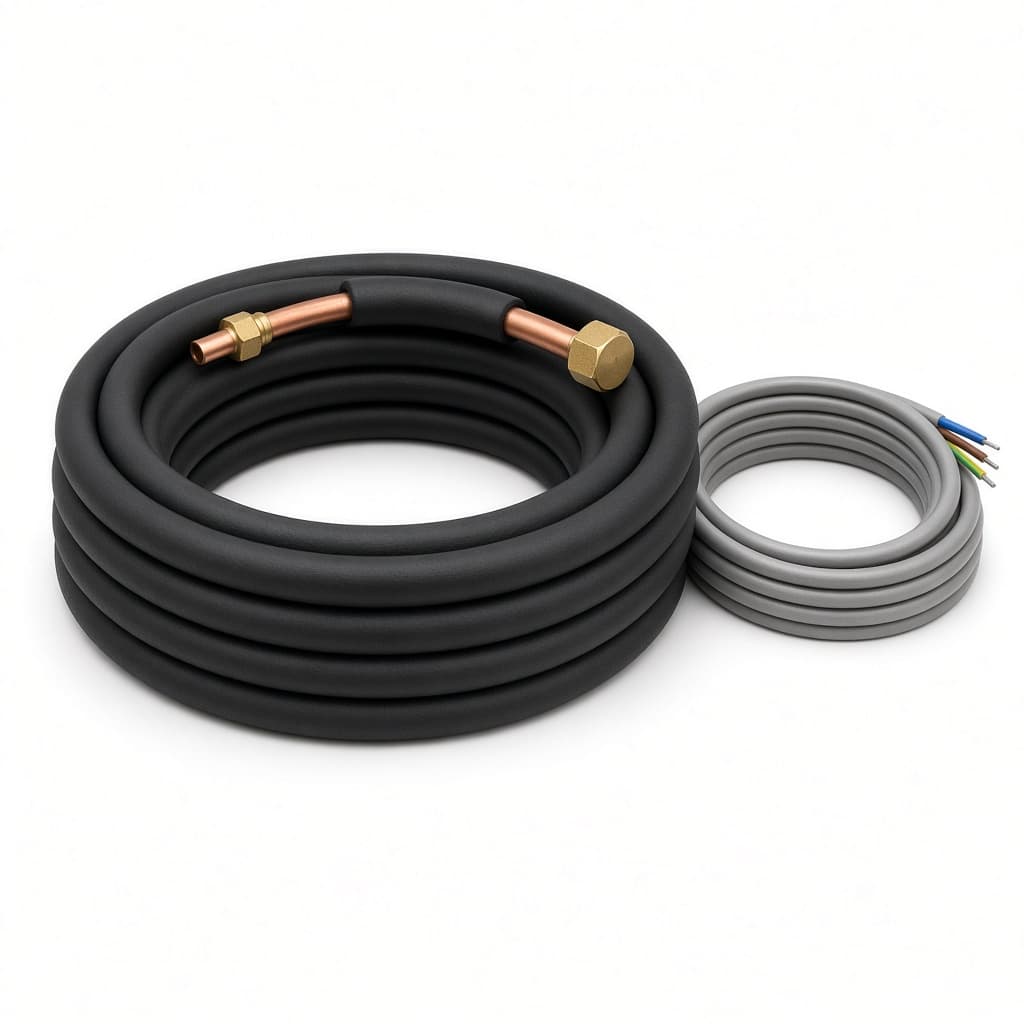 In stockAURAAir Conditioning Copper Pipe & Cable Kit — 5m
Code: AURA-KIT-PIPE5
inc VAT£58.19 ex VAT
✓ Delivery available✓ Collect today
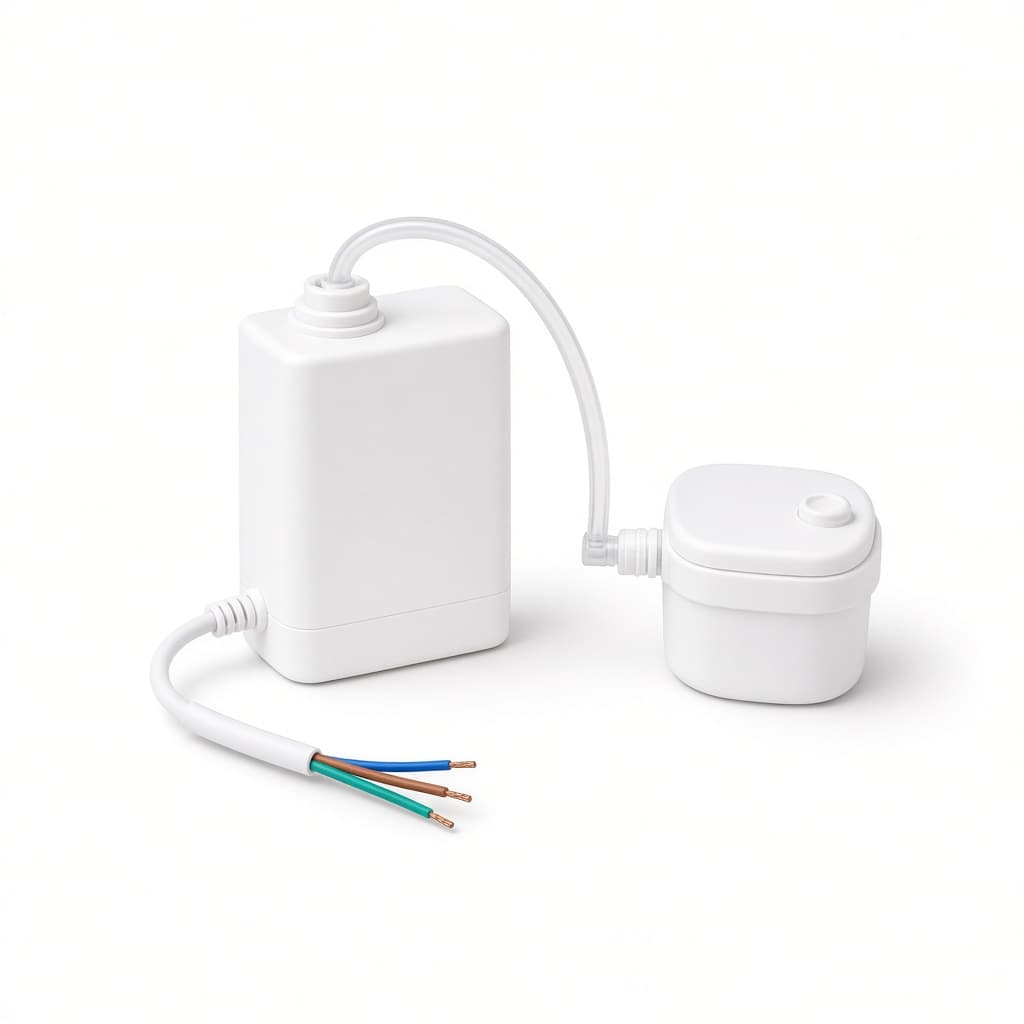 In stockAURAAir Conditioning Condensate Pump
Code: AURA-COND-PUMP
inc VAT£72.74 ex VAT
✓ Delivery available✓ Collect today
How does the condensate drain?
Cooling takes moisture out of the air, and the indoor unit collects it as water — more of it on humid days. It has to drain away continuously, in one of three ways:
- By gravity to the outside, with the drain hose falling all the way, discharging over a gully or drain rather than across a path.
- Into a waste pipe through a trap, so drain smells can't come back up the hose into the room.
- Through a condensate pump where there's no fall — an inside wall, or a pipe run that has to rise. Our condensate pump (£87.29) moves up to 12 litres an hour and needs a power supply.
A drain hose that sags, kinks or rises anywhere will hold water and can overflow from the indoor unit. If it joins a waste pipe, the waste pipe sizes guide covers traps and falls.
What electrical supply does it need?
The installation manual sets the supply, cable size and fuse or breaker rating for each model, and larger units often need their own circuit. The interconnecting cable between the indoor and outdoor units is supplied — 5 m with each AURA unit — and there's normally an isolator next to the outdoor unit so it can be switched off safely for servicing.
In England and Wales, adding a new circuit is notifiable work under Part P of the Building Regulations, so use an electrician registered with a competent person scheme, who can certify it for you.
Why the refrigerant work needs an F-gas engineer
AURA units use R32 refrigerant. Under the F-gas rules in Great Britain, connecting, leak-testing and commissioning the refrigerant circuit of a split system must be done by a certified engineer working for a certified company. R32 is also classed as mildly flammable, which brings its own handling rules, and makers' warranties usually depend on a proper F-gas installation.
Once the units are fixed and the pipes are run, the engineer:
- Makes the flare joints at both units, tightened to the torque in the manual.
- Pressure-tests the pipework, normally with oxygen-free nitrogen, to prove it's leak-free.
- Vacuums the pipework with a vacuum pump to remove air and moisture, and checks the vacuum holds.
- Opens the service valves to let the refrigerant into the pipework, adding extra charge if the manual calls for it on a longer pipe run.
- Commissions the system: runs it in cooling and heating, checks temperatures and drainage, and records the work.
When you choose an installer, ask to see their F-gas certification, and agree who is arranging the electrics and any planning permission or freeholder consent.
Do you need planning permission?
Sometimes. In England, permitted development rules can cover some air conditioning and heat pump outdoor units, with conditions on things like size, position and noise. Wales and Scotland have their own rules. The cases most likely to need permission or consent:
- Listed buildings usually need listed building consent for an outdoor unit or a hole through the wall, as well as any planning permission.
- Conservation areas and other protected areas often have tighter rules, especially for units on a wall facing a road.
- Flats and maisonettes are treated differently from houses, so planning permission may be needed — and a leaseholder will usually need the freeholder's written consent under the lease.
- Rented homes need the landlord's permission.
Check with your local planning authority before you buy, and get any freeholder's consent in writing. Thinking about where the outdoor unit's noise goes also heads off complaints from neighbours later.
Before the installer arrives
- Positions for both units agreed, with any permission or consent in hand.
- The electrics arranged, if there's a new circuit.
- The unit, any pipe extension kit, the outdoor wall bracket, the installation kit and a condensate pump if needed, all on site.
- Clear access to both sides of the wall, with furniture moved and dust sheets down for the core drilling.
Units and installation parts can be delivered or collected from our Chingford counter — see delivery for the details. Your engineer can also buy the parts on a trade account.
Questions
- What size hole is needed for air conditioning?
- Usually a core hole of about 65mm through the wall, drilled with a slight fall to the outside. Some installers drill larger for bigger units; the installation manual gives the size each model needs.
- Can I install air conditioning myself?
- You can plan the positions, arrange permission and the electrics, and have the parts ready, but the refrigerant connections, pressure test, vacuum and commissioning must be done by an F-gas certified engineer.
- How long does it take to install air conditioning?
- A single wall-mounted split with a short pipe run is often done in a day. Long pipe runs, multi-splits, awkward access and new electrical circuits add time.
- Does the indoor unit have to go on an outside wall?
- No, but it's simplest. On an inside wall the pipes and condensate drain need a route out — along walls in trunking or through a ceiling — and you may need a condensate pump.
- How far apart can the indoor and outdoor units be?
- Each AURA unit comes with 5 m of pipe and cable, and a 5 m kit extends it. The maximum pipe length and height difference depend on the model, so check the installation manual with your engineer.
- Do I need planning permission for air conditioning?
- Sometimes. Permitted development rules can cover some installations in England, but listed buildings, conservation areas and flats may need permission. Check with your local planning authority, and get the freeholder's consent if you're a leaseholder.
- Do you install air conditioning?
- No. We supply AURA units and installation parts online and from our Chingford counter; installation must be done by an F-gas certified engineer.
Related guides
- Air conditioningWhat Size Air Conditioner Do I Need? BTU and kW by Room Size
- Air conditioningPortable vs Split Air Conditioner: Which Should You Buy?