
The short answer
For a room you want properly cool and quiet, a wall-mounted inverter split is the best choice: the noisy compressor sits outside, it heats as well as cools, and it uses less electricity for the same cooling than a portable. Portables need no installer but vent hot air through a window hose and are loud. Floor-standing cabinets suit big open spaces like shops and gyms, and multi-splits run up to three rooms off one outdoor unit.
The four types of air conditioning
| Type | How it works | Best for | Installer |
|---|---|---|---|
| Wall-mounted split | Slim indoor unit high on the wall, compressor in an outdoor unit, joined by refrigerant pipe | Bedrooms, living rooms, home offices | F-Gas engineer |
| Floor-standing | Tall cabinet indoor unit with an outdoor unit; big output | Shops, salons, gyms, large open-plan spaces | F-Gas engineer |
| Multi-split | One outdoor unit running two or three indoor units | Several rooms, one place for the outdoor unit | F-Gas engineer |
| Portable | Everything in one box on wheels, hot air out through a window hose | Occasional use, rented homes | None |
Splits — wall, floor and multi — are fixed systems: the hot, noisy part is outside, and the refrigerant pipes go through a hole in the wall. A portable is plug-and-play, but its compressor is in the room with you and the window has to stay open for the hose.
What does inverter mean?
An inverter unit varies the speed of its compressor. It runs hard to cool the room down, then slows right down to hold the temperature, instead of switching on and off. That makes it quieter, keeps the temperature steadier and uses less electricity than an on/off unit.
Every AURA unit we sell is a DC inverter heat pump using R32 refrigerant, which has a lower global-warming potential than the older R410A. Being heat pumps, they heat as well as cool.
Which size?
Allow about 100 W of cooling per square metre for a typical room, and 125–150 W for a sunny, top-floor or busy one. The air conditioner size guide has a calculator and a room-size chart. Here's what our range covers:
| Unit | Cooling | Heating | Typical room | Price |
|---|---|---|---|---|
| AURA 12,000 BTU Inverter Split Air Conditioner | 3.4 kW (11,601 BTU) | 3.4 kW | about 27–34 m² | £960.30 |
| AURA 18,000 BTU Inverter Split Air Conditioner | 5.1 kW (17,538 BTU) | 5.2 kW | about 41–51 m² | £1,158.36 |
| AURA 24,000 BTU Floor-Standing Air Conditioner | 7.0 kW (23,713 BTU) | 7.3 kW | about 56–70 m² | Call for price |
| AURA 24,000 BTU Inverter Split Air Conditioner | 7.2 kW (24,566 BTU) | 7.0 kW | about 58–72 m² | £1,381.80 |
| AURA Multi-Split Air Conditioner (27,000 BTU, 1–3 Rooms) | 7.9 kW (26,955 BTU) | 8.0 kW | about 63–79 m² | Call for price |
| AURA 45,000 BTU Floor Standing Air Conditioner | 13.5 kW (46,062 BTU) | 14.4 kW | about 108–135 m² | Call for price |
How loud is it?
With a split, the compressor and its fan are outside, so indoors you mostly hear moving air. AURA quote an indoor sound pressure of 45 dB for the 12,000 BTU unit, 48 dB for the 18,000 and 51 dB for the 24,000 — and like most makers' figures that's the unit on a high fan speed; it's quieter turned down.
For a bedroom, size the unit so it isn't working flat out at night, and run it on a low fan speed. Think about the outdoor unit too: site it away from your own and your neighbours' bedroom windows, on anti-vibration mounts.
What comes with it, and what else you'll need
Each AURA unit comes with 5 m of copper refrigerant pipe and 5 m of interconnecting cable. The usual extras:
| Part | What it's for | Price |
|---|---|---|
| Copper pipe & cable kit, 5 m | Extends the run between the indoor and outdoor unit; 1/4" + 3/8" pipe, insulated | £69.83 |
| Installation kit | Trunking to box in the pipes, anti-vibration pads and drain hose | £58.19 |
| Outdoor unit wall bracket set | Powder-coated steel, rated up to 120 kg, with anti-vibration mounts | £29.09 |
| Condensate pump | Pumps condensate away (up to 12 litres an hour) where it can't drain by gravity | £87.29 |
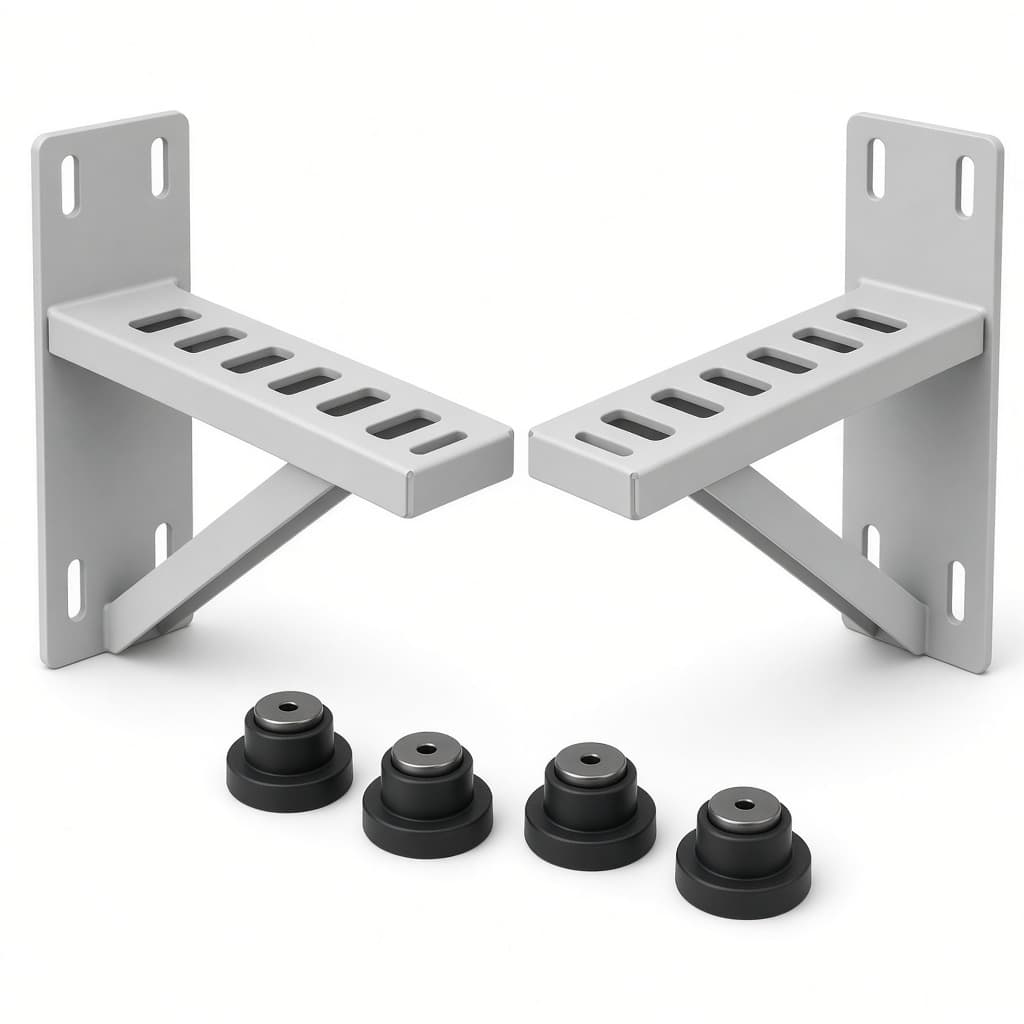 In stockAURAAir Conditioning Outdoor Unit Wall Bracket Set
Code: AURA-BRACKET
inc VAT£24.24 ex VAT
✓ Delivery available✓ Collect today
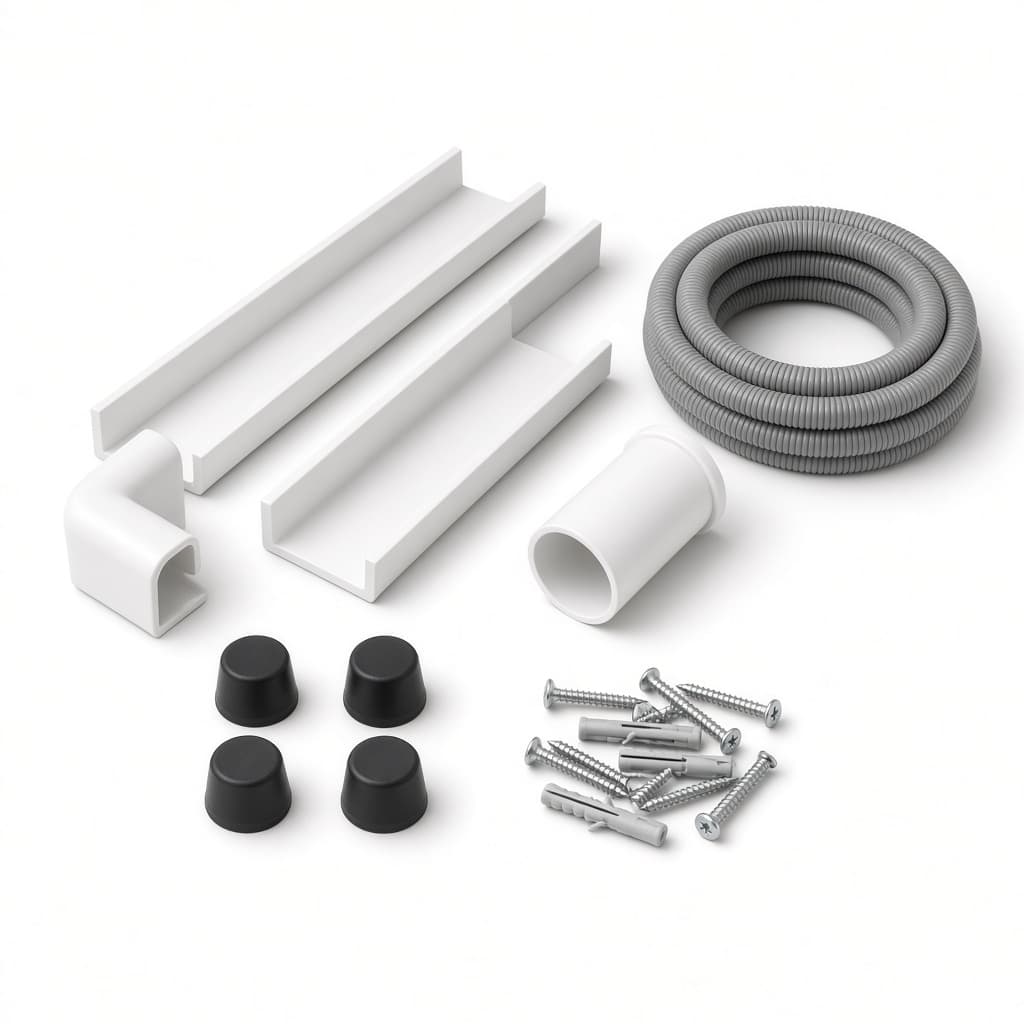 In stockAURAAir Conditioning Installation Kit (Trunking, Pads & Sundries)
Code: AURA-KIT-INSTALL
inc VAT£48.49 ex VAT
✓ Delivery available✓ Collect today
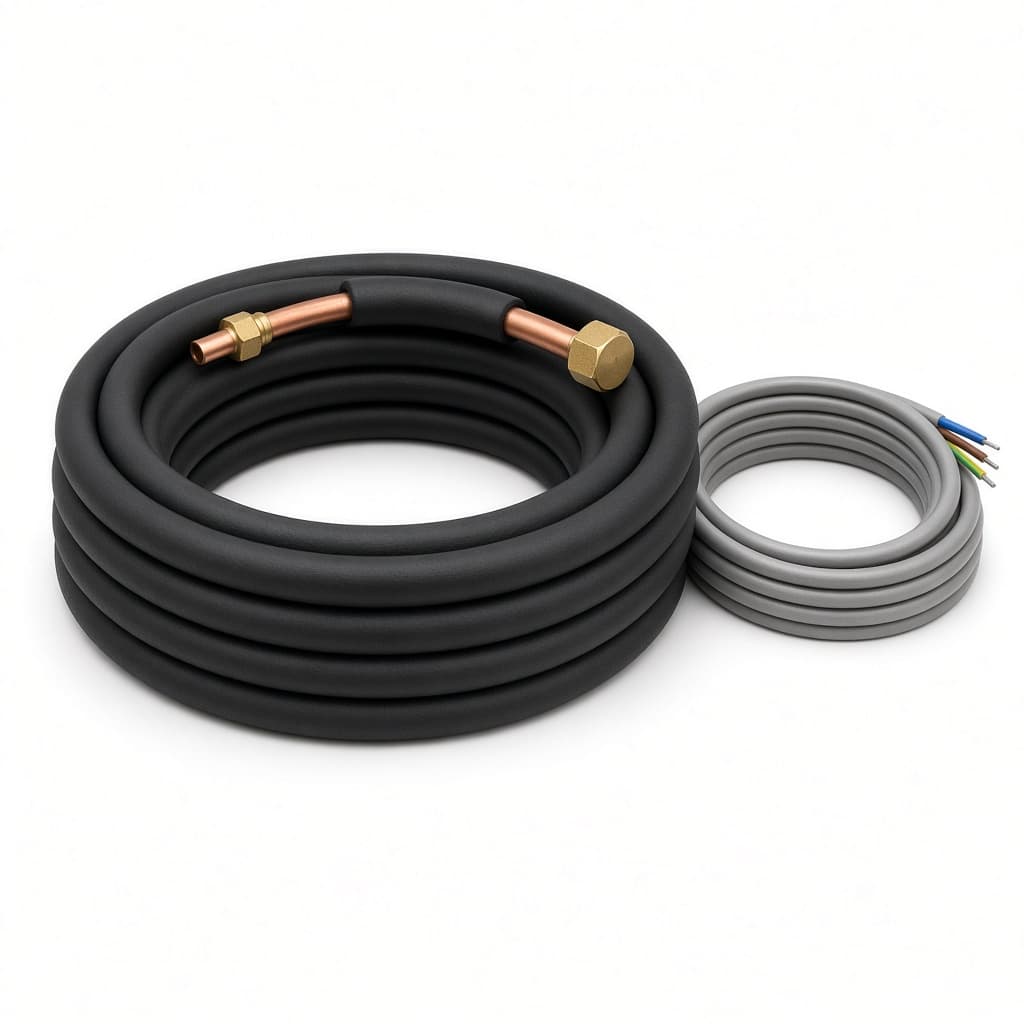 In stockAURAAir Conditioning Copper Pipe & Cable Kit — 5m
Code: AURA-KIT-PIPE5
inc VAT£58.19 ex VAT
✓ Delivery available✓ Collect today
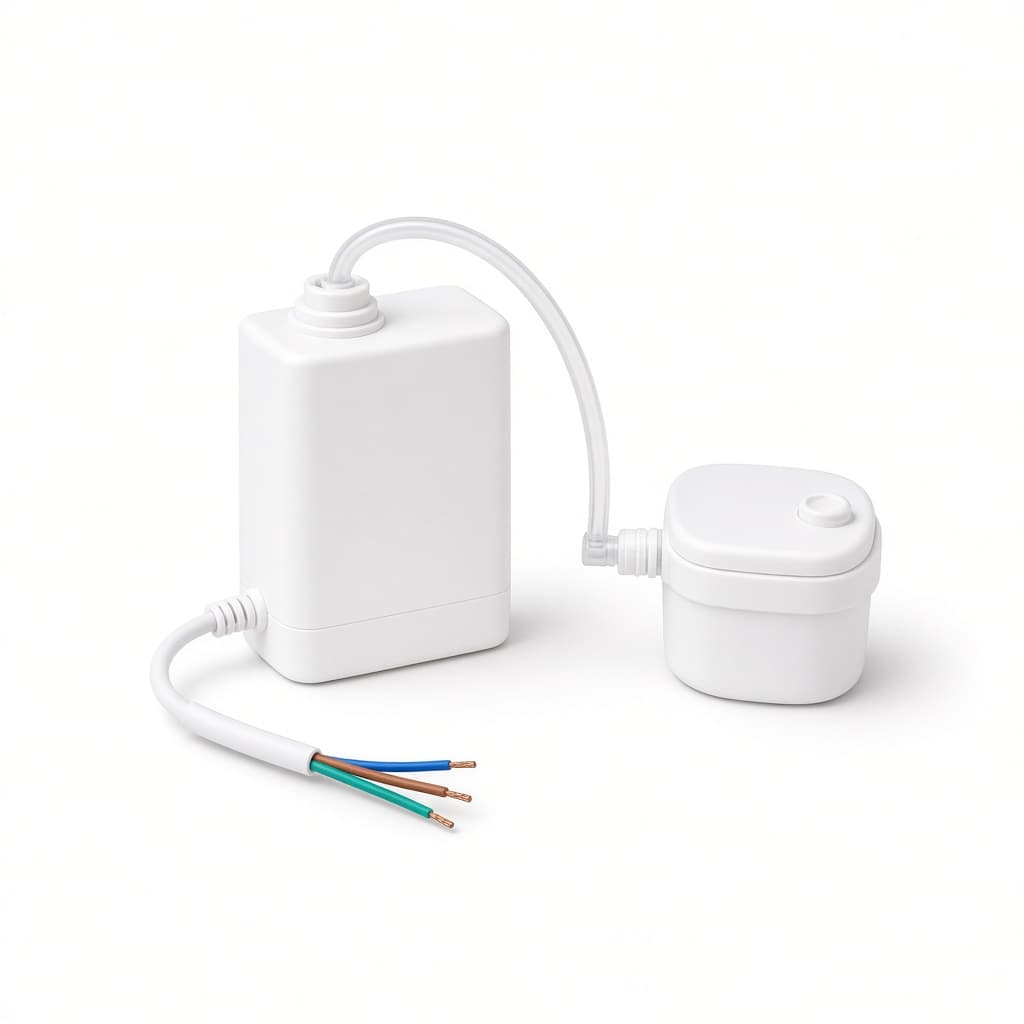 In stockAURAAir Conditioning Condensate Pump
Code: AURA-COND-PUMP
inc VAT£72.74 ex VAT
✓ Delivery available✓ Collect today
Installation: F-Gas, electrics and permission
Split systems contain refrigerant, and in Great Britain connecting, pressure-testing and commissioning the refrigerant circuit must be done by an F-Gas certified engineer. Makers' warranties usually depend on it too. You can save time by deciding where both units go and having the electrics and any trunking route sorted, but the refrigerant work is the engineer's.
- Electrics: the unit needs a suitable supply, and larger units often their own circuit — work for a qualified electrician.
- Condensate: the indoor unit's drain needs a fall to the outside or a waste pipe, or a condensate pump.
- Planning: outdoor units can need planning permission, so check with your council — especially for listed buildings, conservation areas and flats. Leaseholders also need the freeholder's consent.
How much does it cost to run?
The electricity a unit uses is its cooling output divided by its efficiency. A typical inverter split turns each kilowatt of electricity into about three or more kilowatts of cooling, so a 3.4 kW unit draws roughly 1.1 kW at full output. At 25p a kWh that's under 30p an hour flat out — and much less once the room is cool and the inverter slows down. Check your own tariff and the unit's efficiency rating for an exact figure.
Portables are less efficient for the same cooling, partly because the hot exhaust hose and the open window let heat back in. On heating mode, a heat pump split gives several kilowatts of heat for each kilowatt of electricity in mild weather, against one for one from an electric fan heater.
Questions
- Do I need an F-Gas engineer to fit air conditioning?
- For any split system, yes. The refrigerant connections, pressure test and commissioning must be done by an F-Gas certified engineer. A portable unit needs no installer.
- Is a split system better than a portable air conditioner?
- For regular use, yes: it's quieter because the compressor is outside, uses less electricity for the same cooling, doesn't need a window open, and a heat pump split heats as well. A portable is cheaper to start with and needs no installation.
- Can air conditioning heat a room in winter?
- A heat pump unit can — every AURA unit heats as well as cools, with about the same output either way. Output falls in very cold weather, so it works best as a top-up to central heating or in a well insulated room.
- How long can the pipe run be?
- AURA units come with 5 m of pipe and cable, and a 5 m extension kit adds more. The maximum length and height difference depend on the model, so check its installation manual with your engineer.
- Do you install air conditioning?
- No. We supply the units, pipe kits, brackets, condensate pumps and sundries from our Chingford counter; installation must be done by an F-Gas certified engineer.
Related guides
- Air conditioningWhat Size Air Conditioner Do I Need? BTU and kW by Room Size
- Heating & boilersWhat Size Radiator Do I Need? Radiator BTU Calculator