
The short answer
A vented cylinder is fed by gravity from a cold water tank in the loft, so its pressure depends on the tank's height and is often weak upstairs without a pump. An unvented cylinder runs straight off the mains, giving mains-pressure hot water at every tap with no loft tank, but it needs a good mains supply, a G3-qualified installer and a service every year. Vented is simpler and cheaper; unvented performs better.
Vented and unvented cylinders side by side
| Vented (open-vented) | Unvented | |
|---|---|---|
| Fed from | A cold water tank in the loft, by gravity | The mains, through an inlet control group |
| Hot water pressure | Set by the tank's height: about 0.1 bar per metre | Mains pressure, reduced by the inlet valve — often to 3 bar |
| Showers | Often weak upstairs without a pump | Strong, if the mains flow is good |
| Loft tank | Yes | No |
| Cylinder | Usually copper | Usually stainless steel, with safety valves and an expansion vessel |
| Who can fit it | A competent plumber | A G3-qualified installer, with the work notified to Building Control |
| Servicing | Little needed | Every year, by a competent person |
| Cost | Lower | Higher, plus the yearly service |
| If the mains goes off | The loft tank keeps water flowing for a while | No flow until it's back |
How a vented cylinder works
A vented cylinder is filled from the cold water storage tank in the loft. Cold water drops into the bottom of the cylinder and hot water is drawn off the top, while an open vent pipe from the top loops back over the tank, so the cylinder can never build up pressure. It's the set-up in many older homes, usually alongside a regular (heat-only) boiler.
Its weakness is pressure. Every metre between the water level in the tank and the outlet gives only about 0.1 bar, so a shower just below the loft may get 0.1–0.2 bar. The low water pressure guide explains the sums, and when a shower pump is the answer.
- For: simple, with few safety controls to go wrong; cheaper to buy and fit; fine with a weak mains supply.
- Against: low pressure, especially upstairs; a loft tank that needs a lid and insulation; and hot and cold at very different pressures if the cold taps are on the mains.
How an unvented cylinder works
An unvented cylinder is connected straight to the cold mains, so the stored hot water is pushed out at mains pressure. Hot and cold arrive at similar pressures, which suits modern mixer showers and taps. Because it's a sealed vessel of hot water under pressure, it carries a set of safety devices:
- An inlet control group: a pressure-reducing valve, a strainer, a check valve and an expansion relief valve.
- An expansion vessel, or an air bubble inside the cylinder, to take up the water's expansion as it heats — see the expansion vessel guide.
- A temperature and pressure relief valve on the cylinder, which opens if the water gets dangerously hot or the pressure too high.
- Thermal cut-outs on the immersion heater and on the boiler coil's control valve, which shut off the heat if a thermostat fails.
- A tundish and discharge pipe, so any water the valves release is visible and runs safely away.
The mains has to be up to it. Each cylinder maker sets a minimum mains pressure and flow, and an unvented cylinder can only deliver what the supply brings in — so measure yours before you choose. On our shelf: 31 unvented cylinder lines from Ideal, Gledhill, Heatrae Sadia and Telford.
Who can fit an unvented cylinder?
In England and Wales, Part G of the Building Regulations (requirement G3) says an unvented hot water system storing more than 15 litres must be installed by a competent person and notified to Building Control. In practice that means an installer holding the unvented hot water qualification — usually just called G3 — who either self-certifies through a competent person scheme or notifies Building Control before starting. Scotland and Northern Ireland have equivalent rules.
Once it's in, the cylinder needs a service every year by a competent person. Makers require it to keep the warranty, and it's when the relief valves, the inlet controls and the expansion vessel's charge are checked.
A vented cylinder doesn't need a G3 qualification to fit. Either way, the boiler that heats it must be installed by a Gas Safe registered engineer.
Direct or indirect?
This is about how the water is heated, and it applies to vented and unvented cylinders alike:
| Type | Heated by | Suits |
|---|---|---|
| Indirect | A coil inside the cylinder carrying hot water from a boiler, usually with an immersion heater as back-up | Homes with a regular or system boiler |
| Direct | Immersion heaters only, with no coil — often two, for off-peak electricity | Homes without a boiler |
| Heat pump cylinder | An indirect cylinder with a much larger coil, for a heat pump's cooler water | Air and ground source heat pumps |
| Twin-coil (solar) | One coil for solar thermal panels and one for the boiler | Homes with solar water heating |
Make sure the coil suits what heats it: a cylinder with a standard boiler coil won't take enough heat from a heat pump.
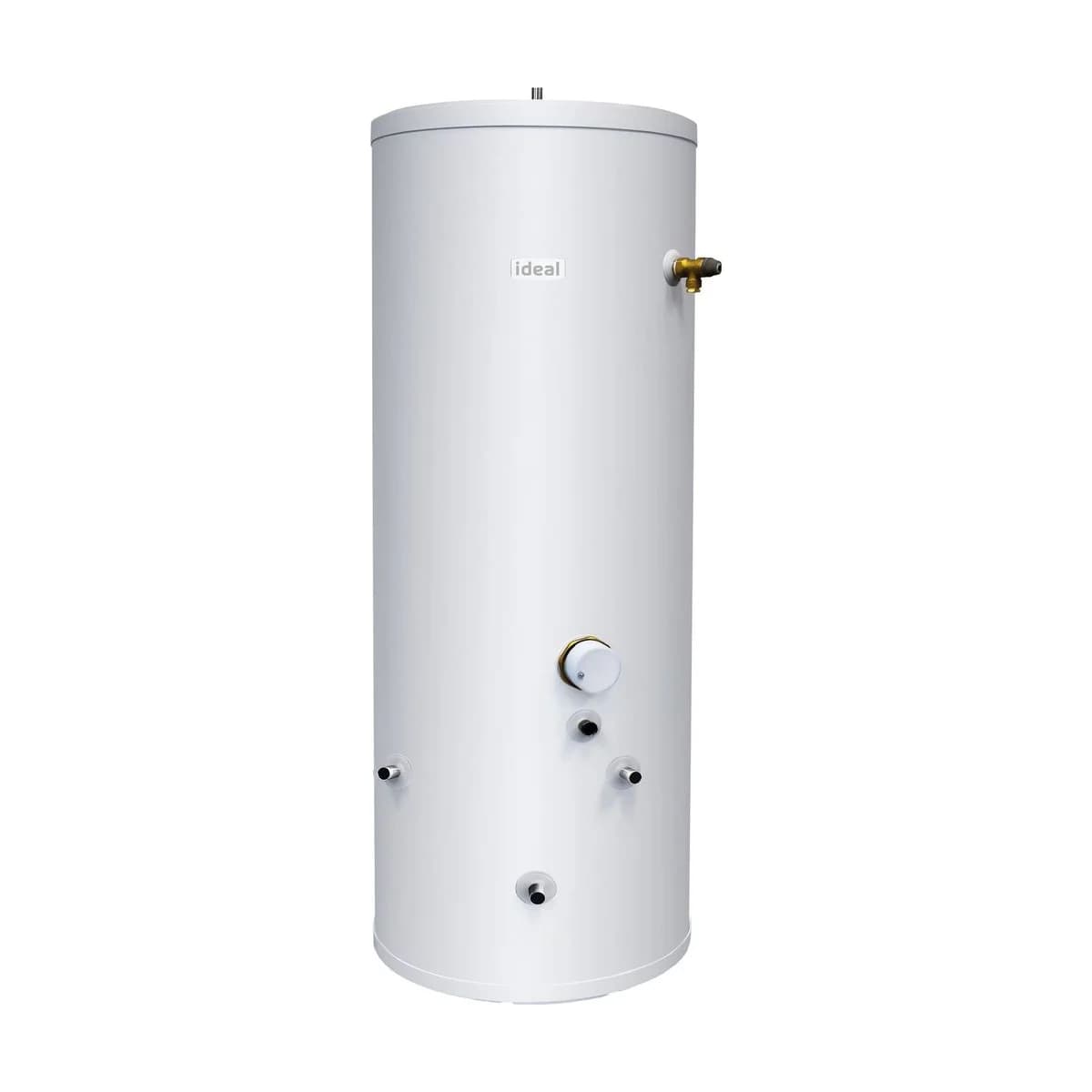 In stock
Ideal
Ideal Pro 90 L Indirect Unvented CylinderCode: LP-1YA4D3H
inc VAT£418.62 ex VAT
✓ Delivery available✓ Collect today
 In stock
Gledhill
Gledhill Es Indirect Unvented Cylinder4 sizes available
Frominc VAT£428.89 ex VAT
✓ Delivery available✓ Collect today
 In stock
Ideal
Onyx/Ideal Pro Unvented Cylinder12 options available
Frominc VAT£312.82 ex VAT
✓ Delivery available✓ Collect today
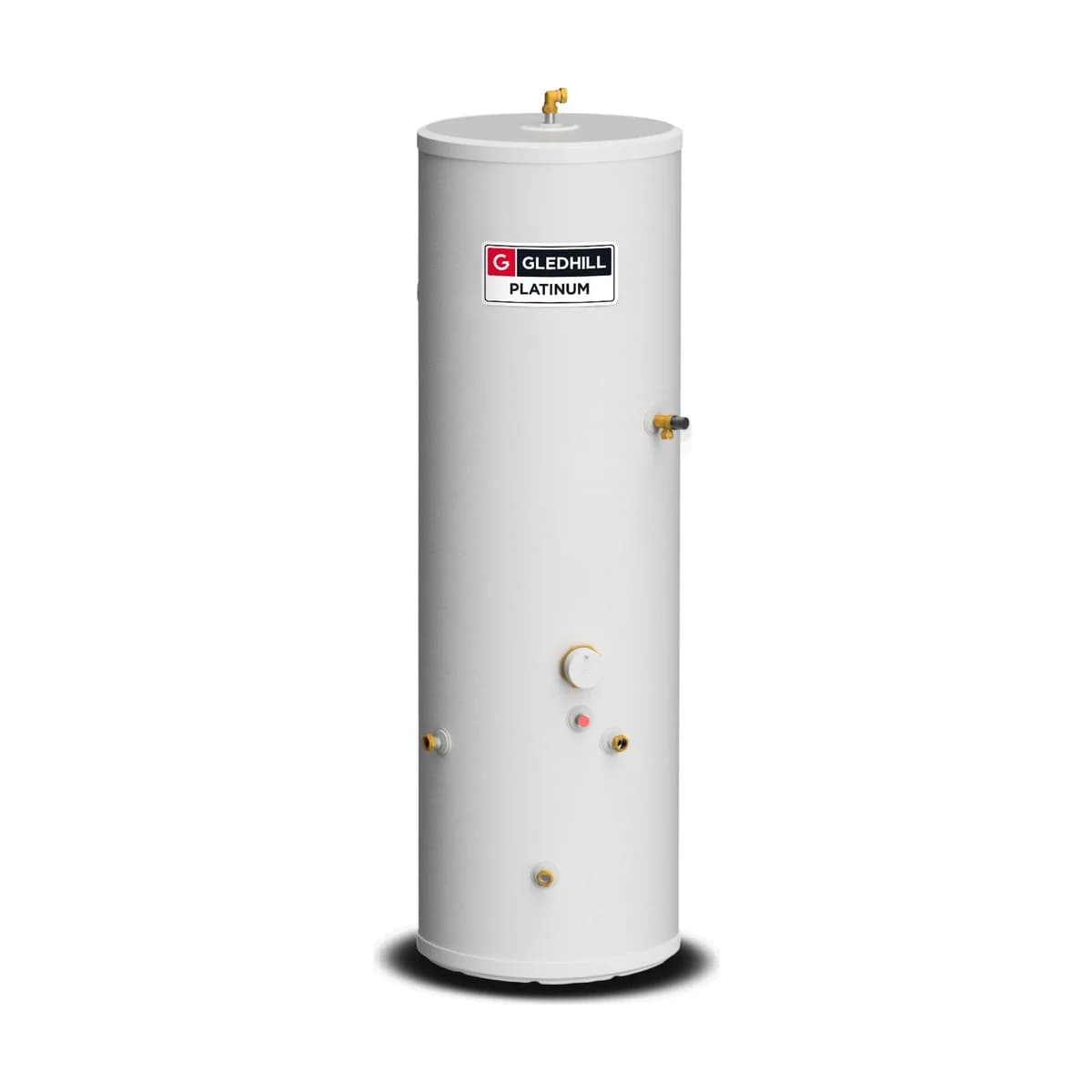 In stock
Gledhill
Gledhill Stainless Platinum 170L Indirect Internal Expansion Unvented CylinderCode: LP-1WQ3WWA
inc VAT£477.58 ex VAT
✓ Delivery available✓ Collect today
Immersion heaters
Most cylinders have at least one immersion heater: an electric element, usually 3kW, screwed into a boss on the cylinder, with a rod thermostat inside it. On an indirect cylinder it's the back-up; on a direct cylinder it's the main heat.
- Length: top-entry immersions are commonly 18, 23 or 27 inches, to suit the cylinder's height; side-entry ones are usually 11 or 14 inches. Measure the old one.
- Thread: most UK cylinders take a 2¼-inch BSP immersion, but many unvented cylinders use a 1¾-inch boss.
- Element: incoloy and titanium resist hard-water scale better than copper, and stainless steel cylinders usually call for one of them — check the cylinder maker's spec.
- Unvented cylinders need an immersion with a built-in thermal cut-out that doesn't reset itself — usually the maker's own part.
- Wiring: an immersion has its own circuit and double-pole switch; have a qualified electrician do any new wiring.
Changing one means draining the cylinder below the boss and undoing it with an immersion box spanner; on an unvented cylinder, leave it to a G3-qualified installer.
Keep stored hot water at 60°C or above — the HSE's guidance for stopping Legionella bacteria growing. That's hot enough to scald, which is why Part G expects bath hot water in new homes to be limited to 48°C, usually with a thermostatic mixing valve.
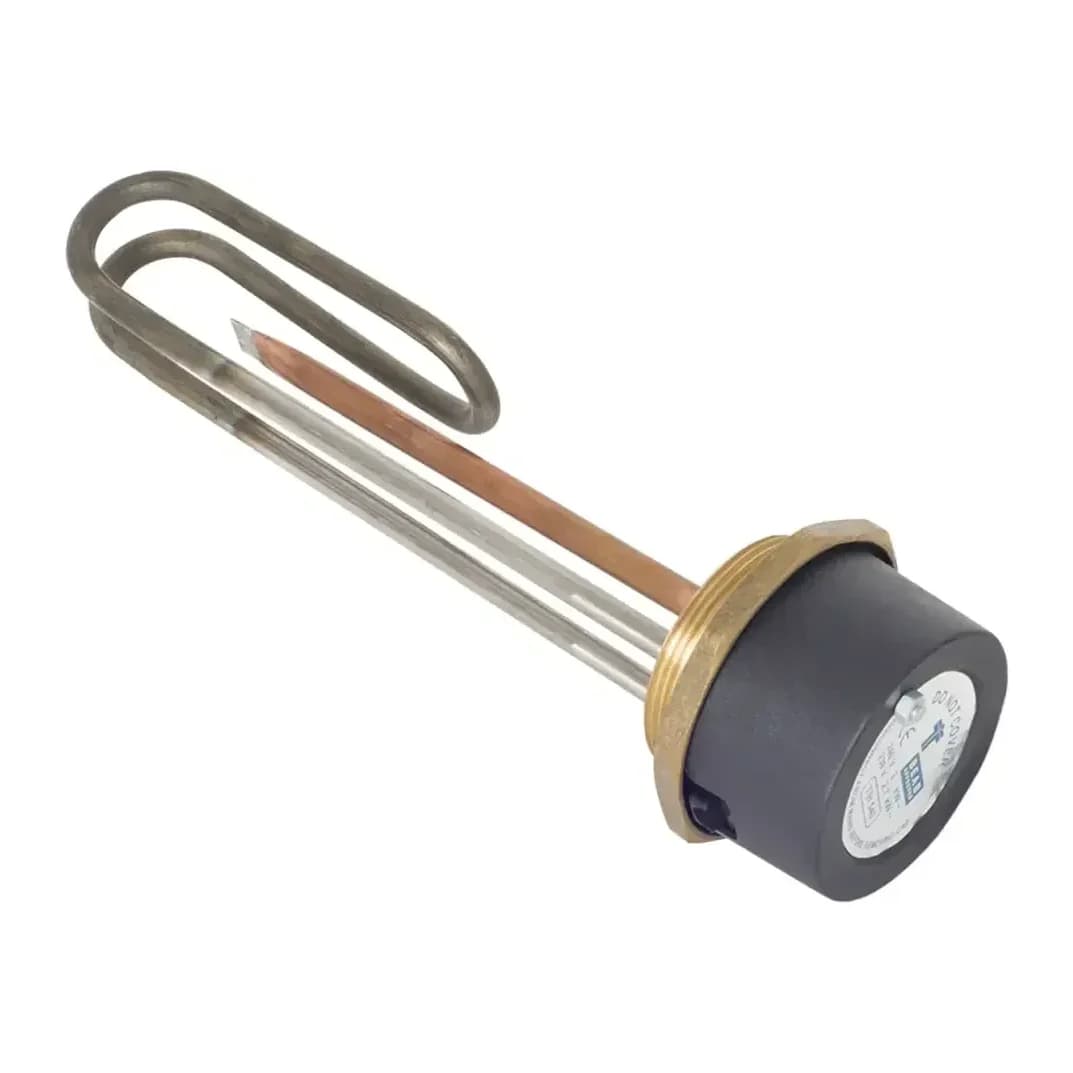 In stockTesla Immersion Heater c/w Thermostat - Incoloy/Copper
7 sizes available
Frominc VAT£20.20 ex VAT
✓ Delivery available✓ Collect today
 In stockTesla Immersion Heater c/w Thermostat - Incoloy
7 sizes available
Frominc VAT£24.24 ex VAT
✓ Delivery available✓ Collect today
 In stockTesla Immersion Heater c/w Thermostat - Titanium
3 sizes available
Frominc VAT£31.43 ex VAT
✓ Delivery available✓ Collect today
What size cylinder do I need?
Size it for the hot water you use at the busiest time — usually the morning rush — rather than the size of the house. As a starting point:
| Home | People | Cylinder, about |
|---|---|---|
| One bathroom, mainly showers | 1–2 | 120–150 litres |
| One bathroom with a bath | 3–4 | 150–180 litres |
| Bathroom and en-suite | 3–5 | 180–250 litres |
| Two or more bathrooms, regular baths | 5 or more | 250–300 litres or more |
Size up for a heat pump, which heats the water cooler and more slowly, and for a big bath or a large shower head; size down if the household only showers. Too big wastes energy keeping water hot you never use, so have the installer confirm the size.
Check the space too: cylinders come in standard, slimline (narrower and taller) and horizontal versions for tight cupboards, eaves and lofts.
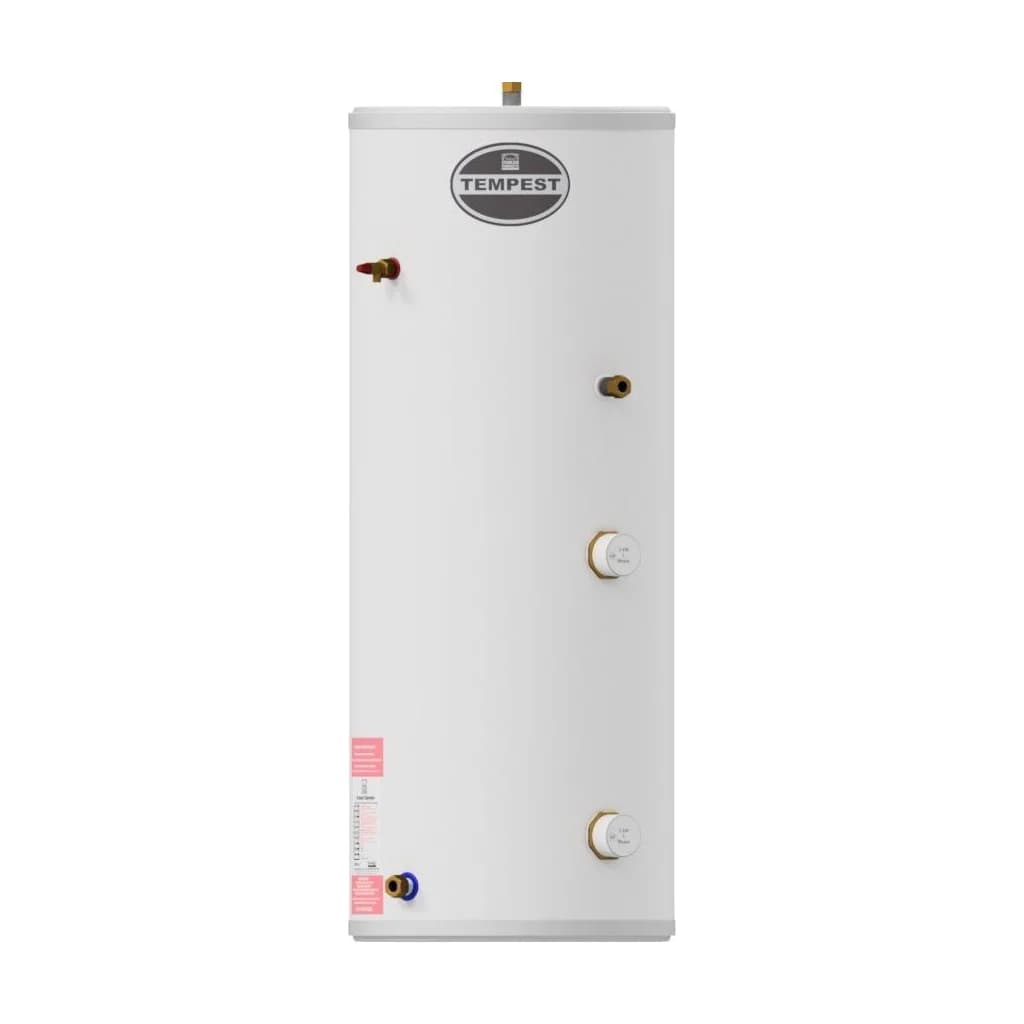 In stock
Telford
Telford Tempest Hot Water Cylinder25 options available
Frominc VAT£464.06 ex VAT
✓ Delivery available✓ Collect today
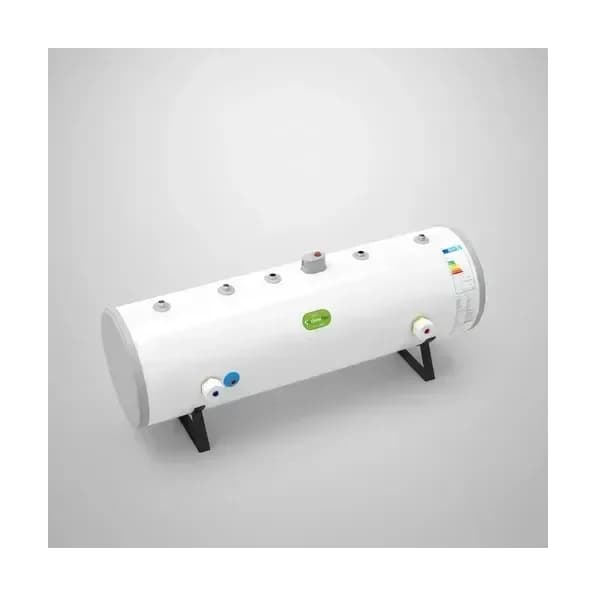 In stock
Ideal
Onyx/Ideal Pro Ind Horizontal Unv Cylinder4 sizes available
Frominc VAT£571.49 ex VAT
✓ Delivery available✓ Collect today
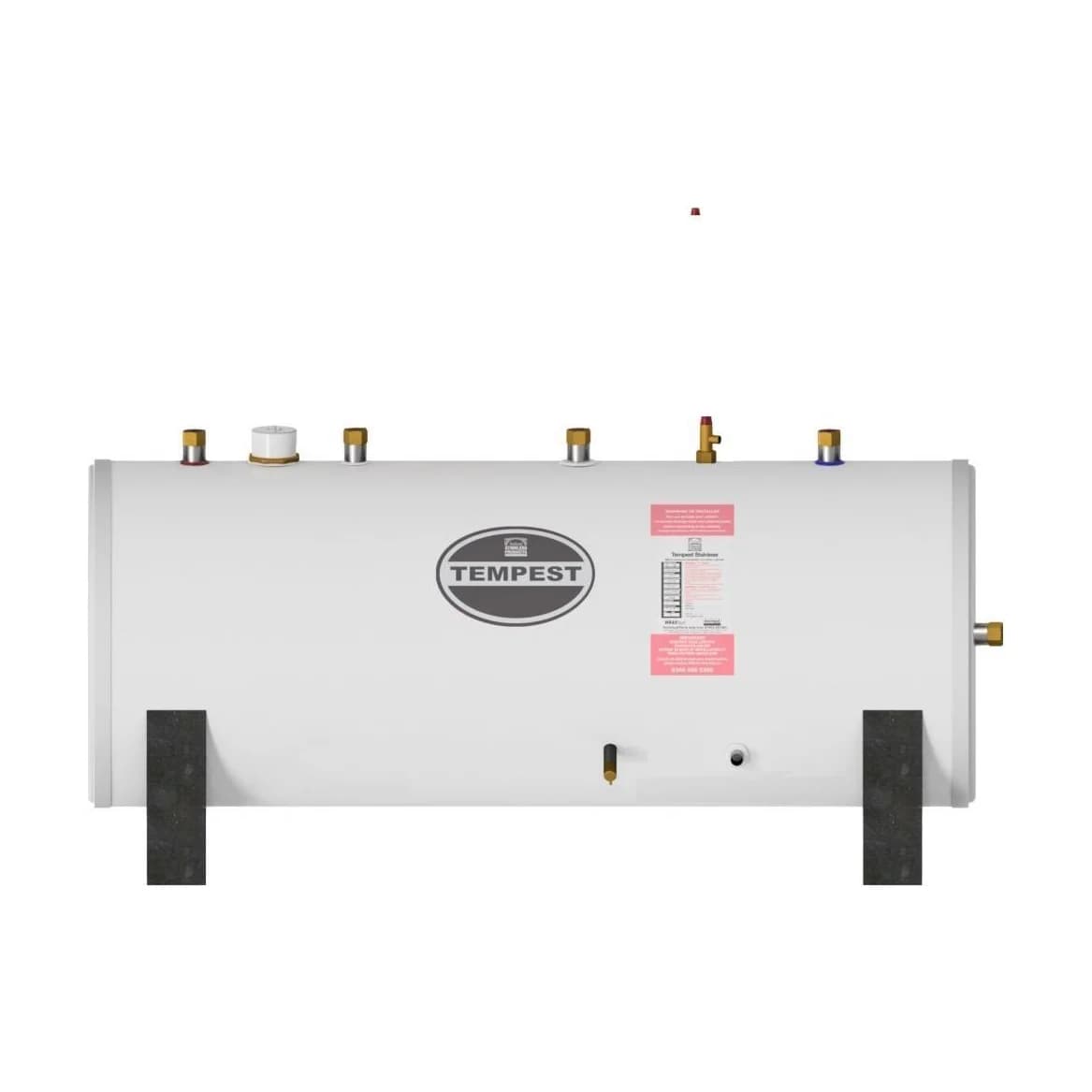 In stock
Telford
Telford Tempest Unvented Cylinder6 options available
Frominc VAT£494.79 ex VAT
✓ Delivery available✓ Collect today
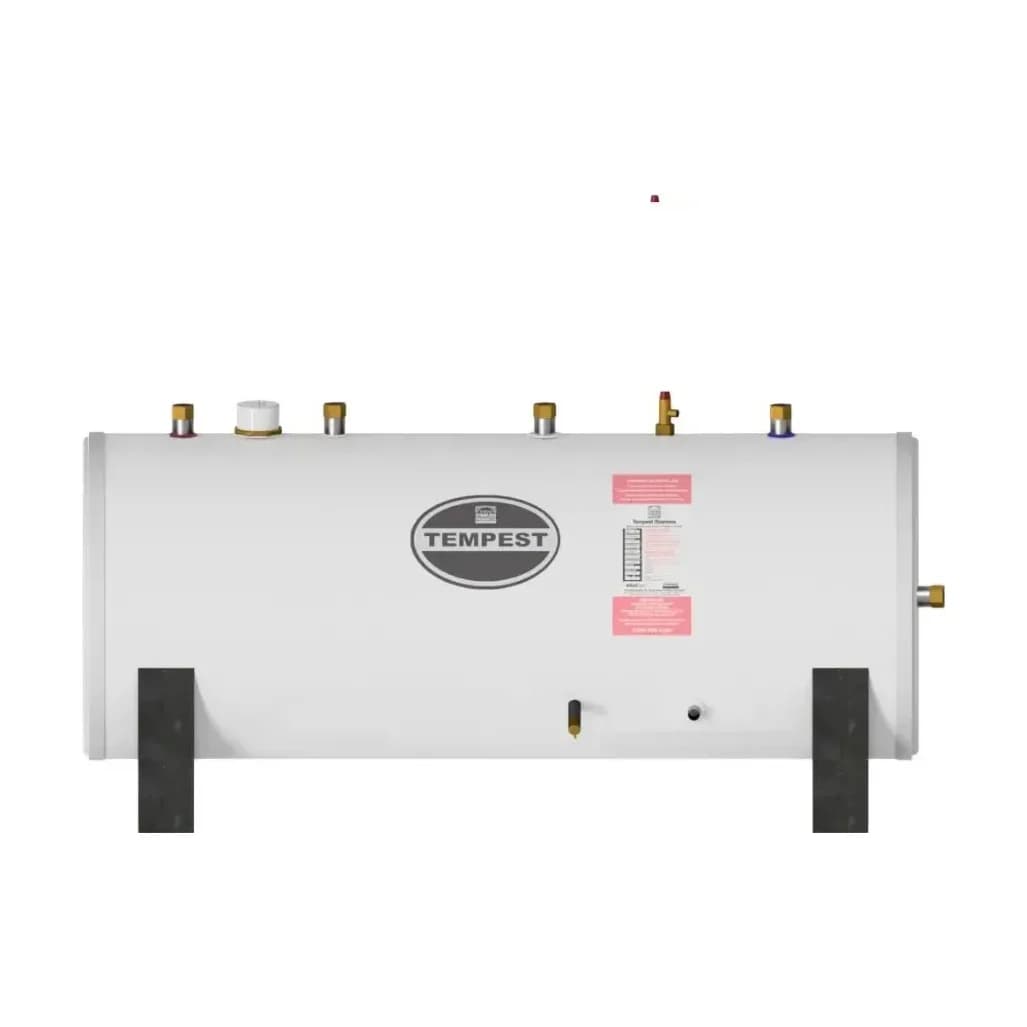 In stock
Telford
Telford Tempest Indirect Horizontal 150 Litre Unvented Cylinder (TSMI150/H)Code: LP-ATUYYT
inc VAT£659.45 ex VAT
✓ Delivery available✓ Collect today
Which should you choose?
- Keep a vented cylinder if the mains pressure or flow is poor, or you're replacing a cylinder like for like on a budget. A shower pump fixes many pressure complaints.
- Go unvented if the mains is strong and you want good showers on every floor without pumps, or want the loft tank gone. Budget for the G3 installation and a yearly service.
- Consider a combi instead in a smaller home with one bathroom — there's no cylinder at all. The combi vs system vs regular boiler guide compares them.
| Shelf | Lines | From (inc VAT) |
|---|---|---|
| Unvented cylinders | 31 | £375.38 |
| Hot water cylinders — direct, indirect, slimline and horizontal | 44 | £556.87 |
Replacing an old cylinder like for like? Bring its height, diameter and the positions of its connections to the counter, or call 020 3802 3275, and we'll check what we can get.
Questions
- Is an unvented cylinder better than a vented one?
- For pressure, yes: mains-pressure hot water at every tap with no pump. But it needs a good mains supply, costs more, must be fitted by a G3-qualified installer and needs a yearly service. With weak mains, a vented cylinder and a shower pump can be the better answer.
- Can I replace a vented cylinder with an unvented one?
- Usually, if the mains pressure and flow meet the cylinder maker's minimums and there's a safe route for the discharge pipe. The loft tank can then come out. It must be done by a G3-qualified installer and notified to Building Control.
- How can I tell if my cylinder is vented or unvented?
- A vented cylinder is fed from a cold water tank in the loft and is usually plain copper with no valves or vessel on it. An unvented one has no loft tank, a set of safety valves, a tundish, usually an expansion vessel, and normally a label saying it's unvented.
- Does an unvented cylinder need servicing every year?
- Yes. Makers require a yearly service by a competent person to keep the warranty, and it's when the safety valves, inlet controls and expansion vessel are checked.
- What size immersion heater do I need?
- Match the length and thread to the cylinder: top-entry immersions are commonly 18–27 inches and side-entry ones 11–14 inches, on a 2¼-inch boss or, on many unvented cylinders, 1¾-inch. Most domestic elements are 3kW.
- What temperature should a hot water cylinder be set to?
- 60°C. That's hot enough to stop Legionella growing in the stored water. It can scald, so use thermostatic mixing valves where that's a worry.
Related guides
- Heating & boilersCombi vs System vs Regular Boiler: Which Do You Need?
- Bathrooms & showersLow Water Pressure: Which Taps and Showers Will Work?
- Heating & boilersWhat Size Combi Boiler Do I Need? kW Explained