
The short answer
Measure three things: the length from the midpoint between the two fixing holes to the front of the rim, the width across the widest part of the rim, and the distance between the fixing holes, often around 155mm in the UK. Match the shape too: round-fronted standard, D-shaped or longer elongated. Then pick the fixing: bottom-fix bolts tighten from under the pan, while top-fix hinges tighten from above for back-to-wall and wall-hung pans.
How do you measure a toilet seat?
Take the old seat off, or lift it right up, and measure the pan itself. Seats vary, and the one you're replacing may never have fitted properly.
- Length: from the midpoint between the two fixing holes to the outside front edge of the rim.
- Width: across the widest part of the rim, outside edge to outside edge.
- Hinge spacing: from the centre of one fixing hole to the centre of the other. It's often around 155mm, and most replacement seats have hinges that slide or swivel to suit a range — check the range in the seat's details.
- Shape: note whether the front of the bowl is rounded, squared off or noticeably long, and take a photo from above.
Compare your figures with the seat's stated length and width. A few millimetres either way is normal, but the seat's buffers — the rubber feet underneath — should sit on the flat of the rim, not overhang the bowl or the outside edge.
Standard, D-shaped or elongated: which shape do you need?
| Shape | What it looks like | Typical pans |
|---|---|---|
| Standard (round or oval) | Rounded front, narrowing towards the hinges | Most close-coupled and older pans; often sold as universal |
| D-shaped | Straight across the back with a broad, rounded front, like a D on its side | Contemporary pans with a squarer outline |
| Elongated | A longer, narrower oval | Some comfort-height and imported pans |
| Wrapover | Seat and lid wrap down over the edge of the rim | A style, made in both standard and D shapes |
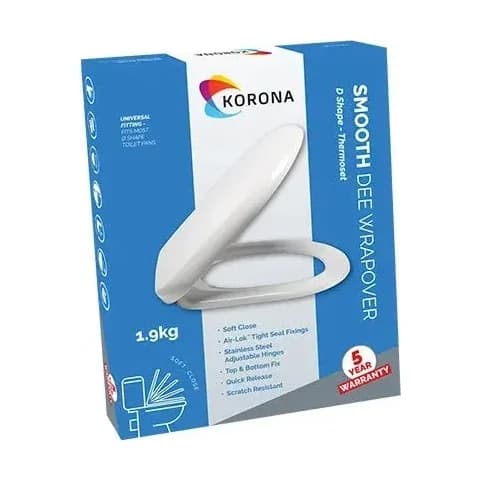
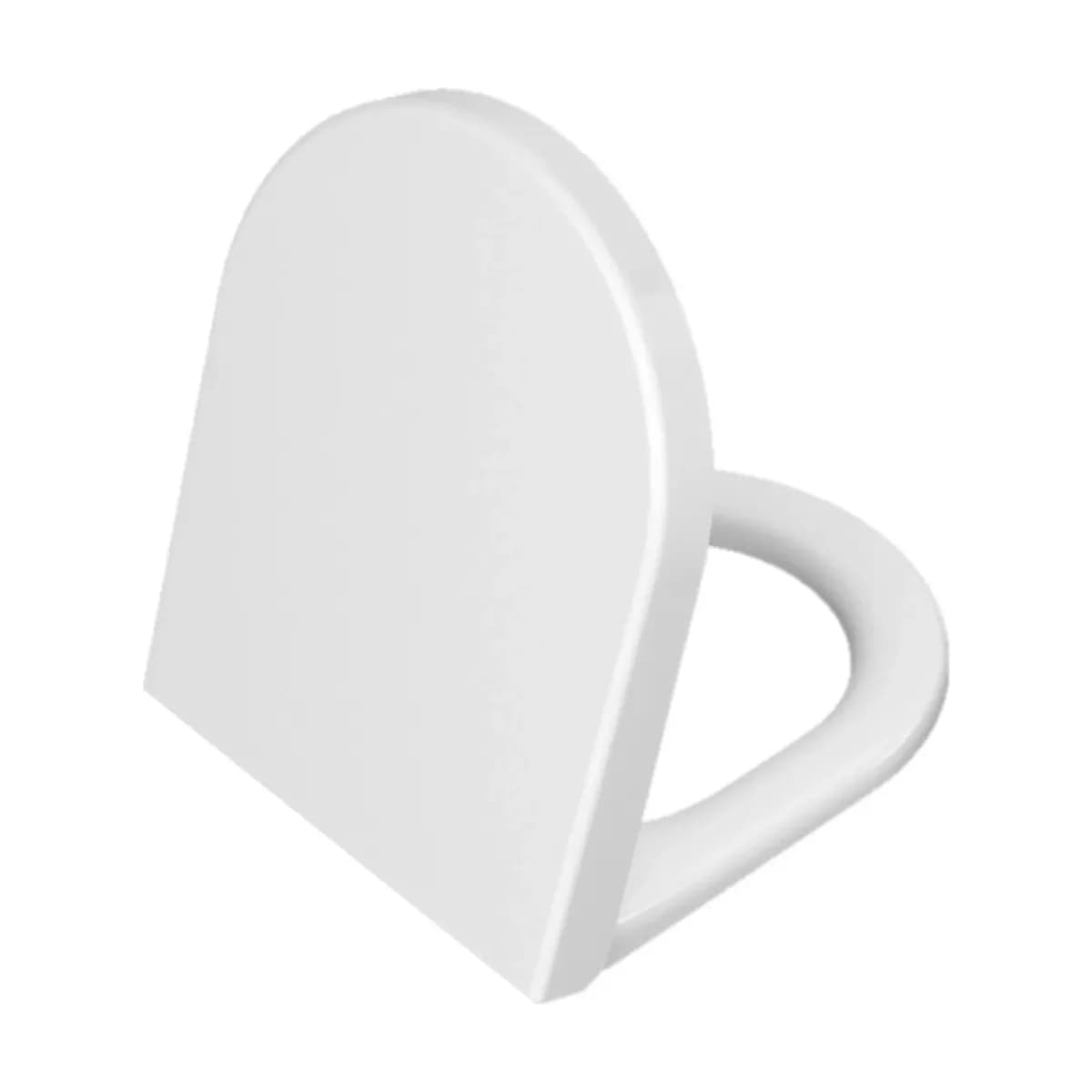
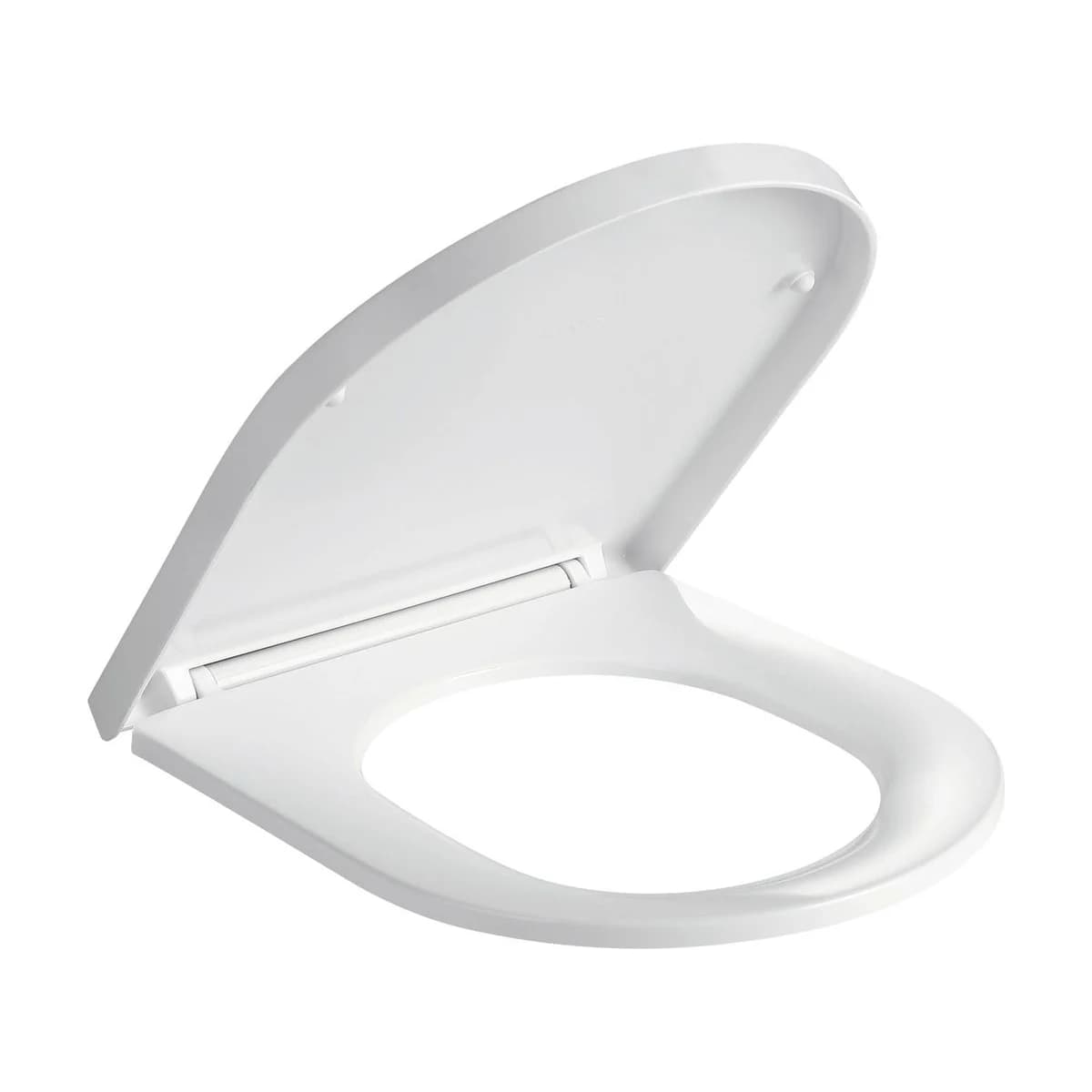
On our shelf there are standard-shape seats such as the Korona moulded wood seat and the UNI 1 soft close seat, and D shapes including the Smooth Dee Plus and the Standard D wrapover. A D-shaped seat on a round pan, or the other way round, overhangs or leaves the rim showing, so match the shape before the brand.
 In stock
 In stock
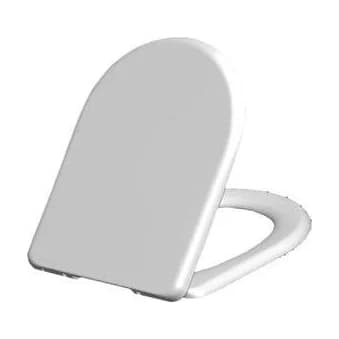 In stockSmooth Dee Plus - Dee Shape Thermoset
Code: LP-9TYQYC
inc VAT£33.05 ex VAT
✓ Delivery available✓ Collect today
 In stock
Which toilet seat material is best?
| Material | Feels | Good to know |
|---|---|---|
| Polypropylene (PP) | Light, slightly flexible | The cheapest; stands up to cleaning products, but scratches over time |
| Thermoset, such as duroplast | Hard, glossy and solid | Resists scratches and keeps its shine; heavier and dearer than PP |
| Moulded wood (MDF) | Heavy and warm to the touch | Painted finish; if it chips, water can get into the board and swell it |
A heavy seat and lid put more strain on the hinges and fixings, which is one reason soft-close hinges are worth having on a moulded wood seat.
Soft close and quick release: what's the difference?
Soft close hinges have a damper that lowers the seat and lid slowly and quietly instead of letting them drop — no slamming, and less chance of a chipped pan. Let them close on their own: pushing a soft-close lid down forces the damper and wears it out.
Quick release hinges let the seat lift off its fixings, usually with a button or a firm pull, so you can clean round the hinges and the back of the pan. Many seats are both. If a quick-release seat wobbles, check it has clicked fully back onto its base plates before you tighten anything.
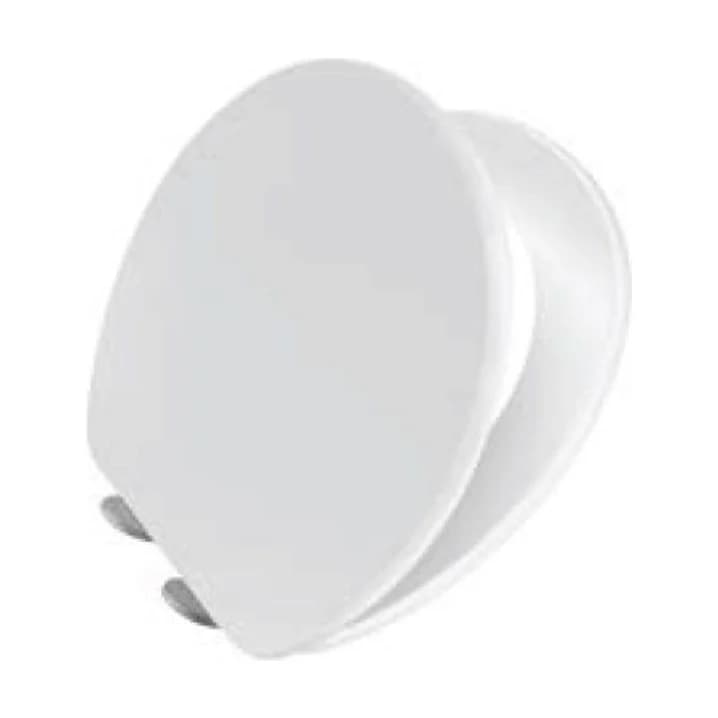 In stock
Kartell
UNI 1 Standard Soft Close Seat (PP)Code: LP-YVK52F
inc VAT£16.16 ex VAT
✓ Delivery available✓ Collect today
 In stockKorona Soft Close Universal Toilet Seat, Smooth
Code: LP-4UWCDB
inc VAT£17.37 ex VAT
✓ Delivery available✓ Collect today
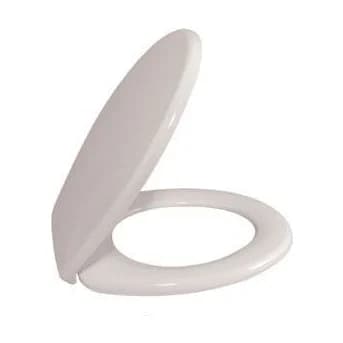 In stockSoft Close Top Fix Toilet Seat, Polypropylene, 1.5kg
Code: LP-156Q2DF
inc VAT£20.20 ex VAT
✓ Delivery available✓ Collect today
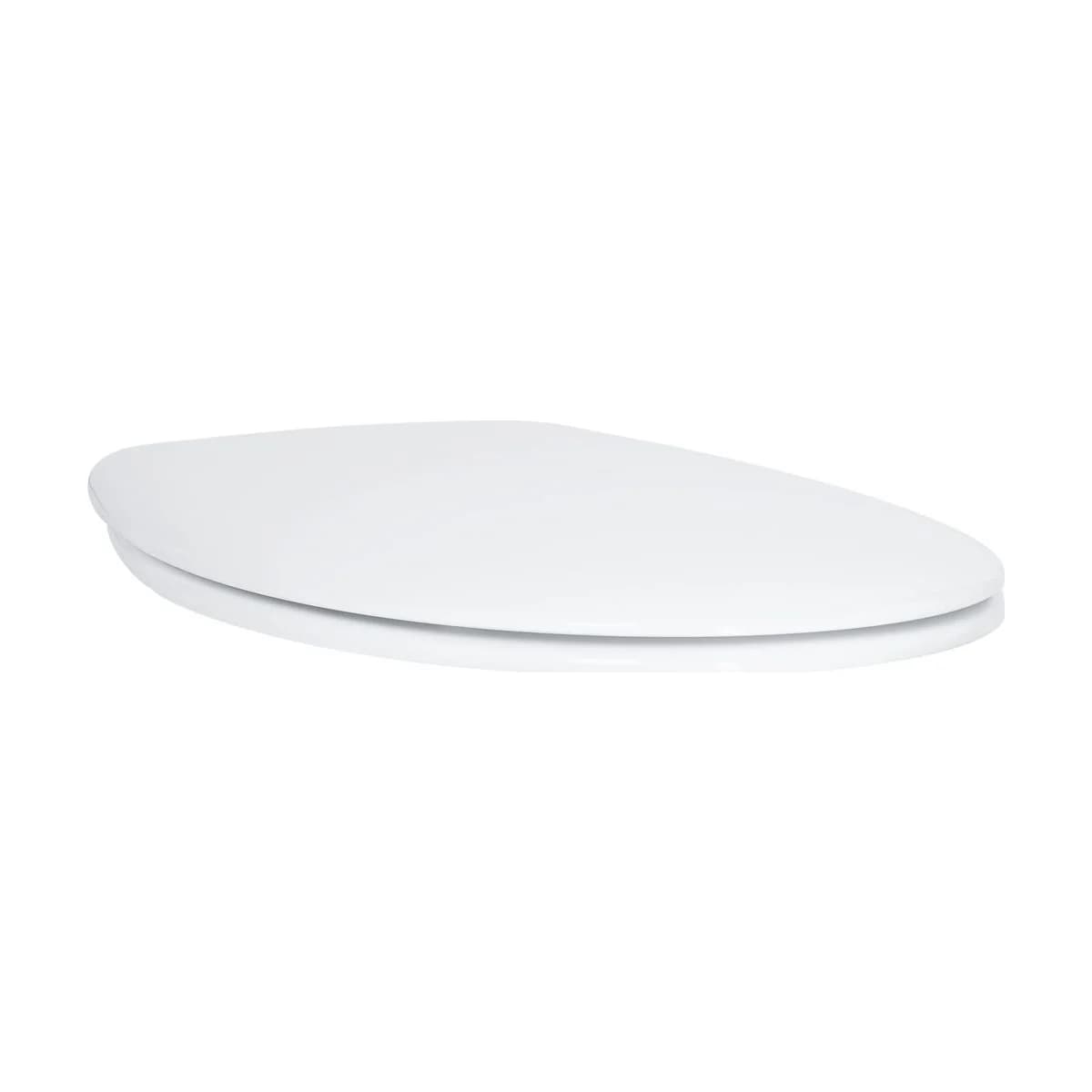 In stockBau Ceramic WC Seat & CoverSoft Close
Code: LP-UM43HH
inc VAT£80.74 ex VAT
✓ Delivery available✓ Collect today
Top fix or bottom fix hinges?
| Bottom fix | Top fix | |
|---|---|---|
| How it fixes | Bolts drop through the pan's holes; nuts tighten from underneath | Rubber anchors in the holes expand as you tighten screws from above |
| Needs | Room to reach under the back of the pan | Nothing underneath |
| Use on | Most open-back close-coupled pans | Back-to-wall, wall-hung and fully shrouded pans, and blind fixing holes |
If you can't get a hand and a spanner under the back of the pan, you need top fix. Spares are on the seat hinges shelf, including a soft-close top-fix metal hinge at £30.24 and a top-fix hinge set at £5.36, with a replacement hinge and a bolt set on the toilet seats shelf. Hinges aren't universal between seat makes, so check the fixing pattern against your seat, or bring the old hinge to the counter.
How to fit a toilet seat
- Lift off the hinge covers and undo the old fixings — from underneath on a bottom-fix seat, from above on a top-fix one.
- Clean the fixing holes and the rim where the hinges sit.
- Fit the hinges to the new seat loosely and set them to the spacing of the pan's holes.
- Drop the bolts or top-fix anchors into the holes, centre the seat on the bowl and line its front up with the front of the rim.
- Tighten a little at a time on each side until the seat doesn't move. Don't overtighten: you can crack the pan or strip a plastic thread.
- Lift the lid and check it stays up without leaning on the cistern's flush button. If it does, move the hinges forward if the seat allows.
- Refit the hinge covers.
How do you fix a loose toilet seat?
A seat that shifts sideways is almost always loose at the pan fixings; one that wobbles on its hinges is loose where the hinges meet the seat.
- Bottom fix: hold the bolt still from above with a screwdriver and tighten the nut underneath. Replace the rubber washers if they've perished.
- Top fix: tighten the screw from above so the anchor expands in the hole. If the screw just spins, the anchor is worn out — fit new top-fix fixings.
- Hinges to seat: tighten the screws or nuts that hold the hinges to the seat. Don't take a soft-close damper apart.
- Still moving? Seats with locking fixings, such as the STA-TITE seat we stock, are designed to stay tight.
Questions
- Are toilet seats a standard size?
- No. Most UK seats fit most round-fronted pans, but D-shaped, elongated and designer pans need a seat made for their shape. Measure the length, width and hinge spacing before you buy.
- What is the standard distance between toilet seat fixing holes?
- Often around 155mm centre to centre in the UK. Most replacement seats have adjustable hinges that suit a range, so check your measurement falls within it.
- Do I need a top fix toilet seat?
- Yes, if you can't reach under the back of the pan to tighten nuts — typically on back-to-wall, wall-hung and fully shrouded close-coupled pans.
- Can you replace the hinges on a soft close seat?
- Sometimes. Some makers sell replacement soft-close hinges, and we stock a soft-close top-fix metal hinge. Check the fixing pattern matches your seat; if it doesn't, a new seat is often simpler.
- Why does my soft close toilet seat drop quickly?
- The dampers have worn, usually from the lid being pushed down. Fit new hinges if your seat takes them, or replace the seat.
- How do I stop my toilet seat moving sideways?
- Tighten the fixings at the pan and replace any perished rubber washers. On a top-fix seat, a screw that spins means the anchors need replacing.