
The short answer
Stone resin trays are heavier and stiffer, feel solid underfoot and can be made slim, at 30mm to 50mm high. Acrylic-capped trays are lighter and usually cheaper, but rely on reinforcement underneath and can flex or creak if they aren't fully supported. Hybrids such as Nuie's Pearlstone pair an acrylic surface with a strong, light resin core. Whatever the material, most cracked trays come down to poor bedding: a tray must be fully supported on a level base.
What's the difference between stone resin and acrylic?
A stone resin tray is cast from crushed mineral bound in resin, with a hard gelcoat surface. It's dense, rigid and heavy, which is what makes it feel like a solid floor rather than a plastic shell. An acrylic tray is a moulded acrylic skin — or ABS plastic capped with acrylic — stiffened underneath, often with glass-fibre reinforcement. It's light and warmer to the touch, but its stiffness depends on that reinforcement and on how well it's bedded.
| Stone resin | Acrylic-capped | Pearlstone (Nuie) | |
|---|---|---|---|
| Weight | Heavy; big sizes are a two-person lift | Light | Light for its strength |
| Underfoot | Solid, no flex | Can flex or creak if poorly supported | Rigid |
| Height on our shelves | 30–50mm | — | 40–45mm |
| Surface | Gelcoat, gloss or textured | Gloss acrylic | Gloss acrylic cap |
| Raised install | Maker's legs or plinth | Maker's legs or plinth | Leg set screws into the base |
Which tray materials do we stock?
The branded trays on our shelves are stone resin or Nuie's Pearlstone, all with a 90mm waste and a 10-year warranty:
| Range | Material | Height |
|---|---|---|
| Giavani Slim | Stone resin, double skinned; made to BS EN 14527 | 30mm |
| JT Fusion | Stone resin, double skinned; made to BS EN 14527 | Low profile |
| Nuie Pearlstone | Pearlstone Matrix: acrylic-capped polyurethane resin | 40–45mm |
| Merlyn Touchstone | Stone resin with a moulded solid under-section | 50mm |
| ICON White Slate | Stone resin, white slate effect, double skinned | 30mm |
BS EN 14527 is the European standard for domestic shower trays. Here's the same 1200 x 900mm rectangle in each range, so you can compare like for like:
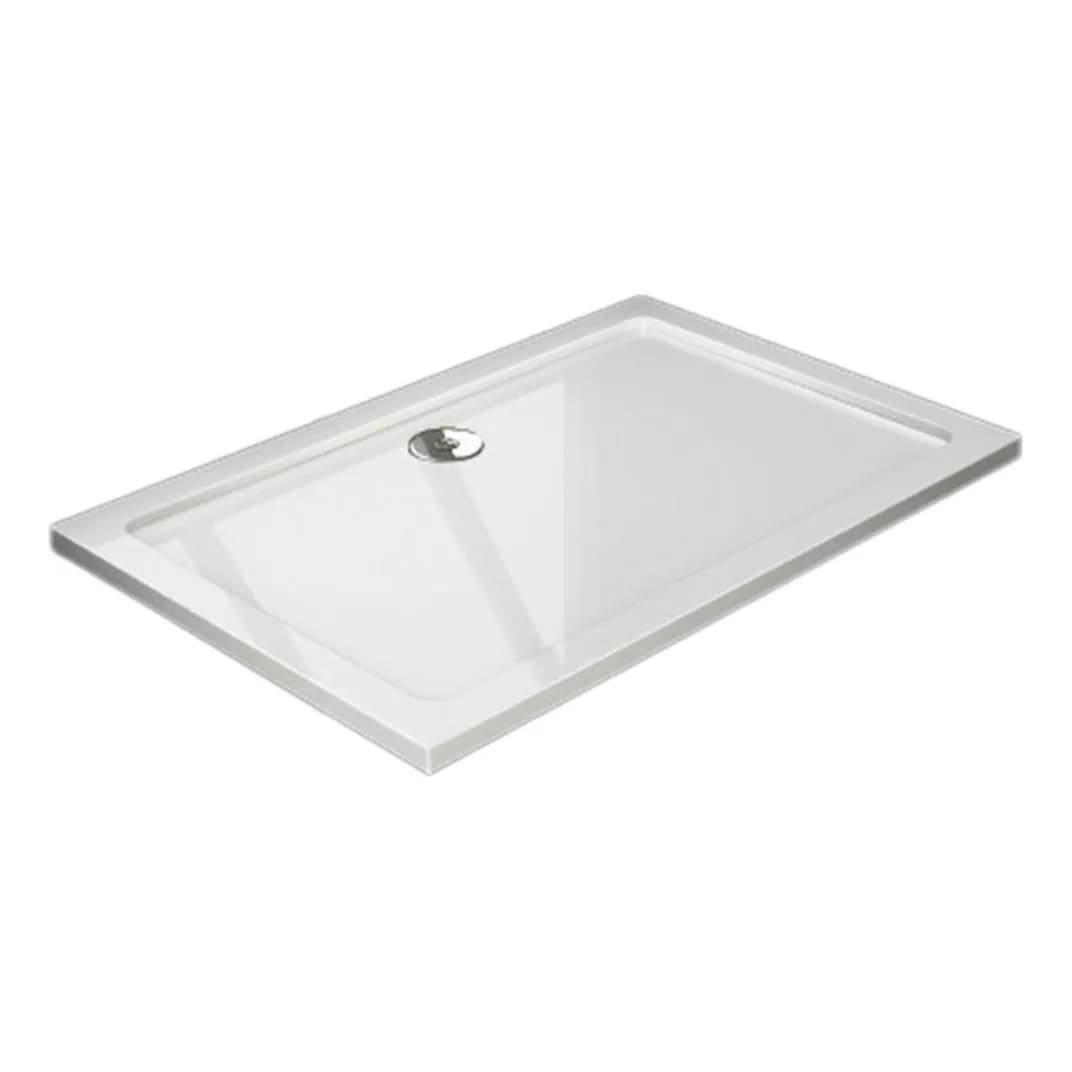 In stock
Giavani
Giavani Slim Rectangular Shower Tray34 sizes available
Frominc VAT£139.03 ex VAT
✓ Delivery available✓ Collect today
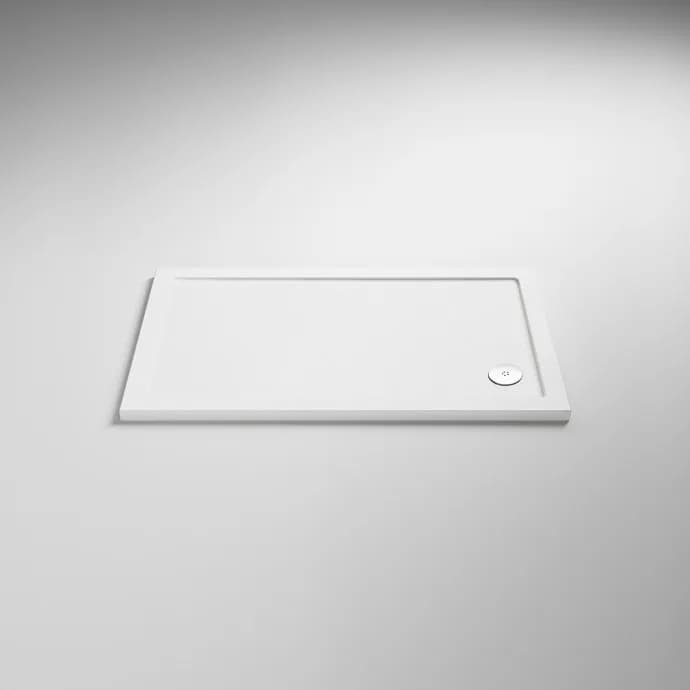 In stock
Nuie
Nuie Pearlstone Rectangular Shower Tray35 sizes available
Frominc VAT£144.68 ex VAT
✓ Delivery available✓ Collect today
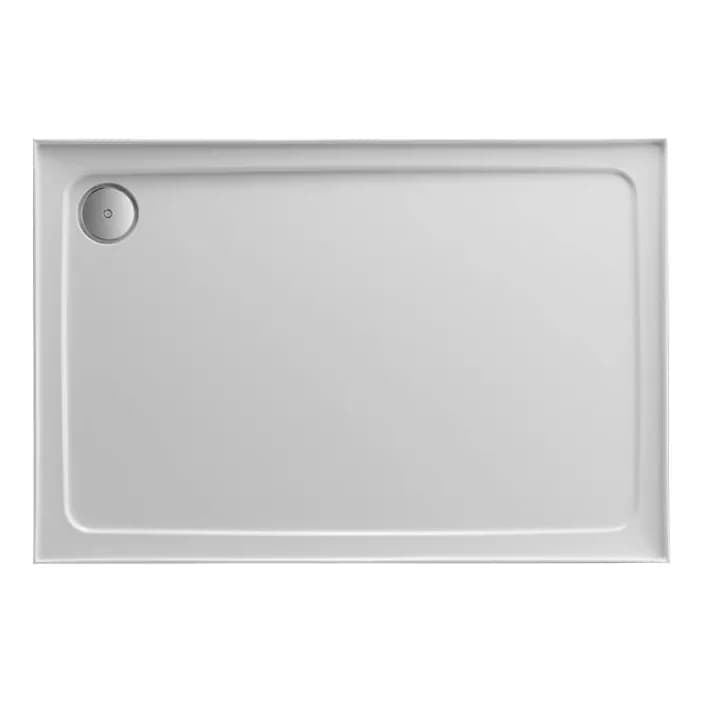 In stock
JT
JT Fusion Rectangular Shower Tray32 sizes available
Frominc VAT£137.41 ex VAT
✓ Delivery available✓ Collect today
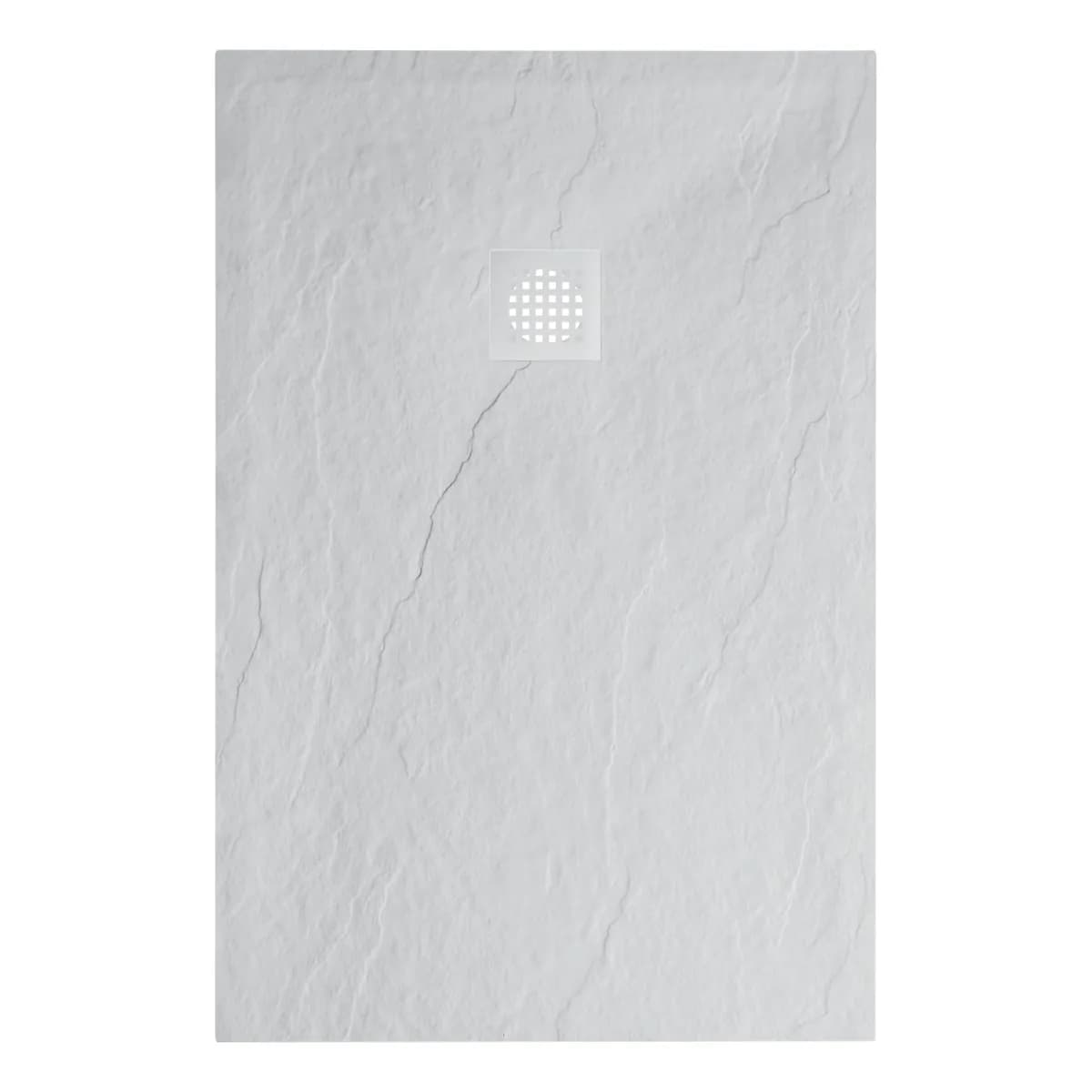 In stock
ICON
ICON White Slate Rectangular Shower Tray19 sizes available
Frominc VAT£199.65 ex VAT
✓ Delivery available✓ Collect today
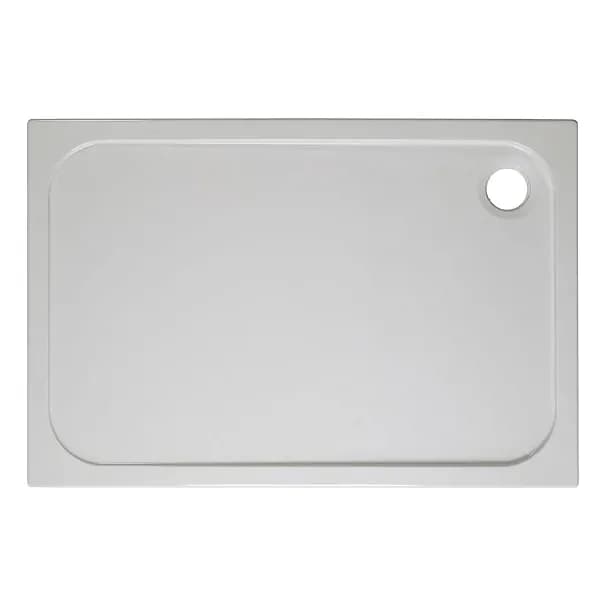 In stock
Merlyn
Merlyn Touchstone Rectangular Shower Tray28 sizes available
Frominc VAT£198.84 ex VAT
✓ Delivery available✓ Collect today
We also carry a run of British-made low-profile trays under our own name, from £71.61 for a 760 x 760mm square.
Are stone resin shower trays good?
Yes. They're stiff, so they don't move when you stand on them, they don't drum or creak, and the strength of the material lets makers go down to 30mm high for a near-flush look. The gelcoat is hard-wearing and wipes clean.
The downsides are weight and temperature. A large stone resin tray is heavy enough to need two people, which counts on a top-floor job, and it feels cooler underfoot than acrylic for the first moment. Merlyn's Touchstone takes a slightly different route: a single skin with a moulded solid under-section, which keeps it rigid and quiet underfoot at 50mm high.
Do stone resin shower trays crack?
They can, but it's almost always down to how they were fitted, not the material. A tray stuck down on a few dabs of adhesive, or on an uneven floor, has unsupported patches. Every time someone stands on it, those patches flex a fraction, and over months the tray cracks or the silicone seal breaks and leaks. Acrylic trays fail the same way, they just bend further first.
- Make sure the floor is solid. A timber floor that bounces needs stiffening first, usually with plywood screwed down to the joists.
- Connect the waste and test it before the tray goes down — you won't get at it afterwards.
- Bed the tray fully on a level mortar bed, or use the maker's leg set or riser kit, exactly as the maker specifies.
- Check it's level both ways, then don't stand in it until the bed has set.
- Seal it to the walls with sanitary silicone once the walls are tiled or panelled.
Slate vs stone resin: what's the difference?
Most slate-effect trays, including ICON White Slate, are stone resin with a textured, slate-look surface, so the difference is the finish rather than the material. The texture gives more grip under wet feet — ICON describes its tray as slip resistant — and looks less clinical than gloss white. The trade-off is cleaning: soap and limescale settle in the texture, so it needs a soft brush rather than a quick wipe.
ICON White Slate trays are 30mm high, come with a 90mm waste, square cover and trap in the box, and run from 800 x 800mm to 1700 x 900mm.
Pearlstone vs stone resin
Pearlstone Matrix is Nuie's patented material: polyurethane resin with a volcanic-ash filler and an acrylic cap on top. Nuie says it's one of the strongest and lightest tray materials available, so it's easier to carry up stairs than stone resin of the same size, and the flat underside is easy to bed and level.
It's 40–45mm high, against 30mm for the slimmest stone resin trays. Its party trick is the leg set, which screws straight into the base with a drill and lifts the tray so the trap runs underneath without cutting into the floor — from £77.59.
How do you clean a shower tray?
Rinse it after use and wipe it down with a mild, non-abrasive bathroom cleaner and a soft cloth. Avoid scouring pads, abrasive powders and strong solvents, which dull gelcoat and scratch acrylic. London's water is hard, so limescale builds up quickly: deal with it little and often using a descaler the tray maker approves, rather than a strong acid once a year.
Questions
- Which is better, stone resin or acrylic?
- For most bathrooms, stone resin: it's stiffer, slimmer and feels more solid. Acrylic is lighter and cheaper, and fine if it's fully supported.
- Are stone resin shower trays heavy?
- Yes. Small trays are a one-person carry, but big rectangles are a two-person job. If weight is the worry, Nuie's Pearlstone is much lighter for its strength.
- Do I need a riser kit for a stone resin tray?
- Only if the trap can't go into the floor. A slim tray bedded on mortar needs the trap below floor level; otherwise use the maker's legs or plinth so the waste runs underneath.
- Why has my shower tray cracked?
- Nearly always because it wasn't fully supported, so it flexed each time someone stood on it. A cracked tray usually has to be replaced, and the new one bedded properly.
- What warranty do your shower trays have?
- Every Giavani, JT, Nuie, Merlyn and ICON tray we stock carries a 10-year warranty. Fit it exactly as the maker's instructions say, because a warranty usually depends on it.
Related guides
- Bathrooms & showersShower Tray Sizes UK: Standard Sizes Chart and How to Choose
- Bathrooms & showersWetroom vs Walk-In Shower: Screens, Trays, Drains and Tanking
- Bathrooms & showersShower Enclosure Buying Guide: Types, Sizes and Which to Choose
- Bathrooms & showers6mm vs 8mm Shower Glass: What's the Difference?