
The short answer
Use PTFE tape or jointing compound on taper threads — the ones that seal on the thread itself, such as a radiator valve tail or a fitting screwed into a valve. Parallel threads seal on a washer and compression joints on the olive, so neither needs sealant on the thread. Wrap PTFE clockwise, looking at the end of the male thread. Use WRAS-approved products on drinking water; gas needs gas-rated materials and a Gas Safe registered engineer.
Which thread sealant goes where?
| Joint | Where it seals | What to use |
|---|---|---|
| Taper thread (BSPT): a radiator valve tail, a fitting into a valve body, a drain cock | On the thread | PTFE tape, jointing compound or thread sealing cord; hemp and paste on larger iron threads |
| Parallel thread with a washer: tap connectors, flexible hoses, fill valves | On the washer or seal | Nothing on the thread — a good washer |
| Compression fitting | The olive, squeezed onto the pipe | Nothing required; some plumbers add a smear of compound to the olive (see below) |
| Union with a flat face or cone | On the face, washer or cone | Nothing on the thread |
| Gas threads | On the thread | Gas-rated tape or compound only, fitted by a Gas Safe registered engineer |
| Plastic threads | On the thread | PTFE tape, or a sealant the maker says is safe on plastic |
Our BSP thread sizes guide explains how to tell parallel threads from taper ones and how to measure them.
PTFE tape: water grade and gas grade
PTFE tape is a thin film of unsintered PTFE. On a taper thread it fills the gaps between the threads as the joint tightens, and lubricates them so the joint pulls up properly. It's clean, cheap, doesn't set, and the joint comes apart easily later.
- Standard (water) tape is thin and low-density — the everyday white reel for water and heating threads. Our 12m PTFE tape is made to BS 7786 and WRAS-approved for drinking water, at £0.34 a reel.
- Gas tape is thicker and denser, usually on a yellow reel or in yellow packaging, and made to BS EN 751-3 for gas — look for the number on the pack. It works on water threads too, and plenty of plumbers carry only gas tape for that reason. Our 5m gas PTFE tape conforms to BS EN 751-3 and is £0.49.
- Colour alone isn't proof of a rating. Check the packaging for the standard, and on drinking-water threads use a tape the maker says is suitable for drinking water.
How to wrap PTFE tape: which way and how many wraps
- Clean the male thread. Old tape, compound and grit stop a new joint seating.
- Hold the fitting with the thread pointing towards you, and start a thread or two back from the end so no tape hangs into the bore.
- Wrap clockwise as you look at the end of the thread — the way the fitting turns as it tightens — so screwing it in smooths the tape down instead of unravelling it.
- Keep the tape taut so it beds into the threads, overlapping each turn by about half the tape's width.
- Finish at the base of the thread, tear the tape off and press the end down.
- Screw the joint in by hand, then tighten with a spanner. Don't back a taper joint off to line it up once it's tight — that breaks the seal. Go further round, or start again with fresh tape.
How many wraps? There's no single right number: it depends on the tape's thickness and how well the threads match. A common starting point for thin water tape on 1/2" and 3/4" threads is somewhere around 5 to 10 wraps, and fewer of thicker gas tape. It's right when the shape of the thread still shows through the tape and the joint tightens with firm, even resistance. Too little and it weeps; too much and the joint won't pull up — and it can split a female fitting, especially a cast or plastic one.
Jointing compound, hemp and thread sealing cord
Jointing compound (paste, or pipe dope) is smeared onto the male thread. Non-setting compounds stay soft, so the joint can be undone later, and they fill rougher and larger threads well. Some plumbers use a light coat of compound over PTFE tape on rough or stubborn threads.
- Drinking water: use a compound that's WRAS-approved. It says so on the tube or tub — and not every compound is.
- Gas: only compounds approved for gas, marked BS EN 751-1 or 751-2 on the pack, applied by a Gas Safe registered engineer.
- Hemp and paste is the traditional seal on iron and steel threads, and still used on large threads and older installations: strands of hemp are wound along the thread and covered with jointing paste. It copes with rough threads. Don't use it on gas, and keep it off plastic fittings, which it can split as it swells.
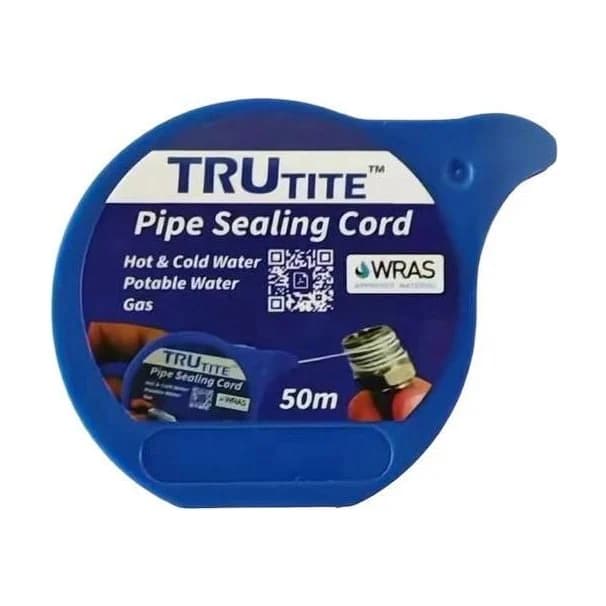
- Thread sealing cord, such as TruTite pipe sealing cord, is a coated cord wound into the threads. It seals as soon as the joint is made up, and cords generally allow a small amount of back-off to line a fitting up — the pack says how much and which materials it suits.
- Anaerobic thread sealants such as Loctite 577 cure without air between metal threads, making a strong seal that resists vibration. They're for metal threads only and can be harder to undo than paste.
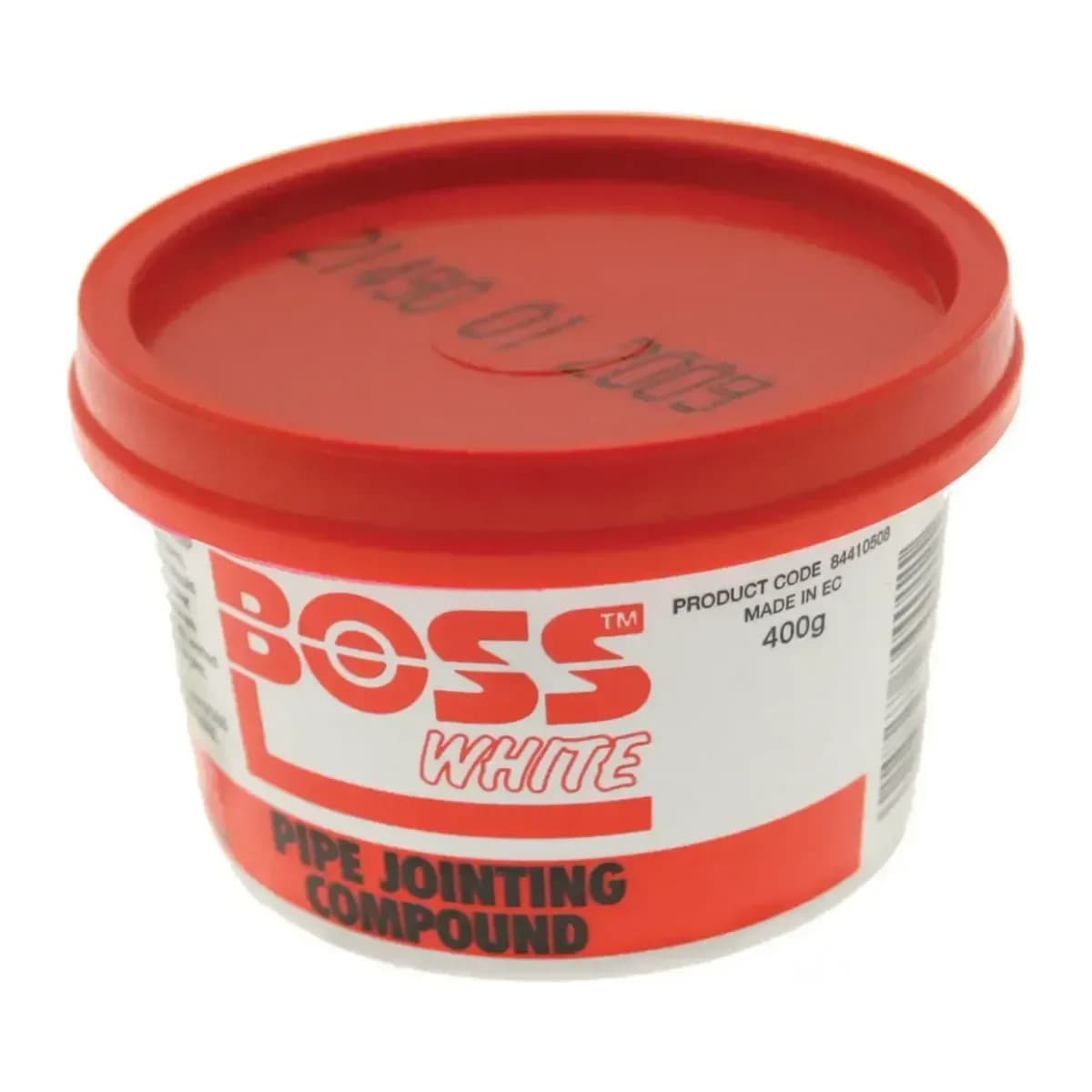 In stock
Boss
400g Boss Jointing Compound - WhiteCode: LP-1D723JW
inc VAT£2.55 ex VAT
✓ Delivery available✓ Collect today
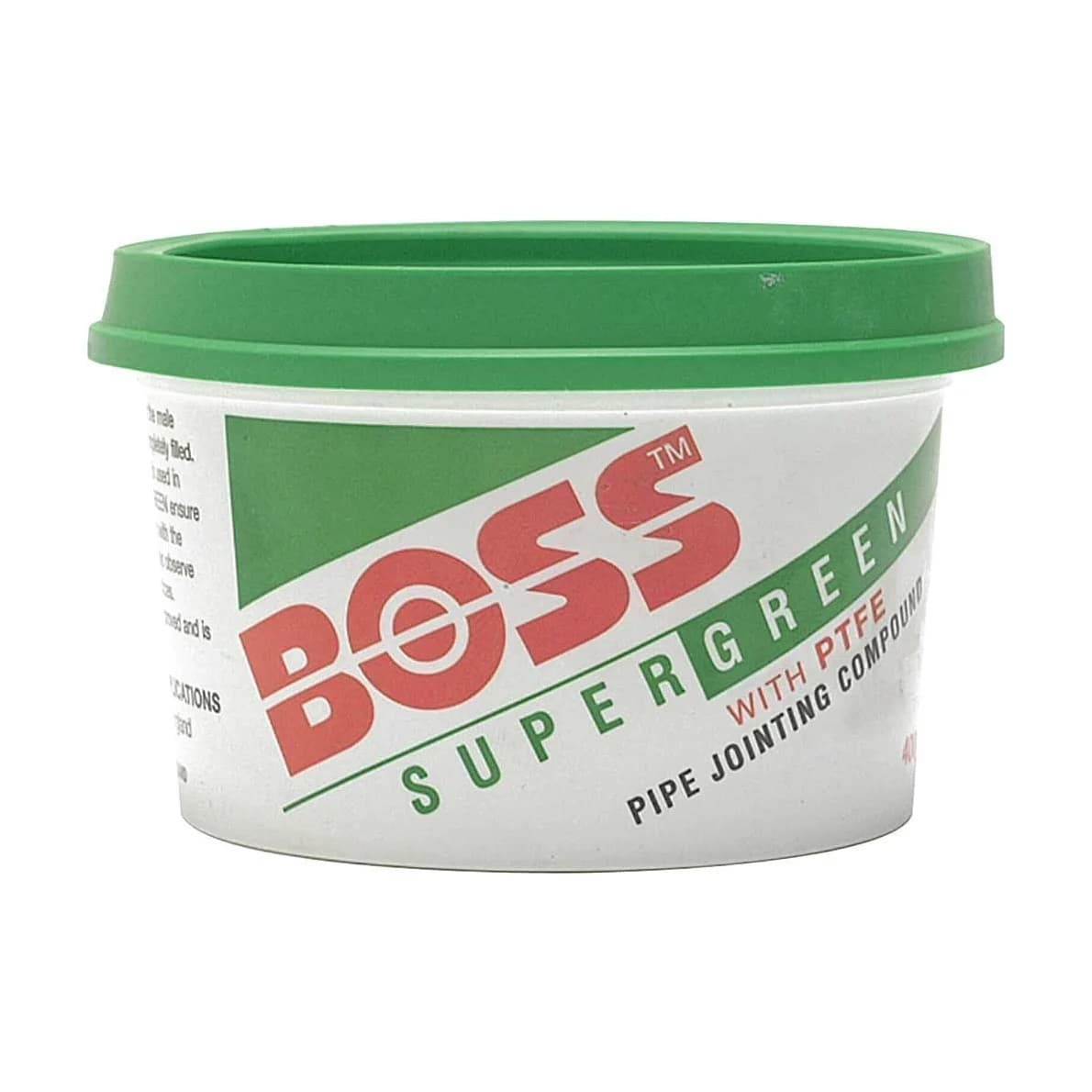 In stock
Boss
Boss Green Pipe Jointing Compound 400g (84510094)Code: LP-1OYP48X
inc VAT£3.48 ex VAT
✓ Delivery available✓ Collect today
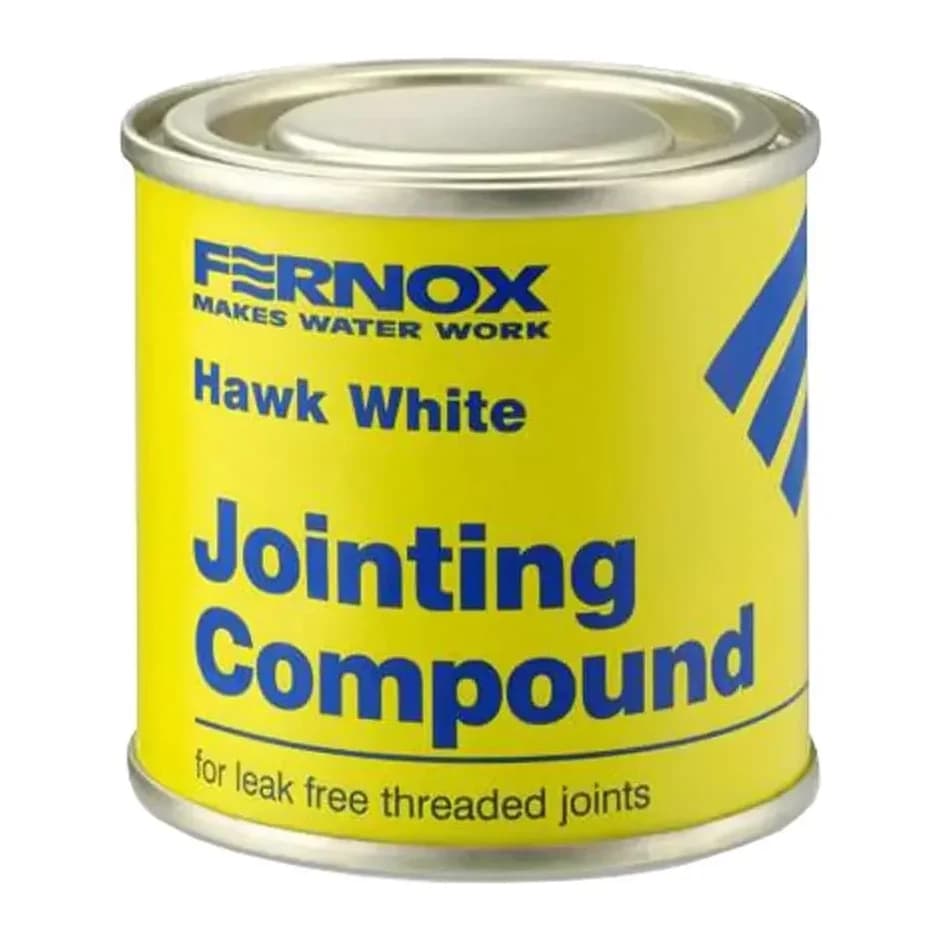 In stock
Fernox
Fernox Hawk White Jointing Compound 200gCode: LP-S9PY1P
inc VAT£5.01 ex VAT
✓ Delivery available✓ Collect today
 In stock
Should you put PTFE or compound on a compression olive?
This is one of the most argued-about questions at any trade counter, so here's the honest version. A compression joint seals where the brass olive is squeezed between the fitting body and the pipe. The nut's thread only clamps — it doesn't seal — so tape on the nut thread does nothing useful, and it can stop you feeling when the joint is tight.
- The case for nothing: compression fittings are designed to seal dry, and many makers' instructions say no sealant is needed. A clean, round, deburred pipe and a new olive, tightened correctly, seal on their own.
- The case for a smear of compound: a little WRAS-approved jointing compound on the olive lubricates it so it pulls up evenly, and can help on slightly marked or older pipe. Plenty of experienced plumbers do this as routine.
- PTFE on the olive: some plumbers wrap a turn or two round the olive. It can help on a lightly scored pipe, but loose strands can end up in the joint or the valve, so it's the least favoured option.
- What no sealant can do: rescue an olive on a damaged pipe, or one that's been overtightened and distorted. Cut back to good pipe and fit a new olive.
Our advice: follow the fitting maker's instructions, get the pipe end right, and if you use anything, a thin smear of WRAS-approved compound on the olive. Hand-tight plus about a half to three-quarters of a turn is usually enough on 15mm and 22mm.
Gas, drinking water and plastic threads
- Gas: use only tapes and compounds approved for gas, and leave the work to a Gas Safe registered engineer. Gas joints are tightness-tested after any work, which takes the engineer's gauge and training.
- Drinking water: the Water Supply (Water Fittings) Regulations 1999 require materials in contact with drinking water to be suitable for it. In practice that means WRAS-approved compounds and tapes on any thread that touches drinking water.
- Plastic threads: use PTFE tape or a sealant the maker says is compatible, go easy on the tape and tighten gently — plastic female threads split easily. Avoid anaerobic sealants and hemp unless the maker approves them.
- Heating: threads on radiators, valves and pumps go through heating and cooling cycles. PTFE tape, a good compound or sealing cord all work; check joints with the system hot as well as cold.
Thread sealants we stock
| Product | Lines | From |
|---|---|---|
| PTFE tape | 2 | £0.34 |
| Jointing compounds | 22 | £2.90 |
| Washers and seals | 14 | £0.24 |
| Compression olives | 13 | £0.10 |
Not sure whether a thread is parallel or taper? Bring it to our Chingford trade counter or call 020 3802 3275.
Questions
- Which way do you wrap PTFE tape?
- Clockwise as you look at the end of the male thread — the way the fitting tightens — so screwing it in doesn't unwind the tape.
- How many wraps of PTFE tape should I use?
- Enough to fill the threads while their shape still shows: often around 5 to 10 wraps of thin tape on 1/2" and 3/4" threads, and fewer of thicker gas tape.
- Can you use PTFE tape and jointing compound together?
- Yes, on taper threads. Some plumbers add a light coat of compound over the tape on rough or stubborn threads. Use WRAS-approved compound on drinking water.
- Is yellow PTFE tape for gas?
- Usually — gas tape is thicker and normally comes on a yellow reel — but check the pack for BS EN 751-3 rather than relying on colour. Gas work needs a Gas Safe registered engineer.
- Do compression fittings need PTFE tape?
- No. The olive makes the seal. Some plumbers add a smear of jointing compound to the olive, but tape on the nut's thread does nothing useful.
- Do tap connectors need PTFE tape?
- Not if they have a fibre or rubber washer. Parallel threads seal on the washer, and tape can stop it seating. Fit a new washer instead.
- Is jointing compound safe for drinking water?
- Only if it's approved for it. Look for WRAS approval on the pack before using a compound on drinking-water pipework.