
The short answer
Cut the pipe square, deburr it, and clean the pipe end and the inside of the fitting until bright. Brush on a thin coat of flux, push the joint fully home and heat the fitting — not the pipe — with a blowtorch. On an end feed fitting, feed lead-free solder into the mouth until a complete ring shows; a solder ring (Yorkshire) fitting is done when a bright ring appears at each end. Let it cool undisturbed, then wipe and flush.
What you need to solder copper pipe
A soldered joint is a capillary joint: the pipe slides into a fitting with a hair's-breadth gap, and molten solder is drawn into that gap. Done well, it's the slimmest, neatest and cheapest joint in plumbing, and it lasts as long as the pipe. The kit is modest:
- Fittings: end feed or solder ring couplers, elbows and tees in your pipe size.
- A pipe cutter and deburrer: the joint is only as good as the cut — see how to cut and bend copper pipe.
- Something to clean with: abrasive strip, cloth or wire wool for the pipe end, and a fitting brush or a strip of abrasive cloth for the inside of the fitting.
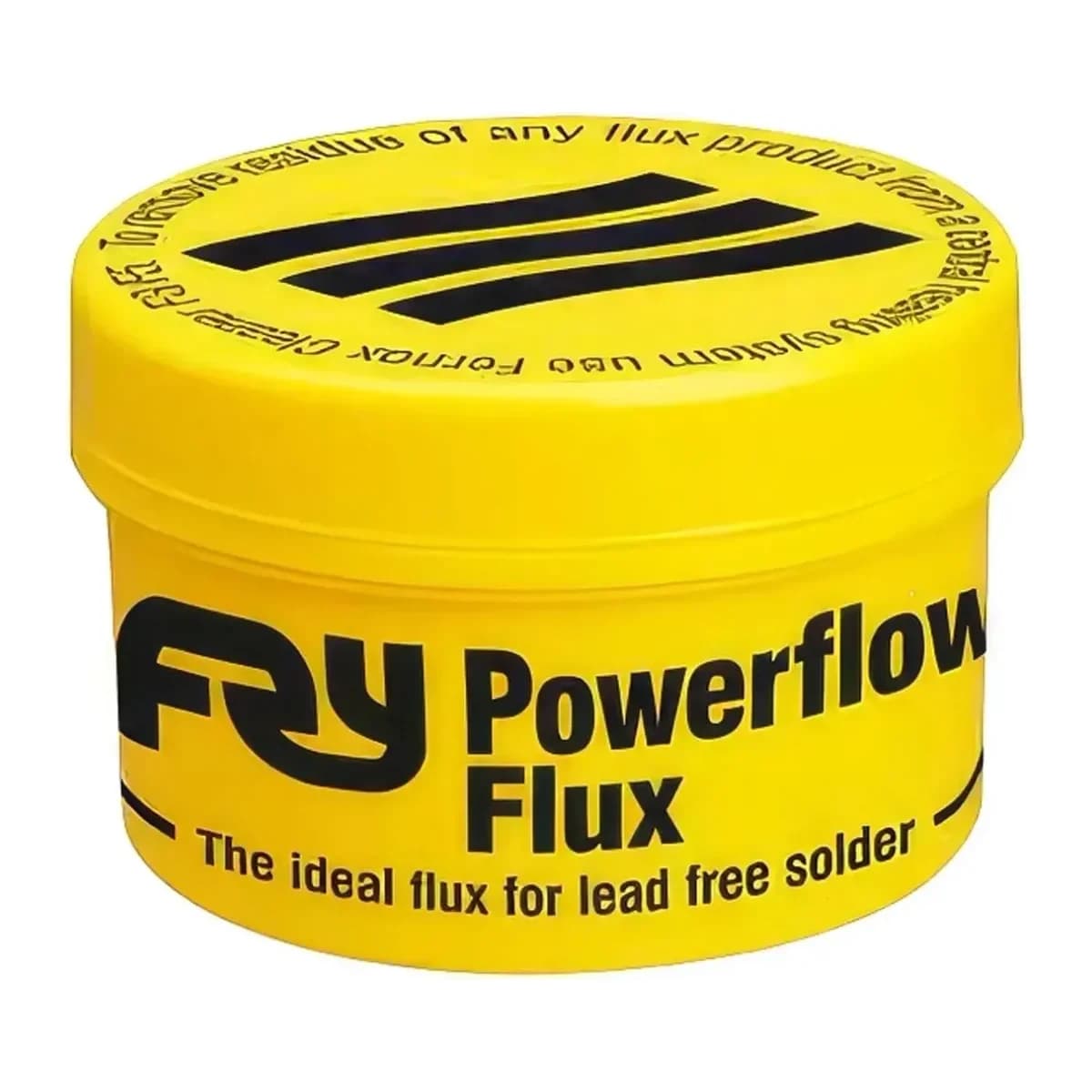
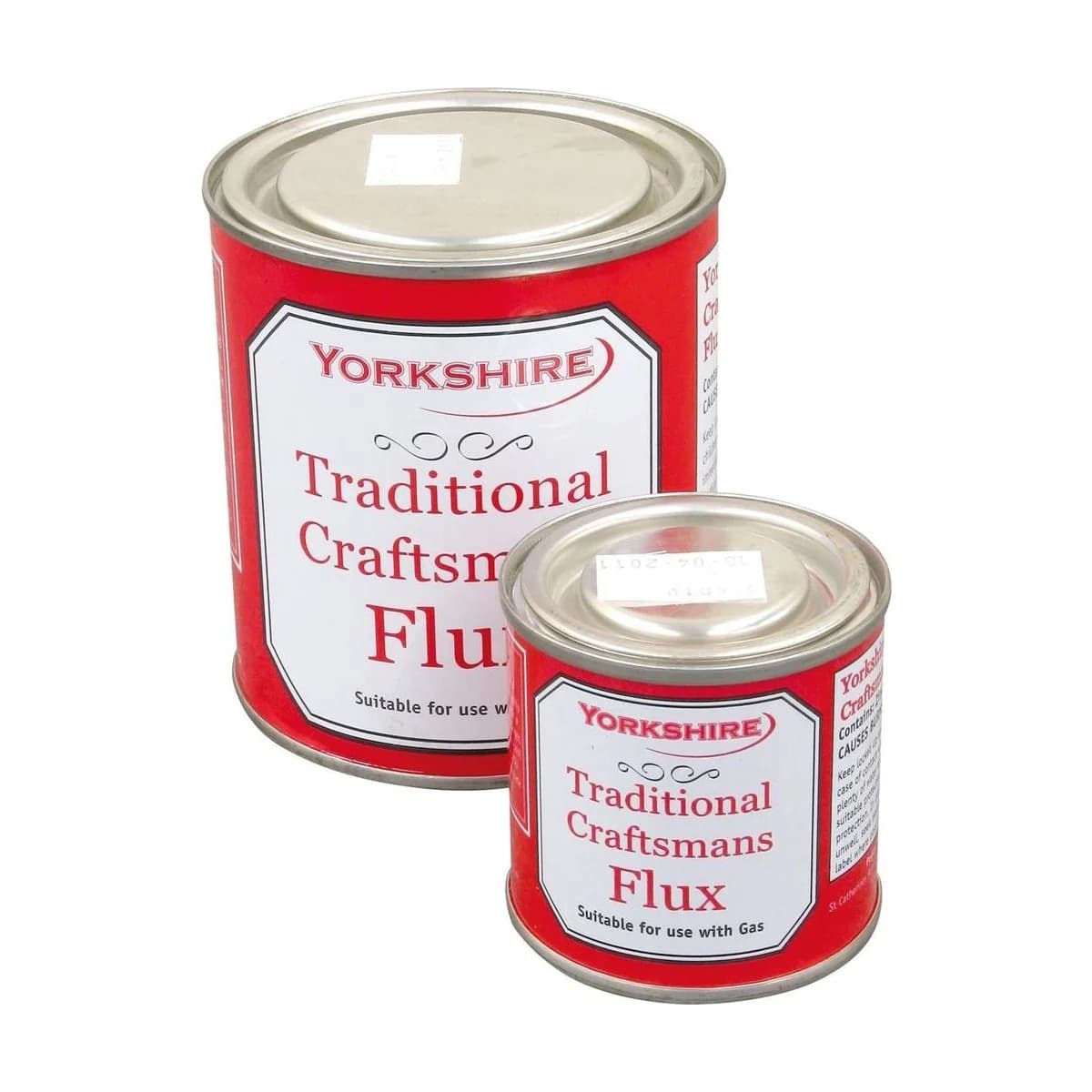
- Flux and a flux brush from our flux shelf — WRAS-approved on drinking-water pipework.
- Lead-free solder wire for end feed fittings. Our 500g unleaded solder is a tin-copper alloy made for drinking-water pipework, at £27.16.
- A blowtorch and gas: a plumbing torch and a gas cartridge that fits it.
- Heat protection: a soldering mat (heat mat), a damp cloth, and a fire extinguisher or a spray bottle of water within reach.
End feed or solder ring (Yorkshire) fittings?
Both are capillary fittings made to the same metric pipe sizes, and both need clean copper and flux. The difference is where the solder comes from.
| End feed | Solder ring (Yorkshire) | |
|---|---|---|
| Solder | Fed in by hand from a reel of wire | A ring of solder built into each socket |
| Skill | Takes practice to feed the right amount | More forgiving: heat until the ring shows |
| A good joint shows | A complete ring of solder at the mouth | A bright, unbroken ring of solder at the mouth of each socket |
| Cost per fitting | Lowest | A little more |
| Range | Widest: reducers, adaptors, crossovers, unions and large sizes | The common sizes and shapes |
| Suits | Volume trade work and larger pipe | Occasional jobs and awkward positions |
Yorkshire is a long-standing brand of solder ring fitting, and the trade uses the name for the whole type. Plenty of plumbers use solder ring for everyday 15mm and 22mm joints and keep end feed for reducers, adaptors and anything unusual. We stock 52 end feed couplers from £0.20 and 21 end feed elbows from £0.32, plus reducers, tees and crossovers.
Which flux and solder for drinking water?
Solder must be lead-free on any pipe that carries drinking water. Lead solder has been banned on drinking-water pipework for decades, and the Water Supply (Water Fittings) Regulations 1999 still prohibit it. Leaded solder is still sold for heating and other pipework that never carries drinking water, but most plumbers now use lead-free for everything — there's no risk of a mix-up, and pipework that's heating-only today can be altered later. Solder ring fittings sold for plumbing normally carry lead-free solder in the ring; check the packaging if you're not sure.
Lead-free solder melts at a higher temperature than the old leaded kind, so it needs a little more heat and a little more patience.
Flux removes the last traces of oxide as the joint heats and lets the solder wet the copper. The type matters:
- WRAS-approved flux is the one to use on drinking-water pipework. The approval is printed on the tin.
- Water-soluble flux washes out when the system is filled and flushed — what you want inside a water pipe.
- Self-cleaning (more active) flux helps on slightly tarnished copper but is more corrosive. It doesn't replace cleaning, and residue left on or in the pipe can carry on attacking it.
Apply a thin, even coat to the cleaned pipe end and, for end feed fittings, a light smear inside the socket. More flux doesn't make a better joint; the excess just runs inside the pipe. Afterwards, wipe the outside of each joint with a damp cloth and flush new pipework thoroughly before anyone drinks from it.
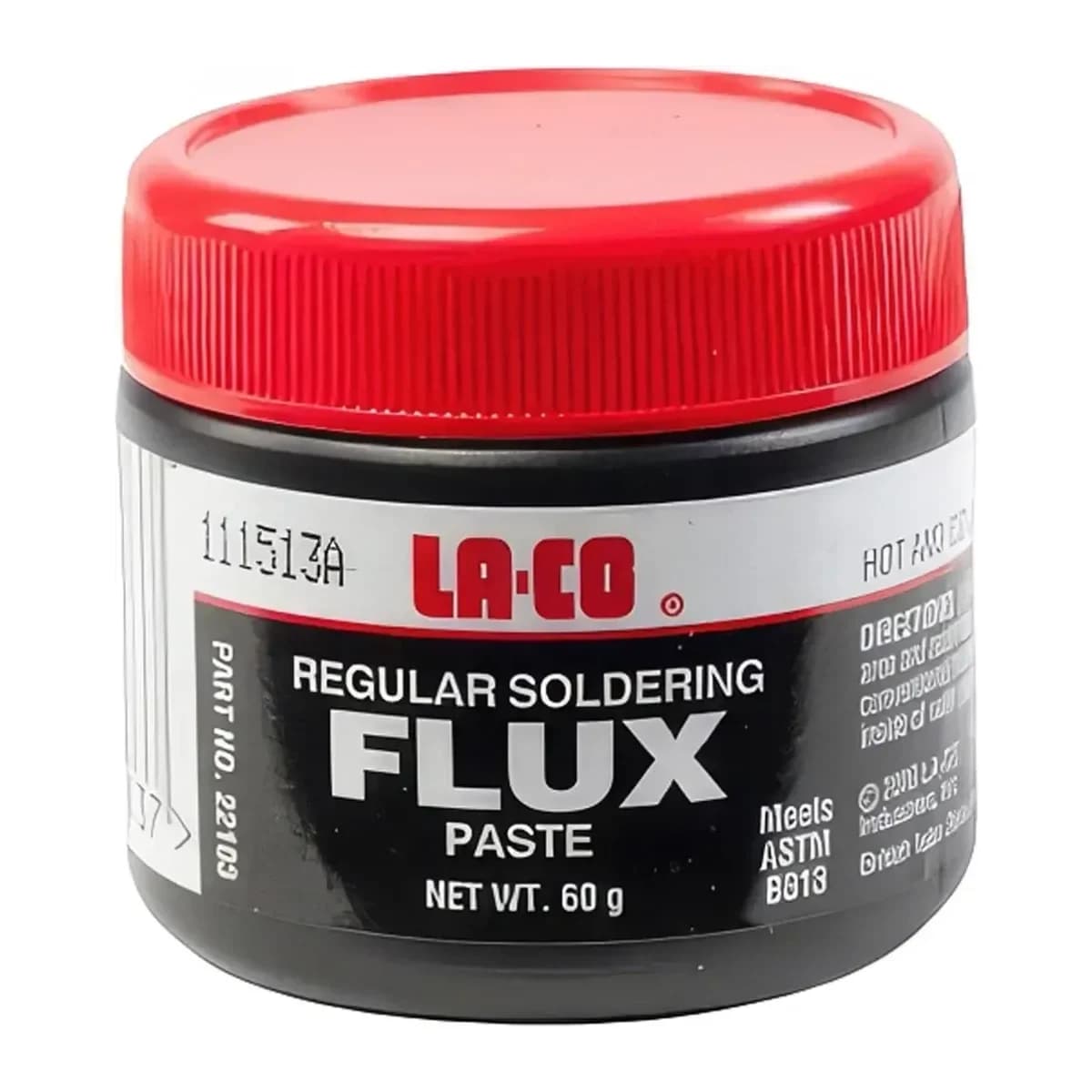 In stock
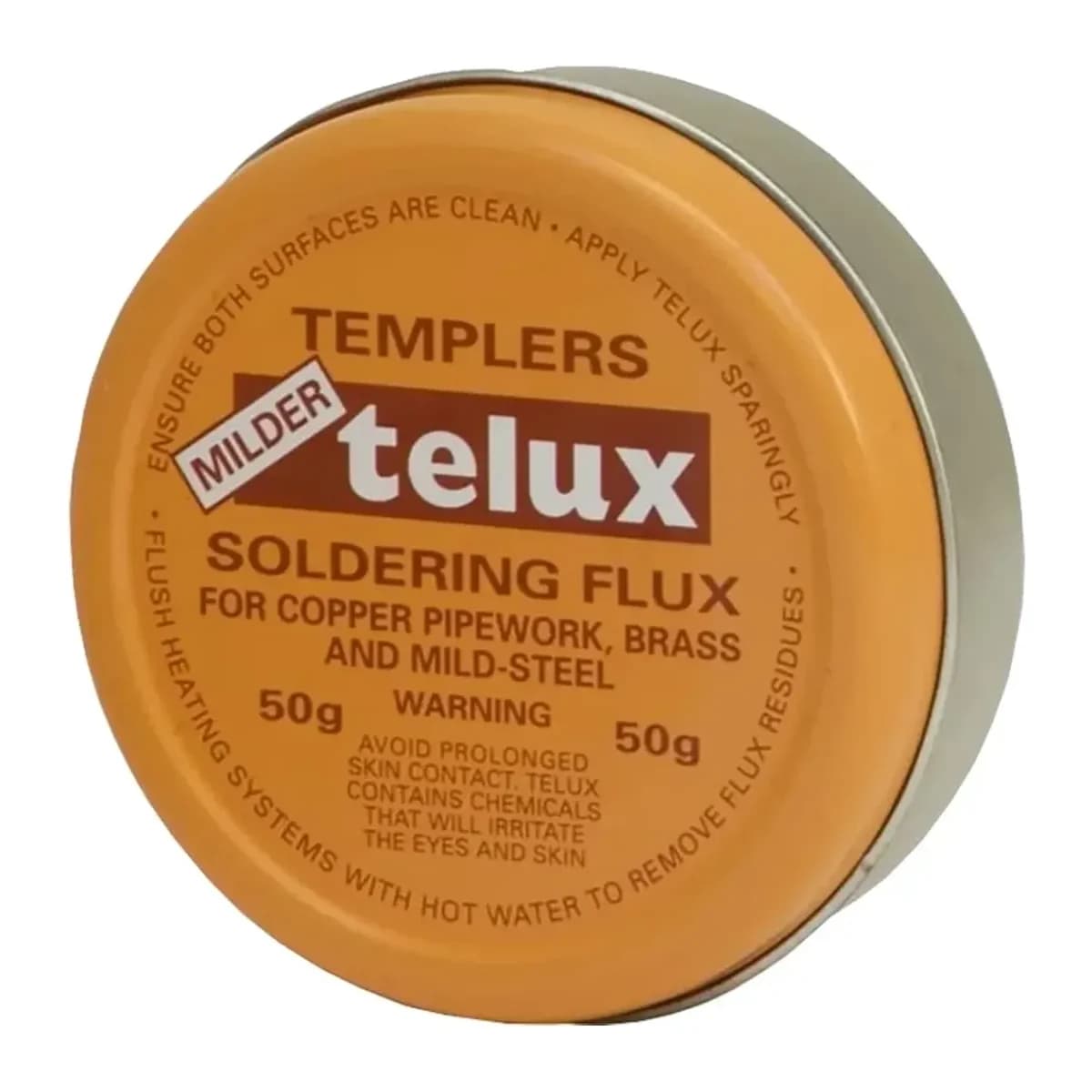 In stockTemplers Flux Traditional (Telux)
2 sizes available
Frominc VAT£4.04 ex VAT
✓ Delivery available✓ Collect today
 In stock
Fernox
Fernox Powerflow Flux2 sizes available
Frominc VAT£5.24 ex VAT
✓ Delivery available✓ Collect today
 In stock
Yorkshire
Pegler Yorkshire tub traditional flux 500g (70215)Code: LP-1HMVJMB
inc VAT£12.13 ex VAT
✓ Delivery available✓ Collect today
How to solder an end feed joint, step by step
- Drain and dry the pipe. Turn the water off and drain down. Water in the pipe soaks up the heat and turns to steam, and the joint won't take. Open a tap below the joint so expanding air and steam can escape instead of blowing through the solder.
- Cut square and deburr inside and out, so the pipe slides fully into the socket and the bore isn't narrowed.
- Clean until bright. Rub the pipe end with abrasive strip or wire wool, a little further back than the socket depth, and clean inside the fitting. Don't touch the cleaned copper with greasy fingers.
- Flux thinly: the pipe end, plus a light smear inside the socket.
- Assemble fully. Push the pipe home to the stop and turn it a little to spread the flux. Wipe off what squeezes out, and support the work so nothing moves while the solder sets.
- Heat the fitting, not the pipe. Play the flame over the fitting body, moving it to heat evenly. Solder flows towards heat, so heating the fitting draws it into the socket.
- Test, then feed. Touch the solder wire to the mouth of the joint on the side away from the flame. When it melts on contact, feed it round the joint until a complete, shiny ring shows. Don't overfeed: extra solder drips off or forms lumps inside the pipe.
- Leave it alone. Take the flame away and let the joint cool undisturbed until the solder has set — moving it now cracks the joint. Then wipe off the flux residue with a damp cloth.
- Fill, check and flush. Refill slowly, check every joint for weeps, then flush the pipework to clear flux residue.
How to solder a solder ring (Yorkshire) fitting
Prepare a solder ring fitting exactly as you would an end feed one: square cut, deburr, clean until bright and a thin coat of flux. Yes, it still needs flux. The ring holds enough solder for the joint, so you don't normally add any.
- Heat the fitting evenly until the solder melts and a bright, unbroken ring appears at the mouth of the socket, all the way round.
- On a fitting with two or three ends, check the ring shows at every mouth you're soldering. If one side lags, move the flame towards it.
- If the ring won't appear after reasonable heating, the copper is dirty or unfluxed, or the pipe isn't fully home. Don't keep heating — that only burns the flux. Let it cool, take it apart and clean it again.
- A touch of solder wire can top up a joint that looks thin, but a fitting that needs a lot usually wasn't clean.
Heat travels a long way along copper. Keep the flame off nearby compression fittings, plastic pipe and fittings, and valves with rubber or fibre washers. Where a valve's maker allows, take the washers out before soldering it in, or choose a compression version instead.
Blowtorch and soldering mat safety
The real risk with a blowtorch is what you can't see: dry joists, loft insulation, dust, cables and the back of a skirting board behind the joint. Before you light up:
- Put a soldering mat behind the joint to shield timber, plaster and anything else close by. It protects what's behind it; it isn't a licence to aim the flame at the wall.
- Move insulation and anything combustible away from the work, and look into voids before you heat a pipe that runs through them.
- Keep a fire extinguisher or a spray bottle of water, and a damp cloth, within reach.
- Check the torch before use: the cartridge should screw on cleanly and the seals should be in good condition. Turn the torch off and take the cartridge off when you've finished.
- Never leave a lit torch unattended or put one down still burning.
- Ventilate the space — burning flux gives off irritating fumes — and wear eye protection, as hot flux and solder can spit.
- When you've finished, stay and check the area for a while. Timber can smoulder unseen and catch long after the torch is off.
Which gas? Propane is the cheaper everyday gas and is plenty for 15mm and most domestic work. MAPP-type gases burn hotter, heat 22mm and 28mm joints faster, and help in cold or draughty spots. Check the cartridge suits your torch — not every torch takes every cartridge. We stock 9 blowtorches and accessories from £7.76, and gas cartridges from £4.62.
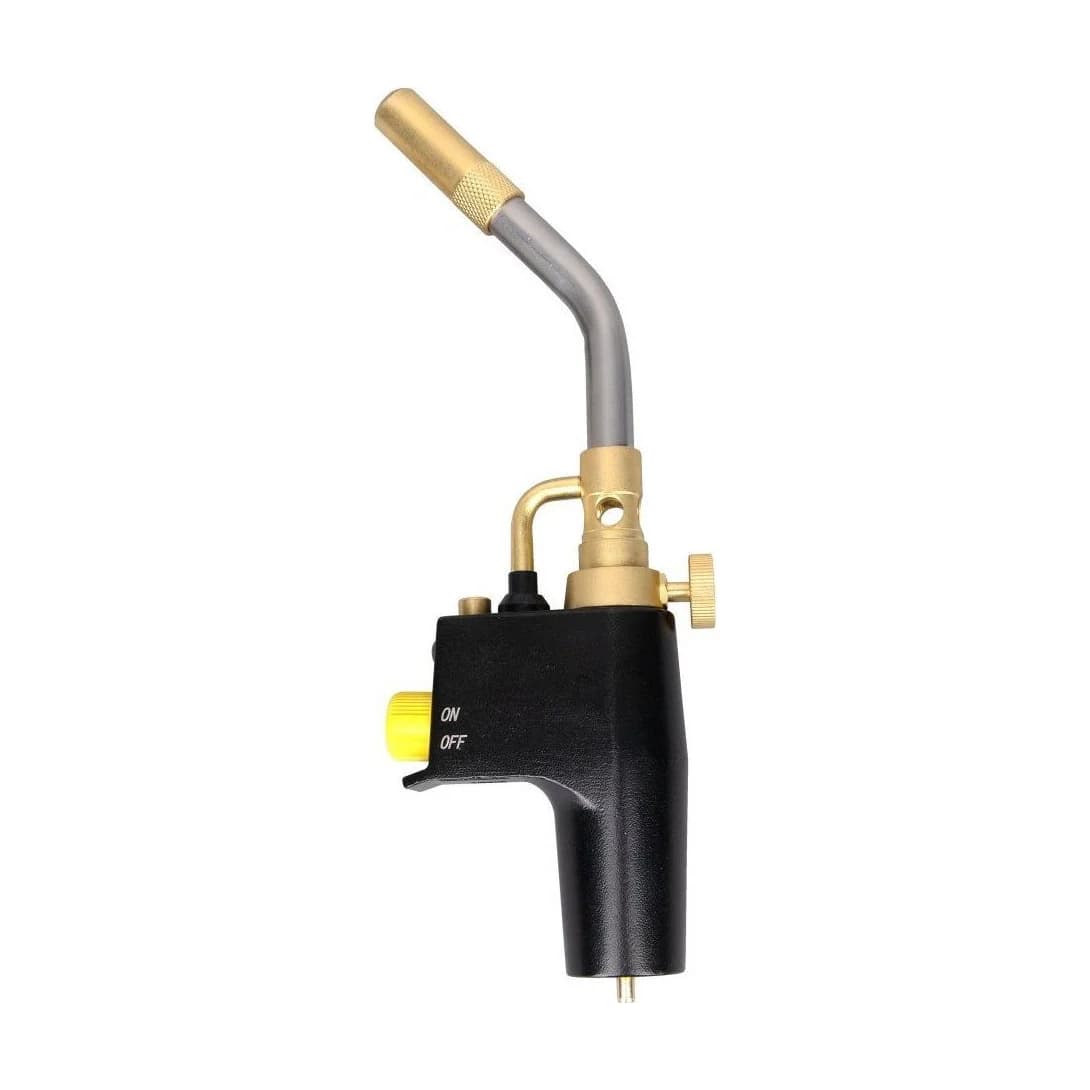 In stock
Arctic Hayes
Arctic Hayes GT3 Gas Torch with 3 Interchangeable Burner TipsCode: LP-1A0TPLT
inc VAT£34.58 ex VAT
✓ Delivery available✓ Collect today
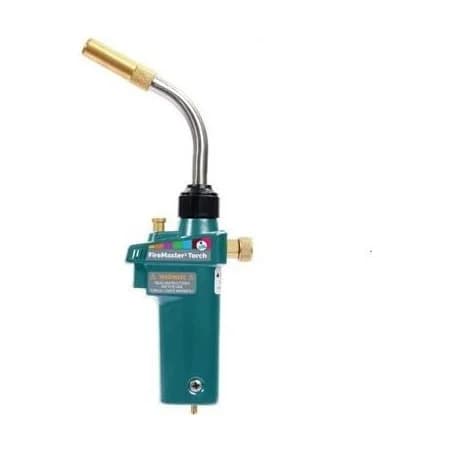 In stockTrigger Start H/D Adjustable Torch
Code: LP-LE8I7F
inc VAT£44.06 ex VAT
✓ Delivery available✓ Collect today
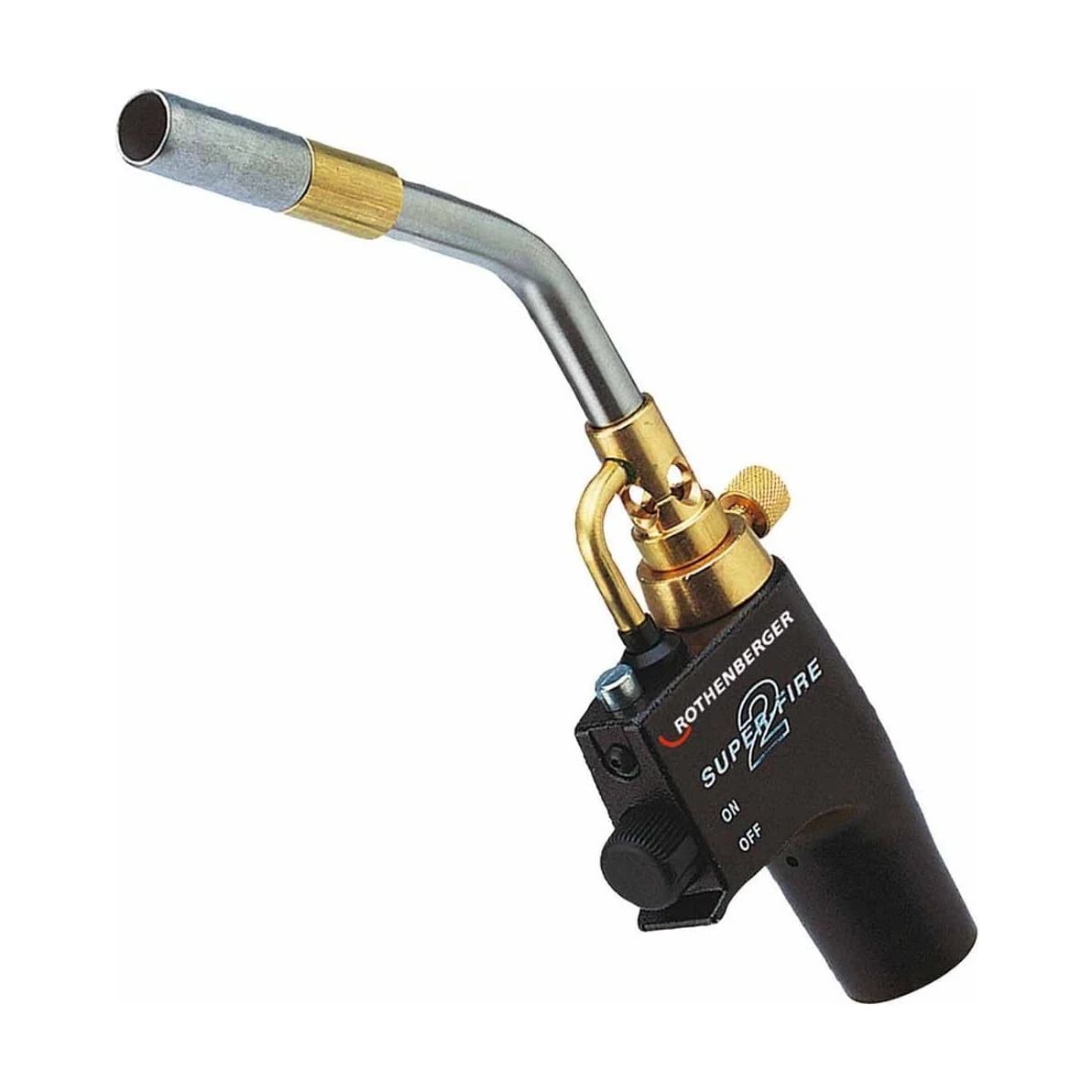 In stock
Rothenberger
Rothenberger 35644X Superfire 2 Map & Propane Brazing TorchCode: LP-1E8RU6D
inc VAT£68.71 ex VAT
✓ Delivery available✓ Collect today
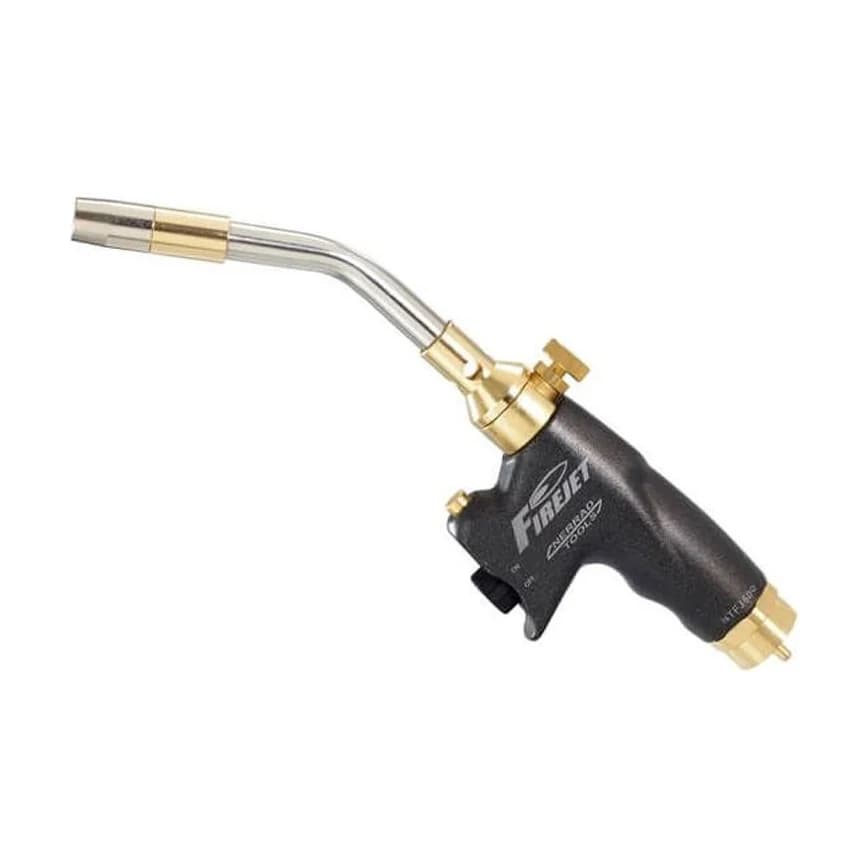 In stock
Why soldered joints leak: common faults
| What you see | Likely cause | Fix |
|---|---|---|
| Solder balls up and rolls off instead of flowing in | Dirty or unfluxed copper, or the joint isn't hot enough | Clean, re-flux and heat the fitting more evenly |
| Flux turns black, copper darkens and solder won't take | Overheated: the flux has burnt off and the copper has oxidised | Let it cool, take it apart, clean back to bright copper, re-flux and use less heat |
| Joint hisses, spits or won't get hot | Water in the pipe | Drain properly and stop the trickle at its source, or use a pipe freezer |
| Solder ring doesn't show all the way round | Uneven heating, a dirty patch, or the pipe isn't fully home | Heat the side that's behind; if it still won't show, remake the joint |
| Pinhole weep when the system is filled | A gap in the solder, often from a dirty spot or the joint moving as it set | Drain and dry, then reheat and feed a little solder; if it won't flow, remake the joint |
| Green staining on the pipe weeks later | Flux left on the outside | Wipe every joint with a damp cloth after soldering |
| Lumps of solder inside the pipe | Overfeeding | Feed only until the ring is complete |
A joint that has properly failed usually has to come apart: heat it, pull it off, clean everything back to bright copper and start again, ideally with a new fitting. Piling more solder onto a dirty, oxidised joint rarely seals it for long.
Not sure what you need for a job? Bring the old fitting to our Chingford trade counter — we're open 7 days: Mon–Fri 7am–7pm · Sat 7am–6pm · Sun 10am–4pm · Closed bank holidays.
Questions
- Do you need flux with solder ring fittings?
- Yes. The ring supplies the solder, but the copper still has to be clean and fluxed or the solder won't flow into the joint.
- Can I use leaded solder on central heating pipes?
- It isn't banned on heating-only pipework, but it is on anything carrying drinking water, and lead-free works on both. Most plumbers use lead-free for everything to rule out mistakes.
- Why won't my solder joint take?
- Usually water in the pipe, dirty copper, or too little or too much heat. Drain and dry the pipe, clean back to bright copper, flux thinly and heat the fitting evenly.
- Can you solder a pipe with water in it?
- Not reliably — even a trickle stops the joint reaching temperature. Drain down, open a tap below the joint, and use a pipe freezer kit if you can't isolate the section.
- Propane or MAPP gas for soldering copper pipe?
- Propane is fine for 15mm and most domestic joints. MAPP-type gas burns hotter, so it's quicker on 22mm and 28mm pipe and in cold spots.
- What flux should I use on drinking water pipes?
- A WRAS-approved flux, ideally water-soluble so the residue flushes out. Use it sparingly and flush the pipework before the water is used.
- How long after soldering can I turn the water back on?
- Once the joints have cooled enough to hold comfortably. Then refill slowly, check every joint for weeps and flush the pipework.