
The short answer
Cut copper with a pipe slice or rotary pipe cutter, tightening a little on each turn so the wheel scores through rather than squashing the pipe, then remove the burr inside and out. A fine-toothed hacksaw works if you file the end square. Bend 15mm and 22mm Table X copper with a lever pipe bender; an internal bending spring manages gentle 15mm bends. Never bend tighter than the bender's former — use a fitting instead.
Pipe slice, adjustable cutter or hacksaw?
| Tool | Best for | Watch out for |
|---|---|---|
| Pipe slice (fixed-size cutter, 15mm or 22mm) | Pipe already fixed close to a wall or in a tight space; quick, square cuts | One size only; a blunt wheel squashes the pipe |
| Adjustable rotary cutter | A range of sizes from one tool; clean, square cuts | Needs room to swing round the pipe; overtightening raises a heavy inside burr |
| Mini cutter | Very tight spots and small pipe | Slow work on 22mm |
| Hacksaw, 32 teeth per inch | Large pipe, or where a cutter won't fit | Hard to cut square; leaves burrs and swarf to clear |
| Plastic pipe cutter | Plastic pipe only | Not for copper |
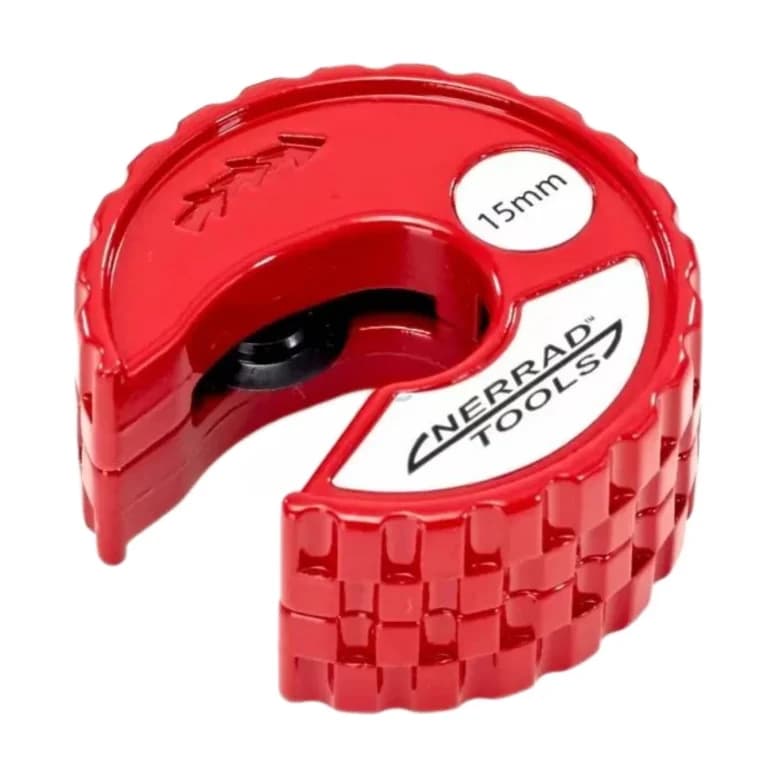
Pipe slices — the trade name for fixed-size, self-tightening cutters such as the Proslice and U-Cut — clip onto the pipe and need very little clearance, so they're the go-to for cutting into existing pipework. An adjustable cutter covers everything else. We stock 38 pipe cutters and spare wheels from £3.30.
 In stockU-Cut Pipe Cutter and Spare Cutter
2 sizes available
Frominc VAT£8.88 ex VAT
✓ Delivery available✓ Collect today
 In stock
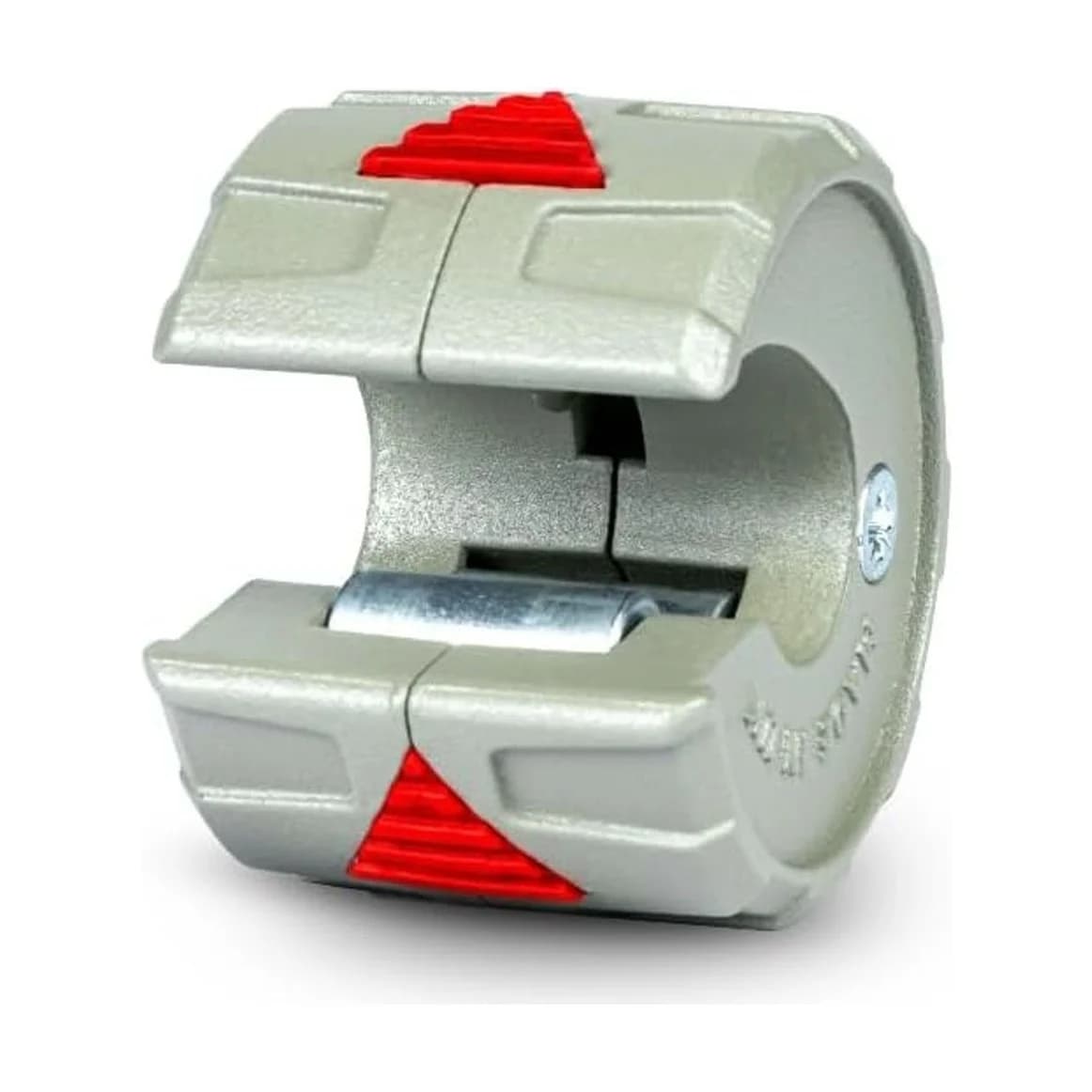
Nerrad
Nerrad Tools Copper Tube Cutter2 sizes available
Frominc VAT£12.28 ex VAT
✓ Delivery available✓ Collect today
 In stock
Rothenberger
Rothenberger 1500005092 Pro-Cut Copper Pipe Cutter 15mmCode: LP-VZTQGY
inc VAT£14.78 ex VAT
✓ Delivery available✓ Collect today
 In stockProslice Copper Tube Cutter
4 sizes available
Frominc VAT£14.49 ex VAT
✓ Delivery available✓ Collect today
How to cut copper pipe square
- Isolate and drain if you're cutting into existing pipe, with a bucket and cloth for what's left in it. If there's an earth bonding clamp on the pipe, fit a temporary bond across the cut first.
- Measure and mark with a fine pen or pencil. Allow for the depth the pipe goes into each fitting — push a fitting on and mark it rather than guessing.
- Fit the cutter with the wheel exactly on the mark. On an adjustable cutter, nip the wheel up until it just grips.
- Turn, then tighten a little. Rotate the cutter round the pipe, tighten about a quarter-turn, and go round again. Let the wheel score its way through: cranking it tight squashes the pipe out of round and raises a heavy burr.
- Deburr inside and out — see the next section.
- Check the end is round and square. An oval end won't seal in a compression or push-fit fitting, and won't solder well.
With a hacksaw, use a fine 32 TPI blade, wrap a strip of paper or tape round the pipe as a square guide, and let the saw do the work. File the end flat, deburr it and clear out every scrap of swarf — otherwise it ends up in valve seats and tap cartridges. A junior hacksaw and 32 TPI blades are handy in awkward spots.
How to deburr copper pipe, and why it matters
Every rotary cutter leaves a rolled lip inside the pipe, and a hacksaw leaves rough edges on both sides. Take them off every time:
- The inside burr narrows the bore and causes turbulence and noise, and over time can erode the pipe just past the joint.
- The outside burr stops the pipe sliding fully into a fitting, stops an olive seating evenly, and will cut the O-ring in a push-fit fitting.
- For push-fit, chamfer the outside edge slightly — a smooth lead-in protects the O-ring as the pipe goes in.
A pen-style deburring tool with a swivel blade does inside and outside in a few turns; a cone-type internal and external deburrer is quicker still on 15mm and 22mm. Many rotary cutters have a fold-out reamer for the inside, and a half-round file or abrasive cloth tidies the outside.
Bending copper pipe: spring or bender?
Only bend pipe that's made to bend. Standard half-hard Table X — the copper in most homes — bends with a lever bender or, gently, with a spring. Soft Table Y and microbore coil bend by hand. Hard Table Z shouldn't be bent at all, and chrome-plated pipe can mark or crack its plating, so use fittings on both. See copper pipe Table X, Y and Z for the grades.
| Bending spring | Lever pipe bender | |
|---|---|---|
| How it works | A spring inside the pipe stops it collapsing as you bend it over your knee | The pipe is pulled round a curved former, supported by a straight back guide |
| Sizes | Best on 15mm; 22mm is hard work by hand | 15mm and 22mm formers on most models |
| Bends | Gentle, larger-radius bends; easy to kink if forced | Tight, consistent bends without kinks |
| Accuracy | By eye | Repeatable once you know where it puts the bend |
| Cost | Low | From £97.00 on our shelf |
Using a bending spring: push the spring in so its middle sits where the bend will be — tie string to it if that's a long way in. Bend slowly over your knee, going slightly past the angle you want, then ease back a little: that loosens the spring so you can twist it out. Don't try to drag it straight out of a tight bend.
Using a lever bender:
- Fit the former and back guide for the pipe size.
- Sit the pipe in the former's groove and against its stop, and fit the back guide between the pipe and the roller or pressure arm, as the bender's instructions show.
- Close the handles steadily, without jerking, until the pipe reaches the angle. Copper springs back slightly, so go a touch past it.
- Check the angle with a square or against the job, then open the bender to release the pipe.
 In stock
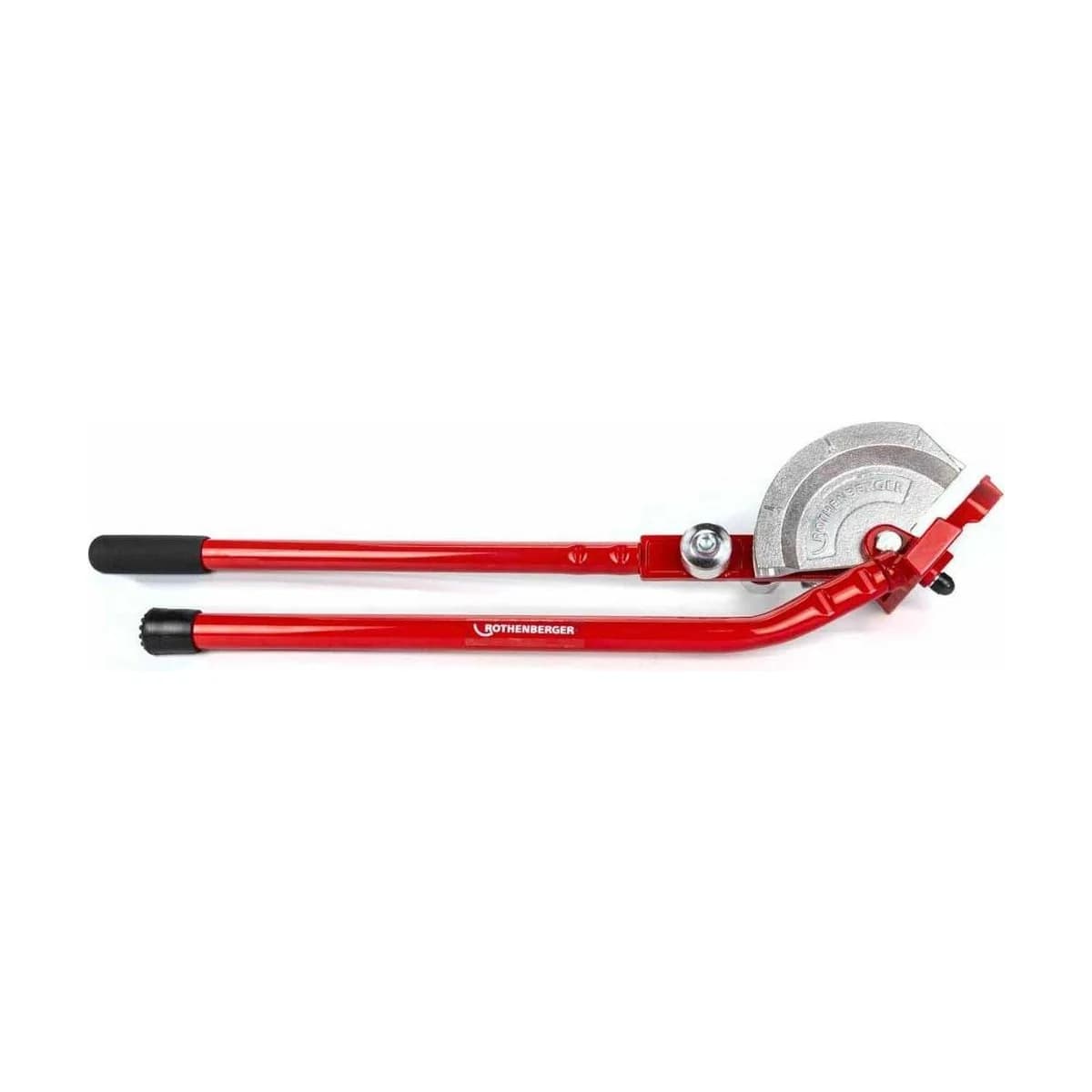
Rothenberger
Rothenberger 80280 Multibender Pipe Bender 15-22mmCode: LP-1M8NOSI
inc VAT£80.83 ex VAT
✓ Delivery available✓ Collect today
 In stock
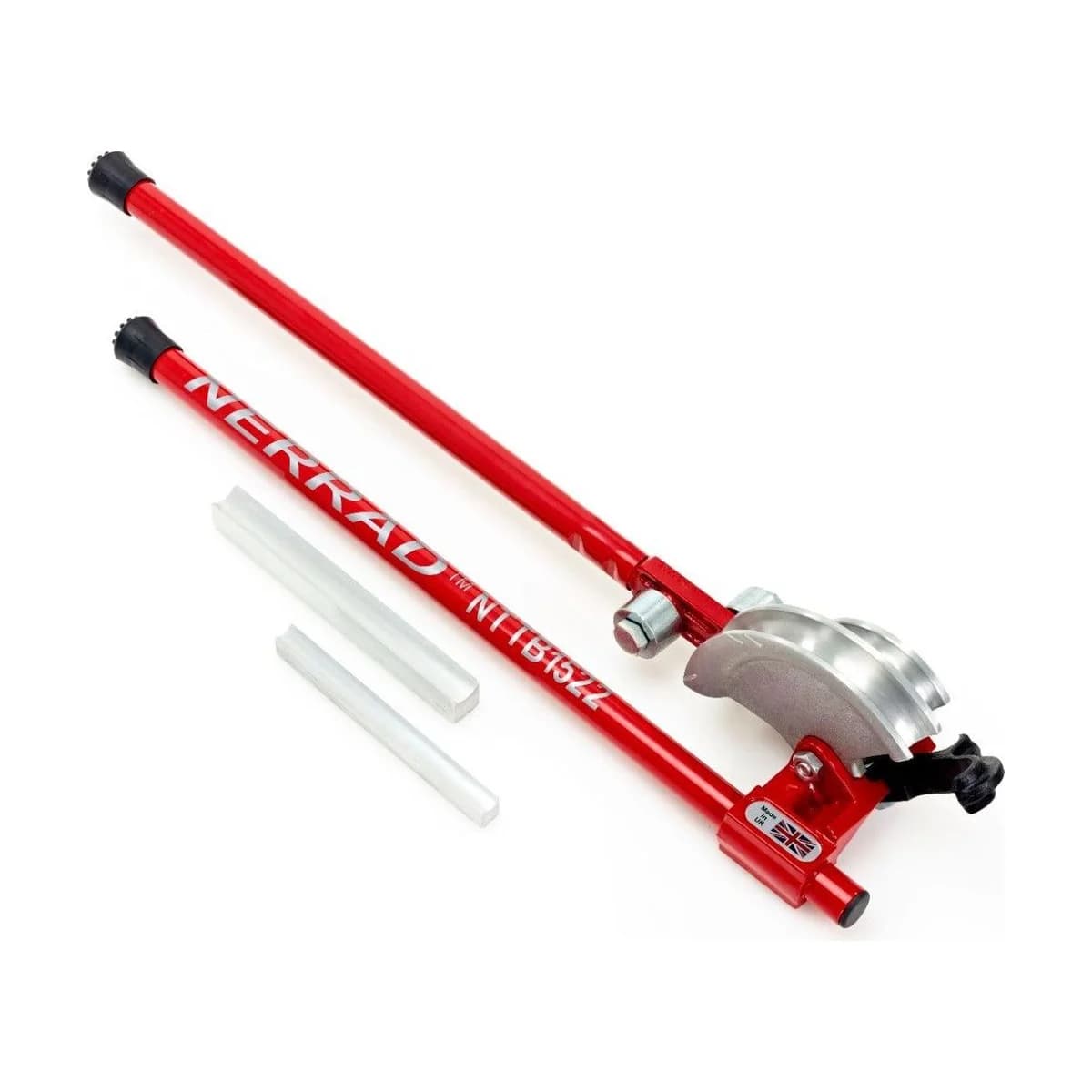
Nerrad
Nerrad Tools Tube Bender 15mm And 22mmCode: LP-YBK0HX
inc VAT£121.90 ex VAT
✓ Delivery available✓ Collect today
 In stock
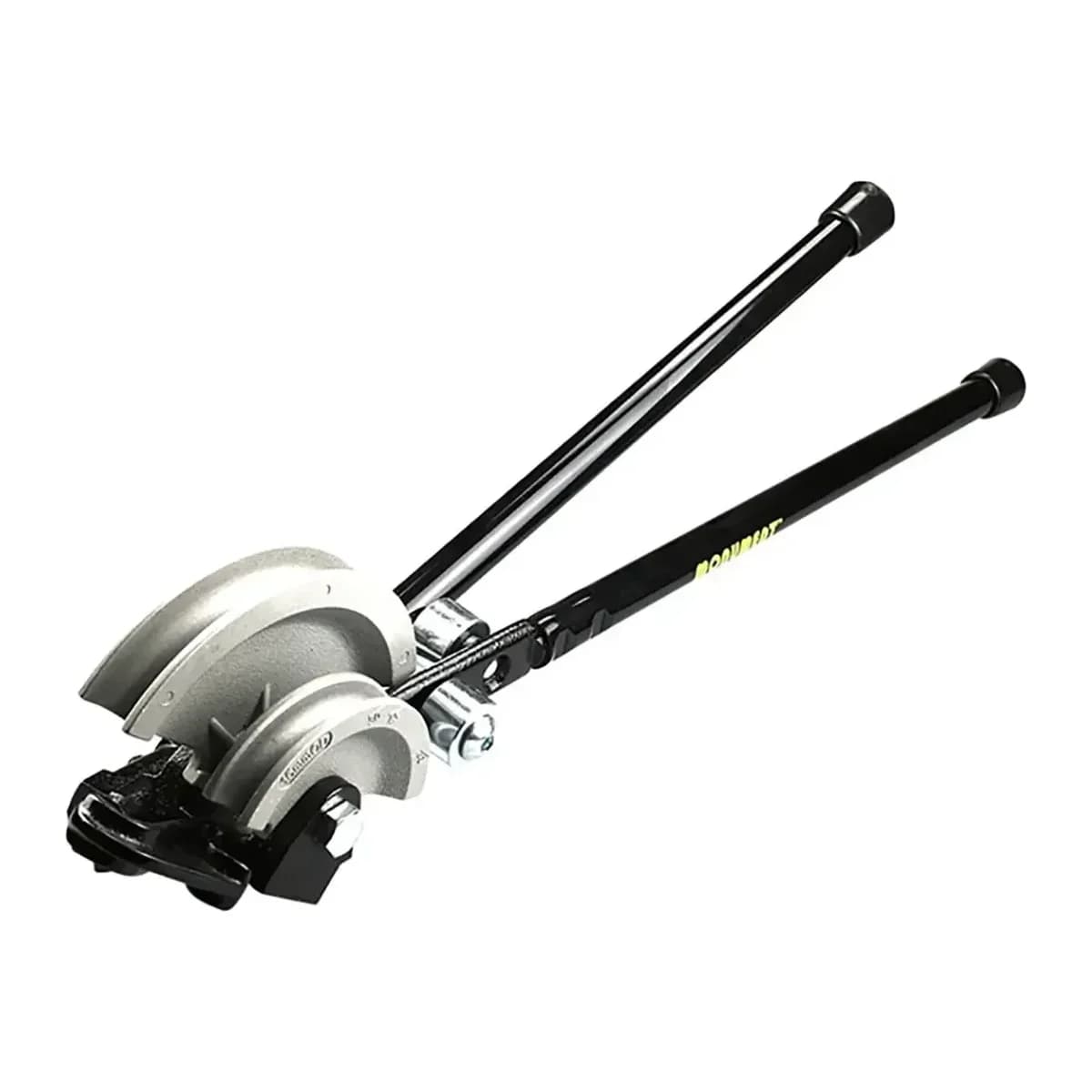
Monument
Monument Pipe Bender 15&22mmCode: LP-1DHD0M2
inc VAT£126.47 ex VAT
✓ Delivery available✓ Collect today
Minimum bend radius and how to avoid kinks
The former sets the tightest bend the pipe can take — roughly three to four times the pipe's diameter on a typical 15mm or 22mm bender. Go tighter and the outside of the bend thins while the inside wrinkles or kinks. If the job needs a tighter turn, use an elbow.
- Ripples on the inside of the bend: the back guide isn't seated, it's the wrong size, or the pipe has jumped out of the groove. Reset and try on an offcut.
- Flattening or a kink: bent too fast, too tight or without support. A kinked pipe is weakened and restricts flow, so cut it out rather than trying to straighten it.
- Too close to the end: leave enough straight pipe to sit in the former and under the guide, or the end distorts. Where you can, bend first and cut to length afterwards.
- Too close to a fitting: keep bends clear of fittings and soldered joints.
- Second attempts: copper hardens each time it's bent or straightened, so a pipe that's been bent and straightened is more likely to kink or crack. Use fresh pipe.
Measuring for a bend and an offset
Every bender puts the bend in a slightly different place relative to your mark, so the reliable method is to calibrate yours once for each size:
- Mark an offcut a set distance from the end — say 300mm.
- Line the mark up with the same point on the former every time (the edge of the former, for example) and bend to 90°.
- Measure from the end of the pipe to the outside (back) of the bend. The difference from 300mm is your bender's allowance for that size; write it on the bender.
- Next time, move your mark by that allowance and the bend lands where you need it.
Offsets (sets) step a pipe sideways round an obstacle — out from the wall to a valve, or over a skirting — with two equal bends in opposite directions. Measure the offset between the centre lines of the two parallel runs, then multiply it by the figure below to get the distance between the two bends, measured along the pipe.
| Angle of each bend | Multiply the offset by | Example: 50mm offset |
|---|---|---|
| 22.5° | 2.61 | 131mm |
| 30° | 2.00 | 100mm |
| 45° | 1.41 | 71mm |
| 60° | 1.15 | 58mm |
Make the first bend, mark the second along the pipe from the centre of the first, then turn the pipe over in the bender so the second bend goes the opposite way, and bend to the same angle. Lay it on a flat surface to check the two runs are parallel and the pipe hasn't twisted. Where two bends won't fit, a ready-made crossover takes one pipe over another, and 45° elbows make a quick offset.
Questions
- What's the best way to cut copper pipe?
- A pipe slice or rotary pipe cutter. It gives a square, clean cut with only a small inside burr. A hacksaw works, but the end needs filing square and careful deburring.
- Can you bend 22mm copper pipe with a spring?
- Gentle bends are possible, but it's hard work and easy to kink. A lever bender with a 22mm former is the right tool.
- Do you need to deburr copper pipe?
- Yes, inside and out, every time. Burrs restrict flow, stop fittings seating properly and cut the O-rings in push-fit fittings.
- What's the minimum bend radius for 15mm copper pipe?
- With a bender, the former sets it — roughly three to four times the pipe diameter. Bends made with a spring need a gentler radius.
- Why does my pipe cutter squash the pipe?
- It's being tightened too much on each turn, or the wheel is blunt. Tighten a little per revolution and replace worn wheels.
- How do I get a bending spring out of the pipe?
- Bend slightly past the angle you need, then ease back to loosen the spring, and twist it as you pull. Tying string to it helps when the bend is a long way in.