
The short answer
Fit a carbon monoxide alarm in every room with a fuel-burning appliance — a boiler, gas fire, wood burner or oil boiler — 1 to 3 metres from it, on the ceiling or high on a wall, as its instructions say. In England, one must be fitted whenever a fixed combustion appliance other than a gas cooker is installed or replaced, and landlords must fit them too. Choose an alarm made to BS EN 50291. If it sounds, get everyone outside and call 0800 111 999.
Why you need a carbon monoxide alarm
Carbon monoxide (CO) is a poisonous gas you can't see, smell or taste. It's made when gas, oil, coal or wood burns without enough air — typically in an appliance that's badly fitted or poorly maintained, or has a blocked flue or chimney. An alarm is the only way to know it's there.
The NHS lists the symptoms of CO poisoning as a tension-type headache, dizziness, feeling or being sick, tiredness and confusion, stomach pain, and shortness of breath. They're easily mistaken for flu or food poisoning. Clues that it's CO: symptoms that ease when you're away from home, and several people — or pets — in the house feeling ill at once.
Signs an appliance may not be burning properly:
- Lazy yellow or orange flames on a gas appliance that normally burns blue.
- Soot or brown staining on or around the appliance.
- A pilot light that keeps going out.
- More condensation than usual on the windows of the room.
Those are reasons to get an appliance checked — but CO often gives no warning at all, which is why the alarm matters. It's a backstop, not a replacement for having appliances serviced every year.
CO alarms vs smoke and heat alarms
A smoke alarm won't detect carbon monoxide, and a CO alarm won't detect a fire. Most homes need both, in different places.
| Carbon monoxide alarm | Smoke alarm | Heat alarm | |
|---|---|---|---|
| Detects | Carbon monoxide gas | Smoke from a fire | A fast rise in temperature |
| Where it goes | In each room with a fuel-burning appliance | Hallways and landings — at least one on every storey — and living areas | Kitchens, where smoke alarms give false alarms |
| Standard to look for | BS EN 50291 | BS EN 14604 | BS 5446-2 |
Combined smoke and CO alarms put both sensors in one box, but the best place for each is different: smoke rises to the hallway ceiling, while a CO alarm belongs in the room with the appliance. A combined alarm only makes sense where its position suits both jobs, as its instructions describe — it doesn't replace the smoke alarms in your hall and landing.
Our smoke and CO alarm shelf has a sealed-battery CO alarm, combined smoke and CO alarms, mains-powered smoke and heat alarms with battery backup, and a smoke alarm tester.
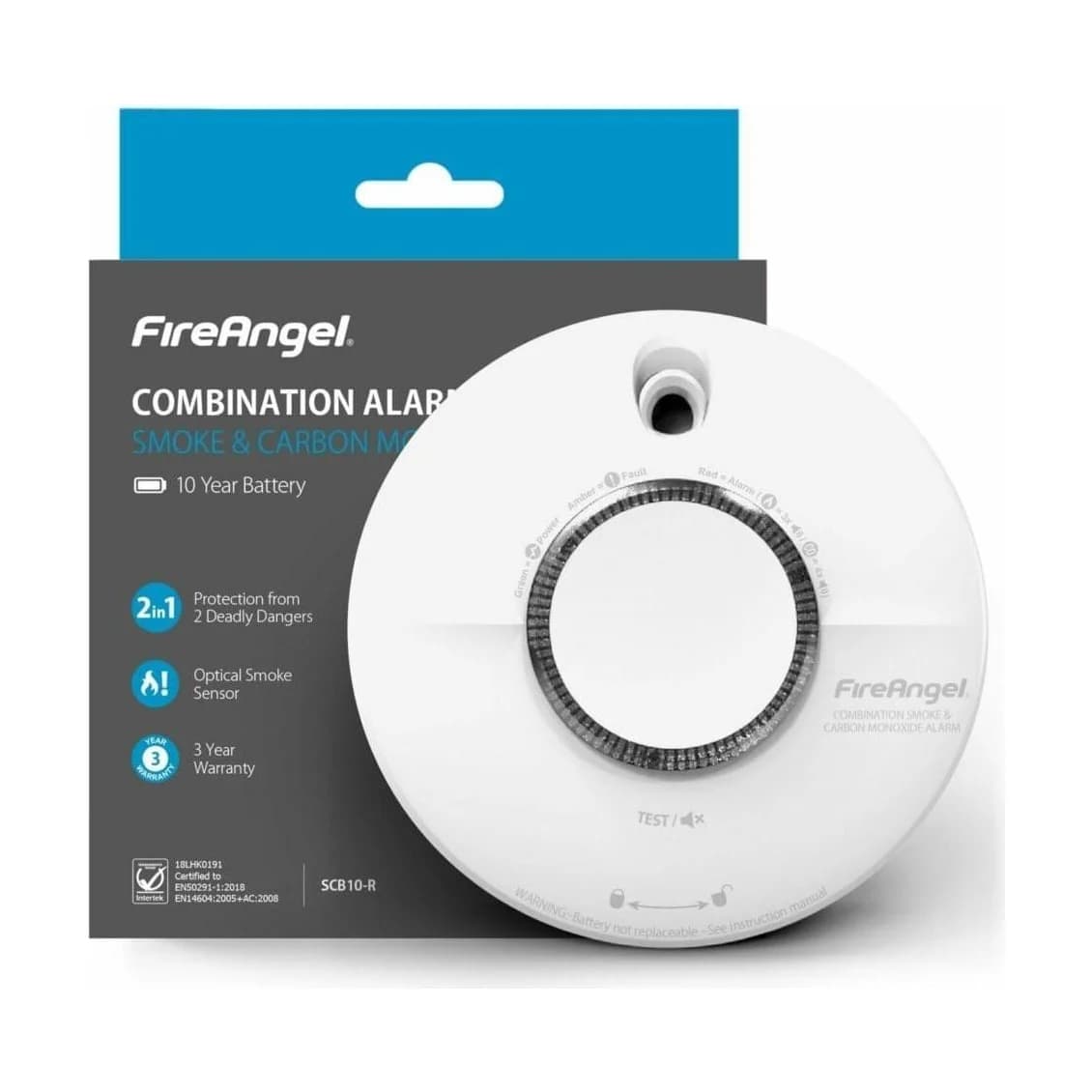 In stockFire Angle Smoke & Carbon Monoxide Alarm
Code: LP-73QOK6
inc VAT£28.29 ex VAT
✓ Delivery available✓ Collect today
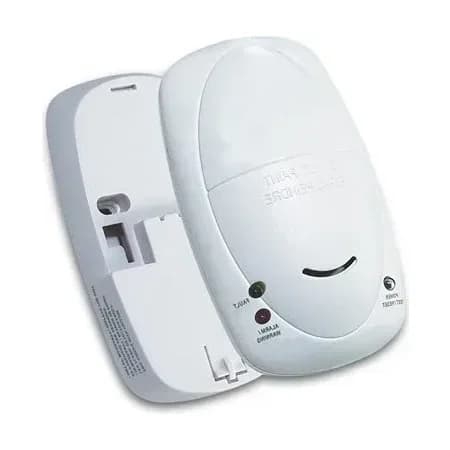 In stockSmoke Detector Carbon Monoxide 230V PHTO
Code: LP-130OXOH
inc VAT£31.04 ex VAT
✓ Delivery available✓ Collect today
Where should a carbon monoxide alarm go?
Put one in every room with a fuel-burning appliance: the boiler, a gas fire, a wood burner or multi-fuel stove, an oil boiler or a range cooker that burns solid fuel or oil. A flat with the boiler in the kitchen and a gas fire in the living room needs two. If the boiler is in a cupboard, most instructions put the alarm in the room outside it, not inside the cupboard.
Approved Document J, the government's guidance in England, sets out where the alarm in the appliance's room should go:
- Between 1 and 3 metres horizontally from the appliance.
- On the ceiling, at least 300mm from any wall; or
- On a wall, as high as possible — above any door or window — but not within 150mm of the ceiling.
Some makers also recommend alarms in bedrooms and in rooms a flue passes through, and allow those to be fitted at head height where people sleep. Instructions differ between models, so follow the ones that come with your alarm.
What does the law say about CO alarms?
- When an appliance is fitted (England): since 1 October 2022, the Building Regulations require a CO alarm in the room whenever a fixed combustion appliance — gas, oil or solid fuel — is installed or replaced. Gas cookers are excluded. The installer normally fits it as part of the job. Before October 2022 this applied only to solid fuel appliances.
- The alarm itself: Approved Document J asks for an alarm made to BS EN 50291-1 (Part 1 covers homes), powered by a battery designed to last the life of the alarm, with a warning before it reaches the end of its life. A mains-wired alarm to the same standard, with a sensor failure warning, is an alternative.
- Rented homes (England): under the Smoke and Carbon Monoxide Alarm (Amendment) Regulations 2022, since 1 October 2022 private and social landlords must fit a CO alarm in any room used as living accommodation that has a fixed combustion appliance (gas cookers excluded) and a smoke alarm on every storey with living accommodation, and must repair or replace alarms once told they're faulty. Landlords must also check the alarms work on the day a new tenancy begins.
- Gas safety checks: landlords must have gas appliances checked every 12 months by a Gas Safe registered engineer.
This is a summary — read the government guidance for the detail. Scotland and Wales have their own rules, which in some cases go further.
Battery or mains, and how long do CO alarms last?
- Sealed long-life battery alarms are the simplest to fit and what Approved Document J has in mind: the battery lasts as long as the sensor, typically 7 or 10 years, and the whole alarm is replaced at the end. See the smoke and CO alarms we stock.
- Mains-wired alarms run on 230V, usually with a backup battery, and some can be interlinked so they all sound together. They need an electrician to install.
- Replaceable-battery alarms need new batteries as the instructions say — and the sensor still has a fixed life.
Every CO alarm has a replace-by date on it, and most give an end-of-life warning — usually a chirp or a light pattern described in the manual. When that comes, replace the alarm: the sensor won't be reliable after it.
Testing and looking after a CO alarm
- Press the test button at least once a month, or as often as the instructions say, and after you've been away.
- The test button checks the electronics and the sounder. Don't test the alarm with smoke, gas or car exhaust.
- Keep it free of dust as the instructions describe, don't paint over it, and keep aerosols, solvents and cleaning sprays away from it.
- Learn the difference between the full alarm and the low-battery, fault and end-of-life chirps — they're described in the manual.
- Have every fuel-burning appliance serviced every year: by a Gas Safe registered engineer for gas, and an OFTEC or HETAS registered engineer for oil and solid fuel.
What to do if your carbon monoxide alarm goes off
- Open doors and windows to let fresh air in.
- Turn off fuel-burning appliances if you can do it safely, and stop using them.
- Get everyone, pets included, out into the fresh air, and don't go back in until it's safe.
- Call the National Gas Emergency Service free on 0800 111 999, 24 hours a day, if you suspect gas or carbon monoxide.
- If anyone feels unwell, get medical help straight away — call 999 in an emergency, or NHS 111 — and say you think it's carbon monoxide.
- Don't use the appliance again until a registered engineer has checked it and found the cause.
Questions
- Do I need a carbon monoxide alarm with a gas boiler?
- Yes. In England one is required whenever a boiler is installed or replaced, and landlords must fit one in the boiler's room. If your boiler predates the rule and has no alarm, fit one — a sealed-battery alarm takes minutes to put up.
- Where should a carbon monoxide alarm be placed?
- In the room with the appliance, 1 to 3 metres from it: on the ceiling at least 300mm from a wall, or high on a wall but not within 150mm of the ceiling — and always as the alarm's own instructions say.
- Does a gas cooker need a CO alarm?
- Gas cookers are excluded from both the Building Regulations requirement and the rules for landlords. They still burn gas, though, so an alarm in the kitchen, placed away from the hob as its instructions say, does no harm.
- Does a smoke alarm detect carbon monoxide?
- No. Smoke alarms detect smoke; carbon monoxide needs a CO alarm. Combined alarms have both sensors, but must go where both can work.
- How long does a carbon monoxide alarm last?
- Usually 7 to 10 years, depending on the model. There's a replace-by date on the alarm, and most warn you when they reach the end of their life.
- Why is my carbon monoxide alarm beeping?
- An occasional single chirp usually means a low battery, a fault or the end of the alarm's life — the manual explains each pattern. The full, loud alarm means carbon monoxide: open the windows, get everyone out and call 0800 111 999.
- Who is responsible for CO alarms in a rented home?
- In England, the landlord. They must fit CO alarms in rooms with a fixed combustion appliance (except gas cookers), check they work when a new tenancy starts, and repair or replace them once told they're faulty. Tenants should test them and report faults.
Related guides
- Heating & boilersCombi vs System vs Regular Boiler: Which Do You Need?
- Heating & boilersWhat Size Combi Boiler Do I Need? kW Explained
- Heating & boilersWhat Size Radiator Do I Need? Radiator BTU Calculator