The short answer
Choose an LED bathroom mirror about the width of your basin or vanity unit — 500 x 700mm suits a cloakroom or small basin, 600 x 800mm a standard 600mm vanity. A heated demister pad keeps it clear after a shower, and a built-in shaver socket charges a shaver or toothbrush. Check its IP rating suits the zone it's going in (IP44 is the usual minimum in zone 2, beside a bath or shower), and have a qualified electrician wire it.
What size LED mirror do you need?
Start with the basin. A mirror about as wide as the basin or vanity unit below it, or a little narrower, looks right; one wider than the unit looks top-heavy. Leave a gap above the tap or splashback, and hang it so the middle of the glass is roughly at eye height for whoever uses it most.
| Size | Shapes | Suits |
|---|---|---|
| 500 x 700mm | Rectangular (SCN and ICON) | Cloakroom basins and 400–500mm vanity units |
| 500 x 800mm | Oval (ICON) | 500–600mm vanity units |
| 600mm diameter | Round (ICON) | 500–600mm vanity units |
| 600 x 800mm | Rectangular (SCN and ICON) | 600mm vanity units in a main bathroom |
| 800mm | Arc (ICON) | Wider basins and feature walls |
ICON's rectangular mirrors hang portrait or landscape, and come frameless or framed in matt black or brushed brass to match your taps and shower. Our vanity unit guide covers the unit underneath.
What does a mirror demister do?
A demister is a thin heating pad on the back of the glass. It warms the mirror slightly so steam doesn't condense on it, and you can see yourself straight after a shower. Depending on the model it runs with the light or has its own switch. Every SCN and ICON LED mirror we stock has one.
It clears the mirror, not the room. Steam still needs an extractor fan to take it out before it settles on the walls and ceiling.
LED mirror with shaver socket: what can you plug in?
A shaver socket is the one kind of socket you'll normally see in a bathroom, because it's built differently. A bathroom shaver supply unit is made to BS EN 61558-2-5, with an isolating transformer, and supplies only a small current — enough for an electric shaver or toothbrush and nothing more. Hairdryers and straighteners need an ordinary socket outside the bathroom.
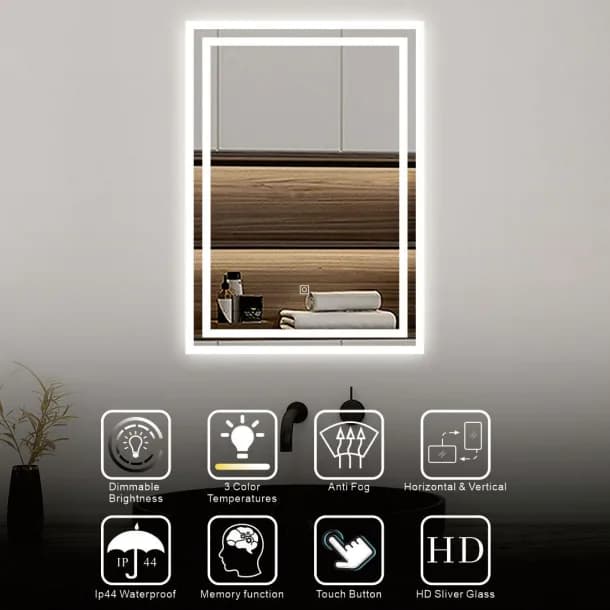
SCN's LED mirrors come in 500 x 700mm and 600 x 800mm, with or without a built-in shaver socket. The 600 x 800mm is £150.34 without one and £175.56 with one; both dim and change from warm to cool white. A mirror with its own socket saves fitting a separate shaver point.
Bathroom zones and IP ratings explained
The wiring regulations divide a bathroom into zones by how wet each part gets, measured from the bath or shower:
| Zone | Where it is | For a mirror |
|---|---|---|
| Zone 0 | Inside the bath or shower tray | Never |
| Zone 1 | Directly above the bath or tray, up to 2.25m from the floor | Avoid — it's in the spray |
| Zone 2 | Within 0.6m of the edge of zone 1, up to 2.25m | Allowed with a suitable IP rating — IP44 is the usual minimum |
| Outside the zones | The rest of the room | Fewer restrictions, but steam still reaches it |
A mirror over a basin is usually in zone 2 if the basin is within 0.6m of the bath or shower, or outside the zones if it's further away. The IP number measures protection: the first digit against solid objects, the second against water, so IP44 keeps out objects over 1mm and water splashed from any direction. Check the IP rating in the mirror's instructions against where it's going, and ask us if you can't find it.
Do LED mirrors need an electrician?
Yes. An LED mirror is wired into the mains, not plugged in, in the one room where water and electricity meet, so have a qualified electrician fit it.
In England, electrical work in a bathroom falls under Part P of the Building Regulations. Much of it — a new circuit, or work on a circuit in the zones round a bath or shower — has to be notified to building control, which a registered electrician does for you. The wiring regulations also require 30mA RCD protection on every circuit in a bathroom; your electrician will check the existing installation has it.
Plan the cable before the walls are finished: it needs to come out of the wall behind the mirror, usually fed from the lighting circuit or a fused spur with a way to isolate it. If you'd like us to arrange fitting in Greater London, electrics are booked by phone through our supply & fit service.
How do you switch an LED mirror on?
- The mirror's own switch. ICON's rectangular, oval and Arc mirrors have a hand sensor you wave past — handy with wet hands — and the round ICON mirrors have a touch button.
- A ceiling pull-cord switch inside the bathroom, the traditional bathroom switch.
- A switch outside the bathroom door, or wired with the main light so the mirror comes on with it.
Which works best depends on the mirror and the wiring, so agree it with your electrician before the cable goes in.
LED mirrors on our shelf
We stock 17 LED mirrors from £132.88, all with a demister and a 10-year warranty.
 In stock
SCN
SCN LED Bathroom Mirror with Demister4 options available
Frominc VAT£125.28 ex VAT
✓ Delivery available✓ Collect today
 In stock
ICON
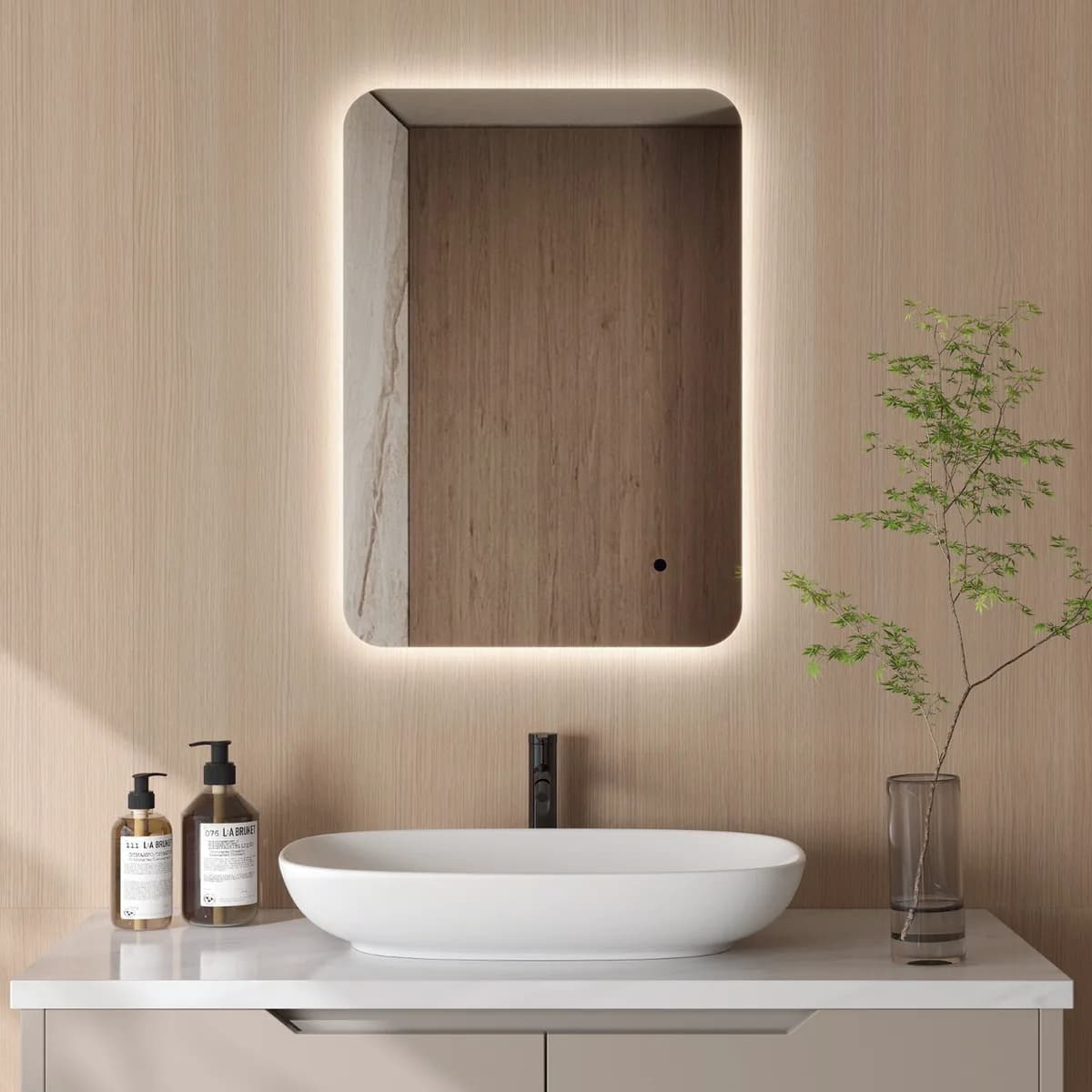
ICON Rectangular LED Bathroom Mirror6 options available
Frominc VAT£110.73 ex VAT
✓ Delivery available✓ Collect today
 In stock
ICON
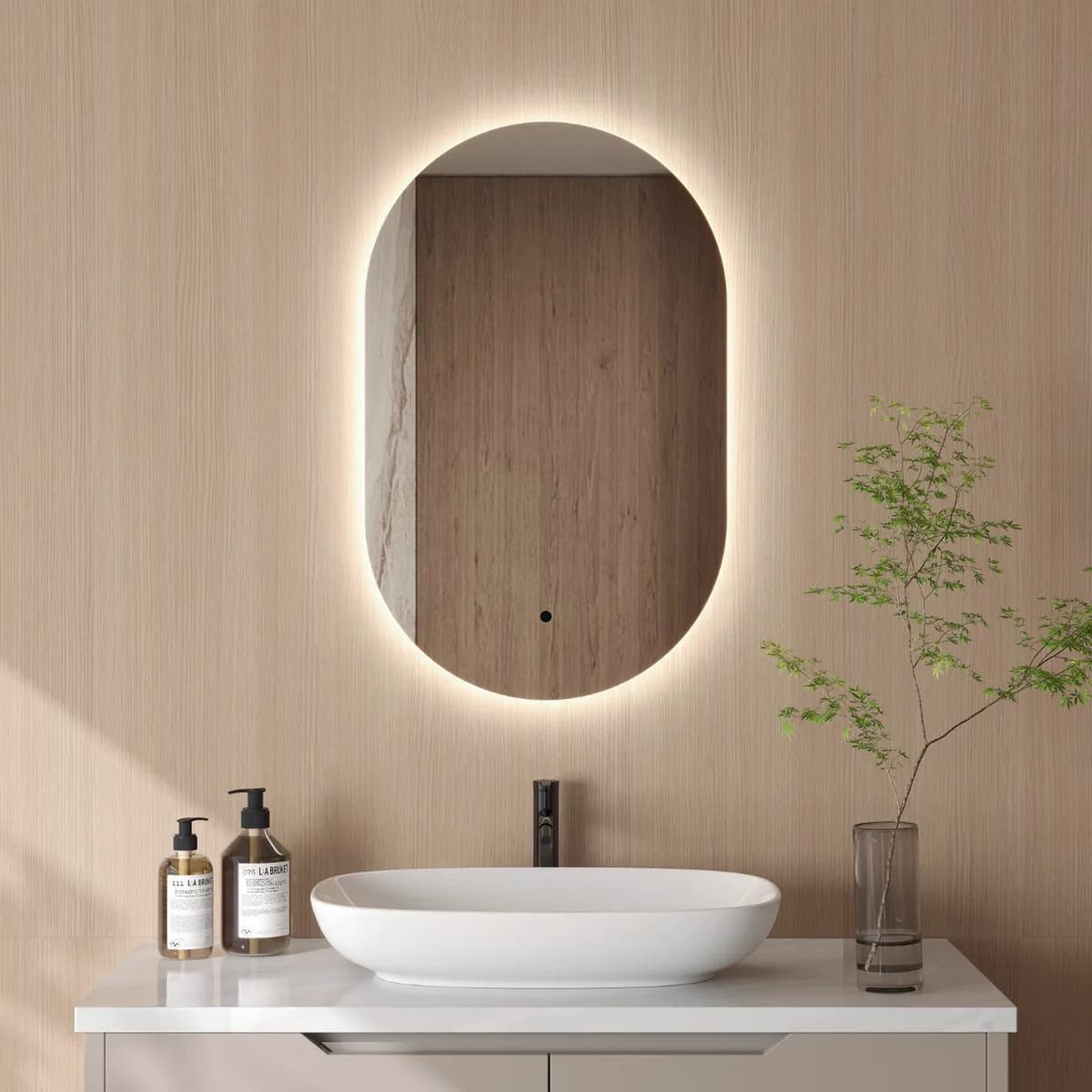
ICON Oval LED Bathroom Mirror3 colours available
Frominc VAT£132.56 ex VAT
✓ Delivery available✓ Collect today
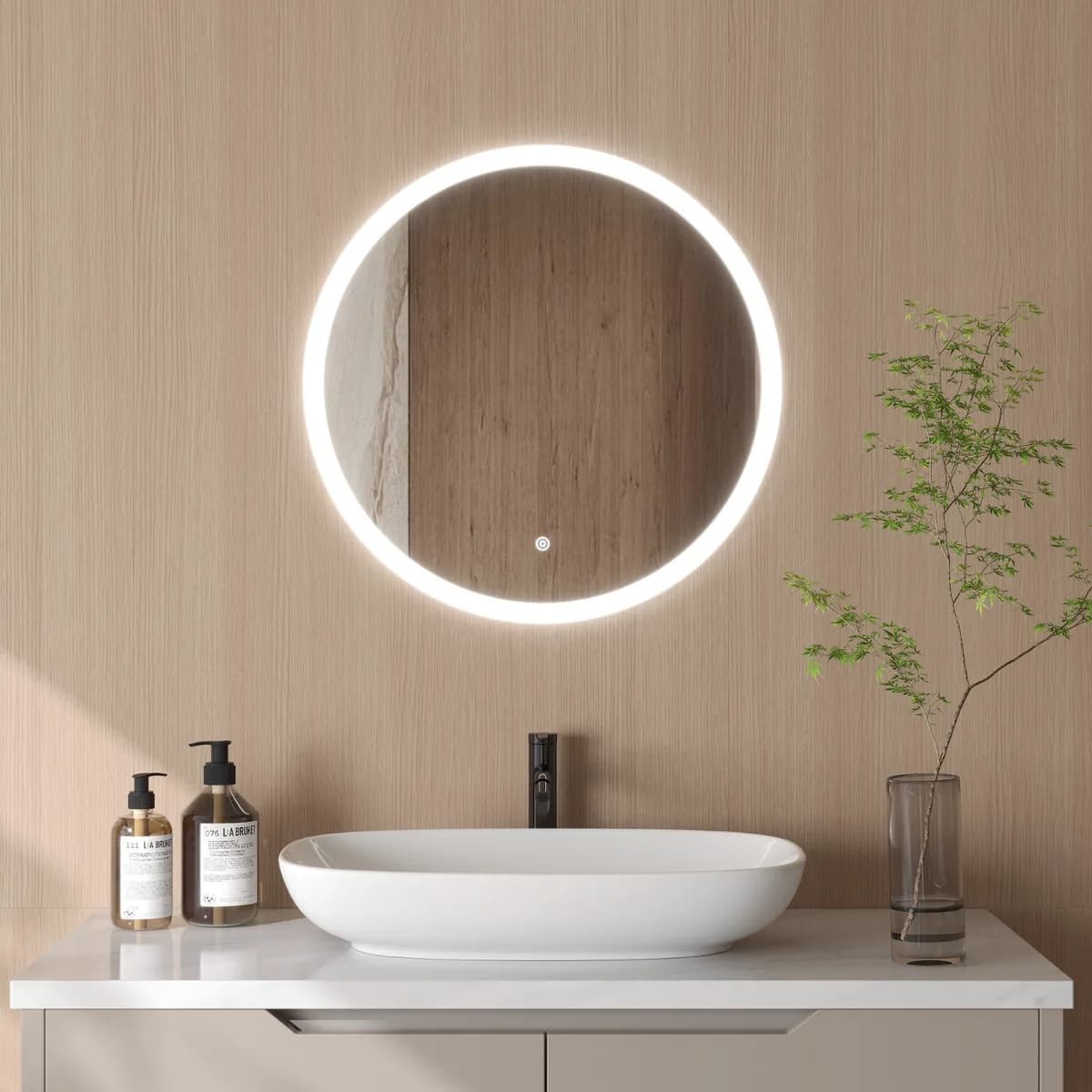 In stock
ICON
ICON Round LED Bathroom Mirror3 colours available
Frominc VAT£135.79 ex VAT
✓ Delivery available✓ Collect today
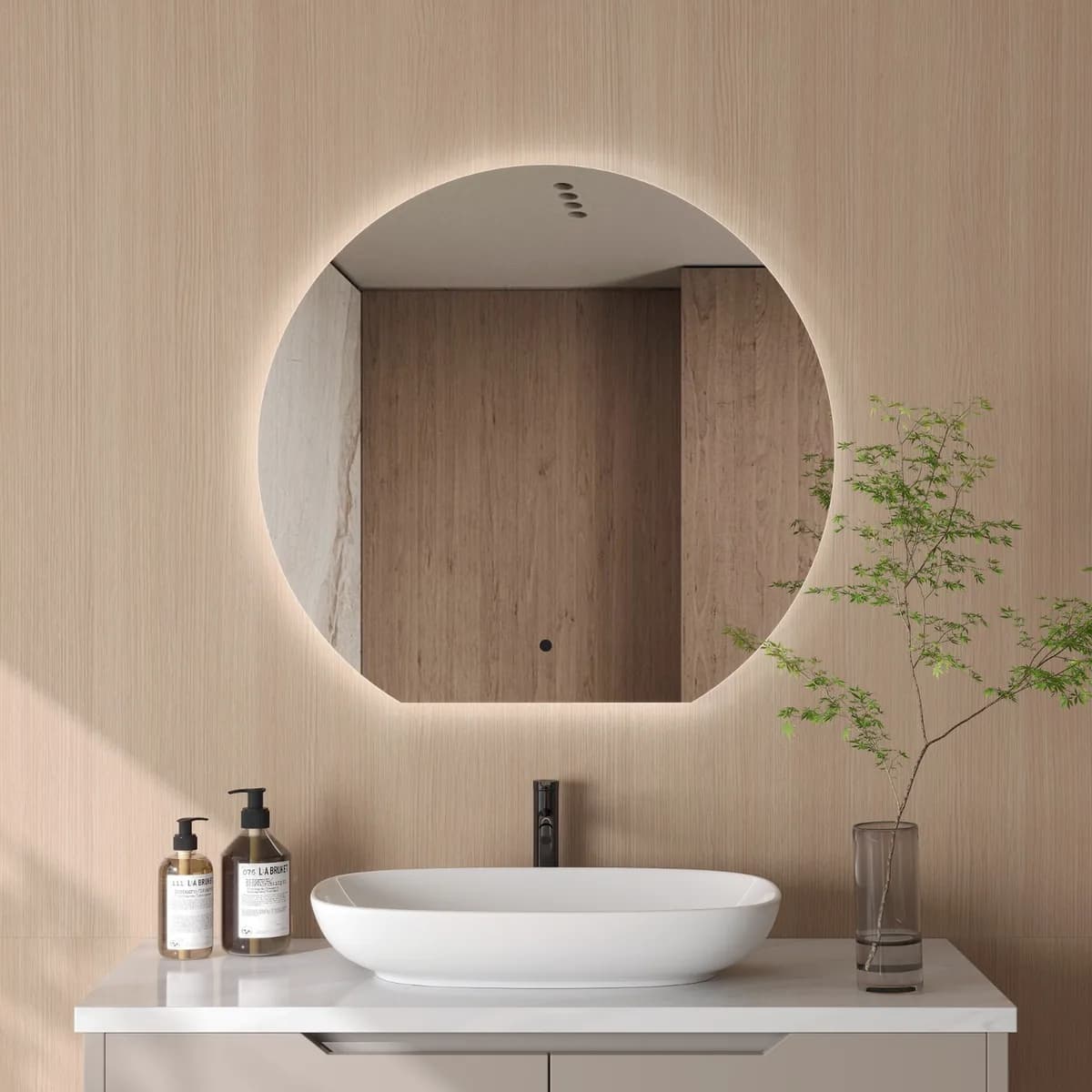 In stock
ICON
ICON Arc LED Bathroom Mirror 800mm with Sensor Switch and DemisterCode: SCN-ICR80-ARC
inc VAT£175.40 ex VAT
✓ Delivery available✓ Collect today
Questions
- Can I plug a hairdryer into a mirror's shaver socket?
- No. A shaver socket supplies only enough power for an electric shaver or toothbrush. Hairdryers and straighteners need an ordinary socket outside the bathroom.
- Do LED mirrors need an electrician?
- Yes. They're hard-wired, and bathroom electrical work in England falls under Part P of the Building Regulations. A registered electrician can fit, test and certify it.
- What does IP44 mean on a bathroom mirror?
- Protection against solid objects over 1mm (the first 4) and water splashed from any direction (the second 4). It's the usual minimum for zone 2, beside a bath or shower.
- Can an LED mirror go on PVC wall panels?
- Yes, but fix it through the panel into the wall behind, with fixings suited to that wall — the panel alone won't carry it. Seal round the screw holes with silicone.
- Which colour of light is best for a bathroom mirror?
- Warm white (around 2700K) is softer for a relaxing bath; cool white (up to 6500K) is closer to daylight for shaving and make-up. ICON mirrors adjust across that range, and SCN's change from warm to cool white.
Related guides
- Bathrooms & showersVanity Unit Buying Guide: Sizes, Wall Hung vs Floor Standing, and Materials
- Bathrooms & showersPVC Shower Wall Panels vs Tiles: Which Is Better for Your Bathroom?
- Bathrooms & showersIs Click Vinyl Flooring OK in a Bathroom?
- Bathrooms & showers6mm vs 8mm Shower Glass: What's the Difference?